Deep Brain Stimulation for Movement Disorders: Candidates, Benefits, and Risks
Deep brain stimulation does not cure movement disorders, but it can significantly reduce specific symptoms in carefully selected patients. The best candidates usually have a clear diagnosis, symptoms that respond to stimulation targets, and realistic expectations about benefits and follow-up care.
Key Takeaways
- Deep brain stimulation does not cure movement disorders, but it can significantly reduce specific symptoms in carefully selected patients.
- The best candidates usually have a clear diagnosis, symptoms that respond to stimulation targets, and realistic expectations about benefits and follow-up care.
- DBS involves implanted electrodes in the brain connected to a pulse generator, similar to a pacemaker, placed under the skin.
- Programming and medication adjustment after surgery are essential parts of treatment and may take several visits.
- Risks include bleeding, infection, device-related problems, mood or speech changes, and the usual risks of surgery and anesthesia.
Deep brain stimulation is a surgical treatment that uses carefully placed electrical impulses to improve certain movement disorder symptoms. It may help selected people with Parkinson's disease, essential tremor, dystonia, and some other conditions when medication no longer provides adequate control or causes troublesome side effects.
Overview
Deep brain stimulation, often called DBS, is a neurosurgical treatment for selected movement disorders. It uses thin electrodes placed in precise areas of the brain that control movement. These electrodes are connected to an implanted pulse generator, which sends controlled electrical signals to help regulate abnormal brain activity.
DBS is most commonly considered for people with Parkinson’s disease, essential tremor, and dystonia. In some specialist centers, it may also be evaluated for carefully selected cases of other neurological conditions. The goal is not to remove the underlying disease, but to reduce symptoms such as tremor, stiffness, slowness, abnormal postures, or involuntary movements.
For many patients, DBS is considered when medicines are no longer giving steady relief, when symptoms fluctuate throughout the day, or when medication side effects become difficult to manage. The decision is made after a detailed assessment by a multidisciplinary team, usually including a neurologist, neurosurgeon, neuropsychologist, radiologist, and rehabilitation professionals.
How Deep Brain Stimulation Works
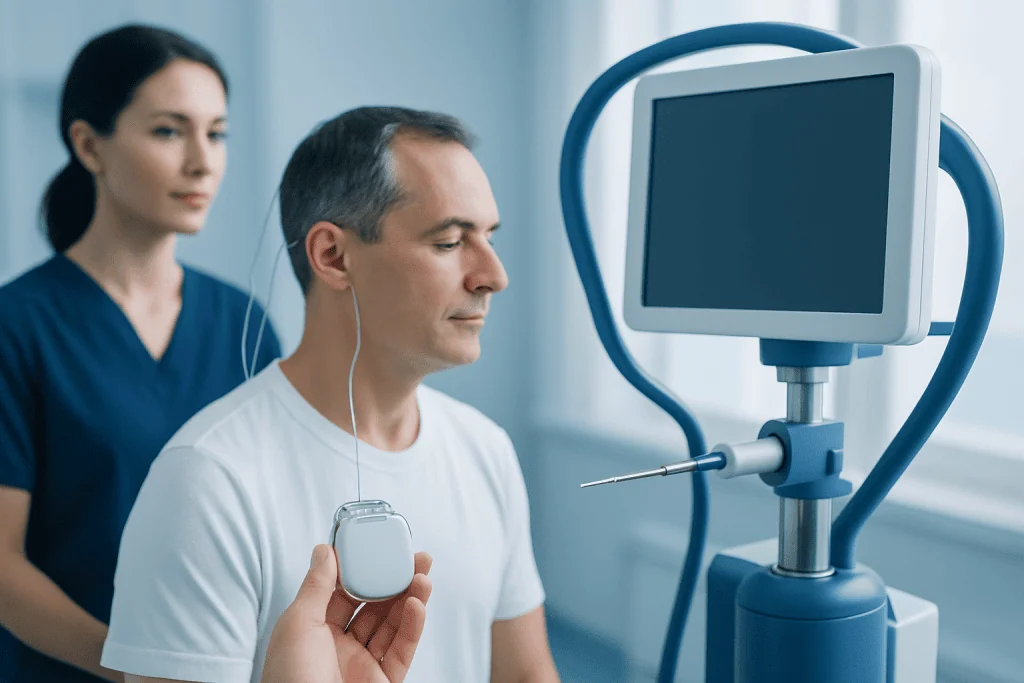
Movement depends on communication between several brain networks. In some movement disorders, signals in these networks become irregular or overactive. DBS does not destroy brain tissue. Instead, it modifies abnormal signaling with adjustable electrical stimulation, helping the brain circuits work in a more balanced way.
The DBS system usually has three main parts: one or two electrodes placed in the brain, extension wires passed under the skin, and a pulse generator implanted under the skin of the chest or, less commonly, the abdomen. The pulse generator is programmed using an external device. Settings can be adjusted over time to find the best balance between symptom relief and side effects.
Different brain targets are chosen depending on the condition and the person’s symptoms. For example, specific targets may be used for tremor, Parkinson’s motor symptoms, or dystonia. Target selection is individualized and based on examination findings, brain imaging, age, cognitive health, medication response, and treatment goals.
Who May Be a Candidate for DBS?

A good candidate for deep brain stimulation is someone whose symptoms are likely to improve with stimulation and who is medically suitable for surgery. The evaluation starts with confirming the diagnosis, because DBS works best when the condition and symptom pattern are well understood. The team also reviews medication history, daily function, brain imaging, general health, and personal goals.
In Parkinson’s disease, DBS may be considered when symptoms such as tremor, stiffness, slowness, or medication-related involuntary movements remain troublesome despite optimized treatment. People whose motor symptoms improve with levodopa often respond better to DBS for those same symptoms. However, DBS is usually less helpful for symptoms that do not respond to medication, such as some balance, speech, swallowing, or memory problems.
In essential tremor, DBS may be an option when tremor significantly interferes with eating, writing, dressing, work, or social activities and medicines are not effective or tolerated. In dystonia, DBS may be considered when abnormal muscle contractions, twisting, or postures cause disability or pain and conservative treatments have not provided enough benefit. The response in dystonia may develop gradually over months rather than immediately.
DBS may not be suitable for people with uncontrolled medical illness, active infection, significant untreated psychiatric illness, severe cognitive impairment, or brain imaging findings that increase surgical risk. Age alone is not the only deciding factor, but overall health, resilience, and expected benefit are carefully weighed.
Expected Benefits and Realistic Goals
The main benefit of DBS is improved control of specific movement symptoms. Depending on the condition, this may mean less tremor, fewer off periods, reduced stiffness, improved ease of movement, fewer medication-induced involuntary movements, or reduced dystonic postures. Many people also experience improved independence in daily activities when symptoms become more predictable.
DBS can sometimes allow doctors to adjust medication doses, especially in Parkinson’s disease. This may reduce medication side effects such as dyskinesia, nausea, sleepiness, or fluctuations. However, medication changes must be supervised by a neurologist, because stopping or reducing medicines too quickly can worsen symptoms.
It is important to have realistic expectations. DBS does not stop disease progression, does not cure Parkinson’s disease, essential tremor, or dystonia, and does not usually improve every symptom. Symptoms such as memory problems, advanced balance difficulties, speech problems, or swallowing difficulties may not improve and can sometimes become more noticeable after treatment. The best outcomes occur when goals are specific, measurable, and discussed clearly before surgery.
The Evaluation and Procedure
Before DBS, the care team performs a structured evaluation. This may include a detailed neurological examination, review of medications, brain MRI or CT imaging, neuropsychological testing, and assessment of mood and general health. For Parkinson’s disease, patients may be examined both on and off medication to understand which symptoms are medication responsive.
The procedure is planned with advanced imaging to identify the target area and avoid important blood vessels. Some centers perform parts of the surgery while the patient is awake so the team can test stimulation effects and monitor symptoms; others use asleep techniques with imaging guidance. The choice depends on the center’s protocol, the condition being treated, and patient-specific factors.
During surgery, the electrodes are implanted into the selected brain target. The pulse generator is usually implanted under the skin and connected to the electrodes either during the same operation or in a separate step. After healing, the device is activated and programmed. Initial programming is only the beginning; several visits may be needed to fine-tune settings and adjust medications.
Patients and families should understand that DBS is a therapy process, not just a single operation. Follow-up care includes checking the device, monitoring symptom control, adjusting settings, managing medications, and supporting rehabilitation or lifestyle strategies when needed.
Risks and Possible Side Effects
Like any brain surgery, DBS has risks. Serious complications are uncommon but can include bleeding in the brain, stroke-like symptoms, seizures, infection, or problems related to anesthesia. The surgical team discusses individual risk based on age, medical history, imaging findings, and the exact procedure planned.
Device-related issues can also occur. These may include lead movement, wire fracture, skin irritation, discomfort around the implanted generator, or battery depletion requiring replacement. Rechargeable and non-rechargeable battery options may be available, and each has practical advantages and responsibilities.
Stimulation itself can cause side effects if current spreads to nearby brain pathways. These may include tingling, muscle pulling, speech changes, balance problems, double vision, mood changes, or changes in thinking. Many stimulation-related side effects improve when the settings are adjusted, which is why expert programming is an essential part of DBS care.
Emotional adjustment is also important. Some patients feel disappointed if expectations were too broad, while others need time to adapt to changes in symptoms, medications, or daily routines. Ongoing communication with the care team helps identify concerns early and improve the overall treatment experience.
Aftercare, Self-care, and When to See a Doctor
Recovery after DBS varies, but most patients need time for incision healing, device activation, and gradual programming. Patients are usually advised to keep follow-up appointments, take medications exactly as prescribed, and report new symptoms promptly. Rehabilitation, exercise, occupational therapy, or speech therapy may be recommended depending on the movement disorder and individual needs.
Patients should learn the basics of living with an implanted device. This may include how to use a patient controller, when to recharge the battery if applicable, and what to tell healthcare providers before MRI scans, surgery, dental procedures, or security screening. Device safety instructions should always come from the DBS team and manufacturer-specific guidance.
Medical advice should be sought urgently if there is fever, wound redness or drainage, sudden severe headache, new weakness, confusion, seizure, sudden speech difficulty, or a rapid worsening of neurological symptoms. Patients should also contact their DBS team if symptoms suddenly return, the device seems not to be working, or stimulation causes troublesome side effects.
For international patients, Acibadem International offers evaluation and treatment of movement disorders through multidisciplinary specialists in JCI-accredited hospitals. A qualified neurologist and neurosurgeon can help determine whether DBS is appropriate, explain alternatives, and plan follow-up care before and after travel.
Frequently asked questions
Is deep brain stimulation a cure for movement disorders?
No. Deep brain stimulation does not cure Parkinson's disease, essential tremor, dystonia, or other movement disorders. It is a symptom-control treatment that can improve selected movement symptoms and quality of daily function in carefully chosen patients.
Who decides whether a patient is suitable for DBS?
Suitability is usually assessed by a multidisciplinary team that includes a movement disorder neurologist and a neurosurgeon. The team reviews diagnosis, symptom pattern, medication response, brain imaging, cognitive and mood health, general medical fitness, and the patient's goals.
Will medications still be needed after DBS?
Many patients continue some medication after DBS, although doses may sometimes be reduced or adjusted. Medication changes should only be made under medical supervision, because sudden changes can worsen symptoms or cause side effects.
Does DBS surgery hurt?
The surgical area is numbed and anesthesia is used according to the technique chosen by the medical team. Some procedures are performed with the patient awake for part of the operation, while others are performed asleep. The team explains what to expect and how comfort will be managed.
How long does it take to see results?
Some symptoms, especially tremor, may improve soon after stimulation is turned on. Other benefits, particularly in dystonia, may develop gradually over weeks or months. Several programming visits may be needed to reach the best settings.
Can a person with DBS have an MRI scan?
Some DBS systems are MRI-conditional, meaning MRI may be possible only under specific safety rules. Patients should always tell healthcare providers they have a DBS device before imaging or procedures. The DBS team can confirm whether MRI is safe and what precautions are required.
References
- International Parkinson and Movement Disorder Society
- American Academy of Neurology
- National Institute of Neurological Disorders and Stroke
- Parkinson's Foundation
- Mayo Clinic
This article is for general information only and is not a substitute for professional medical advice. Please consult a qualified doctor about your individual situation.
Movement Disorders in Turkey — costs, top hospitals & a free quote
JCI-accredited · board-certified surgeons · reply within 24h
Add us as a Preferred Source to see more of our trusted health content across Google Search, AI Overviews and Discover.

Neurology
Diagnosis and treatment of disorders of the brain, spinal cord, nerves and muscles.
51 specialists in this unitMore from the Health Library



Related Specialists
Prof. Dr. H. Armağan Arıcan
Radiation Oncology
Dr. Fatih Çelik
Emergency Service
Dr. Nilgün Çavdar
Physical Medicine & Rehabilitation
Fzt. Yusuf Mücahit Turan
Physical Medicine & Rehabilitation