Deep Brain Stimulation vs Medication for Movement Disorders
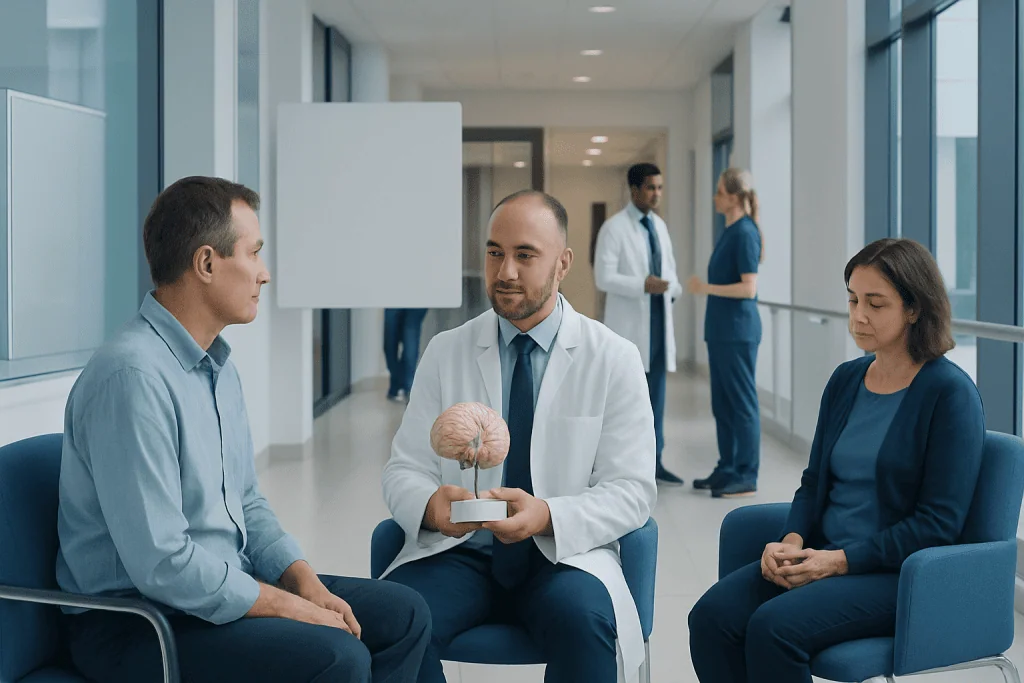
Medication is usually the first treatment for many movement disorders, especially Parkinson’s disease. Deep brain stimulation may help when symptoms are no longer well controlled with medicine or when side effects become difficult.
Key Takeaways
- Medication is usually the first treatment for many movement disorders, especially Parkinson’s disease.
- Deep brain stimulation may help when symptoms are no longer well controlled with medicine or when side effects become difficult.
- DBS does not cure a movement disorder, but it can reduce certain symptoms and improve daily function in selected patients.
- The best choice depends on the diagnosis, symptom pattern, age, overall health, and treatment goals.
- Care from a multidisciplinary movement disorder team helps determine whether surgery, medication adjustment, or both are appropriate.
Deep brain stimulation and medication are both important treatments for movement disorders, but they work in different ways and suit different patients. Understanding how they compare can help patients and families discuss the safest and most effective plan with a specialist.
Overview: How Deep Brain Stimulation and Medication Compare
Deep brain stimulation (DBS) and medication are two of the main treatment approaches for several movement disorders, including Parkinson’s disease, essential tremor, and some forms of dystonia. Medication works through chemicals that affect brain signaling throughout the body or nervous system. DBS, by contrast, is a surgical treatment that places thin electrodes in specific brain areas to deliver controlled electrical stimulation and adjust abnormal movement-related circuits.
For many patients, medication is the starting point because it is non-surgical and can be highly effective, especially early in a disease course. Over time, however, some people develop wearing-off effects, involuntary movements, or symptoms that become harder to control consistently. In these situations, DBS may be considered as an additional treatment rather than a replacement for expert medical care.
The comparison is not simply “surgery versus pills.” In real practice, treatment is individualized. Some patients do very well for years with medication alone, while others benefit from a combination of medication adjustments, rehabilitation, and procedures such as deep brain stimulation. The goal is usually to improve symptom control, daily independence, and quality of life while limiting side effects as much as possible.
Which Movement Disorders May Be Treated This Way?
DBS and medication are most often discussed in relation to Parkinson’s disease, essential tremor, and dystonia. In Parkinson’s disease, medication can improve slowness, stiffness, and tremor, especially in the earlier stages. DBS may later help selected patients who still respond to levodopa but have troublesome fluctuations or dyskinesias.
In essential tremor, medication may reduce shaking, but some people continue to have disabling hand, head, or voice tremor despite treatment. For carefully chosen patients, DBS can provide meaningful tremor control when everyday activities such as eating, writing, or dressing remain difficult.
DBS may also be used in certain cases of dystonia, particularly when muscle contractions and abnormal postures are severe and not adequately controlled by oral medicines or injections. Not every movement disorder responds equally well to DBS, and some symptoms within the same condition improve more than others. A specialist’s evaluation is therefore essential before deciding which option is likely to help.
Medication: Benefits, Limitations, and Common Challenges
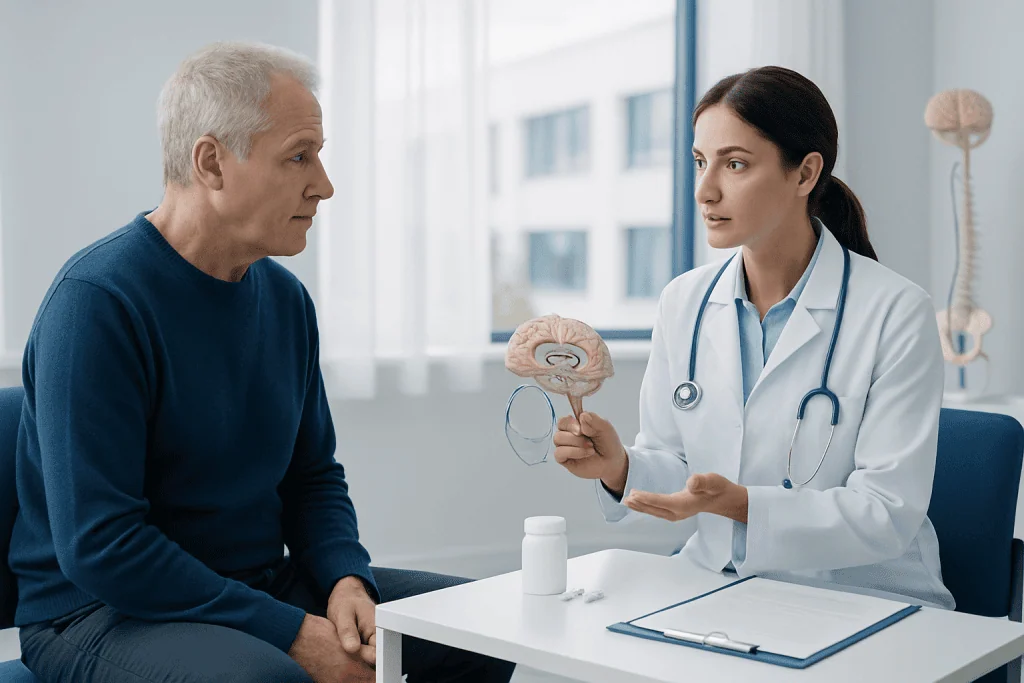
Medication remains the foundation of treatment for many movement disorders. In Parkinson’s disease, doctors may use levodopa and other medicines to improve movement and reduce stiffness or tremor. In essential tremor, commonly used medicines may lessen shaking. In dystonia, treatment may include oral medicines and, in some cases, botulinum toxin injections for focal muscle overactivity.
The main advantage of medication is that it does not require brain surgery and can often be started, adjusted, or stopped relatively easily. This makes it a practical first-line option. Medicines can provide strong symptom relief, especially early on, and they remain important even for many people who later undergo DBS.
Still, medication has limitations. Some symptoms may improve only partially, and side effects can occur. Depending on the condition and drug, these may include sleepiness, nausea, dizziness, confusion, swelling, mood changes, or involuntary movements. Over time, some patients notice that each dose lasts less long or that symptom control becomes less predictable.
Another important point is that medication acts broadly rather than only on one small brain target. This can be helpful, but it can also increase side effects. When a patient has a good response to medicine but struggles with fluctuations, tremor that remains difficult to control, or medication-related dyskinesia, doctors may discuss whether procedures such as DBS should be considered.
Deep Brain Stimulation: How It Works and When It May Help
Deep brain stimulation is a neurosurgical treatment in which electrodes are placed in carefully selected brain regions involved in movement control. These electrodes connect to a device implanted under the skin, usually in the chest, that sends adjustable electrical impulses. The stimulation does not destroy brain tissue; instead, it modulates abnormal signals in specific circuits.
DBS is generally considered when symptoms are no longer well controlled by medication alone, when side effects become limiting, or when tremor remains disabling despite appropriate drug treatment. In Parkinson’s disease, good candidates often still show a meaningful response to levodopa, which suggests that movement symptoms are likely to respond to stimulation as well. In essential tremor, DBS may be especially useful for severe tremor that interferes with daily activities.
Potential benefits of DBS include reduced tremor, less motor fluctuation, lower dyskinesia burden, and in some patients, reduced medication needs. However, DBS does not cure the underlying disease or stop progression. Some symptoms, such as balance problems, speech changes, or cognitive decline, may not improve and can still require ongoing supportive care.
As with any surgery, there are risks, including bleeding, infection, lead-related problems, hardware malfunction, and stimulation-related side effects such as tingling, speech difficulty, or balance changes. Careful selection, experienced surgical teams, and follow-up programming are essential. After the procedure, the device settings are adjusted over time to find the best balance between benefit and side effects.
How Doctors Decide Between DBS and Medication
Choosing between DBS and medication is a step-by-step process rather than a single test result. Specialists first confirm the exact diagnosis because response to treatment depends heavily on the type of movement disorder. They also review which symptoms are most disabling, how the patient responded to medicines in the past, whether side effects are present, and how symptoms affect work, self-care, sleep, and daily routines.
For DBS, evaluation usually includes a neurological examination, a review of medication response, brain imaging, and often neuropsychological assessment. Doctors also consider memory, mood, speech, balance, and overall health. This is important because a patient may have symptoms that are unlikely to improve with surgery, or medical conditions that increase surgical risk.
A multidisciplinary team often includes a movement disorder neurologist, neurosurgeon, neuropsychologist, radiologist, rehabilitation specialists, and nurses experienced in device management. This kind of team-based review helps align treatment with patient goals. In some cases, the best answer is not immediate surgery but more precise medication adjustment, rehabilitation, or a different procedure such as stereotactic and functional neurosurgery.
Shared decision-making matters. Some patients prioritize avoiding surgery and prefer medication changes, while others are most concerned about severe fluctuations or tremor that disrupt independence. A thoughtful discussion of likely benefits, limitations, risks, recovery, and follow-up needs helps patients choose with confidence.
Treatment After the Decision: What to Expect Long Term
If medication remains the best option, treatment often continues to evolve. Doctors may adjust the timing, combination, or form of medicines to smooth symptom control and reduce side effects. Physical therapy, occupational therapy, speech therapy, exercise, and attention to sleep and mental health can all improve function and quality of life alongside medication.
If DBS is chosen, treatment does not end with surgery. The period after implantation includes device programming and fine-tuning over several visits. Medication may still be needed, although sometimes at lower doses. The final outcome often depends not only on the surgery itself but also on the quality of follow-up care and the patient’s participation in rehabilitation and routine monitoring.
Long-term management also includes watching for disease changes over time. A patient who initially has good tremor control may later develop other symptoms that require different strategies. Regular follow-up allows the care team to adapt treatment as needs change and to address practical concerns such as battery life, device checks, and medication review.
Centers with coordinated neurology and neurosurgery expertise can support this process from evaluation through follow-up. Near the end of the care pathway, some international patients choose centers such as Acibadem International, where multidisciplinary specialists in JCI-accredited hospitals diagnose and treat movement disorders with individualized planning.
Self-care, Daily Living, and When to Seek Medical Advice
Whether a patient uses medication, DBS, or both, daily habits remain important. Regular exercise, balance training, good sleep, hydration, and a structured medication schedule can help maintain function. Occupational strategies such as weighted utensils, handwriting aids, and home safety adjustments may reduce the impact of tremor or stiffness on everyday life.
Patients and families should also watch for changes that affect safety or independence. These may include more frequent falls, worsening swallowing, new confusion, depression, medication side effects, or tremor that prevents eating or self-care. A prompt review can help identify whether the issue relates to disease progression, medication timing, a programming adjustment, or another medical problem.
Medical advice is especially important if symptoms suddenly worsen, if there are signs of infection after surgery, or if a DBS device seems not to be working properly. New speech problems, severe dizziness, fainting, chest symptoms, or major mood or behavior changes should also be evaluated without delay. Early communication often prevents small problems from becoming larger ones.
In general, the most reassuring approach is regular follow-up with a qualified movement disorder specialist. With the right plan, many patients can achieve better symptom control and maintain meaningful daily activities for a long time.
Frequently asked questions
Is deep brain stimulation better than medication for movement disorders?
Not always. Medication is often the first and most appropriate treatment, especially early in conditions such as Parkinson’s disease. DBS may be helpful later for selected patients whose symptoms are not controlled well enough with medicine or whose side effects become difficult.
Can a patient stop all medication after DBS?
Usually not. Many patients still need some medication after DBS, although the dose or schedule may change. The exact plan depends on the condition being treated, the symptoms involved, and how well the stimulation works.
Does DBS cure Parkinson’s disease or essential tremor?
No, DBS does not cure these conditions or stop the underlying disease process. It is a symptom-management treatment that can improve certain movement symptoms in carefully selected patients. Ongoing follow-up is still needed.
Who is a good candidate for deep brain stimulation?
A good candidate is usually someone with a confirmed movement disorder diagnosis, significant symptoms affecting daily life, and either incomplete control with medication or troublesome treatment side effects. Doctors also consider overall health, memory, mood, balance, and whether the symptoms are likely to respond to stimulation.
What are the risks of deep brain stimulation?
DBS is brain surgery, so it carries risks such as infection, bleeding, device-related problems, and side effects from stimulation settings. These risks are carefully reviewed before treatment. Ongoing programming and follow-up help improve benefits and reduce unwanted effects.
How long does it take to know whether DBS is working?
Improvement is not always immediate because the device usually needs programming adjustments over time. Some patients notice benefit relatively soon, while others improve more gradually over several visits. Medication adjustments may also be part of the process.
References
- World Health Organization
- National Institute of Neurological Disorders and Stroke
- American Academy of Neurology
- National Institute for Health and Care Excellence
- International Parkinson and Movement Disorder Society
This article is for general information only and is not a substitute for professional medical advice. Please consult a qualified doctor about your individual situation.
Movement Disorders in Turkey — costs, top hospitals & a free quote
JCI-accredited · board-certified surgeons · reply within 24h
Add us as a Preferred Source to see more of our trusted health content across Google Search, AI Overviews and Discover.

Neurosurgery
Surgical treatment of the brain, spine and nervous system, including minimally invasive and functional procedures.
72 specialists in this unit