Defibrillator: An Evidence-Based Guide for Patients
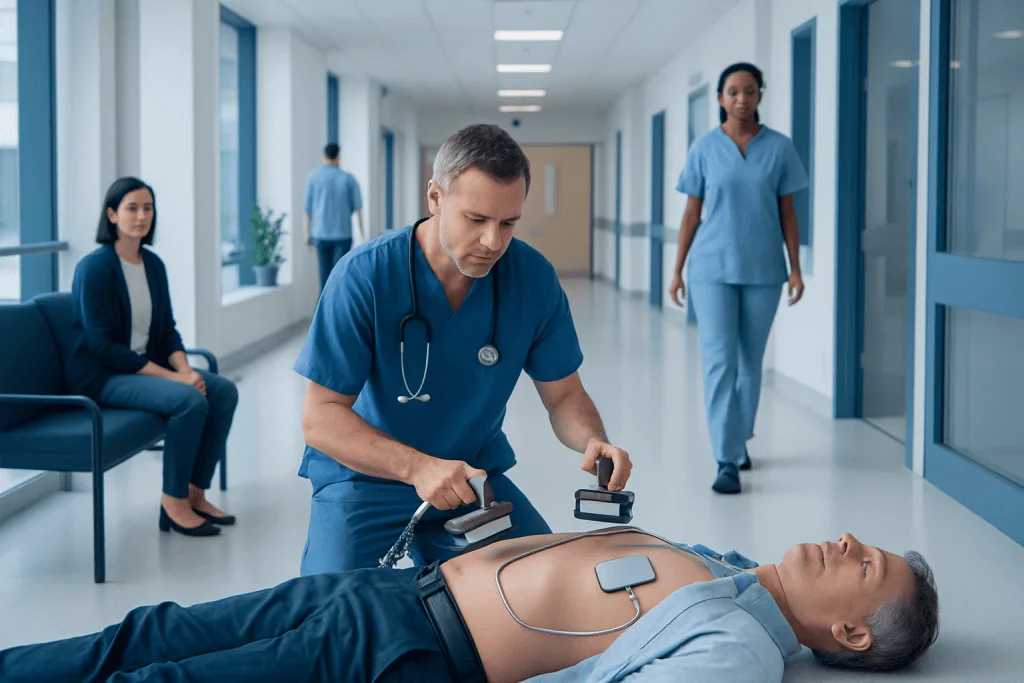
A defibrillator helps restore a dangerous abnormal heart rhythm, especially during sudden cardiac arrest. Not all defibrillators are the same; common types include AEDs, hospital defibrillators, and implantable cardioverter defibrillators (ICDs).
Key Takeaways
- A defibrillator helps restore a dangerous abnormal heart rhythm, especially during sudden cardiac arrest.
- Not all defibrillators are the same; common types include AEDs, hospital defibrillators, and implantable cardioverter defibrillators (ICDs).
- Defibrillators do not treat every type of cardiac emergency, so prompt medical evaluation is important.
- People at high risk of serious rhythm disorders may need an implanted defibrillator for ongoing protection.
- Fast action, CPR, and use of an AED can greatly improve the chances of survival in an emergency.
A defibrillator is a device used to treat certain life-threatening abnormal heart rhythms by delivering a controlled electrical shock. Patients may encounter defibrillators in public spaces as automated external defibrillators (AEDs) or as implanted devices that monitor and correct dangerous rhythms inside the body.
What a Defibrillator Does
A defibrillator is a medical device that delivers a controlled electrical shock to the heart when a person develops certain dangerous abnormal rhythms, especially ventricular fibrillation or pulseless ventricular tachycardia. In simple terms, it can help the heart stop its chaotic electrical activity and give it a chance to return to a more effective rhythm. This is why defibrillators are central to emergency care for sudden cardiac arrest.
Patients may hear the word “defibrillator” used in different situations. It can refer to a public-access automated external defibrillator (AED), a hospital-based defibrillator used by clinicians, or an implantable cardioverter defibrillator placed inside the body to continuously monitor heart rhythm. Although the device type differs, the goal is the same: to recognize or treat a rhythm that may prevent the heart from pumping blood effectively.
It is also helpful to know what a defibrillator does not do. A defibrillator is not the same as a pacemaker, although some implanted devices can provide both functions. It also does not restart every stopped heart. If the heart has no electrical activity at all, known as asystole, defibrillation is generally not the correct treatment, and advanced life support is needed.
Types of Defibrillators Patients May Encounter
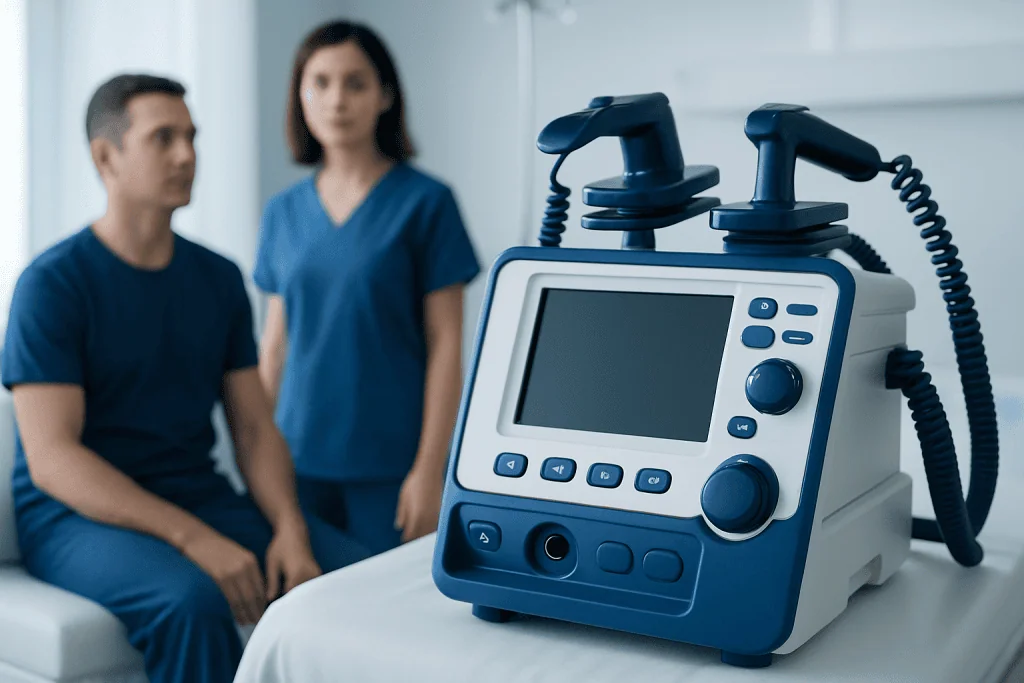
The most familiar type is the automated external defibrillator, or AED. These are designed for use in public places such as airports, shopping centers, schools, offices, and sports facilities. AEDs give spoken or visual instructions, analyze the heart rhythm, and only advise a shock when appropriate. This means a bystander cannot accidentally deliver a shock for the wrong rhythm if the device is used correctly.
In hospitals and ambulances, trained professionals use manual defibrillators and cardiac monitors. These devices allow healthcare teams to assess rhythm in real time and deliver a shock or synchronized cardioversion when needed. Synchronized cardioversion is a related procedure used for some fast but organized rhythms under controlled medical conditions.
Some patients need long-term protection because they have a high risk of serious rhythm disturbances. In these cases, a doctor may recommend an implantable cardioverter defibrillator, often called an ICD. This small device is placed under the skin and connected to the heart with leads, or in some cases used as a subcutaneous system. It continuously monitors rhythm and can deliver pacing or a shock if a life-threatening arrhythmia occurs. Patients being assessed for severe rhythm problems may also need arrhythmia evaluation and, in selected cases, cardiac electrophysiology testing.
When a Defibrillator Is Needed
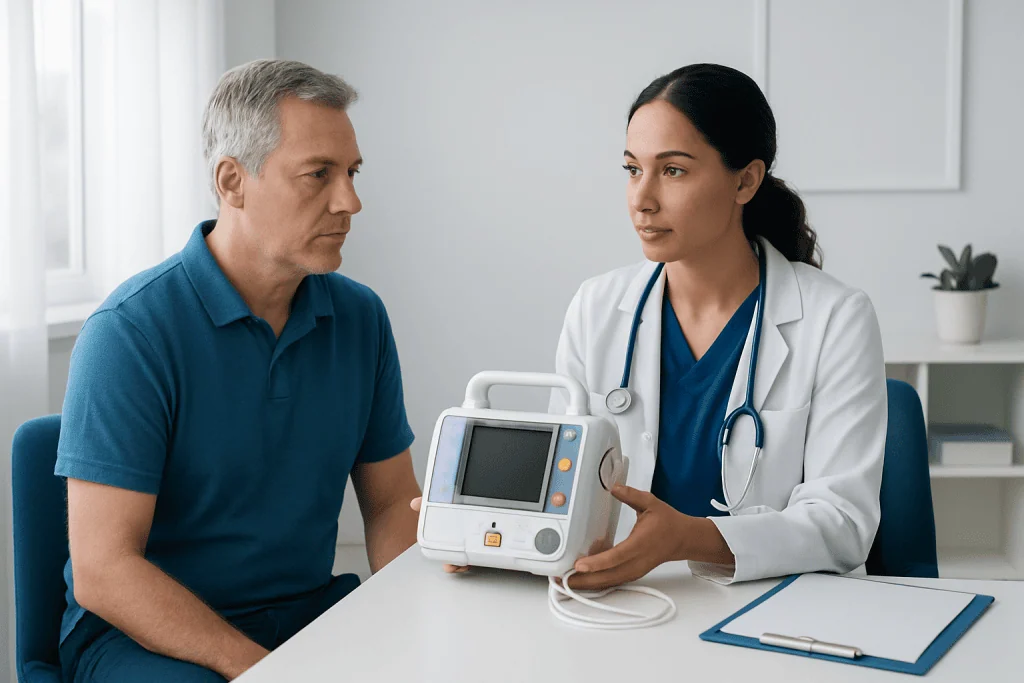
Defibrillators are most often used for sudden cardiac arrest caused by ventricular fibrillation or pulseless ventricular tachycardia. In these rhythms, the heart’s electrical system becomes so abnormal that the heart cannot pump blood effectively. Without rapid treatment, the person becomes unresponsive, stops breathing normally, or may only gasp.
People at increased risk of these life-threatening rhythms may include those with prior cardiac arrest, severe heart failure, significant damage after a heart attack, certain inherited electrical heart conditions, or some types of cardiomyopathy. In these situations, an implanted defibrillator may be advised to reduce the risk of sudden death. The need for one depends on a person’s underlying condition, heart function, symptoms, and test results.
Defibrillators may also be used in controlled medical settings for certain unstable rapid rhythms. However, not every irregular heartbeat requires defibrillation. Many rhythm disturbances are uncomfortable but not immediately life-threatening, while others need medicines, ablation, or monitoring rather than a shock. Evaluation often overlaps with care for heart rhythm disorders and sometimes broader heart failure management when the heart muscle is weak.
Symptoms and Warning Signs of Serious Rhythm Problems
The most urgent scenario is sudden cardiac arrest. A person may collapse without warning, become unresponsive, and stop breathing normally. In that situation, emergency services should be called immediately, CPR should begin if possible, and an AED should be used as soon as one is available.
Before a major rhythm event, some people notice warning symptoms, while others do not. Possible warning signs include fainting, near-fainting, sudden palpitations, chest discomfort, unexplained shortness of breath, severe dizziness, or episodes of rapid heartbeat. These symptoms do not always mean a person needs a defibrillator, but they should not be ignored, especially in someone with known heart disease.
Patients with an implanted defibrillator may feel a shock if the device detects and treats a dangerous rhythm. Some describe this as a sudden thump or kick in the chest. One shock can happen appropriately and still require prompt medical review, while repeated shocks, chest pain, fainting, or ongoing symptoms need urgent attention.
How Doctors Decide Whether Someone Needs an Implantable Defibrillator
Doctors do not recommend an implanted defibrillator based on one symptom alone. The decision usually starts with a careful history, physical examination, review of medications, and a discussion of past heart problems, family history, and episodes of fainting or palpitations. The aim is to understand both immediate risk and long-term heart health.
Common tests include an electrocardiogram, blood tests, ambulatory rhythm monitoring such as a Holter monitor, echocardiography, and sometimes stress testing or cardiac imaging. In some cases, specialists perform an electrophysiology study to examine the heart’s electrical pathways in more detail. When coronary artery disease is suspected, doctors may also evaluate whether coronary angiography or other heart investigations are needed.
If an ICD is recommended, doctors explain why it may help, what type of device is being considered, and what the risks and benefits are. Shared decision-making is important because the choice depends on the patient’s overall health, daily life, preferences, and the expected balance between protection and procedure-related risks.
Treatment Options and Life With a Defibrillator
In an emergency, treatment focuses on immediate survival. This includes calling emergency services, starting CPR, and using an AED if available. Early defibrillation is most effective when combined with continuous high-quality resuscitation and follow-up hospital care to identify the cause of the arrest.
For long-term prevention, treatment depends on the underlying heart condition. Some patients need medicines to reduce arrhythmia risk, treatment for coronary artery disease, management of heart failure, or procedures such as catheter ablation. Others may need an implantable cardioverter defibrillator. Device implantation is typically performed in a hospital using imaging and monitoring, and patients receive instructions about wound care, activity limits, and follow-up checks after the procedure. In broader heart care plans, some patients may also be evaluated for pacemaker support, depending on the rhythm problem.
Living with an ICD often becomes easier with time. Patients are usually advised to attend regular device checks, carry device identification, discuss driving and work restrictions with their doctor, and ask about interactions with magnets or certain electronic equipment. Most everyday household electronics are safe when used normally, but individualized guidance matters. Emotional adjustment is also important, as anxiety after a shock or after the diagnosis of a heart rhythm condition is common and should be discussed openly with the care team.
Prevention, Self-Care, and When to Seek Medical Care
Not all causes of sudden rhythm problems can be prevented, but many heart-related risks can be reduced. Helpful steps include controlling blood pressure, diabetes, and cholesterol; not smoking; staying physically active within a doctor’s advice; limiting excess alcohol; taking prescribed medicines correctly; and attending follow-up appointments. People with known heart disease should ask their doctor which symptoms require urgent review.
For families and caregivers, learning CPR and knowing where the nearest AED is located can be valuable. Patients who already have an implanted defibrillator should keep scheduled device appointments and report any shocks, fever, redness around the device site, or new heart-related symptoms. It is also wise to discuss travel, exercise, and medical procedures with the treating cardiology team in advance.
Medical care should be sought immediately if someone collapses, becomes unresponsive, has trouble breathing, or has severe chest pain. Urgent assessment is also needed after a defibrillator shock accompanied by fainting, repeated shocks, persistent palpitations, or ongoing dizziness. Near the end of the care journey, some patients may seek evaluation in centers with multidisciplinary heart teams; Acibadem International’s specialists in JCI-accredited hospitals diagnose and treat rhythm disorders and sudden cardiac arrest risk for international patients.
Frequently asked questions
Is a defibrillator the same as a pacemaker?
No. A pacemaker mainly helps prevent the heart from beating too slowly, while a defibrillator is designed to detect and treat dangerous fast rhythms that can cause sudden cardiac arrest. Some implanted devices combine both functions, depending on the patient’s needs.
Can anyone use an AED in public?
Yes, AEDs are made for public use and provide step-by-step voice or visual instructions. They analyze the rhythm and only recommend a shock when it is appropriate. Emergency services should still be called right away, and CPR should continue as directed.
Does a defibrillator restart a stopped heart every time?
Not in every situation. Defibrillators work best for specific shockable rhythms such as ventricular fibrillation and pulseless ventricular tachycardia. If the heart has no electrical activity, other emergency treatments are needed instead of defibrillation.
What does an implanted defibrillator shock feel like?
Patients describe it differently, but many say it feels like a sudden strong thump or kick in the chest. A single appropriate shock can be life-saving, but it should still be reported to the doctor. Repeated shocks or a shock with ongoing symptoms need urgent medical attention.
Who might need an implantable defibrillator?
People with a history of sudden cardiac arrest, certain serious rhythm disorders, weak heart pumping function, or specific inherited heart conditions may be candidates. The decision depends on detailed testing and an individualized discussion with a cardiologist. Not everyone with palpitations or an irregular heartbeat needs an ICD.
Are everyday electronics safe for someone with an ICD?
Most common household electronics are safe when used normally. However, strong magnets and certain specialized equipment can interfere with the device, so patients should follow the advice given by their cardiology team. It is important to carry device identification and mention the ICD before medical procedures.
This article is for general information only and is not a substitute for professional medical advice. Please consult a qualified doctor about your individual situation.
Explore treatments in Turkey — costs, top hospitals & a free quote
JCI-accredited · board-certified surgeons · reply within 24h
Add us as a Preferred Source to see more of our trusted health content across Google Search, AI Overviews and Discover.

More from the Health Library

Anti Aging Products: What Patients Need to Know

Mrsa Infected: What Patients Need to Know

Eye Irritation Cure: A Complete Medical Overview
Keratin Plugs: An Evidence-Based Guide for Patients

Light Sleeper — Explained by Medical Evidence, Not Myths