

Dental Implants: How It Works, Recovery, and What to Expect

Dental implants replace missing teeth with an artificial root placed in the jawbone and a crown attached on top. A healthy jawbone and gums are important for successful implant treatment, although bone grafting may help some people qualify.
Key Takeaways
- Dental implants replace missing teeth with an artificial root placed in the jawbone and a crown attached on top.
- A healthy jawbone and gums are important for successful implant treatment, although bone grafting may help some people qualify.
- Treatment is usually completed in stages, with healing time between implant placement and the final restoration.
- Recovery is often manageable with temporary swelling or soreness, but good oral hygiene is essential for long-term success.
- Dental implants can improve chewing, speech, and appearance, but they also carry risks such as infection, implant failure, or nerve irritation.
- A dental specialist can assess whether implants or another tooth replacement option is the best choice.
Dental implants are a long-term way to replace missing teeth by placing a small titanium post in the jawbone and attaching a custom-made tooth. Most people want to know how the process works, how long recovery takes, and whether they are good candidates, and these questions can be answered clearly by understanding the steps, healing timeline, and expected outcomes.
Overview: What Dental Implants Are and How They Work
Dental implants are a method of replacing missing teeth with a structure that acts like an artificial tooth root. A small post, usually made of titanium or another biocompatible material, is placed into the jawbone. Over time, the bone heals around the implant in a process called osseointegration, helping create a stable base for a replacement tooth.
Once healing is complete, a connector piece called an abutment may be attached, followed by a custom-made crown, bridge, or denture. This means dental implants can be used to replace one missing tooth, several missing teeth, or, in some cases, support a full arch of teeth. Unlike removable dentures, implants are fixed in place and designed to feel more natural during eating and speaking.
Many people choose dental implants because they can restore function as well as appearance. They may help preserve the jawbone after tooth loss and can reduce the movement that sometimes happens with traditional dentures. For patients exploring replacement options, dental implant treatment is often considered when a durable, long-term solution is desired.
Who May Be a Good Candidate
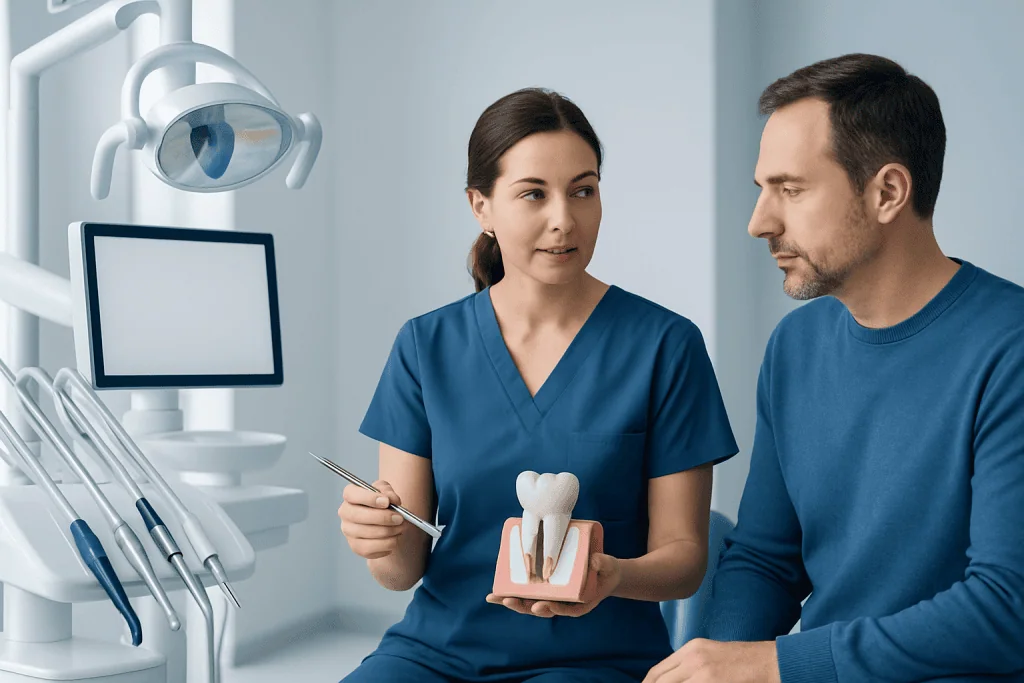
Not everyone is immediately ready for dental implants, but many adults can be candidates after a careful dental evaluation. In general, a good candidate has one or more missing teeth, healthy gums, and enough jawbone to support an implant. If bone volume is limited, procedures such as bone grafting may make treatment possible.
Overall health also matters. Conditions such as uncontrolled diabetes, heavy smoking, untreated gum disease, or certain immune-related disorders can slow healing and raise the risk of implant failure. This does not always rule out treatment, but it does mean the dental team may need to manage these factors before proceeding.
A detailed consultation usually includes dental imaging, a review of medical history, and an assessment of the bite and surrounding teeth. People with active gum disease or untreated tooth decay may need those problems addressed first. The goal is to create the healthiest possible foundation before implant placement.
- One or more missing teeth
- Healthy or treatable gum tissue
- Adequate jawbone, or the ability to rebuild it
- Commitment to oral hygiene and follow-up care
- No uncontrolled medical issues that would significantly impair healing
Step by Step: The Dental Implant Procedure

The dental implant process is usually completed in stages rather than all at once. First, the dentist or oral surgeon performs an examination and treatment plan. This often includes digital scans or X-rays to measure the jawbone and identify the safest, most effective position for the implant. If needed, tooth extraction or bone grafting may be scheduled before the implant itself is placed.
During the implant procedure, the area is numbed with local anesthesia, and sedation may be offered in some cases. The clinician creates a small opening in the gum and places the implant into the jawbone. After placement, the gum may be closed over or around the implant so the site can heal. For some patients, a temporary tooth can be used while healing continues.
The next stage is healing and bone integration, which often takes several weeks to months depending on the patient and the treatment plan. Once the implant is secure, the clinician attaches the abutment and then places the final restoration. This may be a single crown, an implant-supported bridge, or a full-arch solution such as All-on-4 dental implants when multiple teeth are missing.
The exact sequence varies from person to person. Some same-day or immediate-load approaches are possible in selected cases, but many patients benefit from a slower, staged plan because it allows soft tissue and bone to heal properly before the final tooth is attached.
Recovery Timeline and What to Expect After Surgery
Recovery after dental implant placement is often easier than many people expect, although mild discomfort is common. In the first few days, it is normal to have some swelling, tenderness, minor bleeding, or bruising around the surgical area. Most people can return to light daily activities quickly, but they may need to avoid strenuous exercise for a short period if advised by their clinician.
Diet and oral care are important during early healing. Soft foods are usually recommended at first, and patients are often told to avoid chewing directly on the implant site. Gentle brushing, appropriate mouth rinsing, and following the dentist’s aftercare instructions can help reduce irritation and support healing.
The short-term recovery period typically lasts days to a couple of weeks, but the deeper healing process inside the bone takes longer. Osseointegration may take several months before the final crown or bridge is placed. This longer timeline is a normal part of treatment and is one reason implant care involves follow-up visits.
If extra procedures were needed, such as a sinus lift or bone grafting, recovery may take longer. Temporary changes in chewing, speaking, or gum sensitivity can happen while the final restoration is being planned. A dental team can explain what is typical for each phase and when a patient can expect a more complete return to normal function.
Benefits and Possible Risks
Dental implants offer several important benefits. They can improve chewing efficiency, support clearer speech, and create a more secure feeling than removable appliances. Because implants stimulate the jawbone, they may help reduce the bone loss that often follows tooth loss. Many patients also appreciate that implants are designed to blend with natural teeth and can support confidence in social situations.
At the same time, implants are still a surgical treatment, so they are not risk-free. Early risks can include pain, bleeding, infection, delayed healing, or swelling beyond what is expected. In some cases, the implant may not integrate with the bone well enough and may need to be removed or replaced later. This is why careful planning and follow-up are so important.
There are also less common but meaningful complications depending on implant location. These may include injury to nearby nerves, sinus involvement in the upper jaw, loosening of components, or inflammation around the implant known as peri-implant disease. Poor oral hygiene, smoking, and untreated periodontal problems can increase these risks.
For many patients, the benefits outweigh the risks when treatment is performed for the right reasons and maintained properly. A balanced discussion with a qualified dentist or oral surgeon helps set realistic expectations about appearance, function, durability, and the need for ongoing care.
Long-Term Care, Prevention, and Self-Care
Dental implants need regular care just like natural teeth. Although the implant itself cannot develop a cavity, the surrounding gum and bone can still become inflamed if plaque builds up. Daily brushing, cleaning between teeth, and routine professional dental visits are important for protecting the implant and nearby tissues.
People with implant-supported crowns or bridges may be shown special cleaning tools, such as interdental brushes or floss designed for wider spaces. Following these instructions can help prevent irritation around the gumline and reduce the risk of peri-implant inflammation. Avoiding tobacco is especially helpful because smoking can impair healing and long-term implant stability.
It is also wise to manage clenching or grinding if these habits are present. In some cases, a dentist may recommend a night guard to reduce excess force on implants and surrounding teeth. Protecting overall oral health matters too, including treatment for root canal treatment or other dental problems affecting neighboring teeth when needed.
Long-term success depends on both the quality of the initial treatment and the patient’s ongoing habits. A consistent oral care routine, regular checkups, and timely attention to changes such as gum bleeding, discomfort, or a loose restoration can help implants last for many years.
When to Seek Medical Care
Most soreness and swelling after implant surgery improve gradually, but some symptoms should prompt a call to a dental professional. Persistent bleeding, worsening pain after the first few days, fever, pus, increasing facial swelling, or a bad taste that does not improve may suggest infection or another complication. A loose implant or crown should also be assessed promptly.
People should also seek care if they notice numbness, tingling, or changes in sensation that do not fade as expected, especially after lower jaw implants. Difficulty opening the mouth, trouble swallowing, or swelling that spreads significantly should not be ignored. Even if the problem seems minor, early evaluation can help protect the implant and surrounding tissues.
Regular follow-up matters even when healing appears to be going well. During these visits, the dental team can check bone support, gum health, the bite, and the stability of the implant components. Near the end of the treatment journey, patients who need specialist evaluation may also learn that Acibadem International’s multidisciplinary dental specialists in JCI-accredited hospitals diagnose and treat complex implant cases for international patients.
Frequently asked questions
How long do dental implants last?
Dental implants can last many years and may remain in place long term when they heal well and are cared for properly. Their lifespan depends on factors such as oral hygiene, smoking, gum health, bite forces, and regular dental follow-up.
Is getting a dental implant painful?
The procedure itself is usually done with local anesthesia, so patients should not feel sharp pain during placement. Some soreness, swelling, or tenderness afterward is common, but it is often manageable and tends to improve over several days.
How long does the dental implant process take?
The full process often takes several months because the implant needs time to bond with the jawbone before the final crown or bridge is placed. The timeline may be shorter or longer depending on whether tooth extraction, bone grafting, or other preparatory procedures are needed.
Who should not get dental implants right away?
People with uncontrolled medical conditions, active gum disease, severe bone loss, or heavy tobacco use may need treatment or lifestyle changes before moving ahead. A dentist can decide whether these issues are temporary barriers or whether another tooth replacement method would be safer.
Are dental implants better than dentures or bridges?
Dental implants can offer advantages such as a fixed feel, jawbone support, and preservation of neighboring teeth. However, the best option depends on the number of missing teeth, bone health, overall health, personal preferences, and treatment goals.
What can go wrong with a dental implant?
Possible problems include infection, poor healing, implant loosening, gum inflammation, or failure of the implant to integrate with bone. Less common complications may involve nerves or the sinus area, depending on where the implant is placed.
References
- American Dental Association
- National Institute of Dental and Craniofacial Research
- Mayo Clinic
- Cleveland Clinic
- International Team for Implantology
This article is for general information only and is not a substitute for professional medical advice. Please consult a qualified doctor about your individual situation.
Dental Implants in Turkey — costs, top hospitals & a free quote
JCI-accredited · board-certified surgeons · reply within 24h
Add us as a Preferred Source to see more of our trusted health content across Google Search, AI Overviews and Discover.

Dental & Oral Health
Full-scope dental care from implants and aesthetics to oral and maxillofacial surgery.
158 specialists in this unitMore from the Health Library



Related Specialists

Dr. Rifat Urnal
Emergency Service
Prof. Dr. Mehmet Temel Yilmaz
Endocrinology
Asst. Prof. Dr. Neval Yurttutan Uyar
Clinical Laboratory
Prof. Dr. Fulya Ağaoğlu
Radiation Oncology