Dental Prosthesis: An Evidence-Based Guide for Patients

A dental prosthesis can replace one tooth, several teeth, or a full dental arch. Common options include crowns, bridges, dentures, implant-supported restorations, and maxillofacial prostheses.
Key Takeaways
- A dental prosthesis can replace one tooth, several teeth, or a full dental arch.
- Common options include crowns, bridges, dentures, implant-supported restorations, and maxillofacial prostheses.
- The best choice depends on oral health, bone support, comfort goals, and long-term maintenance needs.
- Good oral hygiene and regular dental follow-up help prostheses last longer and function better.
- Pain, poor fit, mouth sores, or trouble chewing should be assessed by a dental professional.
A dental prosthesis is a custom-made device that replaces or restores missing or damaged teeth and surrounding oral structures. Depending on a person’s needs, it may improve chewing, speech, comfort, and appearance with removable or fixed options.
Overview: what a dental prosthesis is
A dental prosthesis is a device used to replace missing teeth or restore parts of teeth that have been damaged by decay, injury, wear, or disease. It may be removable, such as a denture, or fixed in place, such as a crown, bridge, or implant-supported restoration. The main goals are to improve oral function, support speech, protect remaining teeth and tissues, and restore a natural-looking smile.
This broad term covers more than one treatment. Some dental prostheses rebuild a single tooth, while others replace many teeth or even larger areas of the mouth and face after surgery or trauma. Because needs differ from person to person, treatment planning usually considers the condition of the gums, jawbone, bite, general health, and personal preferences.
For many patients, the most important point is that a dental prosthesis is not one-size-fits-all. The right option balances appearance, comfort, durability, oral hygiene demands, and cost over time. A qualified dentist or prosthodontist can explain which approach is most suitable and why.
Types of dental prosthesis
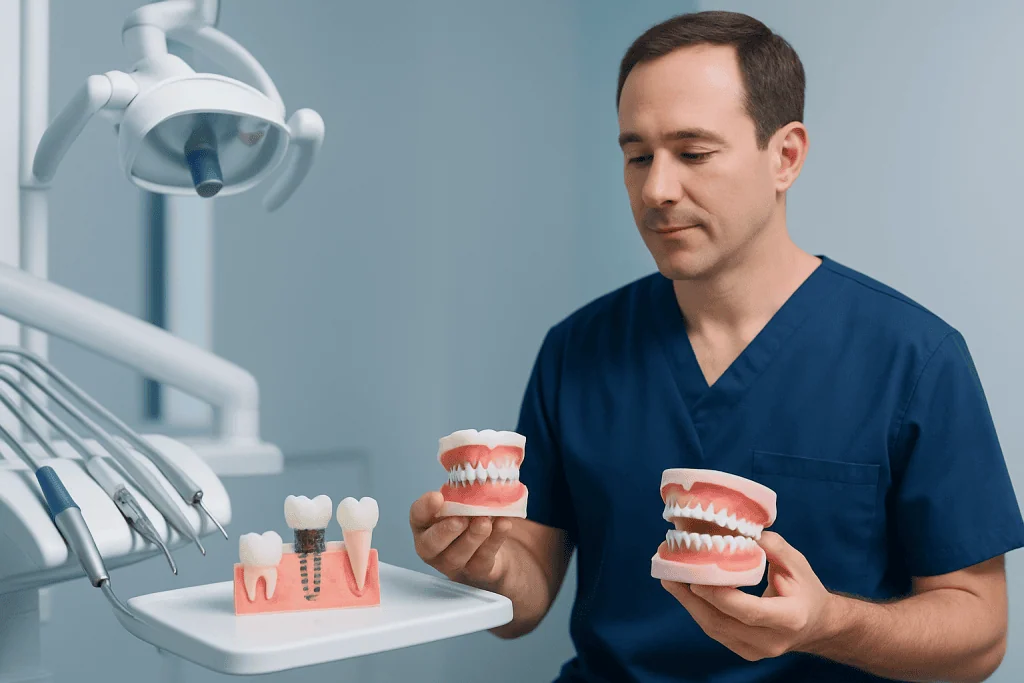
Dental prostheses are often grouped into fixed and removable options. Fixed prostheses stay in the mouth and are removed only by a dental professional. Removable prostheses can be taken out for cleaning and, in some cases, for sleeping. Each type has advantages and limitations depending on how many teeth are missing and the health of the supporting structures.
Common examples include:
- Crowns: caps placed over damaged or weakened teeth to restore shape, strength, and function.
- Bridges: restorations that replace one or more missing teeth by anchoring to neighboring teeth or implants.
- Partial dentures: removable appliances for patients missing several teeth but not a full arch.
- Complete dentures: full removable prostheses for people who have lost all teeth in the upper or lower jaw.
- Implant-supported prostheses: crowns, bridges, or dentures attached to dental implants placed in the jawbone.
- Maxillofacial prostheses: specialized devices used after trauma, congenital differences, or cancer treatment to restore oral and facial structures.
In some cases, patients may need treatment for supporting conditions before receiving a prosthesis. For example, gum disease may require care first because inflamed or unstable tissues can reduce the success of later restorative work. When this is relevant, dentists may also discuss related conditions such as dental implant treatment planning or options like implant-supported restorations.
Who may need one and how it can help
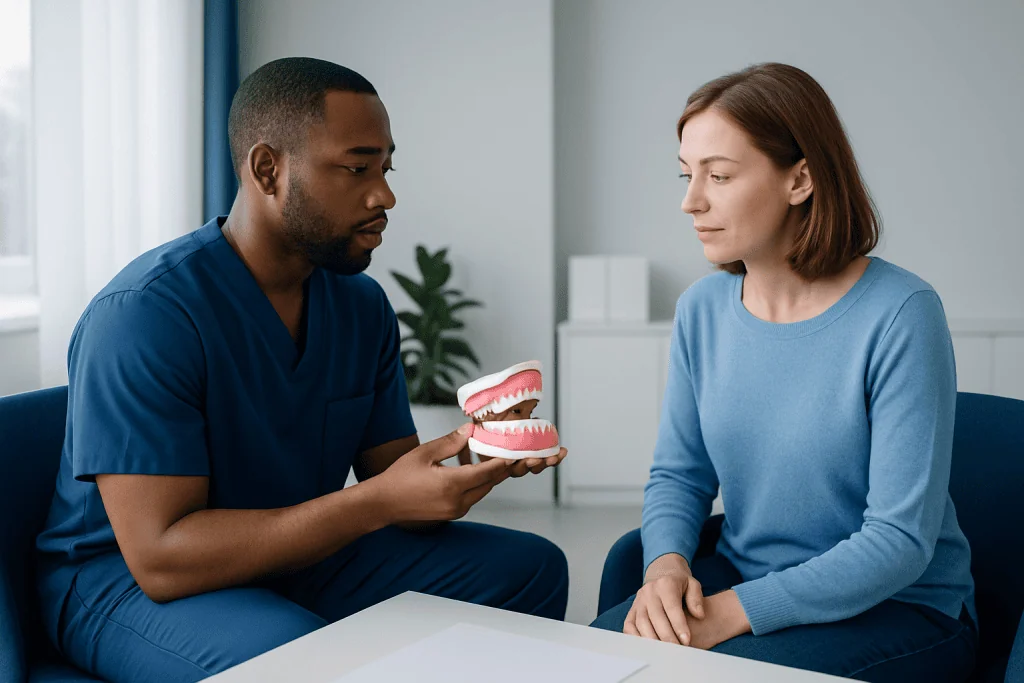
A dental prosthesis may be recommended when teeth are missing, broken, heavily worn, severely decayed, or structurally weak. Some patients need one after tooth extraction, advanced gum disease, trauma, congenital dental differences, or treatment for oral tumors. Others seek care because poor tooth support affects eating, speaking, or confidence.
Replacing missing teeth is not only about appearance. Teeth help maintain bite balance and guide jaw movement. When a tooth is lost, nearby teeth may drift, the opposing tooth may over-erupt, and chewing forces can become uneven. Over time, this may make oral hygiene harder and contribute to further wear or discomfort.
A well-planned prosthesis can improve several aspects of daily life. Many patients notice easier chewing, clearer pronunciation of certain sounds, better lip and cheek support, and improved facial symmetry. However, adaptation can take time, especially with new dentures, and realistic expectations are an important part of the treatment process.
Assessment and diagnosis before treatment
Choosing a dental prosthesis begins with a detailed dental examination. The clinician typically checks the teeth, gums, jaw joints, bite, and oral soft tissues. Medical history also matters because conditions such as diabetes, osteoporosis, dry mouth, or smoking can affect healing, comfort, and long-term outcomes.
Imaging is often used to assess the roots, bone levels, and surrounding anatomy. Depending on the case, this may include dental X-rays, panoramic imaging, or three-dimensional scans. Impressions or digital scans of the mouth may be taken to study the bite and help design a custom prosthesis with the right fit and function.
In more complex cases, the dentist may look for problems that need treatment first, such as active tooth decay, infection, unstable gums, or significant bone loss. If missing teeth are being considered for implant support, the quality and quantity of bone are especially important. Some patients may also benefit from consultation with specialists in periodontics, oral surgery, orthodontics, or prosthodontics.
The treatment plan usually includes a discussion of goals, expected timeline, alternatives, and maintenance needs. This shared decision-making step is important because the best clinical option should also fit the patient’s daily routine and ability to care for the prosthesis over time.
Treatment options and how dentists choose between them
The choice of dental prosthesis depends on how many teeth are missing, whether the remaining teeth are healthy enough to support a restoration, and whether the patient wants a removable or fixed solution. A single damaged tooth may be restored with a crown, while a single missing tooth might be replaced with a bridge or an implant-supported crown. Larger gaps may require partial dentures or multi-unit implant restorations.
Complete dentures remain a common option when all teeth in one or both jaws are missing. They can restore appearance and basic function, but they may feel less stable than fixed alternatives, especially in the lower jaw. For some people, adding implants can improve retention and comfort. Dentists may discuss choices such as full-arch implant-supported teeth when appropriate for extensive tooth loss.
Bridges can be effective when neighboring teeth already need crowns or when implants are not suitable. Implant-supported prostheses may help preserve chewing efficiency and reduce pressure on the gums, but they require adequate bone, careful hygiene, and a healing period. Crowns may be made from different materials, including ceramic or metal-based designs, depending on the location in the mouth and functional demands.
In selected patients with jaw alignment issues or tooth position problems, dentists may recommend orthodontic or bite-related treatment before the final prosthesis is made. This can improve fit, function, and longevity. If a patient is considering a fixed solution, related options such as dental crowns or zirconia crown restorations may be part of the discussion, depending on the clinical situation.
Living with a dental prosthesis: care, comfort, and adaptation
Good daily care helps a dental prosthesis function well and last longer. The exact routine depends on the type of prosthesis, but in general it includes brushing natural teeth and gums carefully, cleaning around restoration margins, and following the dentist’s instructions for flossing or using interdental brushes. Removable dentures should be cleaned regularly with suitable products and handled gently to avoid damage.
It is normal to need an adjustment period. New dentures may initially feel bulky, and some patients notice mild soreness, changes in speech, or increased saliva for a short time. Eating softer foods, chewing slowly, and practicing speech can help during adaptation. Persistent pain, clicking, looseness, or ulcers are not expected to continue and should be checked.
Regular dental reviews are important even when a patient has few or no natural teeth left. The dentist can evaluate wear, fit, gum health, bite changes, and the condition of any supporting implants. Dentures may need relining or replacement over time because the shape of the jaw can change, especially after tooth loss.
Self-care also includes protecting the mouth from avoidable damage. Limiting tobacco use, managing dry mouth, treating teeth grinding when present, and attending routine checkups all support the long-term success of a prosthesis. Patients should not try to repair or reshape a prosthesis themselves, as this may worsen the fit or injure the tissues.
Possible risks, limitations, and when to seek medical care
Like any dental treatment, a dental prosthesis has possible limitations and risks. A removable appliance may feel less stable than natural teeth. Fixed restorations can also have complications, including wear, chipping, difficulty cleaning, irritation around the margins, or failure of supporting teeth or implants. Not every patient is a candidate for every option, especially if there is active gum disease, major bone loss, or uncontrolled medical illness.
Patients should seek dental care if they have ongoing pain, a poor fit, broken parts, bad breath that does not improve with cleaning, bleeding gums, or difficulty chewing. Medical care is especially important if swelling, fever, pus, sudden facial pain, or signs of spreading infection develop. Problems should not be ignored, as early treatment is usually simpler and more effective.
For patients who need coordinated dental and medical support, Acibadem International’s multidisciplinary specialists and JCI-accredited hospitals diagnose and treat oral rehabilitation needs for international patients. This may be relevant in complex cases involving implants, extensive reconstruction, or related conditions such as gum disease.
Frequently asked questions
What is the difference between a dental prosthesis and dentures?
A dental prosthesis is a broad term for any device that restores or replaces teeth or oral structures. Dentures are one type of dental prosthesis, but crowns, bridges, and implant-supported restorations also fall under this category.
Is a dental prosthesis permanent?
Some dental prostheses are fixed and designed for long-term use, while others are removable. Even long-lasting restorations may eventually need adjustment, repair, or replacement because the mouth changes over time.
Which is better: a bridge, denture, or implant?
There is no single best option for everyone. The most suitable choice depends on the number of missing teeth, gum and bone health, overall health, budget, hygiene habits, and whether the patient prefers a removable or fixed solution.
How long does it take to get a dental prosthesis?
The timeline varies with the type of prosthesis and whether additional treatment is needed first. A simple crown may take fewer visits than an implant-supported restoration, which usually involves healing time and staged treatment.
Will a dental prosthesis look natural?
Modern dental prostheses are usually designed to match facial features, tooth shape, and color as closely as possible. Natural appearance depends on good planning, material choice, and careful fitting.
Can a dental prosthesis help with chewing and speech?
Yes, many patients notice improvement in chewing efficiency and clearer speech after treatment. Some adaptation is normal at first, especially with removable dentures, but persistent problems should be reviewed by a dentist.
References
- American Dental Association
- National Institute of Dental and Craniofacial Research
- World Health Organization
- FDI World Dental Federation
This article is for general information only and is not a substitute for professional medical advice. Please consult a qualified doctor about your individual situation.
Explore treatments in Turkey — costs, top hospitals & a free quote
JCI-accredited · board-certified surgeons · reply within 24h
Add us as a Preferred Source to see more of our trusted health content across Google Search, AI Overviews and Discover.