Denture Implants: Benefits, Risks, and Recovery — A Complete Guide
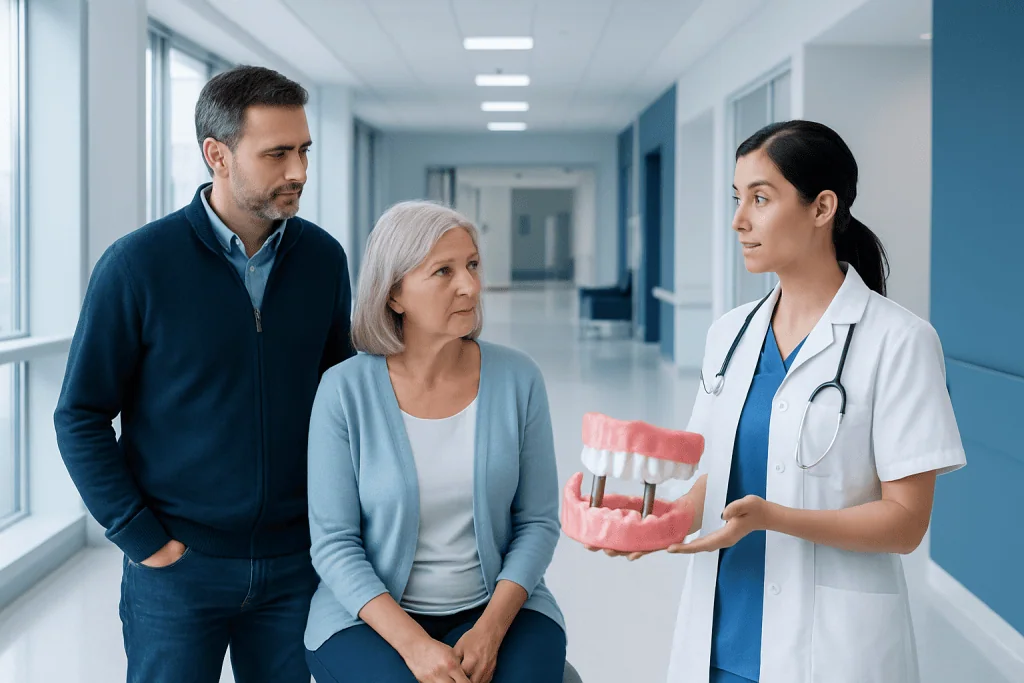
Denture implants use titanium implants in the jaw to support a removable or fixed denture. They are often more stable than traditional dentures and may improve chewing, speech, and comfort.
Key Takeaways
- Denture implants use titanium implants in the jaw to support a removable or fixed denture.
- They are often more stable than traditional dentures and may improve chewing, speech, and comfort.
- Not everyone is an immediate candidate; bone loss, gum disease, smoking, and some medical conditions can affect planning.
- Treatment is done in stages, often including imaging, implant placement, healing, and denture attachment.
- Recovery varies, but gum soreness improves within days while full implant healing usually takes months.
- Good oral hygiene and regular dental follow-up help reduce complications and support long-term success.
Denture implants are implant-supported tooth replacements that hold a full or partial denture more securely than traditional removable dentures. They can improve comfort, chewing, and confidence, but the best option depends on bone support, oral health, overall health, and treatment goals.
Overview: what denture implants are and how they work
Denture implants are artificial tooth replacements that anchor a denture to dental implants placed in the jawbone. In simple terms, they combine the coverage of a denture with the stability of implants, helping the denture stay in place more securely during speaking and eating. For many people, this means less slipping, less irritation, and a more natural day-to-day feel.
Unlike a conventional denture that rests mainly on the gums, implant-supported dentures transfer some biting forces to implants embedded in bone. Over time, the bone can grow around the implant surface in a process called osseointegration. This bond is what gives denture implants their support and can make them feel more stable than a denture held only by suction or adhesive.
Denture implants can be removable or fixed. A removable implant-supported denture snaps onto implants and is taken out for cleaning. A fixed full-arch prosthesis is attached by the dental team and is not removed at home. The best design depends on the number of missing teeth, the amount of available bone, bite pattern, oral hygiene ability, and personal preference. For readers exploring options, dental implants are the foundation of these systems.
Who may be a good candidate
A person may be a good candidate for denture implants if they have several missing teeth or a full arch of missing teeth and want a more stable alternative to traditional dentures. Many candidates are people whose dentures move while eating, cause sore spots, or no longer fit well because the jawbone and gums have changed over time.
Healthy gums and adequate jawbone are important, but they are not the only factors. A dentist or oral surgeon also considers smoking status, diabetes control, medications that affect bone healing, teeth grinding, and a person’s ability to keep the implants and denture clean. Some people with bone loss may still qualify after bone grafting or with a treatment plan designed around the available bone.
Candidacy also depends on active dental disease being brought under control. Untreated gum inflammation or infection can increase the risk of implant complications. Conditions such as gum disease and severe tooth loss often shape the treatment plan, because the amount of bone and the health of surrounding tissues influence whether implants can be placed immediately or in stages.
Age alone is not usually the deciding factor. What matters more is overall health, bone maturity, and whether the patient can safely undergo oral surgery and follow aftercare instructions. A careful assessment helps identify whether denture implants are the best choice or whether another restorative option may be more suitable.
Step by step: how the procedure is done

Treatment usually begins with a detailed consultation, dental examination, and imaging such as panoramic X-rays or 3D scans. These help the dental team assess bone volume, nerve position, sinus anatomy, and bite alignment. A customized plan is then made for the number of implants, the type of denture, and whether any extractions, grafting, or temporary teeth are needed first.
On the day of surgery, local anesthesia is commonly used, sometimes with sedation depending on the case and patient preference. The dentist or oral surgeon places the implants into the jawbone through small openings in the gum. In some cases, remaining teeth are removed and implants are placed in the same appointment. A temporary denture or temporary fixed prosthesis may be provided while healing progresses.
After implant placement, a healing period is usually needed to allow the implants to integrate with bone. This can take several weeks to months, depending on the bone quality, implant stability, and whether grafting was done. Once healing is adequate, connectors called abutments may be attached and impressions or digital scans are taken to create the final denture.
The final stage is fitting the implant-supported denture and checking comfort, bite, and speech. Some people receive a removable overdenture that clips onto attachments, while others receive a fixed full-arch bridge supported by implants. In selected cases, teams may discuss solutions related to All-on-4 dental implant treatment, which uses strategically placed implants to support a full arch.
Benefits and possible drawbacks
The main benefit of denture implants is improved stability. Many people find they can chew more confidently and speak more comfortably because the denture is less likely to shift. Implant support may also reduce the need for denture adhesive and can improve overall comfort by decreasing rubbing on the gums.
Another important advantage is support for the jawbone. After teeth are lost, the bone in the jaw can gradually shrink over time. Because implants transmit some chewing force to the bone, they may help limit this bone loss compared with a conventional denture. This can help preserve facial support and improve the long-term fit of the prosthesis.
There are also trade-offs to consider. Denture implants require surgery, healing time, and regular maintenance. Removable implant dentures still need daily cleaning and attachment parts may wear over time. Fixed options can feel more natural to some people, but they also require careful cleaning under the prosthesis and professional follow-up.
Results depend on planning, oral hygiene, and bone and gum health. Some people need additional procedures before implants can be placed safely. Others may choose alternatives if surgery is not appropriate. A balanced discussion of goals, expectations, and limitations helps determine whether implant-supported dentures are the most practical and lasting option.
Risks, complications, and what can affect success
Like any surgical treatment, denture implants carry risks. Common short-term effects include swelling, bruising, minor bleeding, and soreness in the gums or jaw. These are usually temporary. Less commonly, complications may include infection, delayed healing, numbness if a nearby nerve is affected, sinus issues in the upper jaw, or loosening of an implant before it fully bonds to bone.
Longer-term problems can involve gum inflammation around implants, wear of attachment parts, fracture or chipping of the denture, bite changes, or implant failure. Risk is higher when there is poor oral hygiene, uncontrolled diabetes, heavy smoking, severe teeth grinding, or untreated periodontal disease. Routine review visits are important because small issues can often be corrected before they become larger problems.
Success also depends on good planning. The number and position of implants, the quality of bone, and the design of the final prosthesis all matter. In some situations, bone grafting or sinus lifting may be needed first to create a more secure foundation. Patients considering broader restoration options may also discuss oral and dental health care as part of a complete treatment plan.
Most people do well when they are carefully selected and follow aftercare instructions. Still, no implant treatment is maintenance-free. A realistic understanding of the benefits and risks helps patients make informed choices with their dental team.
Recovery timeline and aftercare
Recovery from denture implant surgery happens in phases. In the first few days, it is normal to have mild to moderate discomfort, swelling, and tenderness. Many people return to light daily activities quickly, but strenuous exercise is usually postponed for a short time. Soft foods are commonly recommended while the surgical area settles.
During the first few weeks, the gums continue to heal and any temporary denture may need small adjustments for comfort. If implants are healing beneath the gums or under a temporary prosthesis, protecting them from too much biting pressure is important. Full bone healing around the implants usually takes longer than the initial soft-tissue recovery and may take several months.
After the final denture is attached, there is often another adjustment period. Speech may feel slightly different at first, and chewing is usually reintroduced gradually. Regular cleaning is essential. Patients are commonly advised to brush the denture and implants as instructed, clean between attachments or under the prosthesis, and attend scheduled follow-up visits for professional checks.
Long-term aftercare helps protect both the implants and the surrounding tissues. This includes not smoking if possible, managing dry mouth, treating clenching or grinding when present, and keeping conditions such as diabetes well controlled. For people needing comprehensive restoration, a dentist may also recommend related prosthetic dentistry services to optimize the final bite and appearance.
When to seek medical care
Patients should contact their dentist or surgeon if they have pain that is getting worse rather than better, significant swelling after the first few days, ongoing bleeding, fever, pus, or a bad taste that suggests infection. Difficulty swallowing, trouble breathing, or rapidly spreading swelling needs urgent medical attention.
Medical review is also important if the denture suddenly feels unstable, an implant seems loose, there is persistent numbness, or new sores do not heal. These problems do not always mean the implant has failed, but they should be checked promptly so the cause can be identified and treated early.
Anyone considering denture implants should seek professional advice before treatment if they have major bone loss, active gum disease, uncontrolled medical conditions, or take medicines that affect healing. Near the end of the care journey, some patients choose centers with multidisciplinary specialists; Acibadem International’s JCI-accredited hospitals diagnose and treat complex dental conditions for international patients.
Frequently asked questions
Are denture implants the same as regular dentures?
No. Regular dentures usually rest on the gums, while denture implants are supported by implants placed in the jawbone. This added support can make them feel more secure and reduce slipping.
How long does it take to get denture implants?
The timeline varies by case. Some people need only implant placement and healing, while others need tooth removal, grafting, or temporary teeth first. Initial healing happens over days to weeks, but full implant integration often takes several months.
Do denture implants hurt?
The procedure is usually done with local anesthesia, so patients should not feel sharp pain during implant placement. Afterward, soreness, swelling, and tenderness are common for a short time and are usually manageable with the aftercare plan given by the dental team.
Can denture implants be removed?
Some can and some cannot. Implant-supported overdentures are removable at home for cleaning, while fixed full-arch prostheses are removed only by a dental professional. The right choice depends on oral anatomy, hygiene needs, and patient preference.
What can make someone unsuitable for denture implants?
Active gum disease, inadequate jawbone, poor oral hygiene, uncontrolled diabetes, and smoking can all make treatment more difficult or increase risk. These factors do not always rule implants out, but they often need to be addressed before treatment.
How do patients clean denture implants?
Cleaning depends on whether the denture is removable or fixed. In general, patients need daily brushing of the denture and surrounding areas, cleaning around implant attachments, and regular professional checkups. The dental team gives specific instructions based on the prosthesis design.
References
- American Dental Association
- National Institute of Dental and Craniofacial Research
- Mayo Clinic
- Cleveland Clinic
- National Health Service
This article is for general information only and is not a substitute for professional medical advice. Please consult a qualified doctor about your individual situation.
Explore treatments in Turkey — costs, top hospitals & a free quote
JCI-accredited · board-certified surgeons · reply within 24h
Add us as a Preferred Source to see more of our trusted health content across Google Search, AI Overviews and Discover.