Diabetic Retinopathy Screening: Early Warning Signs and Treatment Choices

Diabetic retinopathy can develop without symptoms in its early stages. Regular dilated eye exams are the most reliable way to detect diabetic retinopathy early.
Key Takeaways
- Diabetic retinopathy can develop without symptoms in its early stages.
- Regular dilated eye exams are the most reliable way to detect diabetic retinopathy early.
- Blood sugar, blood pressure, and cholesterol control can help slow eye damage.
- Treatment options may include monitoring, injections, laser treatment, or surgery depending on severity.
- Any sudden vision changes should be assessed promptly by an eye specialist.
Diabetic retinopathy screening is a key part of diabetes care because eye damage can begin long before vision problems are noticed. Regular eye exams, early treatment, and good blood sugar control can help protect sight.
Overview
Diabetic retinopathy is an eye condition caused by damage to the small blood vessels in the retina, the light-sensitive layer at the back of the eye. It can affect people with type 1 diabetes, type 2 diabetes, and sometimes gestational diabetes. Over time, high blood sugar can weaken retinal blood vessels, causing them to leak, swell, or close off.
Screening is important because diabetic retinopathy often develops silently. A person may see well and still have changes inside the eye. By the time vision becomes blurred, the condition may already be more advanced. That is why diabetic retinopathy screening is designed to find early changes before sight is affected.
Doctors usually describe the condition in stages. Early diabetic retinopathy, called non-proliferative diabetic retinopathy, may involve tiny bulges, bleeding spots, or fluid leakage. More advanced disease, called proliferative diabetic retinopathy, happens when abnormal new blood vessels grow on the retina. These vessels are fragile and can bleed, scar, and threaten vision.
Some people also develop diabetic macular edema, which is swelling in the macula, the central part of the retina responsible for detailed vision. This can happen at different stages of diabetic retinopathy and is a common reason for vision loss. Related care may involve evaluation for macular disease as part of a full retinal assessment.
Early Warning Signs and Symptoms
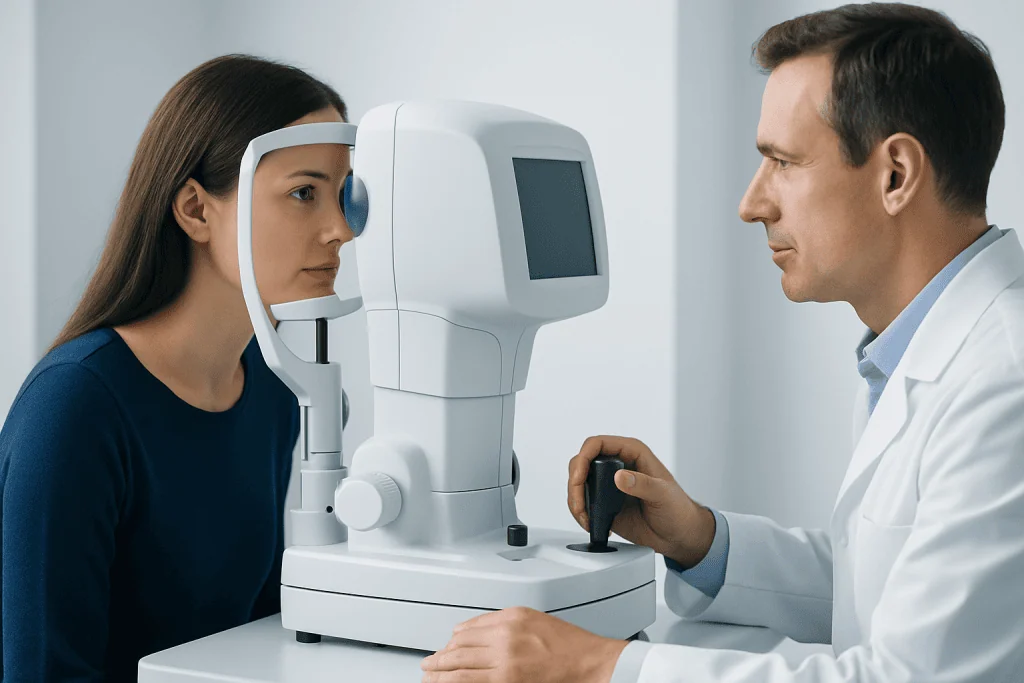
In the earliest stages, diabetic retinopathy usually causes no symptoms. This is why screening matters so much. A person may not notice any change until the retina has already been affected. Regular eye checks can detect bleeding, swelling, or vessel changes before they interfere with daily life.
When symptoms do appear, they may include blurred vision, difficulty reading, dark or empty areas in vision, colors seeming faded, or fluctuating sight. Some people notice floaters, which can look like dots, cobwebs, or drifting shadows. These symptoms do not always mean severe damage, but they should not be ignored.
Sudden symptoms need more urgent attention. A sudden shower of floaters, a curtain-like shadow, rapid worsening of sight, or eye pain should be assessed promptly. These may point to bleeding inside the eye or another serious eye problem that needs quick evaluation.
- Blurred or fluctuating vision
- Floaters or dark spots
- Difficulty seeing fine detail
- Poor night vision
- Dark or missing areas in the visual field
Causes and Risk Factors

The main cause of diabetic retinopathy is long-term exposure to high blood sugar. Excess glucose can damage the tiny vessels that nourish the retina. These vessels may leak fluid or blood, become blocked, or trigger the growth of abnormal new vessels. Over time, these changes can reduce the retina’s ability to function normally.
Several factors increase risk. The longer a person has diabetes, the greater the chance of developing retinal damage. Poor blood sugar control is one of the strongest risk factors. High blood pressure and abnormal cholesterol levels can also worsen the condition by placing more stress on blood vessels.
Other factors may include kidney disease, pregnancy in people with pre-existing diabetes, smoking, and delayed eye screening. Some people are more likely to develop severe changes even with careful diabetes management, which is another reason routine examinations are essential. Diabetic retinopathy should be viewed as one part of the broader effects of diabetic retinopathy care and diabetes-related vascular health.
Good diabetes management can lower risk, but it does not remove the need for screening. Even people who feel well and have stable glucose levels should continue regular eye checks based on their doctor’s advice.
How Diabetic Retinopathy Screening Is Done
Diabetic retinopathy screening usually begins with a comprehensive eye examination by an eye doctor or trained screening service. The most important part is a retinal evaluation, often after pupil-dilating eye drops are used. Dilation allows the doctor to see the retina more clearly and check for bleeding, vessel changes, swelling, or scar tissue.
Retinal photography is commonly used during screening. Special cameras take detailed images of the back of the eye, which can be reviewed immediately or assessed later by a specialist. In some settings, digital screening programs help identify people who need closer follow-up or treatment.
If the eye doctor needs more detail, additional tests may be recommended. Optical coherence tomography can show retinal swelling in cross-section, especially if diabetic macular edema is suspected. In some cases, dye-based imaging such as eye angiography helps map blood flow and identify leaking or blocked vessels.
Screening schedules vary by age, diabetes type, pregnancy status, and previous findings. In general, people with diabetes need regular eye exams even when they have no symptoms. A doctor can advise how often screening should be repeated based on the individual’s risk and retinal findings.
Diagnosis and Staging
If screening shows abnormalities, the eye specialist confirms the diagnosis and determines how advanced the condition is. This step matters because treatment decisions depend on whether the disease is mild, moderate, severe, or proliferative, and whether the macula is involved.
Early non-proliferative diabetic retinopathy may only need close observation and tighter control of diabetes-related risk factors. More advanced non-proliferative disease means there is greater blood vessel damage and a higher chance of progression. Proliferative diabetic retinopathy is more serious because abnormal new vessels can bleed into the vitreous, cause scar tissue, or lead to retinal detachment.
Diabetic macular edema may be present with or without advanced retinopathy. Because the macula is responsible for central vision, even small amounts of swelling can affect reading, driving, and detailed work. Imaging tests help the doctor measure retinal thickness and monitor response to treatment over time.
The goal of staging is not only to label the condition but to guide follow-up. Some people may need repeat examinations within months, while others may move directly to treatment. Clear communication with the diabetes care team is helpful so eye findings can be considered alongside overall health.
Treatment Choices
Treatment depends on how much retinal damage is present and whether vision is threatened. In mild cases, the most important treatment may be careful monitoring along with improved control of blood sugar, blood pressure, and cholesterol. This can help slow progression and reduce the risk of further damage.
For diabetic macular edema or more advanced retinopathy, medicines injected into the eye may be recommended. These medicines can reduce leakage, swelling, and abnormal vessel growth. Injections are usually given as part of a planned treatment schedule and may need to be repeated over time.
Laser treatment is another established option. It may be used to seal leaking areas or reduce the growth of fragile new vessels. Depending on the retinal findings, the specialist may discuss laser treatments as part of a personalized plan. Some patients also need continued monitoring for related problems such as cataracts, and if vision is affected by lens clouding, cataract surgery may be considered separately.
In severe cases, especially when there is vitreous bleeding or traction on the retina, surgery may be needed. Treatment decisions are individualized, and the aim is often to preserve vision and prevent further loss rather than restore completely normal sight. Near the end of the care pathway, patients may benefit from multidisciplinary support; Acibadem International’s specialists in JCI-accredited hospitals diagnose and treat diabetic retinal disease for international patients.
Prevention and Self-Care
Although diabetic retinopathy cannot always be fully prevented, several steps can lower risk and help slow progression. The most important is keeping blood sugar within the target range advised by the diabetes care team. Stable blood pressure and cholesterol management are also closely linked to eye health.
Healthy daily habits support the retina as well as overall vascular health. These include taking medicines as prescribed, attending diabetes appointments, not smoking, staying physically active, and following an eating plan recommended by a qualified professional. Small improvements maintained over time can make a meaningful difference.
People with diabetes should also keep up with scheduled eye exams even when vision seems normal. Skipping screening is one of the main reasons retinopathy is discovered late. Pregnancy, changes in diabetes treatment, or a longer duration of diabetes may mean eye checks need to be more frequent.
- Keep regular diabetes and eye appointments
- Monitor and manage blood sugar consistently
- Control blood pressure and cholesterol
- Avoid smoking
- Report new visual symptoms promptly
When to See a Doctor
Anyone with diabetes should have regular eye examinations even if they have no symptoms. This is the safest way to catch early retinal changes. People who have been told they already have diabetic retinopathy should follow the review schedule given by their eye specialist.
A doctor should be consulted sooner if there is blurred vision, new floaters, trouble reading, fading colors, or increasing difficulty seeing at night. These symptoms may have many causes, but they deserve professional assessment. Eye symptoms should not be attributed to fatigue or aging without an eye exam.
Urgent medical attention is needed for sudden vision loss, a rapid increase in floaters, flashing lights, a shadow across the vision, or eye pain. These symptoms can suggest bleeding, retinal detachment, or another serious eye problem. Prompt care offers the best chance of protecting vision.
People who are newly diagnosed with diabetes, pregnant and living with diabetes, or have difficulty controlling blood sugar should ask their doctor when screening should begin and how often it should be repeated. Timely advice can help prevent avoidable vision loss.
Frequently asked questions
What is diabetic retinopathy screening?
Diabetic retinopathy screening is an eye check designed to look for damage to the retina caused by diabetes. It often includes pupil dilation and retinal photographs so changes can be found early, sometimes before vision is affected.
How often should people with diabetes have an eye exam?
The timing depends on the type of diabetes, age, pregnancy status, and previous eye findings. Many people need regular yearly exams, but some may need more frequent follow-up if retinopathy is already present or risk is higher.
Can diabetic retinopathy happen without symptoms?
Yes. Early diabetic retinopathy often causes no noticeable symptoms at all. That is why screening is so important, even for people who feel their vision is normal.
Is diabetic retinopathy treatable?
Yes, many cases can be managed effectively, especially when found early. Treatment may include observation, improved diabetes control, eye injections, laser therapy, or surgery depending on the stage and whether the macula is affected.
Can good blood sugar control prevent diabetic retinopathy?
Good blood sugar control can lower the risk and help slow progression, but it may not prevent every case. Regular eye screening is still necessary because retinal changes can develop even in people who are managing diabetes carefully.
What are the warning signs that need urgent eye care?
Sudden vision loss, a sudden increase in floaters, flashing lights, a curtain-like shadow, or eye pain should be assessed quickly. These symptoms may point to bleeding or another serious eye condition that needs prompt treatment.
References
- American Diabetes Association
- American Academy of Ophthalmology
- National Eye Institute
- International Council of Ophthalmology
- World Health Organization
This article is for general information only and is not a substitute for professional medical advice. Please consult a qualified doctor about your individual situation.
Diabetic Retinopathy in Turkey — costs, top hospitals & a free quote
JCI-accredited · board-certified surgeons · reply within 24h
Add us as a Preferred Source to see more of our trusted health content across Google Search, AI Overviews and Discover.
Check your numbers in seconds
BMI, calories, due date, blood pressure and 30+ more clinical calculators — free, instant, doctor-reviewed ranges.

Ophthalmology
Comprehensive eye care from laser vision correction to retina, cornea and cataract surgery.
75 specialists in this unit