

Diabetic Socks — Explained by Medical Evidence, Not Myths

Diabetic socks are made to lower friction, improve comfort, and help keep feet dry. They may be helpful for people with diabetes, especially those with neuropathy, sensitive skin, or circulation concerns.
Key Takeaways
- Diabetic socks are made to lower friction, improve comfort, and help keep feet dry.
- They may be helpful for people with diabetes, especially those with neuropathy, sensitive skin, or circulation concerns.
- Diabetic socks are not a treatment for foot ulcers, infections, or poor circulation and cannot replace medical evaluation.
- Seamless design, gentle tops, moisture-wicking fabric, and a proper fit are the main features to look for.
- Daily foot inspection, well-fitting shoes, and professional care remain the foundation of diabetes foot health.
Diabetic socks are specially designed socks that help reduce friction, pressure, and moisture on the feet. They can support foot protection in people with diabetes, but they do not replace regular foot checks, proper footwear, or medical care when foot problems are present.
What diabetic socks are and what they do
Diabetic socks are socks designed to reduce common stresses on the feet, especially pressure, rubbing, and excess moisture. They are usually made without bulky seams, with soft fibers and a non-restrictive cuff, to help protect skin that may already be vulnerable. For many people, the main purpose of diabetic socks is comfort and prevention, not treatment.
This matters because diabetes can affect the feet in several ways. Over time, some people develop nerve damage that reduces sensation, so a blister, pressure spot, or small cut may go unnoticed. Others have dry skin, swelling, or reduced circulation. A sock that fits smoothly and keeps the foot drier may help lower the chance of minor skin damage that could otherwise worsen.
At the same time, diabetic socks are sometimes overpromoted. Medical evidence supports good foot protection and moisture control, but no sock can guarantee prevention of ulcers or infections. Their role is best understood as one part of a wider foot-care plan that also includes glucose management, suitable footwear, daily skin checks, and prompt medical attention for any wound or color change.
Who may benefit most from diabetic socks

Not every person with diabetes needs a special sock, but some groups may benefit more than others. People with foot sensitivity, calluses, dry skin, a history of blisters, or mild swelling may find them more comfortable than standard socks. They can also be useful for people who spend long hours on their feet or who notice rubbing from regular sock seams.
They are especially relevant for people with diabetic neuropathy, because reduced sensation can make it harder to notice friction or pressure early. In that setting, choosing socks that limit irritation is a practical preventive step. Readers looking for broader information about diabetes may also find it helpful to learn how blood sugar control affects skin, nerves, and circulation over time.
Some people with circulation problems are told to avoid tight garments around the lower leg. Diabetic socks are often made with a gentle top band to reduce constriction. However, if a person has significant swelling, known peripheral artery disease, deformities, or previous foot ulcers, socks alone are not enough. Those individuals often need personalized advice about footwear and foot protection from a qualified clinician.
Features that matter more than marketing claims
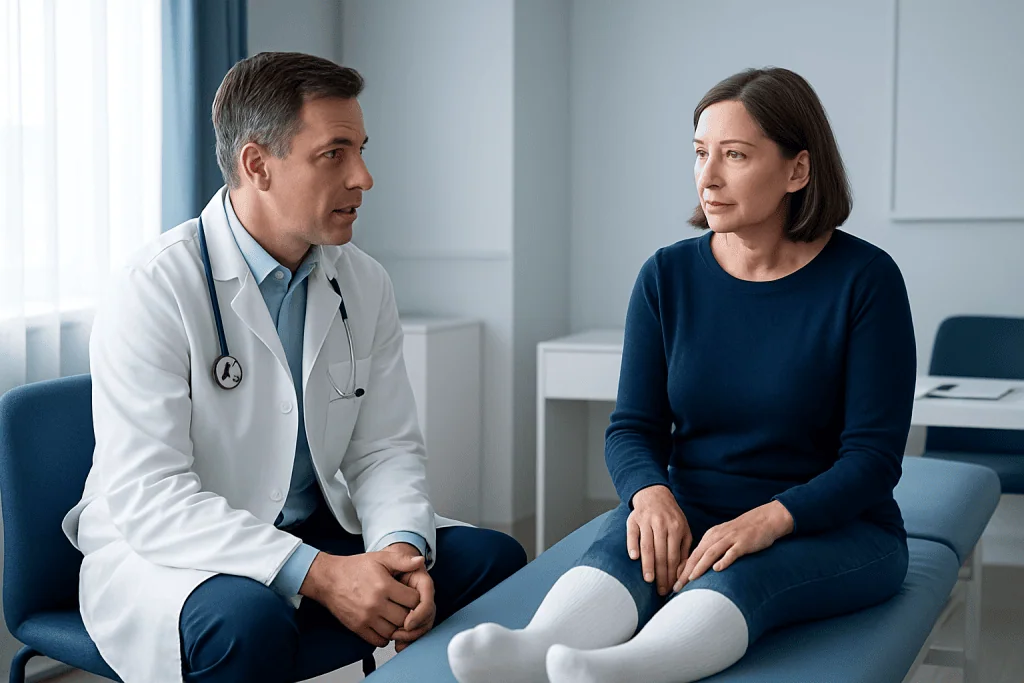
The most useful diabetic socks usually share a few evidence-based features. A seamless or low-profile toe area can reduce rubbing. Moisture-wicking materials can help keep skin drier, which may lower the risk of skin breakdown and fungal overgrowth. Soft padding in selected areas may improve comfort, especially for people who walk a lot or have pressure points.
Another important feature is a non-binding cuff. The top of the sock should stay in place without leaving deep marks or feeling tight. A proper fit is just as important as the material: a sock that bunches, slides, or compresses the toes can create pressure rather than prevent it. In general, the sock should feel smooth against the skin and fit the foot shape without excess fabric.
Common marketing claims deserve a balanced view. Antibacterial, copper-infused, or heavily “circulation-boosting” labels are not necessarily supported by strong clinical proof. What usually matters most is simple design quality: fit, softness, moisture control, and lack of friction. If foot shape has changed because of bunions, hammertoes, or swelling, properly fitted shoes may be even more important than the sock itself.
- Look for a smooth toe area and minimal internal seams.
- Choose breathable, moisture-wicking fabric.
- Prefer a gentle cuff rather than a tight elastic band.
- Select the right size to avoid bunching or compression.
- Replace worn socks that have thinning fabric or rough areas.
What diabetic socks cannot do
Diabetic socks can help protect the skin, but they do not treat the underlying medical problems that put feet at risk. They do not reverse nerve damage, restore circulation, heal infections, or close existing ulcers. If a person already has an open sore, blackened skin, drainage, increasing redness, or pain, a sock is not the solution and medical care should not be delayed.
They also cannot compensate for poor shoe fit. Tight, narrow, or high-pressure shoes can still cause damage even when a person wears high-quality socks. In many cases, the most effective approach is to combine careful sock choice with supportive footwear and regular foot inspection. When specialists assess foot risk, they usually consider the whole picture rather than one item alone.
For people with established diabetic foot complications, treatment may involve wound care, off-loading devices, infection management, or vascular assessment. Depending on the problem, care may connect with services such as vascular surgery or multidisciplinary endocrinology and metabolic disease care. If symptoms suggest nerve injury, information about diabetic neuropathy can also help explain why foot protection becomes so important.
How to choose and use diabetic socks safely
Choosing diabetic socks starts with fit and routine. They should be clean, dry, and comfortable from the moment they are put on. The fabric should not wrinkle inside the shoe, and the toe area should not crowd the toes. For most people, changing socks daily is appropriate, and more often may be needed if the feet sweat heavily or become damp.
Before putting socks on, it is wise to inspect the feet. A person can look for redness, blisters, cracks, swelling, color changes, nail problems, or areas that feel unusually warm or cool. If seeing the bottom of the feet is difficult, a mirror or help from a family member can be useful. Socks should never be used to hide a wound or to avoid checking a problem area.
It is also sensible to pair socks with shoes that fit well, have enough room in the toe box, and do not create pressure points. Walking in socks alone, especially on rough or hot surfaces, may still lead to injury. In people with high-risk feet, clinicians may recommend custom inserts or specialized footwear. When needed, this can be part of broader diabetes treatment planning focused on long-term foot protection and overall metabolic health.
Everyday foot care that matters more than any sock
Evidence-based foot care for diabetes goes beyond what a person wears. Daily foot inspection, regular washing and careful drying, moisturizing dry skin, trimming nails safely, and avoiding walking barefoot are all standard protective habits. Good blood sugar management is also important because it supports nerve, skin, and blood vessel health over time.
People should also pay attention to changes in sensation. Burning, tingling, numbness, or a feeling of walking on cotton can suggest neuropathy. Cold feet, pale or bluish skin, or wounds that heal slowly may point to circulation problems. These changes deserve medical discussion, even if they seem mild at first.
Routine professional foot examinations are valuable, particularly for anyone with longstanding diabetes, neuropathy, deformity, previous ulcers, or reduced pulses. Clinicians may check sensation, blood flow, skin condition, and shoe wear patterns. Near the end of the care pathway, some patients may benefit from evaluation in centers where multidisciplinary specialists coordinate diabetes, wound, and vascular care. Acibadem International’s JCI-accredited hospitals provide diagnosis and treatment for international patients when this kind of coordinated assessment is needed.
When to seek medical care
Medical care should be sought promptly if there is an open sore, blister that does not improve, redness that spreads, swelling, pus, fever, a bad odor, or skin that turns blue, purple, or black. These signs may indicate infection, poor circulation, or tissue injury that needs timely evaluation. Waiting to see whether a sock or shoe change will solve the issue is not recommended in these situations.
A doctor should also be consulted if there is new numbness, burning pain, repeated pressure marks, shoe rubbing, nail injury, or a foot shape change such as worsening bunion or toe deformity. Even small problems can become more serious when sensation is reduced. Early assessment often makes treatment simpler and helps prevent complications.
For urgent concerns, clinicians may recommend foot imaging, wound care, blood tests, circulation assessment, or referral to relevant specialists. In some cases, management may involve diabetic foot treatment to protect healing tissue and address the underlying cause. The safest approach is to ask a qualified doctor when symptoms are new, persistent, or worsening.
Frequently asked questions
Do diabetic socks really help?
They can help by reducing friction, pressure, and moisture on the feet, which may support skin protection. They are most useful as part of an overall foot-care routine, not as a stand-alone solution.
Does every person with diabetes need diabetic socks?
Not necessarily. Some people do well with any well-fitting, soft, moisture-wicking sock. Diabetic socks may be especially helpful for people with neuropathy, sensitive skin, swelling, or a history of foot irritation.
Can diabetic socks improve circulation?
They do not treat poor circulation or increase blood flow in a medical sense. Their main benefit is avoiding tight bands and reducing pressure that might make legs or feet feel uncomfortable.
Should diabetic socks be tight or loose?
They should fit comfortably without bunching or squeezing. A gentle, secure fit is ideal, while tight compression around the ankle or calf may be unhelpful unless a doctor specifically recommends a compression garment.
Can diabetic socks prevent foot ulcers?
They may help lower some skin risks by limiting rubbing and moisture, but they cannot guarantee ulcer prevention. Foot ulcers are influenced by many factors, including neuropathy, circulation, shoe fit, deformity, and blood sugar control.
What is the difference between diabetic socks and compression socks?
Diabetic socks are designed mainly to reduce friction and avoid constriction. Compression socks apply graduated pressure and are used for specific circulation or swelling conditions, so they should not be used without appropriate medical advice in people with diabetes.
References
- American Diabetes Association
- Centers for Disease Control and Prevention
- National Institute of Diabetes and Digestive and Kidney Diseases
- International Working Group on the Diabetic Foot
- National Health Service
This article is for general information only and is not a substitute for professional medical advice. Please consult a qualified doctor about your individual situation.
Explore treatments in Turkey — costs, top hospitals & a free quote
JCI-accredited · board-certified surgeons · reply within 24h
Add us as a Preferred Source to see more of our trusted health content across Google Search, AI Overviews and Discover.

More from the Health Library



Related Specialists

Prof. Dr. Dilaver Özturan
Otorhinolaryngology
Assoc. Prof. Dr. Ebru Sevinç Ok
Nephrology
Dr. Macit Dokur
Inpatient Clinic Physicians Clinical Service
Dyt. Zeynep Acar
Nutrition & Diet