Diarrhea of newborn: A Complete Medical Guide for Patients

Many newborns have loose stools normally, especially breastfed babies, so diagnosis depends on change from the baby's usual pattern. True diarrhea of newborn may be caused by infection, feeding intolerance, allergy, or less commonly an underlying intestinal or metabolic condition.
Key Takeaways
- Many newborns have loose stools normally, especially breastfed babies, so diagnosis depends on change from the baby's usual pattern.
- True diarrhea of newborn may be caused by infection, feeding intolerance, allergy, or less commonly an underlying intestinal or metabolic condition.
- The main concern is dehydration, which can develop quickly in very young babies.
- Urgent medical care is needed for fever, blood in stool, repeated vomiting, poor feeding, reduced urination, or unusual sleepiness.
- Parents should not give over-the-counter anti-diarrheal medicines to a newborn unless a doctor specifically advises it.
Diarrhea of newborn refers to stools that are unusually watery, frequent, or clearly different from a baby's normal pattern. Because normal newborn stools can already be soft and frequent, the most important step is recognizing changes such as poor feeding, fewer wet diapers, lethargy, or signs of dehydration and seeking medical advice promptly.
Overview: what diarrhea of newborn means
Diarrhea of newborn means a newborn baby is passing stools that are more watery, more frequent, or more forceful than usual for that individual infant. This distinction matters because healthy newborns often pass soft or loose stools many times a day, particularly in the first weeks of life. Breastfed babies may have yellow, seedy, runny stools that are completely normal.
The key question is not simply whether the stool looks loose, but whether there has been a noticeable change from the baby’s usual pattern. A baby who suddenly has much more watery stools, feeds poorly, seems less alert, or has fewer wet diapers may have true diarrhea and should be assessed by a clinician. In newborns, even a short illness can lead to dehydration more quickly than in older children.
Diarrhea in this age group is a symptom rather than a diagnosis. It can happen with viral or bacterial infections, feeding problems, food protein intolerance, medication effects, or less commonly with congenital conditions affecting the gut. Care focuses on identifying the cause, checking hydration, and treating any urgent problem early.
How to tell normal newborn stool from diarrhea
Newborn stool appearance varies widely. In the first days after birth, babies pass meconium, which is dark and sticky. As feeding becomes established, stools often turn greenish, then yellow or mustard-colored. Breastfed babies commonly pass loose, seedy stools after many feeds, while formula-fed babies may have somewhat firmer stools.
Diarrhea is more likely when stools become suddenly much more watery than usual, soak into the diaper like urine, occur far more often than the baby’s established pattern, or are accompanied by other symptoms. Mucus can sometimes appear with irritation or infection. Blood in the stool is never something to ignore and needs prompt medical review.
Parents and caregivers often find it helpful to focus on the whole baby rather than the diaper alone. Warning clues include poor sucking, fewer wet diapers, sunken eyes, a dry mouth, less interest in feeding, a weak cry, unusual fussiness, or marked sleepiness. If there is uncertainty, a pediatric clinician can help determine whether the stool pattern is still within a normal range.
Symptoms and warning signs to watch for
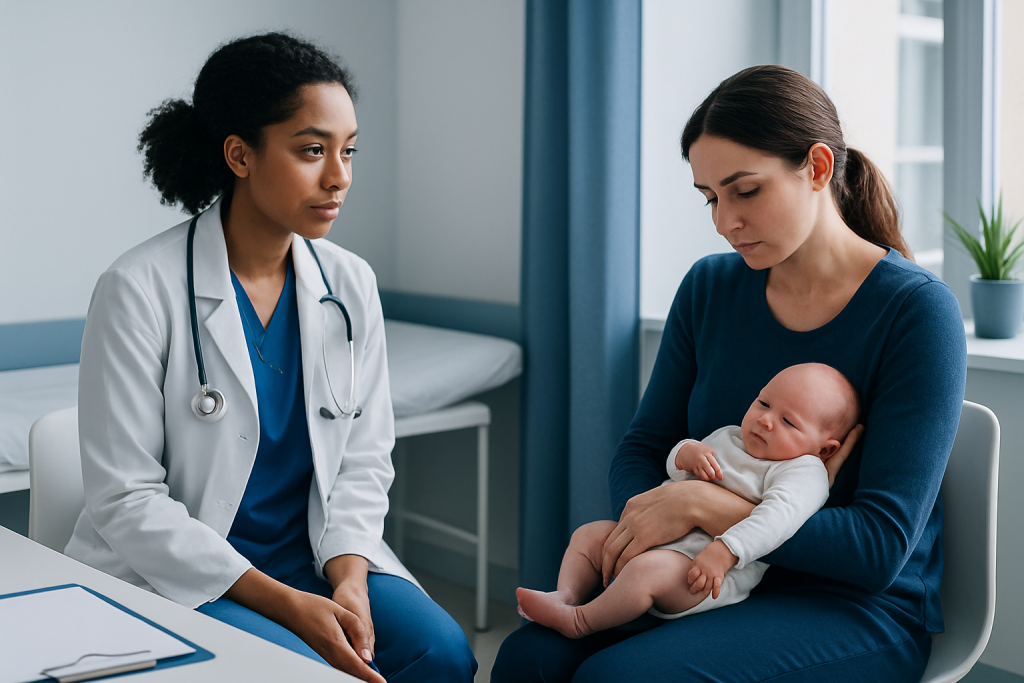
The most obvious symptom is watery stool, but diarrhea of newborn can also come with several other signs. Some babies become irritable, feed less well, or have mild abdominal bloating. Others may develop vomiting, fever, or a change in skin color and alertness depending on the cause.
The most important complication is dehydration. Newborns have small fluid reserves, so fluid loss from stool or vomiting can become serious quickly. Signs that may suggest dehydration include fewer wet diapers than expected, a dry mouth, no tears when crying, cool hands or feet, a sunken soft spot on the head, unusual drowsiness, or breathing faster than usual.
Some symptoms suggest that urgent evaluation is needed rather than home observation. These include blood in the stool, green vomit, repeated vomiting, fever in a newborn, poor feeding, a swollen abdomen, breathing difficulty, or a baby who is hard to wake. In some cases, diarrhea may occur alongside other digestive disorders such as gastroenteritis, but in very young infants the exact cause should not be assumed without medical assessment.
- Watery stools much more frequent than normal
- Reduced wet diapers or signs of dehydration
- Vomiting or refusal to feed
- Fever, blood, or mucus in stool
- Lethargy or unusual irritability
Causes and risk factors
Infections are a common cause of newborn diarrhea, although the exact source varies. Viruses can irritate the intestines and lead to watery stools, while bacterial infections may cause more severe illness and may be associated with fever, poor feeding, or blood in the stool. Because newborn immune systems are still developing, even a seemingly mild infection may need prompt medical attention.
Feeding-related causes are also important. Some babies react to cow’s milk protein in formula or to proteins passing into breast milk from the maternal diet. Others may have temporary trouble digesting certain components of feeds. Diarrhea can also appear after antibiotics, which may disturb normal gut bacteria. Less commonly, the cause may be a congenital intestinal problem, a metabolic disorder, or a condition affecting nutrient absorption.
Risk factors include prematurity, low birth weight, recent hospitalization, exposure to sick contacts, poor feeding, or an underlying medical condition. Babies who have persistent diarrhea, poor weight gain, or ongoing vomiting may need evaluation for rarer digestive conditions. If symptoms are prolonged or accompanied by trouble gaining weight, clinicians may consider broader pediatric digestive assessment, including review by teams experienced in inflammatory bowel conditions when clinically relevant, though this is uncommon in the newborn period.
How doctors diagnose diarrhea in a newborn
Diagnosis begins with a detailed history. The doctor usually asks when the stool pattern changed, how the stools look, how often the baby feeds, whether there has been vomiting or fever, and how many wet diapers the baby has had. Birth history, feeding method, medications, family history, and any recent illness exposures can provide important clues.
A physical examination helps assess hydration and overall stability. The clinician checks weight, temperature, alertness, skin condition, mouth moisture, breathing, and the abdomen. In many cases, the exam is enough to decide whether the baby can be monitored closely, needs tests, or requires hospital care for fluids and observation.
Tests are used selectively rather than routinely. Depending on the symptoms, these may include blood tests, stool testing, or imaging if an intestinal problem is suspected. If dehydration is significant, treatment may be started right away. When specialized evaluation is needed, pediatric teams may use laboratory analysis and gastroenterology assessment to look for infection, malabsorption, or structural causes.
Treatment options and supportive care
Treatment depends on the cause and on how well the baby is hydrated. The first priority is usually maintaining fluid balance and continuing safe feeding whenever possible. Breastfeeding is often encouraged to continue, and formula-fed babies may need individualized advice from a clinician. Parents should not stop feeds or switch formulas repeatedly without medical guidance, because this can make assessment more difficult.
If the baby shows signs of dehydration, a doctor may recommend oral rehydration in carefully guided amounts or may advise hospital care for intravenous fluids. If infection is suspected, treatment depends on the organism and the baby’s age and condition. Antibiotics are not used for every case of diarrhea and should only be given when prescribed for a clear reason.
Persistent or severe symptoms may require more advanced care, including monitoring, imaging, or specialist consultation. In uncommon situations where an anatomical or serious intestinal issue is suspected, doctors may involve teams experienced in pediatric surgery or further neonatal intensive care support. Acibadem International’s multidisciplinary specialists and JCI-accredited hospitals diagnose and treat digestive problems in international patients when this level of evaluation is needed.
Prevention and safe care at home
Not every cause of diarrhea can be prevented, but simple infection-control measures help reduce risk. Caregivers should wash hands carefully before handling the baby, after diaper changes, and before preparing feeds. Bottles, nipples, breast pump parts, and any feeding equipment should be cleaned as recommended. Formula should always be prepared exactly as instructed.
It is also important to protect feeding routines. Babies should continue to feed regularly unless a doctor advises otherwise. Parents should keep track of the number of stools, wet diapers, feeds, and any vomiting or fever, since this information is very helpful to a clinician. A brief note or phone photo of stool changes can sometimes make discussions with the doctor easier.
Home treatment should stay simple and safe. Over-the-counter anti-diarrheal medicines are not appropriate for newborns unless a doctor specifically prescribes them. Herbal remedies, diluted juices, and extra water should also be avoided unless advised by a healthcare professional, because newborns have very specific fluid and electrolyte needs.
When to seek medical care
Parents should seek medical advice promptly if they think a newborn has true diarrhea, especially if the baby is younger than 28 days. Newborns can become dehydrated or unwell quickly, and symptoms that seem mild at first may change over a short time. It is always reasonable to call a pediatrician when there is uncertainty.
Urgent medical care is needed if the baby has a fever, poor feeding, repeated vomiting, fewer wet diapers, unusual sleepiness, blood in the stool, a swollen belly, breathing difficulty, or a weak or high-pitched cry. Emergency evaluation is also important if the baby is hard to wake, looks limp, or shows signs of severe dehydration.
Parents should trust their instincts. If a baby seems different, is not acting normally, or is getting worse rather than better, professional assessment is the safest step. Early evaluation can identify simple feeding issues, but it can also detect infections or other conditions that need prompt treatment.
Frequently asked questions
Is loose stool always diarrhea in a newborn?
No. Many healthy newborns, especially breastfed babies, normally have soft, loose, or seedy stools several times a day. Diarrhea is more likely when the stool becomes much more watery or frequent than the baby's usual pattern and is accompanied by symptoms such as poor feeding or fewer wet diapers.
What is the biggest risk of diarrhea of newborn?
The main concern is dehydration. Newborns lose fluid quickly and have limited reserves, so even a short period of watery stools or vomiting can affect them more than older children. This is why medical advice should be sought early.
Can breastfeeding continue if a newborn has diarrhea?
In many cases, yes. Breastfeeding is often continued because it provides fluids and nutrition and may be easier for the baby to tolerate. However, the baby's doctor should guide care, especially if feeding is poor or dehydration is suspected.
Should parents give water or anti-diarrheal medicine to a newborn?
No, not unless a doctor specifically recommends it. Newborns have unique fluid and electrolyte needs, and giving plain water or non-prescribed medicines can be unsafe. Medical guidance is important for any baby this young with suspected diarrhea.
When is diarrhea in a newborn an emergency?
It becomes urgent if the baby has fever, blood in the stool, repeated vomiting, signs of dehydration, poor feeding, a swollen abdomen, trouble breathing, or unusual sleepiness. A baby who is difficult to wake or seems weak should be assessed immediately.
What tests might a doctor do for newborn diarrhea?
The doctor may first rely on history and physical examination to assess severity and hydration. If needed, blood tests, stool tests, or imaging may be used to look for infection, dehydration, or an intestinal problem. The choice of tests depends on the baby's age, symptoms, and overall condition.
References
- American Academy of Pediatrics
- Centers for Disease Control and Prevention
- World Health Organization
- National Institute of Diabetes and Digestive and Kidney Diseases
- Merck Manual Professional Edition
This article is for general information only and is not a substitute for professional medical advice. Please consult a qualified doctor about your individual situation.
Persistent digestive symptoms? Get evaluated in Turkey
JCI-accredited · board-certified surgeons · reply within 24h
Add us as a Preferred Source to see more of our trusted health content across Google Search, AI Overviews and Discover.