Disc replacement surgery in Turkey: Hospitals, Safety & What to Expect

Disc replacement removes a damaged spinal disc and replaces it with a mobile artificial implant designed to preserve movement at that level. It is most commonly performed in the neck; lumbar disc replacement is appropriate for a smaller, carefully assessed group of patients.
Key Takeaways
- Disc replacement removes a damaged spinal disc and replaces it with a mobile artificial implant designed to preserve movement at that level.
- It is most commonly performed in the neck; lumbar disc replacement is appropriate for a smaller, carefully assessed group of patients.
- Not everyone with back or neck pain is a candidate, particularly when there is spinal instability, significant arthritis, osteoporosis, or disease affecting several spinal levels.
- Assessment should include symptoms, a neurological examination, imaging, medical history, and discussion of non-surgical treatments already tried.
- Recovery requires early guided movement, follow-up, rehabilitation when advised, and individual planning before international travel.
- All surgery has risks, so patients should discuss expected benefits, alternatives, implant-related issues, and personal risk factors with a qualified spine surgeon.
Disc replacement surgery in Turkey can be considered for carefully selected people whose pain or nerve symptoms from a damaged spinal disc have not improved with appropriate non-surgical care. A safe experience depends on an accurate diagnosis, suitable implant selection, experienced spine specialists, accredited hospital standards, and a well-planned recovery and travel process.
Overview: Disc Replacement Surgery in Turkey
Disc replacement surgery in Turkey is a spinal procedure in which a surgeon removes a painful or damaged intervertebral disc and inserts an artificial disc. The aim is to relieve pain caused by a specific disc problem while maintaining movement at the treated spinal level. It may be considered when symptoms remain significant despite suitable non-surgical treatment and imaging findings match the person’s symptoms.
Artificial disc replacement is usually performed in the cervical spine (neck), where it may be used for disc-related nerve compression causing arm pain, numbness, weakness, or certain types of spinal cord compression. Lumbar (lower-back) disc replacement is less common and requires especially careful selection. The procedure is different from spinal fusion, which joins two vertebrae together and limits movement at the fused level.
For international patients, choosing where to have surgery should involve more than the destination. Important considerations include the surgeon’s assessment, hospital accreditation and infection-prevention systems, implant availability, clear communication, coordinated records, rehabilitation planning, and follow-up after returning home. Disc replacement surgery information can help patients understand the procedure and prepare questions for a spine consultation.
How Artificial Disc Replacement Works
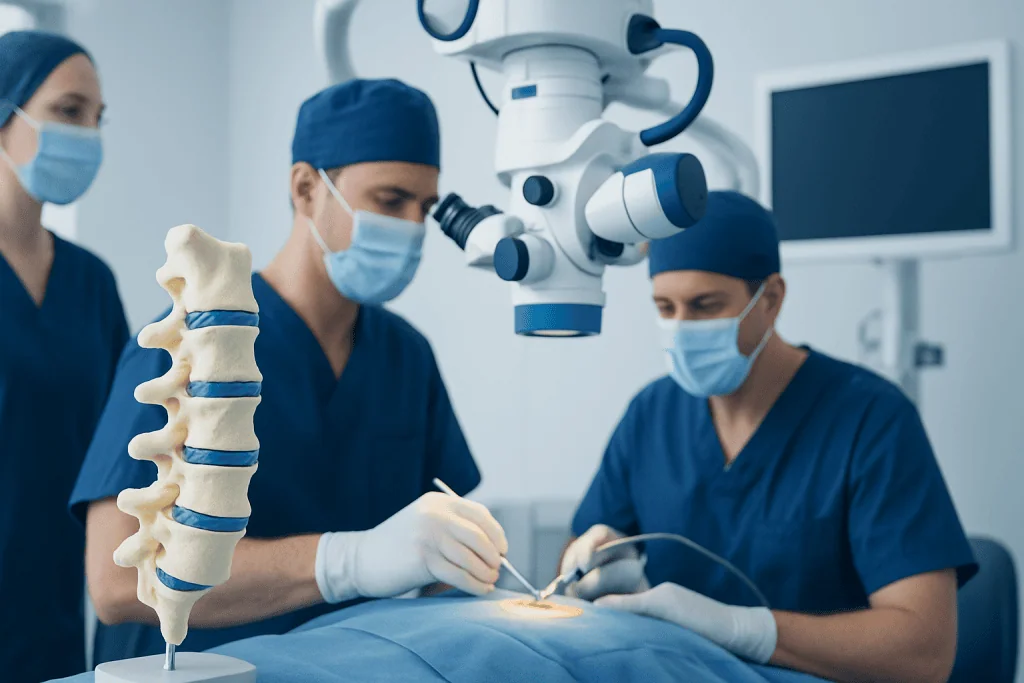
The spine is made of vertebrae separated by discs. These discs act as cushions and allow controlled motion. With age, injury, or degeneration, a disc can lose height or develop tears and bulges. In some people, this can irritate or compress nearby nerves, leading to neck or back pain and symptoms in an arm or leg.
During disc replacement, the surgeon reaches the affected spinal level, removes the damaged disc and any tissue pressing on the nerves or spinal cord, and prepares the space between the vertebrae. An artificial disc is then positioned to restore spacing and allow controlled motion. Implants vary in design and materials, but they are selected according to the level being treated and the patient’s anatomy.
Disc replacement is not simply a general treatment for back or neck pain. Its potential benefit depends on confirming that one disc level is the principal source of symptoms. Other causes, including facet joint arthritis, spinal instability, marked narrowing of the spinal canal, or conditions outside the spine, may require a different approach.
Who May Be a Candidate?
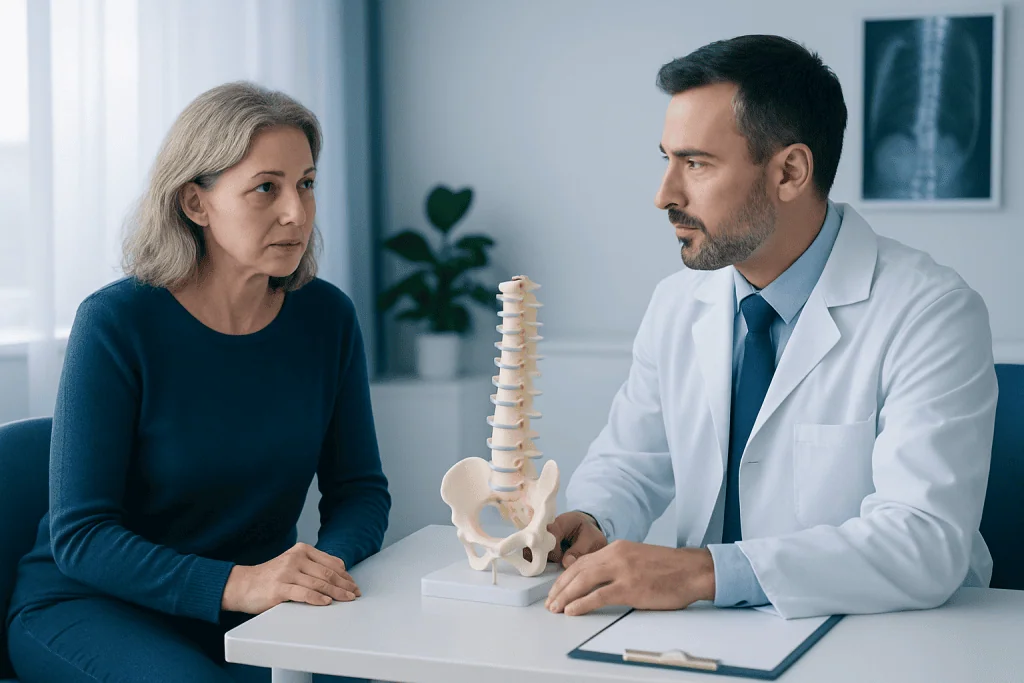
Potential candidates usually have persistent symptoms linked to one, and occasionally selected two, spinal disc levels. In the cervical spine, this may include arm pain, tingling, numbness, or weakness caused by a disc herniation or degenerative disc disease. In the lumbar spine, possible candidates may have ongoing disc-related lower-back pain after a structured programme of non-surgical care.
Before recommending surgery, a spine specialist reviews the person’s medical history, previous treatments, physical examination findings, and imaging. MRI scans commonly show discs, nerves, and soft tissues; X-rays may assess alignment and movement; CT may be useful for evaluating bone anatomy. These findings must be interpreted alongside the symptoms rather than in isolation, since many adults have disc changes on scans without pain.
Disc replacement may be unsuitable for people with major spinal instability, advanced facet joint arthritis, severe osteoporosis, infection, spinal deformity requiring correction, allergy or sensitivity to implant materials, or widespread disease across multiple levels. Smoking, uncontrolled diabetes, obesity, and certain medical conditions can also affect surgical risk and healing. A discussion of alternatives, including rehabilitation, pain management, decompression surgery, or fusion, is an important part of informed decision-making.
- Symptoms should correspond closely to the spinal level shown on imaging.
- Non-surgical treatment should generally have been tried when clinically appropriate.
- The patient should be medically fit enough for anesthesia and rehabilitation.
- Expectations should be realistic: surgery aims to improve symptoms and function, not guarantee a pain-free spine.
Assessment and the Surgical Process
Planning commonly begins with a remote review of medical records and scans for international patients, followed by an in-person evaluation before surgery. The clinical team may request updated imaging, laboratory tests, an anesthesia assessment, and review of medicines, allergies, previous operations, and existing health conditions. Patients should bring reports and image files when possible, not only written summaries.
On the day of surgery, the patient receives general anesthesia. Cervical disc replacement is generally approached through a small incision at the front of the neck. The surgeon carefully moves aside soft tissues, removes the diseased disc, relieves pressure on relevant nerves or the spinal cord, and places the artificial disc using imaging guidance. Lumbar disc replacement is commonly performed through an incision in the abdomen, often with access support from a vascular surgeon because important blood vessels lie in front of the lumbar spine.
After surgery, patients are monitored for pain control, neurological status, wound healing, and safe mobility. The hospital stay varies according to the spinal level treated, the person’s overall health, and the surgical plan. The care team provides discharge instructions covering medicines, wound care, activity, warning signs, follow-up appointments, and plans for travel.
Patients seeking disc replacement surgery in Turkey should ask how their case will be reviewed, which specialists will be involved, what implant is planned, and how records will be shared with their doctor at home. They should also confirm arrangements for an accompanying person, accessible accommodation, transport between the airport, hospital, and hotel, and the expected period to remain locally before flying.
Benefits, Risks, and Alternatives
When the indication is appropriate, disc replacement may reduce nerve-related pain and improve daily function. By preserving motion at the treated level, it may offer an alternative to fusion for selected patients. However, motion preservation does not mean the spine becomes unaffected by future wear, and it does not remove all possibility of symptoms from other spinal structures or levels.
As with any operation, there are risks. These can include infection, bleeding, blood clots, anesthesia-related complications, wound problems, persistent or recurrent pain, nerve injury, and the need for further treatment. Cervical procedures also carry uncommon risks related to swallowing, voice changes, the esophagus, or blood vessels. Lumbar procedures can involve risks to blood vessels, abdominal structures, and nerves. Implant-related concerns can include movement, wear, bone formation around the implant, or mechanical problems over time.
The relative benefits and risks should be compared with non-surgical care and with other operations. Spinal fusion may be more appropriate where there is instability, significant arthritis, deformity, or anatomy that does not support disc replacement. A surgeon should explain why a particular procedure is recommended and what outcome is reasonably expected in an individual case.
Recovery, Rehabilitation, and Travel Planning
Recovery varies by the part of the spine treated, the number of levels involved, the patient’s health, and the physical demands of their work and home life. Early, gentle walking is commonly encouraged after surgery, while bending, twisting, lifting, and strenuous activity are restricted initially. The surgical team gives personalised guidance rather than relying on a fixed timeline.
Neck discomfort, throat soreness, and temporary swallowing discomfort can occur after cervical surgery. Lower-back surgery may involve abdominal incision discomfort as well as spinal soreness. Pain and fatigue usually improve progressively, but recovery is not always linear. Follow-up appointments and, where needed, physiotherapy support safe return to everyday activities, work, driving, exercise, and travel.
International patients should not plan long-distance flights immediately after surgery. The treating team should decide when travel is appropriate based on mobility, wound healing, pain control, clot-risk assessment, and whether postoperative review or imaging is needed first. During approved travel, patients may be advised to move regularly, stay hydrated, follow prescribed clot-prevention measures, and carry a clear medical summary and medication list.
Acibadem International’s multidisciplinary specialists and JCI-accredited hospitals provide assessment and treatment planning for international patients, including coordination of clinical appointments and follow-up documentation. Patients should ensure that accommodation and local support allow adequate rest and easy access to the hospital during the recommended recovery period.
When to Seek Medical Care
Anyone with persistent neck or back pain, pain radiating into an arm or leg, numbness, tingling, weakness, or reduced ability to carry out daily activities should seek assessment from a qualified healthcare professional. Earlier evaluation is particularly important if symptoms are worsening, affecting balance or hand coordination, or not improving with conservative care.
Urgent medical attention is needed for new or progressive muscle weakness, loss of bladder or bowel control, numbness around the groin or buttocks, severe difficulty walking, fever with significant spinal pain, or symptoms after major trauma. These symptoms may indicate a condition that requires prompt assessment and should not be managed by waiting for an elective surgical consultation.
After disc replacement, patients should contact their surgical team promptly for increasing wound redness, drainage, fever, worsening pain not controlled by the care plan, new numbness or weakness, chest pain, shortness of breath, or leg swelling. Clear postoperative contact arrangements are especially important for people travelling internationally.
Frequently asked questions
Is disc replacement surgery in Turkey safe?
Safety depends on careful patient selection, the experience of the surgical and anesthesia teams, hospital safety systems, and appropriate follow-up. Patients should ask about the surgeon’s recommendation, the planned implant, infection prevention, accreditation, emergency support, and arrangements for postoperative care before and after travel.
What is the difference between disc replacement and spinal fusion?
Disc replacement removes the damaged disc and uses an artificial implant intended to preserve controlled movement at that spinal level. Fusion removes the disc and joins adjacent vertebrae together, eliminating movement at that level. The most appropriate option depends on spinal stability, joint condition, anatomy, symptoms, and imaging findings.
How long does recovery take after disc replacement surgery?
Recovery is individual and depends on whether the neck or lower back is treated, the extent of surgery, and the person’s general health. Walking often begins early, but return to work, driving, exercise, and heavier activity should follow the surgeon’s advice. Follow-up and rehabilitation may continue for several weeks or longer.
Can everyone with a herniated disc have disc replacement surgery?
No. Many herniated discs improve with non-surgical treatment, and some people need decompression surgery without disc replacement. Disc replacement is considered only when symptoms, examination findings, imaging, spinal alignment, and the health of nearby joints indicate that it is a suitable option.
How long should an international patient stay in Turkey after surgery?
The recommended stay varies according to the operation, early recovery, wound status, and the need for follow-up before travel. The treating surgeon should confirm when it is medically appropriate to fly and provide travel advice tailored to the patient’s clot risk, mobility, and overall condition.
What questions should a patient ask before choosing disc replacement surgery?
Patients should ask why disc replacement is recommended, what alternatives are available, which spinal level will be treated, and what benefits and risks apply to their case. They should also ask about implant type, expected recovery, postoperative restrictions, rehabilitation, follow-up after returning home, and what support is available if complications occur.
References
- World Health Organization
- North American Spine Society
- American Academy of Orthopaedic Surgeons
- National Institute for Health and Care Excellence
- U.S. Food and Drug Administration
This article is for general information only and is not a substitute for professional medical advice. Please consult a qualified doctor about your individual situation.
Joint and spine care in Turkey — expert assessment & treatment
JCI-accredited · board-certified surgeons · reply within 24h
Add us as a Preferred Source to see more of our trusted health content across Google Search, AI Overviews and Discover.