Do Hemorrhoids Itch? Causes, Explanations, and Next Steps

Hemorrhoids can cause itching, especially when the anal area is irritated by moisture, mucus, or friction. Itching is not specific to hemorrhoids; fissures, skin conditions, infections, and other anorectal problems can feel similar.
Key Takeaways
- Hemorrhoids can cause itching, especially when the anal area is irritated by moisture, mucus, or friction.
- Itching is not specific to hemorrhoids; fissures, skin conditions, infections, and other anorectal problems can feel similar.
- Most cases improve with gentle hygiene, avoiding straining, managing constipation, and using doctor-guided symptom relief.
- Medical assessment is important if itching is persistent, severe, associated with bleeding, pain, a lump, or changes in bowel habits.
- A doctor usually diagnoses hemorrhoids with a symptom history and physical examination, and may recommend additional tests if needed.
Yes, hemorrhoids can itch, and in many cases this is a common, manageable symptom rather than a sign of something serious. Itching often happens when swollen hemorrhoidal tissue becomes irritated by moisture, mucus, friction, or difficulties with cleaning the area, but certain warning signs should still prompt medical review.
Overview: yes, hemorrhoids can itch
Yes, hemorrhoids can itch. This is a very common symptom and is often related to irritation of the skin around the anus rather than a dangerous problem. In many people, the itching settles when the area is protected from moisture and friction and when bowel habits are improved.
Hemorrhoids are swollen veins in or around the lower rectum and anus. Internal hemorrhoids form inside the rectum, while external hemorrhoids develop under the skin around the anus. Either type can contribute to discomfort, but itching is especially common when external tissue or prolapsing internal hemorrhoids irritate the surrounding skin.
Although itching is often harmless, it should not automatically be assumed to be caused by hemorrhoids. Anal itching can also happen with small tears called fissures, skin irritation from soaps or wipes, fungal or parasitic infections, eczema, psoriasis, or other anorectal conditions. That is why persistent or unclear symptoms deserve proper evaluation rather than self-diagnosis alone.
Why hemorrhoids itch
The itching linked to hemorrhoids usually comes from local irritation. Swollen tissue can make it harder to keep the area clean after a bowel movement. Tiny amounts of stool, moisture, or mucus may remain on the skin and trigger itching, burning, or a feeling of dampness.
Internal hemorrhoids can sometimes prolapse, meaning they bulge outward during or after a bowel movement. When this happens, the tissue may secrete mucus and irritate the sensitive skin around the anus. Repeated wiping, scratching, or use of fragranced products can then worsen the itch and create a cycle of irritation.
External hemorrhoids may itch because of friction from clothing, sweating, prolonged sitting, or inflamed skin nearby. In some cases, a blood clot within an external hemorrhoid causes more pain than itching, but both symptoms can occur together. If there is a new painful lump, it is best to have it assessed.
Constipation and straining also play an important role. Hard stools and pushing during bowel movements increase pressure in the hemorrhoidal veins and can aggravate swelling. Diarrhea can be just as irritating because frequent wiping and repeated stool contact inflame the skin.
Symptoms that may happen with itchy hemorrhoids

Itching from hemorrhoids often comes with other symptoms. These may include a feeling of fullness around the anus, mild pain or soreness, burning, swelling, and bright red blood on toilet paper or in the toilet after a bowel movement. Some people notice a small lump around the anal opening, especially with external hemorrhoids.
Symptoms vary depending on the type of hemorrhoid. Internal hemorrhoids are more likely to cause painless bleeding or a sensation of tissue protruding during bowel movements. External hemorrhoids are more likely to cause itching, tenderness, and discomfort when sitting or cleaning the area.
It is important to remember that itching alone does not confirm hemorrhoids. Other conditions can overlap with these symptoms, including anal fissures, skin inflammation, fungal infection, or, less commonly, inflammatory bowel disease and colorectal disease. If symptoms do not improve or seem unusual, a clinician can help clarify the cause.
- Common associated symptoms: burning, mild pain, swelling, bleeding, mucus, and a lump
- Triggers often include constipation, diarrhea, long periods on the toilet, heavy straining, and pregnancy
- Symptoms that are more concerning include severe pain, heavy bleeding, fever, drainage, or unexplained weight loss
What else can cause anal itching?
Anal itching, also called pruritus ani, has many possible causes. Sometimes hemorrhoids are part of the picture, but sometimes the itch comes from the skin itself or from irritation caused by products and habits. Over-cleaning, harsh soaps, wet wipes with fragrance, tight clothing, sweat, and incomplete drying after bathing can all contribute.
Diet can also play a role in some people. Spicy foods, caffeine, alcohol, and acidic foods may worsen irritation, especially if there is already inflamed tissue. Loose stools or leakage can be another hidden cause, because repeated moisture exposure keeps the skin irritated.
Medical causes include fungal infection, pinworms, eczema, psoriasis, contact dermatitis, and infections around the anus. Small tears in the anal lining may itch or burn, particularly during bowel movements. More persistent cases may need assessment by a specialist in digestive health or colorectal care, especially when symptoms resemble hemorrhoids but do not respond to basic care.
How doctors diagnose the cause
When a person seeks care for itchy hemorrhoids or anal itching, the first step is usually a careful symptom history. A doctor may ask when the itching started, whether there is bleeding, pain, constipation, diarrhea, prolapse, mucus, or bowel habit changes, and what home treatments or skin products have been used.
A physical examination often provides the answer. The doctor may inspect the anal area for external hemorrhoids, skin irritation, fissures, rashes, infection, or prolapsed internal hemorrhoids. In some cases, a gentle digital rectal examination is done to check for tenderness or other abnormalities.
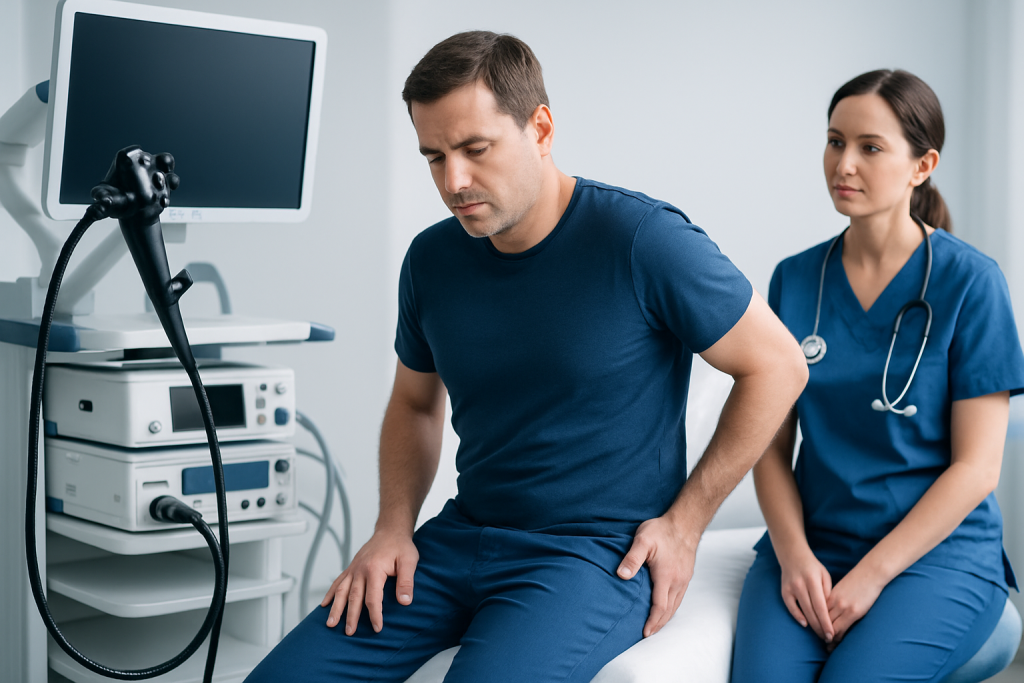
If symptoms suggest internal hemorrhoids or another rectal condition, a clinician may use anoscopy, a simple office procedure that allows the lower rectum and anal canal to be seen more clearly. Additional testing is not needed for everyone, but it may be recommended if there is significant bleeding, anemia, a family history of colorectal disease, or changes in bowel habits. Depending on age and symptoms, evaluation can sometimes include colonoscopy to rule out other causes of rectal bleeding.
Treatment and self-care for itching hemorrhoids
Treatment focuses on reducing irritation, improving bowel habits, and calming inflammation. The simplest steps are often the most helpful: avoiding straining, drinking enough fluids, increasing dietary fiber gradually, and limiting time spent sitting on the toilet. These measures help stools pass more easily and reduce pressure on hemorrhoidal veins.
Gentle skin care is equally important. The anal area should be cleaned with water or a soft, fragrance-free product if needed, then patted dry rather than rubbed. Scratching should be avoided because it worsens the skin irritation and can prolong the itch-scratch cycle. Loose, breathable underwear and careful drying after bathing may also help.
Doctors may recommend symptom relief such as warm sitz baths, fiber supplements, stool softening strategies, or short-term topical treatments. Because some creams can irritate delicate skin if overused, it is best to use them as directed by a healthcare professional. If symptoms are persistent or recurrent, minimally invasive options such as hemorrhoid treatment may be considered, depending on the type and severity of the hemorrhoids.
When another condition is causing the itch, treatment is directed at that specific problem. For example, a fissure, dermatitis, or infection needs a different approach than hemorrhoids. This is one reason a clear diagnosis is helpful when symptoms continue despite home care.
When to seek medical care
Many cases of hemorrhoid-related itching improve with simple changes, but medical review is important when symptoms are persistent, recurrent, or hard to explain. A person should seek care if itching lasts more than a short period despite home measures, if there is rectal bleeding, if pain is significant, or if a new lump develops around the anus.
More urgent assessment is needed for heavy bleeding, black or tarry stools, fever, pus-like drainage, severe swelling, or pain that comes on suddenly and intensely. Medical attention is also important if there are bowel habit changes, unexplained weight loss, anemia, or symptoms that wake a person from sleep.
For people who need specialist evaluation, a multidisciplinary team may include gastroenterology, general surgery, or colorectal expertise. Acibadem International’s multidisciplinary specialists in JCI-accredited hospitals diagnose and treat hemorrhoids and related anorectal conditions for international patients, with further assessment when symptoms overlap with other digestive concerns such as those investigated in gastroenterology care.
Frequently asked questions
Do hemorrhoids itch all the time?
Not usually. Hemorrhoid-related itching often comes and goes, and it may be worse after bowel movements, sweating, prolonged sitting, or irritation from wiping. Persistent daily itching may suggest ongoing irritation or another condition that should be checked.
Can internal hemorrhoids cause itching too?
Yes. Internal hemorrhoids can cause itching, especially if they prolapse or produce mucus that irritates the skin around the anus. Some people notice more dampness, burning, or difficulty cleaning the area when this happens.
Is itching a sign that hemorrhoids are healing?
Itching is not a reliable sign of healing. It usually reflects irritation of the surrounding skin, which can happen whether hemorrhoids are improving or being aggravated. If itching continues, skin care and medical advice may be needed.
What makes hemorrhoid itching worse?
Common triggers include constipation, diarrhea, straining, prolonged toilet sitting, frequent wiping, fragranced soaps or wipes, sweating, and tight clothing. Scratching can also make the area more inflamed and prolong symptoms.
How can someone tell the difference between hemorrhoids and another cause of anal itching?
It can be difficult without an examination because fissures, dermatitis, fungal infections, and other anorectal conditions can feel similar. Bleeding, a lump, prolapse, or pain with bowel movements may offer clues, but a clinician is the best person to confirm the cause.
Should a person worry about itching if there is also blood on the toilet paper?
Bright red blood with hemorrhoids is common, but rectal bleeding should still be assessed, especially if it recurs or is more than a small amount. A doctor may want to rule out other causes of bleeding depending on age, risk factors, and associated symptoms.
References
- National Institute of Diabetes and Digestive and Kidney Diseases
- American Society of Colon and Rectal Surgeons
- Mayo Clinic
- Cleveland Clinic
- National Health Service
This article is for general information only and is not a substitute for professional medical advice. Please consult a qualified doctor about your individual situation.
Hemorrhoids in Turkey — costs, top hospitals & a free quote
JCI-accredited · board-certified surgeons · reply within 24h
Add us as a Preferred Source to see more of our trusted health content across Google Search, AI Overviews and Discover.

General Surgery
Open, laparoscopic and robotic surgery for a broad range of abdominal and soft-tissue conditions.
120 specialists in this unitMore from the Health Library



Related Specialists

Assoc. Prof. Dr. Çetin Kılıççı
Gynecology & Obstetrics
Ody. Sefa Porsuk
Audiology
Dr. Ayşe Cennet Sarimehmetoğlu
Cardiology
Assoc. Prof. Dr. Taner Arpacı
Radiology