Does Teething Cause Fever? A Doctor-Reviewed Answer

Teething may cause gum discomfort, drooling, and irritability, but it usually does not cause a true fever. A slight temperature increase can occur during teething, yet a measured fever often suggests another illness.
Key Takeaways
- Teething may cause gum discomfort, drooling, and irritability, but it usually does not cause a true fever.
- A slight temperature increase can occur during teething, yet a measured fever often suggests another illness.
- Parents should not assume fever, diarrhea, vomiting, or marked lethargy are due to teething alone.
- Doctors assess symptoms, temperature, hydration, and signs of infection to find the real cause.
- Medical advice is important if a baby is very young, has a high fever, seems hard to wake, or has trouble breathing.
Teething is common and usually harmless, but it does not typically cause a true fever. A mild rise in temperature can happen, while a higher temperature or a child who seems unwell should be checked for another cause.
Overview: Does teething cause fever?
In most babies, teething is a normal developmental stage and the symptoms are mild. The short answer is that teething can sometimes be linked to a small rise in body temperature, but it does not usually cause a true fever. If a child has a clearly elevated temperature or seems genuinely ill, another cause should be considered rather than blaming teething alone.
This distinction matters because teething often happens at the same age when babies begin to encounter common viral infections. A child may be drooling and chewing because teeth are coming in, while fever at the same time may be due to a cold, ear infection, throat infection, or another illness. Looking at the whole child—not only the gums—helps parents respond appropriately.
Parents often notice fussiness, gum swelling, increased biting, and disrupted sleep during teething. These symptoms can be uncomfortable but are usually temporary. Reassurance is appropriate when a baby is otherwise alert, feeding reasonably well, and has only mild symptoms.
What teething usually does cause
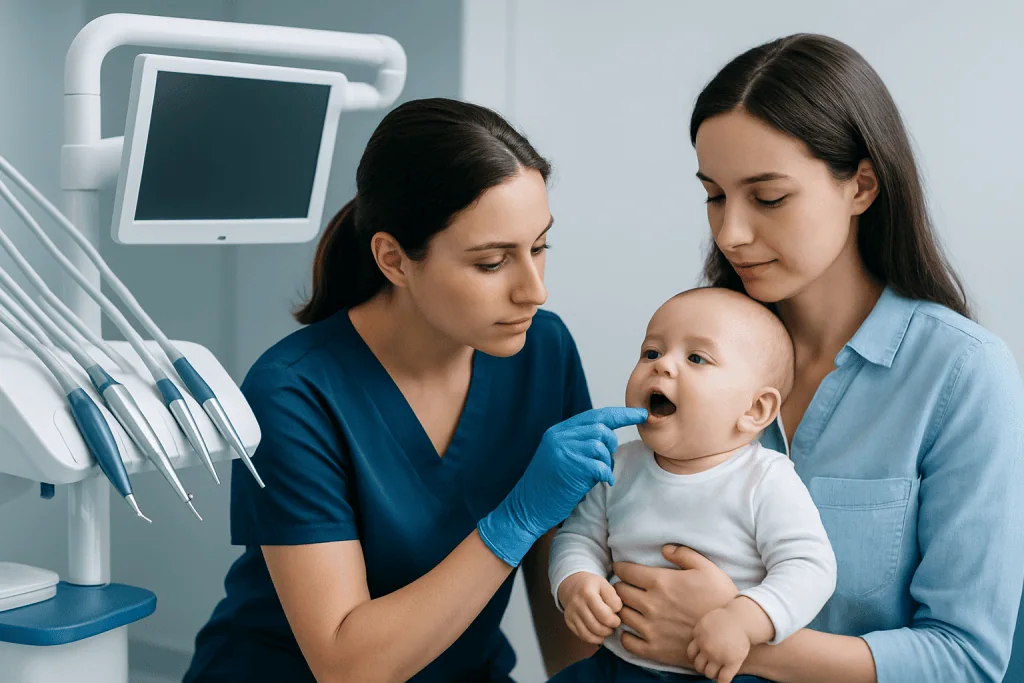
Teething commonly begins around 6 months of age, although the timing varies widely. As teeth move through the gums, the area may feel tender. Babies may want to chew on objects more often, drool more than usual, or rub their gums and face.
Many children also become more irritable for a few days before a tooth appears. Sleep may be lighter, and appetite may shift briefly, especially for solid foods that press against sore gums. These changes are usually short-lived and improve once the tooth erupts.
Common teething symptoms may include:
- Swollen or tender gums
- Extra drooling
- Wanting to chew or bite
- Mild fussiness or clinginess
- Temporary sleep disruption
- Reduced interest in some foods
These symptoms can overlap with everyday childhood illnesses, which is why temperature and general behavior are important clues. If a child is playful between episodes of fussiness and has no other worrying signs, teething may be the main explanation for the discomfort.
What counts as a fever, and why the difference matters

Parents and caregivers often use the word “fever” loosely, but medically it has a specific meaning. Teething may coincide with a slight temperature rise, sometimes called a low-grade elevation, yet this is different from a true fever measured with a reliable thermometer.
A true fever generally suggests that the body is responding to an infection or another inflammatory process. Because babies are vulnerable to dehydration and can become unwell quickly, fever should not automatically be dismissed as part of teething. This is especially important in very young infants.
How temperature is measured also matters. Rectal measurement is generally considered most accurate in young infants, while other methods may be used depending on the child’s age and the device available. If a baby feels hot, seems unusually sleepy, or is feeding poorly, an actual temperature reading is more helpful than touch alone.
In practical terms, a baby who is drooling and chewing with only mild discomfort may simply be teething. A baby with a measured fever, persistent crying, reduced urine output, or signs of illness needs closer attention and may need medical review.
Symptoms that are not usually caused by teething
Teething is often blamed for many symptoms that are actually due to another illness. Although minor changes in behavior can happen, teething is not considered a reliable explanation for a child who appears clearly unwell. Recognizing this can help families seek care sooner when needed.
Symptoms that should not be assumed to be caused by teething include a true fever, repeated vomiting, significant diarrhea, cough with breathing difficulty, rash that is spreading, poor feeding, or unusual drowsiness. Ear pulling may happen during teething because discomfort can radiate, but it can also signal an ear problem such as a middle ear infection.
Common illnesses can occur at the same time as teething simply because both are frequent in infancy. Viral infections, throat infections, and problems such as tonsillitis may cause fever and irritability. If symptoms are stronger than typical teething discomfort, it is safer to think beyond teething.
Caregivers may also notice loose stools when drooling increases and babies swallow more saliva, but persistent diarrhea should be evaluated separately. Likewise, a runny nose or cough may reflect an upper respiratory infection rather than a new tooth.
What else might be causing a fever in a teething baby?
The age when teeth appear is also the age when a child’s environment expands. Babies put toys and hands in their mouth more often, interact with more people, and begin to encounter common viruses. This makes it easy for teething and illness to happen at the same time.
Frequent causes of fever in babies and toddlers include viral colds, flu-like illnesses, ear infections, throat infections, urinary infections, and reactions related to routine vaccinations. Some children may also have mouth sores or gum irritation unrelated to teething. A doctor may consider the child’s age, vaccination history, recent exposures, and how symptoms developed over time.
If fever is accompanied by cough, congestion, poor feeding, or fewer wet diapers, another illness becomes more likely. If there is localized swelling in the mouth, bad breath, or visible dental problems, a clinician may also consider oral causes and recommend a pediatric dental assessment if needed.
When gum symptoms seem prominent, supportive advice may include chilled teething rings and gentle gum massage. If there are concerns about oral health, a child may benefit from a dental evaluation, and in some cases a doctor may suggest dental treatment to address unrelated mouth or tooth issues.
How a doctor evaluates fever during teething
When parents bring a child in for teething-related concerns, the goal is not only to confirm teething but also to make sure nothing more important is being missed. A doctor typically starts by asking about the child’s age, exact temperature, how it was measured, when symptoms began, feeding and urine output, and whether there are cough, rash, vomiting, diarrhea, or contact with sick people.
The physical examination usually includes checking hydration, breathing, alertness, ears, throat, nose, chest, and abdomen, along with the gums and erupting teeth. This helps the doctor separate common teething discomfort from an infection that needs specific care. If a child has signs of breathing trouble, an ear infection, or severe throat inflammation, the medical team may focus on those conditions first.
Most children do not need extensive testing for mild symptoms. However, tests may be considered if the baby is very young, has persistent fever, looks unwell, or has symptoms pointing to a particular infection. Depending on the findings, doctors may recommend observation, treatment for a viral illness, or targeted care such as pediatric ear, nose, and throat evaluation or pediatric assessment.
Near the end of the evaluation, clinicians often explain what is likely due to teething and what is not. This can reassure families while also giving clear warning signs to watch for at home.
Safe treatment and self-care for teething discomfort
Most teething discomfort can be managed at home with simple, low-risk measures. Gentle rubbing of the gums with a clean finger, a cool washcloth, or a chilled teething ring may soothe soreness. Babies should always be supervised with teething items, and frozen hard objects should be avoided because they can injure delicate gums.
If a child is uncomfortable, small, frequent feeds and extra cuddling may help. For babies already eating solids, cool soft foods can sometimes feel soothing. Parents can wipe drool from the chin and neck to reduce skin irritation.
When pain seems more than mild, a doctor may advise age-appropriate pain relief. Caregivers should use medicines only as directed by a qualified clinician and avoid numbing gels or tablets unless specifically recommended, since some products may not be safe for infants.
Good general care also matters. Rest, fluids, and close observation are often enough while a tooth is erupting. If symptoms seem to go beyond expected teething behavior, the child should be reassessed rather than repeatedly treating at home.
When to seek medical care
Medical advice is a good idea if a baby has a measured fever, especially if the child is under 3 months old, has a high temperature, or is not acting normally. Parents should also seek help if the child is difficult to wake, has trouble breathing, shows signs of dehydration, has repeated vomiting, persistent diarrhea, a seizure, or a rash that worries them.
It is also sensible to contact a doctor if symptoms last longer than expected for simple teething, if the baby refuses feeds, or if there is significant ear pain, mouth swelling, or ongoing crying that cannot be soothed. Trusting a caregiver’s sense that “something is not right” is important in young children.
For international patients who need further evaluation, Acibadem International’s multidisciplinary specialists and JCI-accredited hospitals diagnose and treat pediatric and ENT conditions with coordinated care. The priority is always to identify whether symptoms fit normal teething or another problem that needs treatment.
Frequently asked questions
Can teething cause a low-grade temperature?
Yes, some babies may have a slight rise in temperature while teething. However, this is usually mild and not considered a true fever. If the temperature is clearly elevated or the child seems unwell, another cause should be considered.
What temperature is too high to blame on teething?
A clearly measured fever should not automatically be blamed on teething. The higher the temperature and the younger the baby, the more important it is to speak with a doctor. It is best to use a reliable thermometer and assess the child’s overall condition as well.
Can teething cause diarrhea or vomiting?
Teething is not a dependable explanation for persistent diarrhea or vomiting. Swallowed saliva may slightly change stools in some babies, but ongoing gastrointestinal symptoms usually suggest another issue. A child with repeated vomiting or significant diarrhea should be assessed medically.
How long do teething symptoms usually last?
Teething discomfort often comes and goes over a few days as a tooth moves through the gum. Some children have only brief symptoms, while others are fussier with certain teeth. Symptoms that last longer or seem severe deserve a medical review.
How can parents soothe a teething baby safely?
Safe options include a chilled teething ring, a cool clean washcloth, and gentle gum massage with a clean finger. Extra comfort, fluids, and soft cool foods can also help. Any medicines should be used only with appropriate medical guidance for the child’s age.
When should a baby with teething symptoms see a doctor?
A doctor should be contacted if the baby has a measured fever, poor feeding, trouble breathing, unusual sleepiness, signs of dehydration, or symptoms such as vomiting, persistent diarrhea, or a spreading rash. Parents should also seek care if the child is very young or if something simply does not seem right.
References
- American Academy of Pediatrics
- National Health Service
- Mayo Clinic
- Centers for Disease Control and Prevention
- National Institute of Dental and Craniofacial Research
This article is for general information only and is not a substitute for professional medical advice. Please consult a qualified doctor about your individual situation.
Explore treatments in Turkey — costs, top hospitals & a free quote
JCI-accredited · board-certified surgeons · reply within 24h
Add us as a Preferred Source to see more of our trusted health content across Google Search, AI Overviews and Discover.