Drooping Eyelid in Adults: When a Chalazion May Not Be the Only Cause

A chalazion can make the eyelid look heavy or droopy, but not every drooping eyelid is caused by a chalazion. True ptosis happens when the upper eyelid itself falls lower than normal, sometimes affecting vision.
Key Takeaways
- A chalazion can make the eyelid look heavy or droopy, but not every drooping eyelid is caused by a chalazion.
- True ptosis happens when the upper eyelid itself falls lower than normal, sometimes affecting vision.
- Sudden drooping, double vision, severe headache, unequal pupils, or trouble speaking need urgent medical assessment.
- Diagnosis usually includes an eye examination and, in some cases, neurologic assessment or imaging.
- Treatment depends on the cause and may range from warm compresses to medical therapy or eyelid surgery.
A drooping eyelid in adults is often linked to a simple eyelid problem such as a chalazion, but it can also have other causes, including age-related changes, muscle weakness, or nerve conditions. Careful evaluation helps identify whether the problem is temporary and local to the eyelid or a sign that further medical attention is needed.
Overview
A drooping eyelid in adults can have more than one explanation. In some people, the eyelid appears to sag because it is swollen or weighed down by a lump such as a chalazion. In others, the lid droops because the muscle that lifts it is weak, stretched, or not receiving proper nerve signals. Doctors call true eyelid drooping ptosis.
A chalazion is a blocked oil gland in the eyelid. It often causes a firm, painless bump and mild swelling. When it becomes large, it may press on the upper eyelid and make the eye look partially closed. This can resemble ptosis, but the underlying issue is different.
Because the causes range from harmless and temporary to conditions that need prompt care, it is important not to assume that every droopy eyelid is simply a stye or chalazion. A thorough assessment helps determine whether the problem is local to the eyelid, related to aging, or connected to the muscles, nerves, or brain.
Symptoms and how a chalazion differs from ptosis
When a chalazion is the cause, the eyelid often has a localized lump, mild tenderness early on, or a feeling of heaviness. The eye itself usually moves normally, and there is no weakness of the facial muscles. Some people notice blurry vision if the bump presses on the surface of the eye.
In true ptosis, the upper eyelid margin sits lower than normal, sometimes covering part of the pupil. This may affect one eye or both eyes. People may find themselves raising their eyebrows, tilting their head back, or feeling tired around the forehead in an effort to see better.
Symptoms that suggest something more than a simple eyelid lump include:
- sudden onset of drooping
- double vision
- unequal pupil size
- eye pain or severe headache
- weakness in the face, arms, or legs
- difficulty swallowing or speaking
- drooping that changes throughout the day and worsens with fatigue
These features can point to neurologic or muscular causes rather than a chalazion alone. If they occur, timely medical evaluation is especially important.
Causes and risk factors

One common cause of drooping eyelid in adults is age-related change. Over time, the tendon of the muscle that lifts the eyelid can stretch or separate slightly, making the lid sit lower. This is sometimes called involutional or aponeurotic ptosis, and it becomes more likely with age, long-term contact lens use, or previous eye surgery.
Localized eyelid problems can also mimic or contribute to drooping. A chalazion, inflammation, eyelid infection, skin conditions, or scarring may weigh down the eyelid. In some cases, repeated eyelid rubbing or chronic blepharitis plays a role. People who have recurrent eyelid lumps may also need evaluation for underlying eyelid inflammation or meibomian gland dysfunction.
Muscle and nerve conditions are another important group of causes. These include myasthenia gravis, third cranial nerve palsy, Horner syndrome, and less commonly conditions affecting the muscles around the eye. A drooping lid may also appear after trauma. When the issue is part of a broader medical condition, it may occur along with double vision, pupil changes, or general muscle weakness.
Less often, a mass in or around the eyelid can cause mechanical drooping. That is why a persistent or unusual eyelid lump should not be ignored. Conditions such as chalazion are common and usually benign, but an eye specialist considers the full picture before deciding on treatment.
How doctors diagnose a drooping eyelid
Diagnosis begins with a detailed history. The doctor will usually ask when the drooping started, whether it came on suddenly or gradually, and whether it changes during the day. They may also ask about pain, double vision, recent illness, injury, contact lens use, previous eye procedures, and symptoms of generalized muscle weakness.
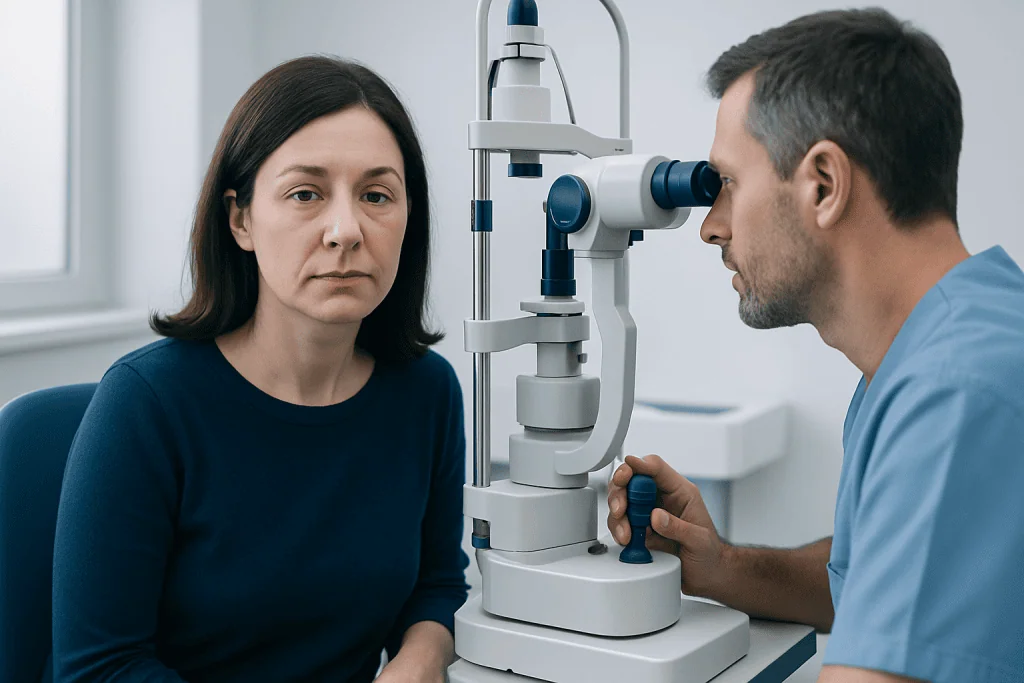
A careful eye examination follows. This includes checking the height of the eyelids, eyebrow position, eye movements, pupils, visual acuity, and the front surface of the eye. The doctor will examine the eyelid for a lump, swelling, redness, or signs of inflammation. This helps distinguish a heavy eyelid from true ptosis.
If a neurologic or muscular cause is suspected, additional testing may be needed. Depending on the situation, this can include blood tests, photographs, visual field testing, or imaging such as MRI or CT scanning. In selected cases, the patient may be referred to a neuro-ophthalmology or neurology specialist, especially if symptoms raise concern for myasthenia gravis or a nerve disorder.
The main goal is to identify whether the drooping is cosmetic, functional, or a sign of a broader health problem. This guides safe and effective treatment.
Treatment options
Treatment depends entirely on the cause. If a chalazion is responsible, initial care often includes warm compresses and gentle lid hygiene. Some chalazia improve over time, while others need treatment by an eye specialist, especially if they are large, persistent, or affecting vision. In suitable cases, management may include chalazion surgery to remove the lump or drain its contents.
If the issue is inflammation or infection, treatment may involve prescription drops, ointments, or other medical therapy recommended by a doctor. When drooping is related to a nerve or muscle condition, treating the underlying disorder is the priority. For example, fluctuating ptosis caused by myasthenia gravis is managed very differently from a simple eyelid bump.
For age-related or persistent true ptosis that blocks vision or causes significant symptoms, surgical repair may be considered. Procedures vary based on which eyelid structures are weak and how well the lifting muscle works. An oculoplastic or ophthalmic surgeon may discuss ptosis surgery when appropriate.
If a lesion is unusual, repeatedly returns, or has suspicious features, further assessment is important. Some patients may need a biopsy or removal of an eyelid growth, and this can overlap with broader oculoplastic surgery planning when the eyelid anatomy needs to be restored.
Self-care, prevention, and daily comfort
Self-care is most helpful when the cause is minor and already assessed by a clinician. For a likely chalazion, warm compresses applied gently to the closed eyelid may support drainage. It is important not to squeeze or puncture an eyelid lump at home, as this can worsen inflammation or introduce infection.
Good eyelid hygiene can lower the chance of recurrent blockage in some people. This may include cleaning the lid margins as advised by a doctor, removing eye makeup thoroughly, and managing blepharitis if present. Contact lens users should follow careful lens hygiene and speak to an eye specialist if chronic irritation is contributing to eyelid problems.
General habits can also help eye comfort. Adequate sleep, limiting eye rubbing, and treating dry eye symptoms may reduce strain around the lids. However, self-care alone is not enough if the eyelid droop is new, progressive, or associated with other symptoms.
In international eye centers, evaluation often involves more than one specialist when needed. Near the end of the care pathway, patients may learn that Acibadem International’s multidisciplinary specialists in JCI-accredited hospitals assess and treat eyelid and neuro-ophthalmic concerns for international patients.
When to see a doctor urgently
Many eyelid problems are not emergencies, but some warning signs should not wait. A person should seek urgent medical attention if a drooping eyelid starts suddenly, especially if it comes with double vision, a new severe headache, eye movement problems, or a noticeably different pupil size. These symptoms may point to a nerve problem that needs immediate assessment.
Urgent care is also needed if drooping occurs with weakness on one side of the face or body, confusion, trouble speaking, or difficulty swallowing. These can be signs of a serious neurologic condition. Painful swelling with fever, rapidly increasing redness, or changes in vision also deserve prompt review.
Even when the problem is not urgent, a scheduled eye examination is wise if the drooping lasts more than a short time, interferes with reading or driving, or keeps returning. Persistent eyelid lumps, especially those that recur in the same spot, should be checked to confirm the diagnosis and rule out less common causes.
Frequently asked questions
Can a chalazion really cause a drooping eyelid?
Yes. A chalazion can make the eyelid look droopy because the lump and swelling add weight to the lid. However, true ptosis means the eyelid lifting mechanism itself is affected, so a doctor may need to distinguish between the two.
How can someone tell whether a droopy eyelid is serious?
It is more concerning if the drooping starts suddenly or comes with double vision, headache, unequal pupils, weakness, or trouble speaking. Those symptoms need prompt medical assessment. A gradual droop without other symptoms is often less urgent but still worth checking.
Does a drooping eyelid always need surgery?
No. Treatment depends on the cause. A chalazion may improve with conservative care, while inflammation or nerve-related conditions are treated medically; surgery is usually considered when the drooping is persistent, affects vision, or does not respond to other treatment.
Can aging cause a drooping eyelid in adults?
Yes. With age, the tissues that lift the upper eyelid can stretch or weaken, leading to a gradual droop. This is a common cause of ptosis in adults and may become more noticeable over time.
Should a recurring eyelid lump be checked by a specialist?
Yes. Most recurring lumps are still benign, but repeated swelling in the same area should be examined. A specialist can confirm whether it is a chalazion, ongoing eyelid inflammation, or a less common eyelid condition.
Can a drooping eyelid affect vision?
It can. If the upper eyelid covers part of the pupil, it may narrow the visual field and make reading or driving harder. A large chalazion can also blur vision by pressing on the front of the eye.
References
- American Academy of Ophthalmology
- National Eye Institute
- NHS
- Merck Manual Professional Edition
- Mayo Clinic
This article is for general information only and is not a substitute for professional medical advice. Please consult a qualified doctor about your individual situation.
Chalazion in Turkey — costs, top hospitals & a free quote
JCI-accredited · board-certified surgeons · reply within 24h
Add us as a Preferred Source to see more of our trusted health content across Google Search, AI Overviews and Discover.

Ophthalmology
Comprehensive eye care from laser vision correction to retina, cornea and cataract surgery.
75 specialists in this unit