Dysmetria — Explained by Medical Evidence, Not Myths

Dysmetria affects the accuracy of voluntary movement rather than muscle strength alone. It most often suggests a problem in the cerebellum or its neural connections.
Key Takeaways
- Dysmetria affects the accuracy of voluntary movement rather than muscle strength alone.
- It most often suggests a problem in the cerebellum or its neural connections.
- Common causes include stroke, multiple sclerosis, brain injury, tumors, alcohol-related damage, and some inherited neurological disorders.
- Diagnosis usually involves a neurological examination and may include MRI or other tests to identify the underlying cause.
- Treatment focuses on the cause and may include medication review, rehabilitation, and targeted neurological care.
Dysmetria is a movement coordination problem in which a person overshoots or undershoots a target, such as when reaching for an object or touching a finger to the nose. It is not a disease by itself, but a clinical sign that often points to changes in the cerebellum or the nerve pathways that help the body judge distance, force, and timing.
What dysmetria means
Dysmetria is a medical term for difficulty measuring the distance, speed, or force of a movement. A person with dysmetria may reach past a cup, stop short when trying to press a button, or have trouble placing a foot exactly where intended. In everyday life, the problem often appears as clumsiness, but medically it is a specific sign of impaired coordination.
The symptom is most strongly associated with the cerebellum, the part of the brain that helps fine-tune movement, balance, posture, and timing. When the cerebellum or the pathways connected to it are affected, the body may still be able to move, but movement becomes less precise. This is why dysmetria is different from weakness, paralysis, or joint pain.
Dysmetria can involve the arms, hands, legs, eye movements, or speech-related muscle control. It may happen on one side of the body or both, and it may appear suddenly or gradually depending on the cause. Some people also have tremor, balance difficulty, slurred speech, or other features of ataxia.
How dysmetria appears in daily life
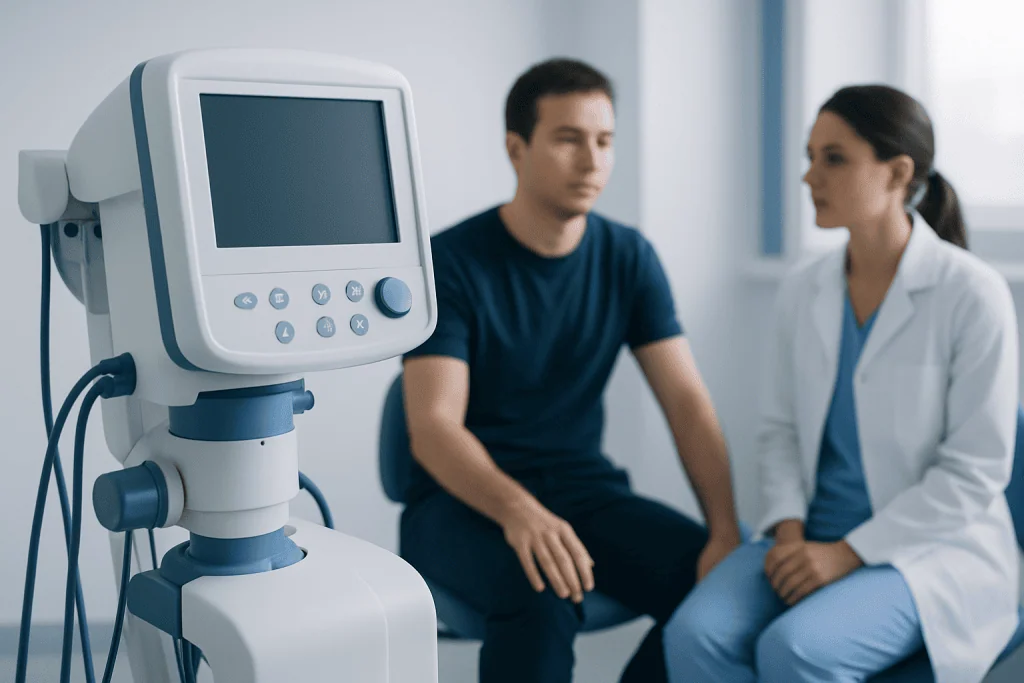
The classic description of dysmetria is overshooting or undershooting a target. During a neurological exam, a clinician may ask a person to touch their nose and then the examiner’s finger, or to slide a heel down the opposite shin. A person with dysmetria may miss the target, correct the movement in steps, or wobble as the limb approaches the goal.
Outside the clinic, symptoms can be subtle or obvious. Tasks such as pouring water, fastening buttons, typing, applying makeup, using utensils, writing, or stepping over a curb may become more difficult. When the legs are involved, walking may look unsteady or poorly judged, especially during turns or when changing speed.
Associated symptoms depend on the underlying neurological problem. These may include:
- hand or arm incoordination
- unsteady gait or poor balance
- intention tremor, especially near the end of a movement
- slurred or scanning speech
- abnormal eye movements
- dizziness or vertigo in some conditions
- difficulty with rapid alternating movements
Because dysmetria can affect independence and safety, even mild symptoms deserve proper medical attention if they are new, worsening, or interfering with work, driving, or self-care.
Why dysmetria happens

Dysmetria usually reflects dysfunction in the cerebellum or in the sensory and motor pathways that help the brain compare intended movement with actual movement. The cerebellum acts like a real-time control system. It helps the body make smooth corrections while an action is happening. If this system is disrupted, the brain may misjudge how far, how fast, or how strongly a person should move.
There are many possible causes. Some are sudden, such as stroke, bleeding, infection, or head trauma. Others develop over time, such as neurodegenerative disease, autoimmune disorders, chronic alcohol-related cerebellar damage, medication toxicity, vitamin deficiency, or inherited conditions affecting coordination.
Common causes and contributors include:
- cerebellar stroke or transient ischemic injury
- multiple sclerosis and other inflammatory disorders
- head injury or concussion with cerebellar involvement
- brain tumors or structural lesions
- alcohol misuse and toxin exposure
- side effects of certain medications, including some antiseizure drugs or sedatives
- vitamin deficiencies, especially when prolonged
- genetic or inherited ataxias
- metabolic or endocrine disorders in some patients
Not every person with poor coordination has dysmetria. Problems such as weakness, peripheral neuropathy, joint disease, vision loss, or inner ear disorders can also affect movement accuracy. This is one reason a careful neurological assessment is important.
Risk factors and patterns doctors look for
Doctors do not usually think of dysmetria as a standalone diagnosis. Instead, they look at the pattern in which it appears. A sudden onset, especially with dizziness, severe headache, facial droop, numbness, or difficulty speaking, raises concern for a neurological emergency such as stroke. A gradual onset may point more toward degenerative, inflammatory, toxic, or inherited causes.
Medical history often provides important clues. Risk may be higher in people with prior stroke, autoimmune disease, multiple sclerosis, chronic heavy alcohol use, repeated head trauma, a family history of coordination disorders, or use of medications that affect the central nervous system. In some cases, recent infection, cancer history, or unexplained weight loss may also guide further testing.
Age matters as well, but dysmetria can occur at any stage of life. In children, clinicians may consider developmental, genetic, inflammatory, or structural causes. In older adults, stroke, medication effects, neurodegenerative conditions, and mixed balance problems are often part of the evaluation.
How dysmetria is diagnosed
Diagnosis begins with a medical history and a neurological examination. The clinician will ask when symptoms started, whether they came on suddenly or gradually, and whether there are related issues such as imbalance, double vision, numbness, weakness, headache, or speech changes. They will also review alcohol use, medications, prior neurological illness, family history, and any recent injuries or infections.
On examination, the doctor may assess finger-to-nose testing, heel-to-shin movements, reaching tasks, rapid alternating movements, gait, eye movements, reflexes, sensation, and muscle strength. These tests help distinguish dysmetria from other causes of clumsiness or instability. If speech is affected, the clinician may also evaluate articulation and rhythm.
Further testing depends on the suspected cause. Imaging is often central, especially when symptoms are new or progressive. MRI may help identify stroke, inflammation, tumors, structural changes, or other brain abnormalities. Some patients also need blood tests, genetic testing, vestibular assessment, or lumbar puncture. If a structural problem or acute neurological event is suspected, doctors may involve specialists in neurology or related fields promptly.
Because dysmetria is a sign rather than a final diagnosis, the goal of testing is not simply to label the coordination problem. The more important aim is to identify what is causing it and whether that cause needs urgent treatment.
Treatment and rehabilitation
Treatment for dysmetria depends on the underlying condition. If the cause is a stroke, inflammation, infection, medication toxicity, vitamin deficiency, or a structural lesion, management is directed at that problem first. In some situations, coordination improves once the underlying issue is treated. In others, symptoms may persist and require rehabilitation.
Rehabilitation is often a major part of care. Physical therapy can help improve gait, balance, limb control, and fall prevention. Occupational therapy focuses on daily tasks such as dressing, writing, eating, and safe use of the hands. If speech or swallowing is affected, speech and language therapy may also be recommended. In selected cases, coordinated care for Parkinson’s disease or other movement disorders may be relevant when symptoms overlap or the diagnosis is still being clarified.
Doctors may also review medications and address contributors such as alcohol use, poor nutrition, or untreated metabolic disease. Assistive devices, home modifications, and exercise plans may reduce injury risk and help maintain independence. When a lesion or compression is found, referral to neurosurgery may be considered if appropriate.
For international patients who need advanced neurological assessment, Acibadem International’s multidisciplinary specialists in JCI-accredited hospitals diagnose and treat coordination disorders using individualized plans based on the underlying cause.
Self-care, safety, and living with dysmetria
Self-care cannot replace medical evaluation, but it can support day-to-day function. Practical adjustments may reduce frustration and improve safety while diagnosis or treatment is ongoing. These measures are especially helpful for people who notice poor hand accuracy, unstable walking, or fatigue-related worsening.
Useful strategies may include moving more slowly, sitting for tasks that require fine hand control, clearing floor hazards, improving lighting, using handrails, and wearing supportive footwear. Family members may help by observing patterns, such as whether symptoms are worse at certain times of day or after taking a medication.
Healthy habits matter because the nervous system is sensitive to sleep, alcohol, stress, and general health. People with dysmetria may benefit from:
- avoiding alcohol or recreational drugs that worsen coordination
- taking medicines exactly as prescribed and reporting side effects
- keeping follow-up appointments for neurological review
- using mobility aids if recommended by a therapist
- doing prescribed balance or coordination exercises safely
- seeking support if symptoms affect mood, work, or independence
If symptoms are chronic, realistic goals are important. Improvement may mean safer movement, fewer falls, better daily function, and more confidence rather than complete symptom disappearance.
When to seek medical care
Medical care is recommended whenever dysmetria is new, unexplained, recurrent, or getting worse. A person should also be evaluated if coordination problems begin to affect walking, driving, hand function, speech, or swallowing. Even mild symptoms can be meaningful if they are persistent or clearly different from a person’s usual baseline.
Urgent care is needed if dysmetria starts suddenly or appears together with warning signs such as severe headache, facial drooping, one-sided weakness, numbness, vision changes, confusion, or trouble speaking. These symptoms can suggest a stroke or another emergency affecting the brain. Sudden onset after head injury, or symptoms accompanied by repeated vomiting or reduced consciousness, should also be assessed immediately.
People already diagnosed with a neurological disorder should contact their doctor if coordination changes abruptly, falls become more frequent, or a new medication seems to worsen symptoms. Early reassessment can help prevent complications and may identify a treatable cause before symptoms progress.
Frequently asked questions
Is dysmetria a disease or a symptom?
Dysmetria is a clinical sign, not a disease by itself. It usually indicates a problem affecting the cerebellum or the nerve pathways involved in coordinated movement.
What does dysmetria feel like?
Many people describe it as missing the target when reaching, stepping too far or not far enough, or feeling inaccurate rather than weak. Some also notice tremor near the end of a movement, unsteady walking, or trouble with precise hand tasks.
Can dysmetria happen suddenly?
Yes. Sudden dysmetria can occur with stroke, bleeding, acute inflammation, or head injury, and it should be evaluated urgently. A gradual onset is more often seen with degenerative, toxic, nutritional, or inherited conditions.
Is dysmetria the same as ataxia?
Not exactly. Dysmetria is one type of coordination problem, while ataxia is a broader term that can include gait instability, limb incoordination, speech changes, and eye movement abnormalities. Dysmetria is often considered a feature of cerebellar ataxia.
Can dysmetria be treated?
Treatment is aimed at the underlying cause, so the outlook depends on why dysmetria is happening. Many people also benefit from physical therapy, occupational therapy, and fall-prevention strategies even when the cause cannot be fully reversed.
Which doctor evaluates dysmetria?
A neurologist usually leads the evaluation, especially when symptoms are persistent, progressive, or accompanied by other neurological signs. In some cases, rehabilitation specialists, neurosurgeons, or speech therapists may also be involved.
References
- National Institute of Neurological Disorders and Stroke
- National Institute on Aging
- Merck Manual Professional Edition
- Mayo Clinic
- MedlinePlus
This article is for general information only and is not a substitute for professional medical advice. Please consult a qualified doctor about your individual situation.
Explore treatments in Turkey — costs, top hospitals & a free quote
JCI-accredited · board-certified surgeons · reply within 24h
Add us as a Preferred Source to see more of our trusted health content across Google Search, AI Overviews and Discover.

More from the Health Library

The Family Planning: What Patients Need to Know

Hydroxyurea: A Complete Medical Overview

Cognitive Restructuring: An Evidence-Based Guide for Patients

Phlegm — Explained by Medical Evidence, Not Myths

Incline Dumbbell Press: A Complete Medical Overview