Eczema vs Psoriasis: Key Differences and How Doctors Tell Them Apart

Eczema usually causes intense itching, dry or weepy patches, and often affects skin folds. Psoriasis typically causes thicker, sharply bordered plaques with silvery scale on extensor surfaces and the scalp.
Key Takeaways
- Eczema usually causes intense itching, dry or weepy patches, and often affects skin folds.
- Psoriasis typically causes thicker, sharply bordered plaques with silvery scale on extensor surfaces and the scalp.
- Doctors tell them apart by looking at the pattern, feel, location, symptoms, age of onset, triggers, and sometimes by using tests or a skin biopsy.
- Both conditions are treatable, but treatment plans differ and may include moisturizers, medicated creams, light therapy, or systemic medicines.
- A dermatologist should assess persistent, painful, infected, widespread, or uncertain rashes.
Eczema and psoriasis can both cause red, inflamed, itchy skin, but they are different conditions with different patterns, triggers, and treatments. In general, eczema tends to itch intensely and may affect skin folds, while psoriasis more often causes well-defined, thicker plaques with silvery scale on the scalp, elbows, knees, or lower back.
Overview: eczema vs psoriasis at a glance
Eczema vs psoriasis is a common question because both conditions can make the skin red, itchy, and irritated. The shortest answer is that eczema is usually linked to a weaker skin barrier and an overreactive immune response, while psoriasis is an immune-mediated condition that speeds up skin cell turnover. That difference often changes how the rash looks, where it appears, and how it feels.
Doctors do not rely on one sign alone. Instead, they compare the rash side by side: its texture, borders, scale, location, itch level, triggers, and whether there are clues elsewhere such as nail changes or a history of allergies. This broader clinical picture helps distinguish eczema from psoriasis and other inflammatory skin conditions.
Below is a practical comparison patients often find helpful:
- Itch: Eczema often itches intensely; psoriasis may itch, burn, or feel sore, but itching is sometimes less dominant.
- Appearance: Eczema can look dry, rough, cracked, or oozing; psoriasis usually forms thicker, raised plaques with silvery-white scale.
- Borders: Eczema patches may be less sharply defined; psoriasis plaques are often more clearly outlined.
- Common locations: Eczema often affects the inner elbows, behind the knees, hands, face, or neck; psoriasis commonly affects the scalp, elbows, knees, lower back, and nails.
- Age pattern: Eczema often begins in childhood, though adults can develop it too; psoriasis can start at any age and often appears in adolescence or adulthood.
- Triggers: Eczema often flares with soaps, fragrances, dry weather, sweat, stress, or allergens; psoriasis may flare with infections, stress, skin injury, some medicines, or alcohol use.
How the symptoms usually differ

Eczema, especially atopic dermatitis, commonly causes very dry, sensitive skin with intense itching. Scratching may lead to rawness, crusting, or thickened skin over time. During active flares, the rash can be pink to red or darker than the surrounding skin, and in some people it may sting, crack, or ooze clear fluid.
Psoriasis usually produces thicker patches of inflamed skin covered by noticeable scale. The plaques often feel raised and rough and can split or bleed if the scale is disturbed. Some people mainly notice scalp flaking, while others have plaques on the elbows, knees, lower back, or around the navel.
The pattern of symptoms can also offer clues. Eczema often disrupts sleep because the itch is so strong, and it tends to worsen with rubbing, heat, sweat, and irritants. Psoriasis may itch too, but people may describe more tightness, burning, or soreness, especially when plaques are thick or cracked.
Another useful clue is involvement beyond the skin. Psoriasis can affect the nails, causing pitting, thickening, or separation from the nail bed, and some people develop joint pain linked to psoriatic arthritis. Eczema is more often associated with asthma, hay fever, food allergy, or a personal or family history of sensitive skin.
Where each condition tends to appear
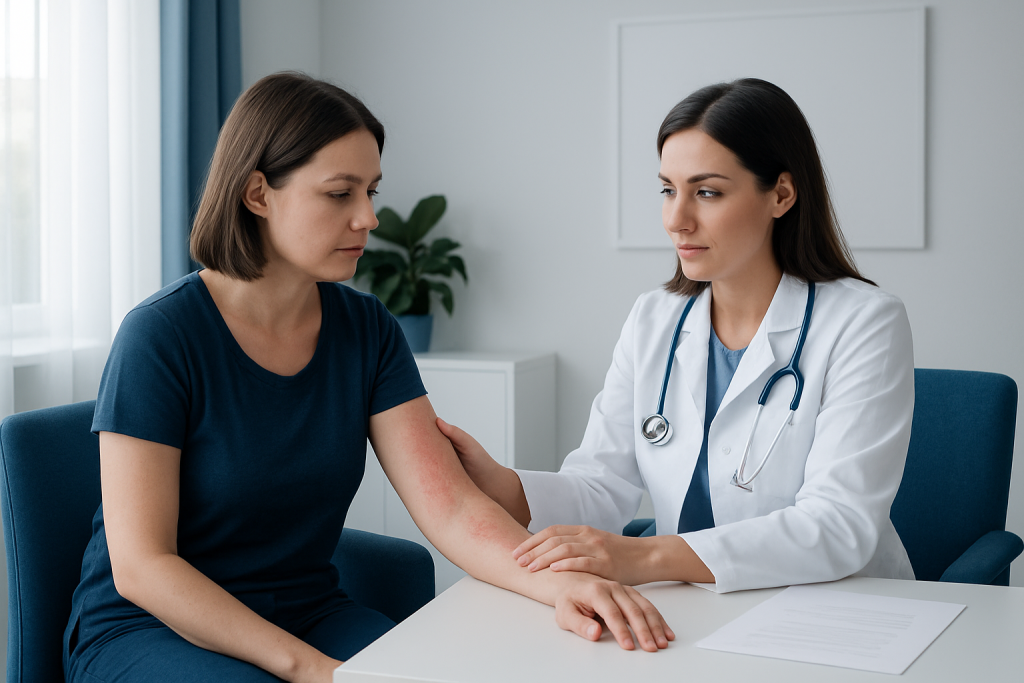
Location matters because eczema and psoriasis often favor different areas. Eczema commonly affects flexural areas, meaning skin folds such as the inside of the elbows, behind the knees, wrists, neck, and around the eyes. In babies and young children, it may appear on the cheeks, scalp, or outer arms and legs.
Psoriasis more often appears on extensor surfaces, especially the outer elbows and knees. It is also common on the scalp, lower back, buttocks, and around the ears. Some types affect skin folds, palms and soles, or only small droplet-like spots after an infection, so the pattern can vary.
The hands can be tricky because both conditions may affect them. Hand eczema may cause dryness, fissures, and irritation after frequent washing or chemical exposure. Psoriasis on the hands may create thicker, more sharply bordered plaques or stubborn scaling that is less clearly linked to irritants.
Skin tone can influence appearance. On lighter skin, eczema and psoriasis often look red or pink, while on darker skin they may appear brown, purple, gray, or darker than the surrounding skin. Because color cues can be subtler, texture, location, and symptom history become especially important.
How clinicians tell them apart
A clinician begins with a focused history and skin examination. They ask when the rash started, whether it comes and goes, how much it itches, what seems to trigger flares, and whether there is a history of allergies, asthma, nail changes, joint pain, recent infections, or new skin-care products. The goal is to understand the pattern, not just the appearance on one day.
During the exam, the doctor looks closely at the lesion borders, scale, distribution, and signs of scratching or infection. Thick, well-demarcated plaques with silvery scale suggest psoriasis, while dry, inflamed, excoriated patches in flexural areas suggest eczema. They may also examine the scalp, nails, and joints, since these can provide important clues.
Sometimes doctors use tests to rule out other causes. A skin swab may be taken if infection is suspected, and patch testing may be considered when allergic contact dermatitis could be contributing to eczema-like symptoms. If the diagnosis remains uncertain, a dermatologist may recommend a skin biopsy to examine the tissue under a microscope.
There is no single blood test that confirms either condition in routine practice. Diagnosis is usually clinical, especially in experienced hands. When symptoms overlap, referral to dermatology can help distinguish eczema from psoriasis, fungal infections, seborrheic dermatitis, contact dermatitis, or less common inflammatory skin disorders.
What to do if it is eczema
If the condition is eczema, treatment usually starts with protecting the skin barrier and reducing inflammation. Regular use of fragrance-free moisturizers is a foundation of care, especially right after bathing. People are often advised to avoid harsh soaps, scented products, wool, overheating, and other personal triggers that make the skin sting or itch.
During flares, doctors may prescribe anti-inflammatory creams or ointments, such as topical corticosteroids or nonsteroidal prescription options, depending on the affected area and severity. Itch control, treatment of any infection, and practical skin-care habits are also important. For persistent disease, specialist care may include eczema treatment options such as phototherapy or systemic medicines.
Self-care matters, but scratching can worsen the cycle of itch and inflammation. Keeping nails short, using lukewarm rather than hot water, and applying moisturizer frequently can help reduce flares. Some people benefit from identifying triggers such as detergents, workplace exposures, stress, or seasonal dryness.
Eczema can overlap with other forms of dermatitis, especially on the hands or face. When symptoms are recurrent or hard to control, a dermatologist may look for allergic contact triggers and tailor treatment to the skin pattern, occupation, and age of the patient.
What to do if it is psoriasis
If the rash is psoriasis, treatment aims to slow skin cell turnover, reduce inflammation, and relieve scaling, itching, or soreness. Mild disease is often managed with prescription topical therapies, while more extensive or stubborn plaques may need light therapy or systemic medicines. The right choice depends on where the psoriasis appears, how widespread it is, and how much it affects daily life.
Scalp psoriasis, nail involvement, and thick plaques on the hands or feet can be especially challenging and may need a more targeted plan. In moderate to severe cases, a dermatologist may discuss psoriasis treatment options that include phototherapy, oral medicines, or biologic therapies. These decisions are individualized and usually involve follow-up over time.
Because psoriasis is linked to broader inflammation, doctors may also ask about joint stiffness, swollen fingers or toes, fatigue, and cardiovascular risk factors. Recognizing psoriatic arthritis early is important because joint symptoms may need rheumatology input. Lifestyle measures such as smoking cessation, limiting alcohol, managing stress, and maintaining a healthy weight can support overall care.
People should avoid picking scale or over-scrubbing the skin, which can worsen irritation. Gentle skin care, regular moisturization, and adherence to the prescribed plan often improve comfort and appearance, even though psoriasis tends to be a long-term condition with periods of flare and remission.
Shared skin-care steps and prevention strategies
Although eczema and psoriasis are different, some skin-care principles help both. Gentle cleansing, short lukewarm showers, and daily moisturizing can reduce dryness and support the skin barrier. Choosing fragrance-free products and avoiding aggressive scrubs or alcohol-based skin products may also lessen irritation.
Trigger awareness is useful. For eczema, common triggers include irritants, allergens, stress, low humidity, and frequent handwashing. For psoriasis, triggers may include infections, stress, skin injury, and certain medications. Keeping a simple symptom diary can help people notice patterns and discuss them with a doctor.
Stress management, good sleep habits, and treatment adherence often improve symptom control. When the diagnosis is not clear, it is best not to self-treat for long periods with over-the-counter steroid products alone, because the rash may need a different approach. Persistent or severe cases may benefit from coordinated dermatology care and, when appropriate, dermatology consultation.
Near the end of the care pathway, some patients seek specialist evaluation across disciplines, especially if there are allergies, hand eczema related to work, or psoriasis with joint symptoms. Acibadem International’s multidisciplinary specialists and JCI-accredited hospitals diagnose and treat inflammatory skin conditions for international patients when further assessment is needed.
When to seek medical care
Medical care is important when a rash is new, persistent, spreading, painful, or severe enough to disturb sleep or daily activities. A doctor should also evaluate symptoms that do not improve with basic skin care, especially if the diagnosis is uncertain or the rash keeps returning.
Prompt assessment is recommended if there are signs of infection such as increasing warmth, pus, yellow crusting, fever, or rapidly worsening redness. People with psoriasis-like symptoms should also seek care for nail changes, swollen joints, morning stiffness, or back pain, since these may suggest associated arthritis.
Children, older adults, pregnant patients, and people with weakened immune systems may need earlier review. If the skin condition is affecting mood, confidence, work, or school, that is also a valid reason to ask for help. Early diagnosis can make treatment more effective and reduce unnecessary discomfort.
Frequently asked questions
Can eczema and psoriasis look the same?
Yes. Both can cause red, inflamed, itchy, scaly skin, so they may look similar at first glance. Doctors usually distinguish them by the location, thickness of the lesions, sharpness of the borders, associated symptoms, and the patient’s history.
Which itches more, eczema or psoriasis?
Eczema often causes more intense itching, especially during flares and at night. Psoriasis can itch too, but some people notice more burning, tightness, or soreness rather than severe itch.
Can a person have both eczema and psoriasis?
It is possible, although it is not the most common situation. In some cases, features overlap and the diagnosis becomes clearer over time or after a dermatologist evaluates the skin closely.
Do eczema and psoriasis need different treatments?
Often, yes. Both may involve moisturizers and anti-inflammatory topical medicines, but the long-term treatment strategy can differ because the diseases are driven by different mechanisms. More severe psoriasis may need therapies that are not typically used in the same way for eczema, and vice versa.
Is psoriasis more serious than eczema?
Neither condition should be dismissed, because both can significantly affect comfort, sleep, and quality of life. Psoriasis may be associated with nail disease, joint inflammation, and broader health considerations, while eczema can lead to severe itch, skin barrier damage, and infections.
When is a skin biopsy needed?
A biopsy is not always necessary. It may be recommended when the rash has unusual features, does not respond as expected, or could be another condition such as a fungal infection, contact dermatitis, or a different inflammatory skin disorder.
References
- American Academy of Dermatology
- National Eczema Association
- National Psoriasis Foundation
- National Institute of Arthritis and Musculoskeletal and Skin Diseases
- British Association of Dermatologists
This article is for general information only and is not a substitute for professional medical advice. Please consult a qualified doctor about your individual situation.
Psoriasis: in Turkey — costs, top hospitals & a free quote
JCI-accredited · board-certified surgeons · reply within 24h
Add us as a Preferred Source to see more of our trusted health content across Google Search, AI Overviews and Discover.