Psoriasis: Treatment
Psoriasis is a chronic immune-mediated skin condition causing red, scaly plaques. Treatment focuses on accurate diagnosis, flare control, skin healing and long-term relapse prevention.
Quick answer
Psoriasis is a chronic, immune-mediated skin condition in which skin cells build up too quickly, forming thickened, scaly plaques that may itch, crack or bleed. Treatment controls the underlying inflammation rather than curing it: options include topical medicines, medical phototherapy, oral systemic drugs and injected biologic therapies, chosen according to the type, severity and location of the disease and the patient's overall health.
Psoriasis: Understanding the Condition Before Treatment Begins
Psoriasis is a chronic, immune-mediated condition in which the immune system drives skin cells to grow far faster than normal, so that cells pile up on the surface as thickened, scaly plaques. It is not an infection, and it cannot be passed from person to person. Psoriasis affects people of every age and every skin tone, and it can involve the scalp, the nails and, in some people, the joints as well as the skin. Because it is a long-term disease, treating psoriasis well means more than clearing what is visible today; it means building a plan that can be adjusted as the disease changes over years.
For many people, psoriasis is far more than a rash. Plaques can be painful, itchy, cracked or bleeding. They influence what you wear, how you sleep, how comfortable you feel at work and in relationships, and, when the joints are involved, how easily you move. Flares can appear at unpredictable times, and it is common to worry about whether the condition will spread, whether others will notice, or whether visible lesions will change how people treat you. These concerns are legitimate, and a serious treatment plan takes them into account.
It is also common to arrive at a specialist appointment frustrated. You may have tried multiple creams, shampoos or home remedies without lasting relief. Psoriasis improves and worsens in cycles, which makes it genuinely difficult to know whether a treatment is working or whether the disease simply entered a quieter phase on its own. Some people have mild disease limited to the elbows, knees or scalp. Others live with widespread plaques, nail changes, painful palms and soles, genital involvement, or the joint stiffness and swelling of psoriatic arthritis. These are very different clinical situations, and they need different plans.
Effective care begins with an accurate diagnosis and a careful assessment of severity. Treatment is not only about clearing plaques. It is about reducing inflammation, healing the skin barrier, lowering the chance of relapse where possible, identifying personal triggers, protecting joint function and choosing therapies that remain safe for you over time. The best psoriasis care is structured, measurable and honest about what each therapy can and cannot do.
What is psoriasis?
Psoriasis is a long-term inflammatory disease in which immune signalling accelerates the turnover of skin cells. In healthy skin, cells mature and shed gradually over weeks. In psoriatic skin, this process is compressed into days, so immature cells accumulate on the surface as raised, scaly plaques while the underlying skin stays inflamed. The disease sits in the immune system, not on the skin surface, which is why scrubbing, exfoliating or washing more often does not remove it, and why modern treatments are aimed at the immune pathways that drive it. Psoriasis typically follows a relapsing and remitting course: periods of activity alternate with quieter periods, sometimes for reasons that can be identified and sometimes without any obvious cause.
What is the main reason for psoriasis?
The main reason for psoriasis is an overactive immune response, acting on a genetic predisposition. Certain immune cells release inflammatory signals that instruct the skin to produce new cells far too quickly. Psoriasis often runs in families, though having an affected relative does not mean you will develop it, and many patients have no known family history. On top of that inherited susceptibility, external factors can set off or worsen the disease: throat and other infections, injury to the skin, significant stress, smoking, heavy alcohol use, cold dry weather, weight gain and certain medicines are all recognised triggers. Psoriasis is not caused by poor hygiene, by diet alone, or by anything a patient did wrong: a point worth stating plainly, because misplaced guilt is common.
Is psoriasis contagious?
No. Psoriasis is not contagious in any circumstance. It cannot be transmitted by touching plaques, shaking hands, sharing towels or bedding, swimming in the same pool, or through intimate contact. There is no bacterium, virus or fungus to pass on; the disease arises from the patient’s own immune system. This matters socially as well as medically. Many patients avoid swimming, sport, hairdressers or physical closeness because they fear others will think the condition is infectious. Understanding, and being able to explain, that psoriasis cannot spread to anyone else is often one of the first meaningful reliefs that a proper consultation provides.
What does psoriasis look like?
Psoriasis usually looks like raised, well-defined patches of thickened skin covered with scale. On lighter skin, plaques tend to appear red or pink with silvery-white scale. On darker skin, the same plaques may look purple, brown or greyish, and the scale can appear thicker or more grey than silver: a difference that sometimes delays diagnosis. Appearance also varies by location: plaques on the elbows and knees are often thick and heavily scaled, while lesions in skin folds may look smooth, shiny and inflamed with little visible scale. Nail psoriasis shows as pitting, thickening, discolouration, crumbling, or lifting of the nail from the nail bed. After plaques heal, temporary darker or lighter marks can remain on the skin for a period before fading.
What does psoriasis feel like?
Most people describe itching, burning, stinging or a feeling of tightness over affected skin. Thick plaques can crack, and those fissures, particularly on the palms, soles or in skin folds, can be genuinely painful, interfering with walking, gripping and everyday tasks. Scalp involvement often causes persistent itch and visible flaking onto clothing. Scratching brings brief relief but damages the skin and can provoke new lesions. When psoriatic arthritis is present, patients also describe joint stiffness that is worst in the morning, swollen fingers or toes, and heel or lower-back pain. Beyond the physical sensations, many patients describe fatigue and a constant low-level awareness of their skin: a burden that clinicians increasingly recognise as part of the disease itself.
The Main Types of Psoriasis
Psoriasis is not a single uniform disease. Several distinct clinical forms exist, they can occur together, and the type you have directly shapes which treatments make sense.
What is plaque psoriasis?
Plaque psoriasis is the most common form of the disease, producing well-defined, raised plaques covered with scale. Plaques often appear symmetrically, on both elbows, both knees, the scalp, the lower back and the trunk, but they can develop almost anywhere on the body. Individual plaques range from small coin-sized patches to broad areas that merge together. Plaque psoriasis can remain stable for long periods or expand during flares, and it is the form for which the widest range of treatments, from topical therapy through to biologic medicines, has been developed and studied.
Scalp psoriasis
Scalp psoriasis ranges from mild, dandruff-like scaling to thick plaques covering large areas of the scalp and extending onto the forehead, the neck and behind the ears. It is frequently mistaken for severe dandruff or seborrhoeic dermatitis, but psoriatic scale tends to be thicker, more sharply demarcated and more persistent, and it often crosses the hairline. Scratching and forceful removal of scale can cause temporary hair shedding, which usually recovers once the inflammation is controlled; psoriasis itself rarely causes permanent hair loss. One practical point deserves emphasis: if you are considering a cosmetic scalp procedure such as scalp micropigmentation, active scalp psoriasis should be assessed and brought under control first, because psoriasis can flare precisely where the skin is injured by needling.
Guttate psoriasis
Guttate psoriasis appears as many small, drop-shaped lesions scattered across the trunk, arms and legs, often developing quite suddenly. It frequently follows a throat infection, particularly streptococcal infection, and it is more common in children, teenagers and young adults. Guttate psoriasis behaves differently from the plaque form: in some patients it settles after the triggering infection resolves and treatment is completed, while in others it evolves over time into chronic plaque psoriasis. Because of that link with infection, the assessment often includes questions about recent illness, and the treatment plan reflects both the skin findings and the likely trigger.
Inverse psoriasis
Inverse psoriasis affects the skin folds: the armpits, the groin, under the breasts and between the buttocks. Because these areas are moist and subject to friction, the lesions usually look smooth, shiny and inflamed rather than scaly, and they are commonly misdiagnosed as fungal or bacterial infection. Sweating, rubbing and secondary infection can all aggravate inverse psoriasis, and the thin skin of these areas limits which topical medicines can be used safely. Getting the diagnosis right here matters doubly: the wrong antifungal course wastes time, and the wrong strength of steroid can damage delicate skin.
Pustular and erythrodermic psoriasis
Pustular psoriasis produces sterile pustules, small collections of inflammatory cells, not infection, either localised to the palms and soles or, more rarely, spread across the body. The generalised form can be medically serious and is managed in hospital. Erythrodermic psoriasis is an uncommon but severe form in which redness and scaling involve most of the body surface, often with fever, chills and fluid imbalance; it is treated as a medical emergency in an inpatient setting. Both forms are rare, but they illustrate why psoriasis deserves proper specialist assessment rather than indefinite self-treatment.
Nail and palmoplantar psoriasis
Nail psoriasis causes pitting, thickening, discolouration, crumbling and lifting of the nail plate, and it is one of the most stubborn forms to treat because medicines reach the nail slowly. It affects hand function and appearance, and it is statistically associated with joint involvement, so nail changes always prompt questions about stiffness and swelling. Palmoplantar psoriasis, thick, fissured plaques on the palms and soles, can be disabling out of all proportion to the skin area involved, because every step and every grip presses on inflamed, cracked skin. Both patterns count as high-impact disease and often justify more active treatment than their surface area alone would suggest.
Who May Need Specialist Psoriasis Treatment
You may need specialist assessment if you have recurring red, scaly, thickened or itchy patches of skin, especially on the elbows, knees, scalp, lower back, hands, feet or in the skin folds. Nail changes, pitting, thickening, discolouration, lifting or crumbling, are another reason to be assessed, as is painful cracking on the palms and soles that interferes with walking, working or daily tasks.
Symptoms vary widely between patients. Some people have mild itching and a few stable plaques. Others experience burning, tenderness, bleeding after scratching, visible scale on dark clothing, disturbed sleep, or real discomfort in social and professional settings. The extent of skin involved is only one measure of severity. Lesions on the face, hands, genitals, scalp, nails, palms or soles can have a major effect on quality of life even when the total affected area is small, and these high-impact locations often warrant more active management than a purely area-based assessment would suggest.
Recognising psoriatic arthritis
Psoriatic arthritis is inflammation of the joints and tendons that occurs in a proportion of people with psoriasis, and it can develop even when the skin disease looks mild. The typical signs are morning stiffness, swollen fingers or toes that take on a sausage-like appearance, heel pain, lower-back pain, joint tenderness, reduced range of motion and worsening nail changes. This is why dermatologists ask about joints at every psoriasis review: untreated inflammatory arthritis can, in some patients, lead to progressive and irreversible joint damage, whereas early recognition and coordinated treatment help preserve movement and long-term function. If both skin and joints are active, dermatology and rheumatology usually plan treatment together, choosing therapies that address both.
How is psoriasis diagnosed?
Psoriasis is usually diagnosed by clinical examination performed by an experienced dermatologist. The doctor assesses the appearance, distribution and thickness of the plaques, checks the nails and scalp, asks about family history, triggers, previous treatments and associated symptoms, and evaluates how much the disease affects daily life. In uncertain cases a small skin biopsy may be recommended to distinguish psoriasis from conditions that can resemble it, eczema, fungal infection, lichen planus, seborrhoeic dermatitis, cutaneous lupus and other inflammatory skin diseases. This step matters: treatments aimed at the wrong diagnosis do not work, and mixed conditions are not rare.
Before advanced treatment, additional tests may be needed. These can include blood tests of liver and kidney function, blood counts, inflammation markers, screening for hepatitis or tuberculosis, pregnancy testing where relevant, and a review of vaccination status. If joint symptoms are present, rheumatology assessment and imaging may be advised. None of this is a formality. It is how the medical team makes sure that the therapies under consideration are both effective for your disease and appropriate for your overall health.
How Psoriasis Treatment Is Planned and Delivered
Psoriasis treatment is a personalised medical plan to control the immune activity that drives the disease, reduce symptoms, help the skin heal and lower the risk of repeated flares. Depending on your situation, the plan may include topical medications, phototherapy, systemic medicines taken by mouth or injection, biologic therapies that target specific immune pathways, trigger and lifestyle management, and structured follow-up. There is no single medication or one-time procedure that suits everyone; modern care is a pathway, adjusted as your disease and your circumstances change.
Initial evaluation and preparation
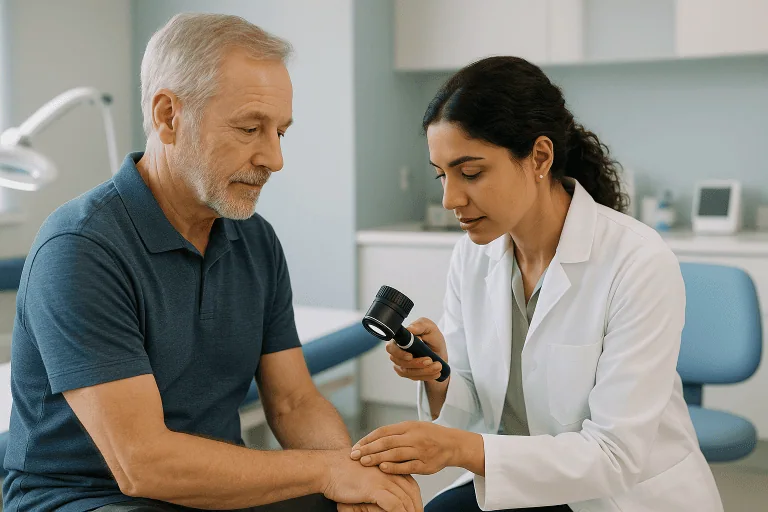
Treatment begins with a detailed dermatology consultation. The dermatologist reviews your symptoms, age at onset, family history, flare pattern, previous medications, allergies, pregnancy plans, past infections, vaccinations and other medical conditions. Photographs may be taken to document baseline disease and to track response objectively over time. The doctor assesses the extent of body surface affected, plaque thickness, redness, scaling, itch, pain, nail involvement and the impact on your daily life, because two patients with identical-looking skin can carry very different burdens.
The first consultation is more productive if previous biopsy results, laboratory reports, medication lists, photographs of past flares and records of prior treatments, creams, phototherapy, tablets or injections, are available for review. The consultation also covers your preferences. Some patients want topical therapy for as long as it remains realistic. Others need a schedule that fits work and travel. Some have needle concerns, pregnancy considerations, liver or kidney disease, recurrent infections or other factors that narrow the safe options. A psoriasis plan succeeds when it fits both the disease and the person living with it.
Topical therapy
Topical medications are usually the first step for mild to moderate psoriasis, and they remain useful even alongside advanced therapies. Options include corticosteroids, vitamin D analogues, keratolytic agents that soften and lift scale, calcineurin inhibitors for sensitive areas, medicated shampoos, and emollients that repair the skin barrier. Your dermatologist explains where and how each product is applied, for how long the stronger preparations should be used, and how to avoid irritation or skin thinning.
Correct use matters more than most patients realise. Many people have been prescribed topical treatment before without clear instructions on quantity, sequence, duration or which body areas each product suits. A medicine appropriate for thick plaques on the elbows may be entirely wrong for the face or groin. A structured, written plan lets you use topical therapy confidently, and it reduces unnecessary exposure to potent medicines. Equally, a regimen with too many steps tends to fail in real life; a practical plan you can actually follow usually outperforms a theoretically ideal one that you cannot.
Phototherapy
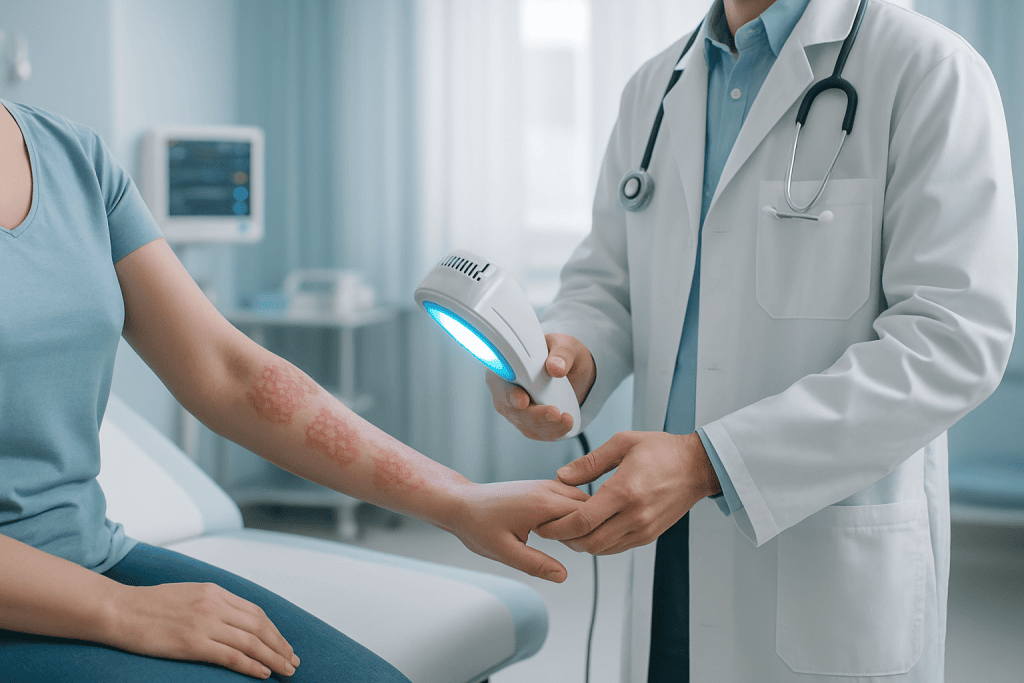
Phototherapy may be recommended when psoriasis is more widespread or when plaques do not respond adequately to topical treatment. Medical phototherapy delivers controlled ultraviolet light under physician supervision: it is not sunbathing, and it is not a tanning bed. The dose is set according to your skin type, disease severity and response, then adjusted gradually to reduce the risk of burning. Individual sessions are brief, but the treatment requires repeated visits over several weeks, and that schedule is part of the decision: phototherapy is only a sensible choice if you can realistically attend the sessions it requires.
Systemic medications
Systemic treatment is considered when psoriasis is moderate to severe, widespread, disabling, affecting high-impact areas, or associated with psoriatic arthritis. These medicines act throughout the body to reduce inflammation. Traditional oral or injectable immunomodulating medicines can be effective, but they require monitoring, of the liver, kidneys, blood counts, blood pressure or pregnancy safety, depending on the specific drug. Newer targeted oral therapies act on defined inflammatory pathways and suit selected patients. Which option is right depends on your disease pattern, previous responses, other medical conditions and the safety profile that fits your history; these are prescribing decisions that belong to the treating doctor, made with you and reviewed over time.
Biologic and targeted immune therapies
Biologic therapies are designed to block specific immune signals involved in psoriasis, and they are usually given by injection or infusion at defined intervals. For many patients with moderate to severe disease, biologic treatment can markedly reduce plaque burden and symptoms. But no biologic suits everyone, and response varies between individuals. Selection depends on the type of psoriasis, joint involvement, infection risk, any history of inflammatory bowel disease, body weight, prior treatments, pregnancy plans and other factors. Before starting, patients are screened for infections such as tuberculosis and hepatitis, with baseline laboratory tests; during treatment, periodic monitoring checks both safety and response. If a therapy proves insufficient or causes side effects, the plan is adjusted, switching within or between drug classes is a normal part of long-term psoriasis care, not a failure.
Technology used in diagnosis and monitoring
Several kinds of medical technology support accurate diagnosis and follow-up. High-resolution skin examination, standardised clinical photography and dermoscopic assessment document plaque characteristics and track change over time. Laboratory systems support infection screening and medication monitoring. When joints are symptomatic, imaging such as ultrasound, X-ray or MRI helps evaluate inflammation or structural change. Phototherapy units deliver precisely dosed therapeutic ultraviolet light when that treatment is indicated. The point of all of this is precision, not complexity: objective documentation tells your physician whether a treatment is genuinely working, whether a new flare is really psoriasis or a different skin problem, and whether the plan should continue, be adjusted or be changed.
How long does psoriasis treatment take to work?
It depends on the treatment and the severity of your disease. Some topical treatments reduce itching and scale within days to weeks, although thick, established plaques take longer to flatten. Phototherapy needs multiple sessions over several weeks before its effect can be judged. Systemic and biologic therapies have a planned evaluation period, with improvement developing progressively rather than overnight. Your physician will tell you when to expect the first signs of response for your specific therapy, and, just as importantly, at what point a treatment that has not delivered should be reassessed rather than continued indefinitely.
Can psoriasis be cured permanently?
No. There is currently no permanent cure for psoriasis, and any product or clinic promising one should be treated with scepticism. What modern medicine can honestly offer is control: many patients achieve skin that is clear or almost clear, sustained over long periods, with therapy matched to their disease and monitored for safety. Some patients experience extended remissions during which little or no treatment is needed. The realistic goal of psoriasis treatment is durable control with a low side-effect burden: a goal that is achievable for a great many people, and very different from a cure.
Does psoriasis ever go away?
Psoriasis can go into remission, sometimes for months or years, but it is a chronic condition, and the tendency to develop plaques remains even when the skin looks entirely normal. Guttate psoriasis is the partial exception: in some patients it clears after the triggering infection and treatment, and never returns; in others it evolves into chronic plaque disease. Because remission and relapse are both normal parts of the course, treatment planning does not stop when the skin clears. Maintenance strategy, trigger awareness and periodic review are what keep quiet periods long and flares short.
How can a psoriasis flare-up be calmed?
General measures genuinely help during a flare: regular use of emollients to support the skin barrier, gentle washing rather than hot water and harsh scrubbing, keeping fingernails short and resisting scratching, protecting the skin from cuts and friction, and paying attention to known triggers such as stress, smoking, heavy alcohol use and untreated infections. Continuing the regimen agreed with your doctor, exactly as prescribed, is usually more effective than improvising. Any change to prescribed medication, starting, stopping or adjusting a dose, is a decision for the treating physician, because some psoriasis medicines behave badly when stopped abruptly and some flares signal that the overall plan needs review rather than a quick fix.
Why Acting Early Matters
Psoriasis is generally easier to control when it is assessed before plaques become widespread, thickened, or complicated by scratching, cracking and secondary infection. Early specialist care also shortens the trial-and-error cycle that so many patients endure, over-the-counter products, borrowed creams and repeated short courses of medication without any long-term plan behind them.
Delay carries costs. Persistent symptoms erode sleep, emotional wellbeing, work performance and social confidence, and inflammation in visible or sensitive areas is especially wearing. In palm and sole psoriasis, untreated fissures can make walking and using the hands painful. In nail psoriasis, ongoing inflammation can produce structural nail changes that are slow and difficult to reverse even once treatment starts.
The strongest argument for early assessment is psoriatic arthritis. Joint symptoms deserve attention even when the skin disease appears trivial, because inflammatory arthritis left untreated can cause pain, stiffness and, in some patients, progressive joint damage. Early recognition and coordinated dermatology–rheumatology treatment help preserve mobility and function, outcomes that are much harder to restore than to protect.
Early evaluation also opens the door to broader health screening. People with moderate to severe psoriasis can have higher rates of metabolic syndrome, cardiovascular risk factors, obesity, diabetes, fatty liver disease, depression and inflammatory bowel disease. Having psoriasis does not mean you will develop these conditions, but thoughtful care includes screening where risk factors exist, and coordination with the relevant specialists when something is found. Addressing these issues does not replace skin treatment; it makes long-term care safer and more complete.
Benefits of Psoriasis Treatment
A well-planned psoriasis treatment programme can improve both the skin itself and the daily life lived in it.
| Benefit | What It Means for You |
|---|---|
| Reduced plaques and scaling | Skin may become smoother, less thickened and less visibly inflamed, making daily activities and clothing choices more comfortable. |
| Relief from itching, burning and cracking | Better symptom control can improve sleep, concentration, exercise tolerance and overall comfort. |
| Protection of sensitive areas | Careful treatment of the face, scalp, genitals, hands, feet and nails can reduce discomfort and functional limitations. |
| Lower flare burden | Maintenance strategies and trigger management may help reduce the frequency or intensity of relapses. |
| Assessment for psoriatic arthritis | Early recognition of joint involvement supports timely treatment and may help preserve mobility. |
| Safer long-term medication use | Screening and monitoring help match therapy to your medical history and reduce avoidable risks. |
Treatment Response Timeline
Psoriasis has no surgical recovery period, but there is a recognisable rhythm to how treatment unfolds: a gradual response followed by ongoing maintenance planning.
| Time Period | What Patients Can Expect |
|---|---|
| Day 1 | The dermatologist confirms the diagnosis, assesses severity, reviews prior treatments and begins a personalised plan. If systemic therapy is considered, screening tests may be arranged. |
| First week | Itching, irritation or scaling may begin to improve with correct topical care. Patients starting advanced therapy receive instructions on dosing, monitoring and warning signs. |
| First month | Many patients notice visible improvement, although response speed varies. Phototherapy and systemic treatments may still be in an early phase. |
| Several months | The medical team evaluates the depth of response, side effects and adherence. Treatment may be continued, adjusted or changed depending on results. |
| Longer term | Maintenance care focuses on relapse prevention, safe monitoring, trigger control and coordinated management of joint or related health concerns. |
Factors That Influence Outcomes
Outcomes in psoriasis depend on several factors: disease severity, plaque location, psoriasis subtype, nail or joint involvement, body weight, smoking status, stress, infections, medication history and other health conditions. Patients with mild, localised plaques often do well with topical therapy alone. Patients with extensive disease or psoriatic arthritis usually need systemic or biologic treatment and closer follow-up. Neither situation is better or worse managed, but they must be managed differently.
Correct diagnosis is one of the most decisive factors. Eczema, fungal infection, seborrhoeic dermatitis and drug reactions can all resemble psoriasis, and mixed presentations occur. When the diagnosis is uncertain or wrong, treatment fails for reasons no medication can fix. A careful dermatological evaluation, with biopsy where needed, prevents unnecessary medicines and months of wasted effort.
Adherence matters just as much. Even a well-chosen therapy underperforms if it is used inconsistently or stopped too soon, and this is especially true of topical regimens, which fail quietly when they are too complicated for daily life. Tell your doctor honestly what you can and cannot sustain; a plan built around your routine will beat a perfect plan you abandon by week three.
Triggers influence relapse. Common ones include infections, injury to the skin, stress, smoking, heavy alcohol use, certain medications, cold weather, friction and weight changes. Skin injury deserves particular mention because of the Koebner phenomenon: in active psoriasis, new plaques can appear precisely along cuts, scratches, tattoos and surgical incisions. This is relevant if you are planning any operation on affected areas, including scalp procedures such as aesthetic scalp surgery or scalp reconstructionwhere surgeons prefer the surrounding skin to be quiet and controlled before operating. Not every patient has the same triggers, and some flares arrive without any identifiable cause; the aim is to spot your patterns, not to police your life.
Medication safety shapes the plan too. Some treatments are unsuitable for patients with liver disease, kidney disease, recurrent infections, uncontrolled hypertension, pregnancy, certain cancers or specific immune conditions. That does not mean treatment is impossible: it means the options are selected more carefully, with the right screening beforehand and the right monitoring afterwards.
Finally, expectations should be informed and realistic. Many patients achieve major improvement with modern therapy, and some enjoy long periods with minimal visible disease. But psoriasis is chronic and can relapse. A good outcome is not simply clear skin at one visit; it is sustained control, a treatment you can live with, a low side-effect burden, and fewer limits on how you spend your days.
Psoriasis Care at Acibadem
Patients often come to Acibadem for psoriasis care when they want a thorough diagnostic review, experienced dermatologists and a treatment plan grounded in evidence rather than habit, particularly when previous therapies have failed, when biologic treatment is under consideration, or when joint symptoms raise the question of psoriatic arthritis.
Care is delivered within structured clinical systems that support patient safety and multidisciplinary communication. Dermatologists work alongside related specialties where the individual case requires it: rheumatology for suspected psoriatic arthritis, internal medicine for metabolic and cardiovascular risk assessment, gastroenterology where inflammatory bowel disease is a consideration, and other specialists depending on the patient’s history. For complex disease, severe skin involvement, multiple coexisting conditions, prior medication intolerance, pregnancy planning, or genuine diagnostic uncertainty, specialist boards and multidisciplinary discussion help align the treatment decision before it is made, not after.
Evidence-based protocols guide screening, treatment selection and follow-up monitoring, while the final plan remains personal to the patient. The supporting infrastructure covers each stage: clinical photography and documentation to track disease objectively, laboratory testing to underpin safe use of systemic and biologic medicines, medical phototherapy where indicated, and imaging when joint involvement needs evaluation. The intention is straightforward, connect each patient to the right level of treatment without unnecessary delay, and without escalating beyond what the disease actually requires.
Continuity is treated as part of the treatment itself, not an afterthought. Some psoriasis therapies require periodic monitoring or ongoing prescriptions long after the initial plan is set, and many patients share their care between a specialist centre and a local physician. During care, the medical team explains which parts of the plan should continue with your own doctor, which laboratory checks belong to which medicine, which findings should prompt reassessment, and how the response to treatment should be judged over time. Where appropriate, written medical summaries set out the diagnosis, the treatment rationale, the screening already completed and the monitoring schedule, so that any physician who shares your care can take over with a full picture rather than fragments. That handover discipline matters in a chronic disease: psoriasis is managed over years, and the quality of the documentation often determines how smoothly one phase of treatment passes into the next.
Living With Psoriasis Long Term
Psoriasis care has advanced considerably, and the range of effective options is wider now than at any previous point. No single treatment is right for everyone, and no honest clinician will promise permanent clearance. What careful, monitored, adaptable treatment can offer is something more durable: skin that is calmer for longer, symptoms that intrude less on sleep and work, joints that are watched before damage occurs, and medicines whose risks are managed rather than discovered.
The most useful way to think about psoriasis is as a condition you manage in partnership with a specialist over years, through flares and remissions, through changes in your health, plans and circumstances, rather than a problem to be solved once. A plan that is accurately diagnosed at the start, reviewed honestly along the way and adjusted without drama when it stops performing is what turns a frustrating, cyclical disease into a manageable part of an otherwise full life.
Preparation
- A dermatologist evaluates skin lesions, symptoms, triggers, previous treatments and related conditions such as joint pain. Blood tests or a skin biopsy may be requested before systemic or biologic therapies. Patients should share all medications, pregnancy plans and infection history before treatment starts.
Aftercare
- Use prescribed topical treatments, moisturizers and sun protection as directed, and avoid known triggers such as smoking, stress or skin injury. Follow-up visits help monitor response, adjust medication and check for side effects. Patients using systemic or biologic therapy may need periodic blood tests and infection monitoring.
Frequently Asked Questions
What affects the cost of psoriasis treatment in Turkey?
The cost depends on disease severity, diagnostic tests, whether biopsy or blood tests are needed, the chosen treatment type, monitoring requirements and follow-up support. Travel services, interpreter support and coordinated international patient services may also affect the package scope.
How can I get a personalised quote for psoriasis care?
You can request a free consultation and share photos of the affected areas, previous test results, current medicines and a summary of past treatments. A dermatologist can then suggest an initial plan and the international patient team can prepare a personalised quote.
Are biologic medicines included in a standard psoriasis package?
Not always. Biologic or targeted medicines require specialist assessment, screening tests and suitability review. If they are appropriate, the quote will clarify what is included and what follow-up or monitoring is needed.
Will I need to stay in Turkey for a long time?
Many psoriasis assessments and treatment plans can be organized within a planned outpatient visit, but the required stay depends on testing, treatment choice and whether phototherapy or specialist consultations are needed. The medical team can advise after reviewing your case.
Can psoriasis be treated permanently?
Psoriasis is a chronic immune-mediated condition, so treatment focuses on controlling flares, healing skin, reducing relapse risk and improving quality of life. Long-term management is personalized and should be guided by a specialist.
Medically reviewed by the Acıbadem International Medical Board September 1, 2026
See our medical review board →
Update history
- PublishedJune 8, 2026
- Medical review approvedSeptember 1, 2026
- Last content updateSeptember 8, 2026
Trusted care for international patients
From the Acibadem Blog

Scalp Psoriasis: What Helps and What Makes It Worse
Scalp psoriasis is usually managed with medicated shampoos that loosen scale, prescription scalp solutions that calm inflammation, and gentle habits such as soaking plaques…

What to Expect From Psoriasis Treatment: How Improvement Is Measured and Why Care Continues
Psoriasis treatment aims to control, not eliminate, an overactive immune response in the skin. Creams and ointments usually take several weeks to show benefit,…
Does Psoriasis Affect the Joints? Why Dermatologists Ask About Stiffness and Adjust the Plan
Yes. Psoriasis can affect the joints through a related condition called psoriatic arthritis, which develops in up to about 30 percent of people with…

Phototherapy for Psoriasis Explained: What Sessions Involve, How Often and Who May Benefit
Phototherapy for psoriasis uses controlled ultraviolet light, most often narrowband UVB, to slow the overactive skin-cell growth and immune signalling that drive plaques. Sessions…

Does Psoriasis Cause Hair Loss? Scalp Psoriasis, Treatment and Regrowth
Psoriasis itself does not destroy hair follicles, but scalp psoriasis can cause temporary hair loss. Thick scale, inflammation, scratching and picking at plaques can…