EKG: What Patients Need to Know
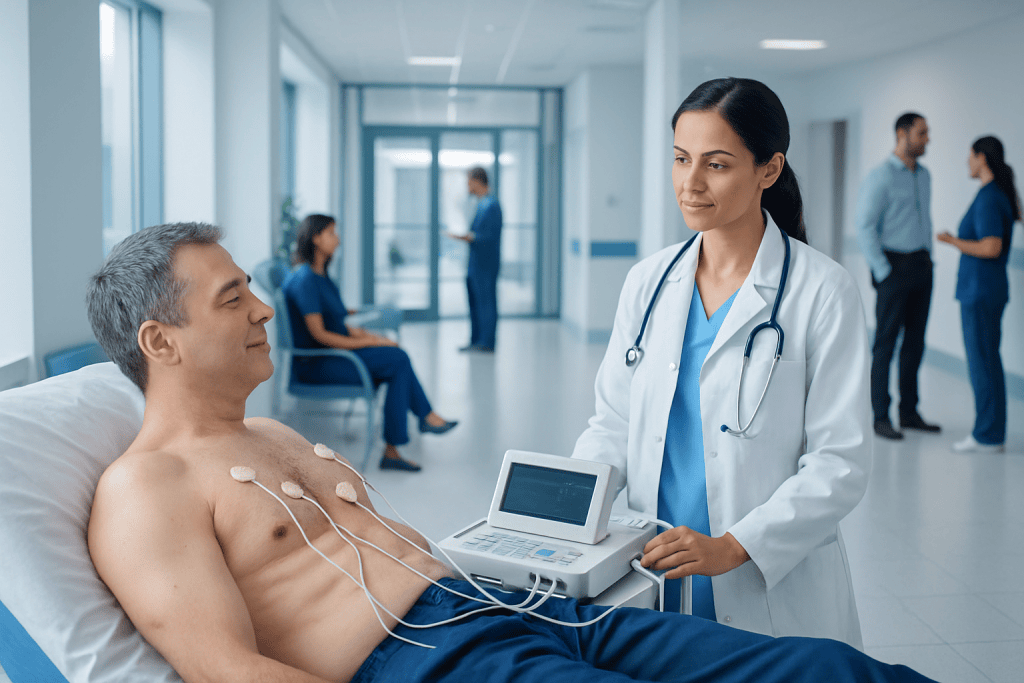
An EKG is a painless, noninvasive test that measures the heart’s electrical signals. It can help detect abnormal heart rhythms, signs of a past or current heart problem, and some effects of medicines or electrolyte imbalances.
Key Takeaways
- An EKG is a painless, noninvasive test that measures the heart’s electrical signals.
- It can help detect abnormal heart rhythms, signs of a past or current heart problem, and some effects of medicines or electrolyte imbalances.
- A normal EKG does not rule out every heart condition, so results are interpreted together with symptoms and medical history.
- The test usually takes only a few minutes and does not send electricity into the body.
- Chest pain, fainting, severe shortness of breath, or a fast or irregular heartbeat should be assessed promptly.
An EKG, also called an electrocardiogram, is a quick, painless test that records the heart’s electrical activity. It helps doctors check heart rhythm, look for signs of strain or damage, and decide whether more testing or treatment is needed.
Overview: what an EKG is and why it is done
An EKG, also written ECG, stands for electrocardiogram. It is a common test that records the heart’s electrical activity using small sticky sensors placed on the skin. The test is quick, painless, and widely used in clinics, emergency departments, and hospitals to understand how the heart is beating.
Each heartbeat begins with an electrical signal. An EKG captures the timing and pattern of that signal as it moves through the heart. From this tracing, a doctor can look for changes in heart rate, rhythm, and conduction, as well as clues that the heart muscle may be under stress or has been affected by poor blood flow.
People may have an EKG because they have symptoms such as chest discomfort, palpitations, dizziness, fainting, or shortness of breath. It may also be done as part of a routine evaluation before surgery, during a checkup for known heart disease, or to monitor how a medicine or device is affecting the heart.
An EKG is an important first-line test, but it is only one piece of the picture. A tracing can be normal even when a person has symptoms, and an abnormal result does not always mean there is a serious problem. Doctors interpret the result alongside the person’s age, health history, examination, and, when needed, additional tests such as echocardiography or other cardiac evaluations.
What an EKG can show
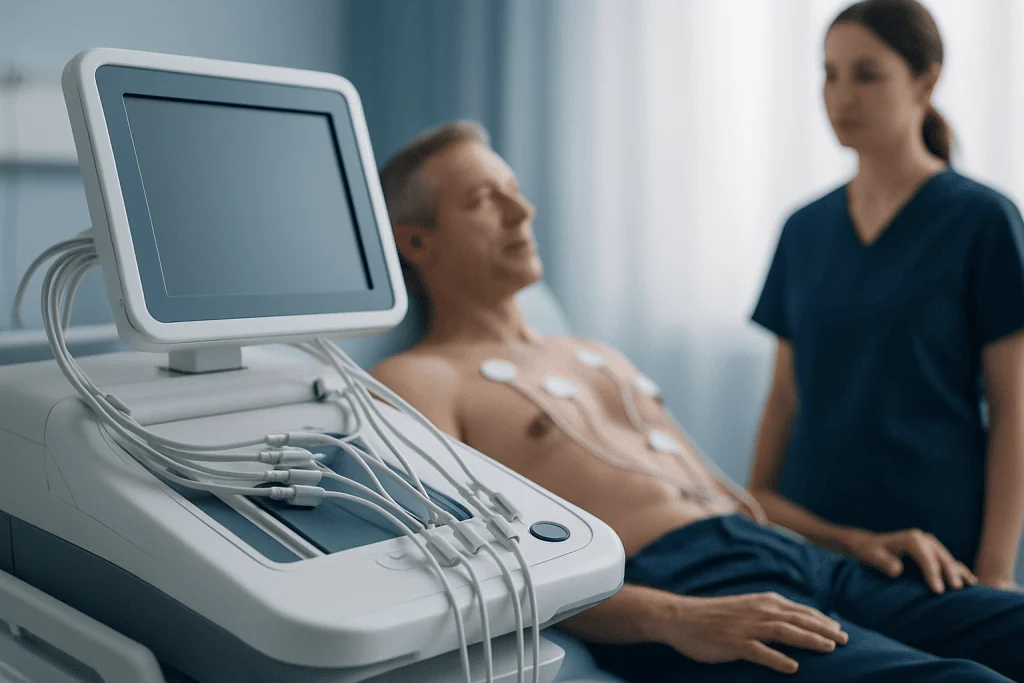
An EKG can provide useful information about how fast the heart is beating, whether the rhythm is regular, and how electrical signals travel through the heart. It can help identify rhythm problems, also called arrhythmias, ranging from harmless extra beats to conditions that need treatment. In some cases, it may support evaluation for arrhythmia when symptoms and test findings fit together.
The test can also show patterns that suggest the heart muscle is not getting enough oxygen-rich blood, or that it has been injured in the past. This is one reason an EKG is often performed when someone has chest pain or symptoms that could point to a heart emergency. However, changes on an EKG are not the only way to diagnose a heart attack, so blood tests and other assessments may also be needed.
In addition, an EKG may reveal signs of an enlarged heart, conduction delays, or effects linked to low or high levels of important minerals such as potassium. Some medicines can change the electrical pattern of the heart as well, so doctors may use repeated EKGs to monitor safety during treatment.
Even with all of this information, an EKG has limits. It records the heart only during the brief time of the test. If symptoms come and go, the tracing may miss an intermittent problem, and a doctor may recommend ambulatory heart monitoring or other tests to capture episodes when they occur.
How the test is performed and what patients can expect

For a standard EKG, a healthcare professional places several small adhesive electrodes on the chest, arms, and legs. Wires connect these electrodes to the machine, which records the electrical activity. The test does not deliver shocks or electricity into the body; it only listens to the heart’s signals.
Most people lie still for a few minutes while the tracing is recorded. The process is painless, though removing the sticky patches can cause mild temporary discomfort, especially if there is body hair. In some cases, the skin may be cleaned or shaved lightly to help the electrodes stick and improve the quality of the recording.
Usually, no special preparation is required. Patients may be asked to avoid applying lotions or oils on the chest that day because they can interfere with electrode contact. It is also helpful to tell the care team about all medicines, supplements, or recent symptoms, as these details can affect how the test is interpreted.
Different forms of electrocardiography may be used depending on the situation. A resting EKG is the standard version. If symptoms happen during activity, a doctor may suggest a monitored exercise test such as stress ECG to see how the heart responds during exertion. If symptoms are brief or unpredictable, longer-term monitoring may be more useful than a single office tracing.
Understanding EKG results
An EKG tracing contains waves and intervals that reflect different parts of the heartbeat. Doctors assess whether the rhythm starts in the right place, whether the heartbeat is too fast or too slow, and whether the electrical signal moves through the heart normally. They also look for patterns that may suggest reduced blood flow, a prior injury, or stress on the heart chambers.
A normal EKG can be reassuring, but it does not rule out every heart problem. Some conditions occur only at certain times, and others may not cause obvious electrical changes at rest. That is why symptoms still matter, even if the tracing appears normal.
An abnormal EKG does not automatically mean there is a dangerous condition. Some changes are mild, temporary, or simply normal variants for that person. Others may be related to fever, dehydration, anxiety, exercise, medicines, or electrolyte changes rather than structural heart disease.
When more information is needed, a doctor may recommend further testing. Depending on the suspected issue, this could include blood tests, wearable rhythm monitoring, imaging, or specialist evaluation. If there are signs of circulation problems in the heart, a person may be assessed further for coronary artery disease or for treatment pathways that may include cardiology care.
When doctors order an EKG
Doctors use EKGs in many situations, from urgent evaluation to routine screening in selected patients. Common reasons include chest pain, a fluttering heartbeat, skipped beats, dizziness, fainting, unexplained fatigue, and shortness of breath. The test may also be ordered when someone has risk factors for heart disease or a history of high blood pressure, diabetes, or prior cardiac problems.
An EKG is often part of preoperative assessment, especially if a patient has known cardiovascular disease or symptoms that need review before anesthesia or surgery. It may also be used to check the heart before starting certain medicines that can affect rhythm or conduction.
For people who already have heart disease, repeated EKGs can help monitor changes over time. This may be important after a heart-related hospital visit, after a procedure, or during follow-up for a known rhythm issue. When findings suggest the heart’s structure or pumping function needs to be examined, doctors may pair the test with an echocardiogram or other imaging, though the exact next step depends on the clinical picture.
In children, athletes, and healthy adults, an EKG is not always needed routinely. Whether it is appropriate depends on symptoms, personal history, family history, examination findings, and the reason for assessment. A qualified clinician can explain when the test is likely to be helpful and when another approach may be more appropriate.
Limits of the test and possible next steps
One of the most important things for patients to know is that an EKG is informative but not complete on its own. It captures a brief moment in time. If an abnormal rhythm comes and goes, the tracing may look normal between episodes. Likewise, some people with early or subtle heart disease can have an EKG that does not show clear changes.
That is why doctors often combine EKG findings with other information. Blood pressure, oxygen level, symptoms, examination, medical history, and family history all matter. In urgent settings, blood tests may be used to look for heart muscle injury. In outpatient care, doctors may use ambulatory monitoring, exercise testing, or imaging to answer specific questions.
Patients sometimes worry when they hear terms such as “nonspecific changes” or “borderline EKG.” These phrases often mean the tracing is not entirely textbook-normal but does not clearly point to one diagnosis. The next step may simply be comparison with an older EKG, repeat testing, or watchful follow-up if symptoms are mild and the overall assessment is reassuring.
If concerns remain, referral to a heart specialist may be recommended. Near the end of the evaluation pathway, some patients benefit from care in a center with coordinated imaging, rhythm testing, and specialist input. Acibadem International’s multidisciplinary specialists and JCI-accredited hospitals diagnose and treat heart conditions for international patients when more advanced assessment is needed.
When to seek medical care
An EKG is often ordered because a symptom needs clarification, but some symptoms should never be ignored. Immediate medical attention is important for chest pressure or pain, severe shortness of breath, fainting, new confusion, weakness on one side of the body, or a rapid or irregular heartbeat that does not settle. These symptoms may or may not be caused by a heart problem, but they require prompt assessment.
Urgent evaluation is also important if symptoms occur along with sweating, nausea, bluish lips, or a feeling of impending collapse. People with known heart disease, implanted heart devices, or a strong family history of sudden cardiac problems should be especially cautious about new symptoms.
For nonurgent symptoms such as occasional palpitations, mild dizziness, reduced exercise tolerance, or repeated episodes of unexplained fatigue, it is sensible to book a medical appointment. Keeping a simple record of when symptoms happen, how long they last, and what the person was doing at the time can help the doctor decide whether an EKG or another test is most useful.
Even when symptoms pass quickly, they should be discussed if they recur. Early evaluation can help identify whether the cause is harmless, medication-related, stress-related, or a sign that more targeted heart testing is needed.
Frequently asked questions
What is the difference between an EKG and an ECG?
There is no difference in the test itself. EKG and ECG are two abbreviations for electrocardiogram, and both refer to a recording of the heart’s electrical activity. In the United States, EKG is commonly used to avoid confusion with EEG, which is a brain wave test.
Does an EKG hurt or expose the body to electricity?
An EKG is painless for most people. The machine records electrical signals from the heart, but it does not send electricity into the body. The only minor discomfort may come from removing the adhesive electrodes from the skin.
How long does an EKG take?
A standard resting EKG usually takes only a few minutes to record, though the full appointment may be a little longer to allow for preparation and electrode placement. In urgent settings, it is often done very quickly. More specialized forms, such as stress testing or ambulatory monitoring, take longer.
Can an EKG detect a heart attack?
An EKG can show patterns that suggest a current or past heart attack, but it is not the only test used. Some heart attacks do not produce clear changes right away, so doctors may also use blood tests, symptoms, and repeated tracings. That is why chest pain should always be assessed by a healthcare professional.
Can anxiety affect EKG results?
Anxiety can affect heart rate and may sometimes contribute to temporary changes such as a faster heartbeat. However, an EKG is still useful because it helps a doctor see whether symptoms fit a normal stress response or suggest another issue. It is important to mention anxiety symptoms, along with any medications or stimulants, during the visit.
If my EKG is normal, does that mean my heart is healthy?
A normal EKG is reassuring, but it does not rule out every heart condition. Some rhythm problems are intermittent, and some structural or circulation-related conditions may need different tests to be identified. Doctors interpret a normal tracing together with symptoms, examination findings, and risk factors.
References
- American Heart Association
- National Heart, Lung, and Blood Institute
- Mayo Clinic
- MedlinePlus
- Cleveland Clinic
This article is for general information only and is not a substitute for professional medical advice. Please consult a qualified doctor about your individual situation.
Explore treatments in Turkey — costs, top hospitals & a free quote
JCI-accredited · board-certified surgeons · reply within 24h
Add us as a Preferred Source to see more of our trusted health content across Google Search, AI Overviews and Discover.
Check your numbers in seconds
BMI, calories, due date, blood pressure and 30+ more clinical calculators — free, instant, doctor-reviewed ranges.