Elastin — Explained by Medical Evidence, Not Myths

Elastin gives many body tissues their ability to stretch and return toward their original shape. The body produces much of its elastin early in life, and replacement later in adulthood is limited.
Key Takeaways
- Elastin gives many body tissues their ability to stretch and return toward their original shape.
- The body produces much of its elastin early in life, and replacement later in adulthood is limited.
- Normal aging, ultraviolet radiation, smoking, and chronic inflammation can damage elastic fibers.
- Collagen provides strength, while elastin provides flexibility and recoil; both are important for healthy tissue.
- No cream, supplement, or procedure can fully replace natural elastin, but some treatments may improve selected visible signs of skin aging.
- Sudden skin changes, unusual joint looseness, breathing symptoms, or a family history of connective-tissue disease should be assessed by a clinician.
Elastin is an essential structural protein that allows tissues such as skin, arteries, lungs, and ligaments to stretch and recoil. Although elastin changes with age and sun exposure, evidence-based skin care and healthy lifestyle choices can help reduce preventable damage.
Elastin: the evidence-based overview
Elastin is a protein that helps certain tissues stretch and then return toward their usual shape. It is especially important in the skin, large blood vessels, lungs, ligaments, and some other connective tissues. In skin, elastin contributes to softness, flexibility, and recoil after facial expressions or gentle stretching.
Elastin is not a cosmetic ingredient in the same sense as a moisturizer. It is a naturally occurring structural component made by the body. Elastic fibers are formed from a core protein called tropoelastin together with supporting proteins and microscopic fibrils. These fibers are organized within the extracellular matrix, the network that supports cells in tissues.
The body makes substantial amounts of elastin during fetal development, childhood, and adolescence. In most adult tissues, production becomes much slower. This helps explain why elastin damaged over time by aging, sun exposure, or smoking is not easily restored to its original arrangement.
Visible skin changes are only one aspect of elastin biology. Because elastic fibers are also present in blood vessels and lungs, elastin has broader roles in normal circulation and breathing. Changes in these tissues should not automatically be attributed to “low elastin,” however; symptoms need individualized medical evaluation.
What elastin does in the body
Elastic fibers act somewhat like very fine biological springs. When a tissue is stretched, the fibers help it recoil once the force is removed. In the skin, this allows the surface to move with facial expression and body movement. In the lungs, elastin helps support the elastic recoil involved in breathing out. In large arteries, it helps vessels expand and contract with each heartbeat.
Elastin works alongside collagen, but the two proteins have different primary roles. Collagen gives connective tissue tensile strength and structure, helping it resist pulling forces. Elastin provides stretch and recoil. Healthy tissue depends on an organized balance of both proteins, as well as water, cells, blood supply, and other extracellular-matrix components.
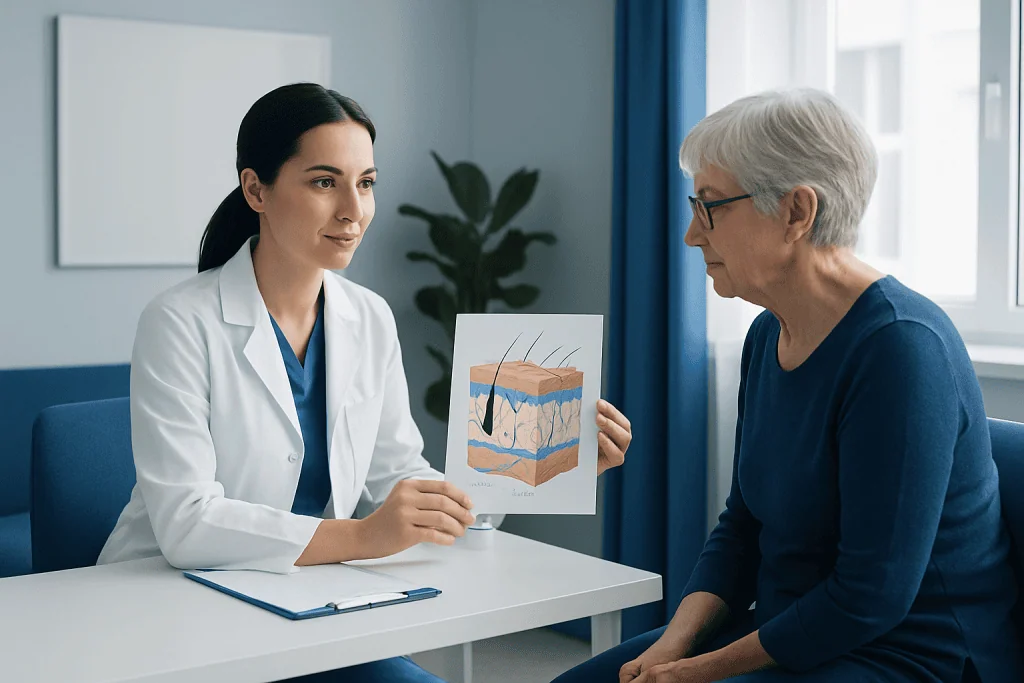
In skin, elastic fibers are concentrated mainly in the dermis, the layer beneath the outer epidermis. The dermis also contains collagen, blood vessels, nerves, and glands. Changes in the dermis can contribute to fine lines, reduced elasticity, uneven texture, and a tendency for the skin to recover more slowly after it is gently pinched or moved.
It is important not to interpret normal changes in skin elasticity as a sign of illness. Skin texture and resilience vary between individuals due to age, genetics, hormonal changes, sun exposure, body weight changes, skin hydration, and environmental factors.
How aging and environment affect elastin
Elastic fibers gradually change throughout adult life. The skin becomes thinner and produces less of several supportive structural components with age. Existing elastic fibers can also become fragmented or disorganized. These normal processes contribute to reduced skin recoil and the development of lines and wrinkles over time.
Ultraviolet, or UV, radiation is one of the most important external causes of premature elastic-fiber damage in the skin. Repeated sun exposure can trigger inflammation and increase enzymes that break down components of the extracellular matrix. A characteristic pattern of abnormal elastic material in chronically sun-exposed skin is often called solar elastosis.
Smoking and exposure to tobacco smoke can also accelerate visible skin aging. Tobacco-related oxidative stress and reduced blood flow may affect collagen and elastin support within the skin. Air pollution, poor sleep, high stress levels, and repeated skin irritation may also influence skin health, although their effects are more complex and vary between individuals.
Rapid weight changes and pregnancy can stretch the skin. Whether stretch marks or loose skin develop depends on many factors, including genetics, the speed and degree of stretching, age, hormones, and skin characteristics. Stretch marks are common and medically harmless, though people may seek advice about their appearance.
Elastin myths, supplements, and skin products
A common misconception is that applying elastin directly to the skin replaces the body’s own elastin fibers. Elastin is a large protein, and topical products generally cannot rebuild the complex elastic-fiber network deep within the dermis. Moisturizers can improve the look and feel of dry skin by supporting the outer skin barrier, but this is different from regenerating native elastin.
Likewise, oral collagen or “elastin” supplements should not be viewed as direct replacements for structural proteins in the skin. Dietary proteins are digested into smaller components, and the body uses these according to its overall needs. Research on some supplements is evolving, but product quality, ingredients, study methods, and outcomes vary. No supplement can reliably recreate youthful elastin architecture.
Some prescription topical medicines and in-clinic procedures may improve certain features of photoaging, such as fine lines, texture, or pigmentation. Their effects may involve skin remodeling and new collagen production, and some approaches may influence elastic-fiber organization. Results depend on the treatment, skin type, baseline sun damage, and aftercare, and should be discussed with a qualified dermatologist or plastic surgeon.
Marketing terms such as “elastin boosting,” “firming,” or “age reversing” are not always clinical claims. A product may be useful for hydration or comfort without changing elastin in a meaningful way. Reading ingredient lists, using sun protection, and seeking professional guidance for persistent concerns are more reliable than relying on promotional language.
Supporting skin and connective-tissue health
The most effective practical step for reducing preventable elastin damage in the skin is regular sun protection. This includes seeking shade when practical, wearing protective clothing and sunglasses, and using a broad-spectrum sunscreen with an appropriate SPF as part of a daily routine. Sunscreen should be reapplied according to the product instructions, especially after swimming, sweating, or prolonged outdoor exposure.
Avoiding smoking and limiting exposure to secondhand smoke are also important for skin and overall health. A balanced dietary pattern that includes adequate protein, fruits, vegetables, whole grains, and healthy fats supports general tissue health. Drinking enough fluid supports normal hydration, but excessive water intake does not rebuild elastin or eliminate wrinkles.
Gentle skin care can help maintain the skin barrier. Many people benefit from a mild cleanser, moisturizer, and daily sunscreen. Products containing retinoids, antioxidants, or exfoliating ingredients may be appropriate for some individuals, but they can cause irritation and are not suitable for everyone. Pregnant or breastfeeding people, and those with eczema, rosacea, or highly sensitive skin, should ask a clinician before starting stronger active products.
Regular physical activity, adequate sleep, and management of chronic health conditions support general wellbeing and circulation. These habits cannot stop biological aging, but they can contribute to healthier skin and body function over time.
Medical conditions involving elastic tissue
Most concerns about elastin relate to normal skin aging rather than disease. Rare inherited connective-tissue disorders can affect elastic fibers and may cause unusually loose, sagging, or fragile skin, joint changes, hernias, or cardiovascular findings. Cutis laxa is an example of a group of uncommon disorders associated with reduced skin elasticity and, in some forms, effects beyond the skin.
Elastic tissue may also be affected in certain lung and blood-vessel conditions. For example, damage to lung elastic structures is involved in emphysema, a form of chronic obstructive pulmonary disease. This does not mean that all breathlessness is caused by elastin damage; asthma, infections, heart disease, anemia, and other conditions can also cause breathing symptoms.
Genetic conditions involving elastin or related pathways are usually assessed through a detailed medical history, physical examination, and, where appropriate, imaging, laboratory tests, or genetic counseling and testing. Evaluation is particularly important when unusual skin laxity occurs in childhood, when multiple family members are affected, or when skin findings occur with heart, lung, or developmental concerns.
Care is tailored to the underlying diagnosis and symptoms. It may involve dermatology, medical genetics, cardiology, pulmonology, pediatrics, or other specialties. The purpose of evaluation is not simply to label changes in the skin, but to identify whether broader health monitoring or treatment is needed.
When to seek medical care
A person should consider medical advice for sudden or rapidly worsening skin changes, marked looseness of the skin that is unusual for their age, frequent unexplained bruising, poor wound healing, or recurrent hernias. A clinician can help distinguish common cosmetic concerns from signs that may need further assessment.
Prompt medical evaluation is important for new or persistent shortness of breath, chest pain, fainting, coughing up blood, severe swelling, or symptoms that interfere with daily activities. These symptoms have many possible causes and should not be self-diagnosed as an elastin problem.
People with a close relative who has a known inherited connective-tissue disorder, early vascular disease, or unexplained severe lung disease may benefit from discussing their family history with a doctor. Genetic counseling can help explain whether testing is appropriate and what results may mean for the individual and family.
For concerns focused on photoaging, wrinkles, scars, or skin laxity, a board-qualified dermatologist or appropriately trained clinician can review realistic options and skin-care safety. Acibadem International’s multidisciplinary specialists and JCI-accredited hospitals also assess skin, genetic, respiratory, and vascular concerns for international patients when coordinated care is needed.
Frequently asked questions
What is elastin?
Elastin is a structural protein found in connective tissues throughout the body. It allows tissues such as skin, lungs, and large blood vessels to stretch and then recoil toward their normal shape. It works with collagen and other tissue components to provide support and flexibility.
What is the difference between elastin and collagen?
Collagen mainly provides strength and structure, helping tissues resist tension. Elastin mainly provides stretch and recoil. Both are present in the skin and many other tissues, and changes in either can affect tissue appearance and function.
Can the body make new elastin after age 30?
The body can produce some elastin-related components in adulthood, but the formation of fully organized, durable elastic fibers is limited compared with early life. Existing fibers also become more difficult to repair after damage. This is why preventing UV and tobacco-related damage is especially valuable.
Do elastin creams work?
A moisturizer containing elastin or similar ingredients may improve skin hydration and temporarily make skin feel smoother. However, topical elastin does not usually rebuild the deep elastic-fiber network in the dermis. Products should be chosen based on skin needs, tolerability, and evidence rather than claims alone.
Can supplements increase elastin in the skin?
There is no supplement proven to directly replace or restore the body’s natural elastin network. Nutritional supplements are digested and do not travel intact to become elastic fibers in the skin. A balanced diet, sun protection, and avoiding smoking are better-established approaches to protecting overall skin health.
Can sun damage to elastin be reversed?
Sun damage cannot be completely reversed, particularly when elastic fibers have become fragmented or disorganized. Consistent sun protection can help prevent further damage, and selected medical treatments may improve some visible signs of photoaging. A dermatologist can advise which options may be suitable for an individual’s skin.
References
- National Institute on Aging
- American Academy of Dermatology Association
- National Institutes of Health
- MedlinePlus
- World Health Organization
This article is for general information only and is not a substitute for professional medical advice. Please consult a qualified doctor about your individual situation.
Joint and spine care in Turkey — expert assessment & treatment
JCI-accredited · board-certified surgeons · reply within 24h
Add us as a Preferred Source to see more of our trusted health content across Google Search, AI Overviews and Discover.