Elbow Break Treatment: How It Works, Results and What to Expect

A broken elbow needs prompt assessment because the elbow is a complex joint involving bone, nerves, blood vessels and ligaments. Stable, well-aligned fractures may be managed with a splint or brace, while displaced fractures may require surgical fixation.
Key Takeaways
- A broken elbow needs prompt assessment because the elbow is a complex joint involving bone, nerves, blood vessels and ligaments.
- Stable, well-aligned fractures may be managed with a splint or brace, while displaced fractures may require surgical fixation.
- Early, supervised movement is often important after the clinician considers the fracture stable enough, as elbow stiffness is common.
- Healing commonly takes weeks, while strength and comfortable range of motion may continue improving for several months.
- Increasing pain, numbness, a cold hand, fever or wound concerns after injury or surgery require urgent medical advice.
Elbow break treatment depends on which bone is fractured, whether the pieces remain aligned, and whether the joint is stable. Many stable fractures heal with immobilization and guided rehabilitation, while displaced or unstable fractures may need surgery to restore joint alignment and movement.
Elbow Break Treatment: How It Works
Elbow break treatment aims to help the fractured bone heal in the correct position while protecting the elbow joint and preserving as much arm movement as possible. Treatment may involve a sling, splint, cast or brace for a stable fracture, or an operation when fracture pieces are separated, the joint is unstable, or the break involves the joint surface.
The elbow is formed by three bones: the humerus in the upper arm, and the radius and ulna in the forearm. A fracture can affect the tip of the ulna (olecranon), the radial head or neck, the lower end of the humerus, or more than one area. The treatment plan is therefore individual and is based on imaging, examination findings, age, activity needs and associated soft-tissue injuries.
For people needing operative care, orthopedic surgery may use plates, screws, pins, wires or, in selected situations, joint replacement components to hold the bones in a stable position. The goal is not simply to join the bone; it is to reconstruct a functional elbow that can bend, straighten and rotate safely during recovery.
Symptoms, Causes and When to Seek Medical Care
Broken elbows often occur after a fall onto an outstretched hand, a direct blow to the elbow, a sports injury or a road traffic accident. Symptoms can include sudden pain, swelling, bruising, difficulty moving the elbow or forearm, tenderness, a visible change in shape, and pain when trying to bend or straighten the arm. Some fractures are subtle, especially when swelling is limited.
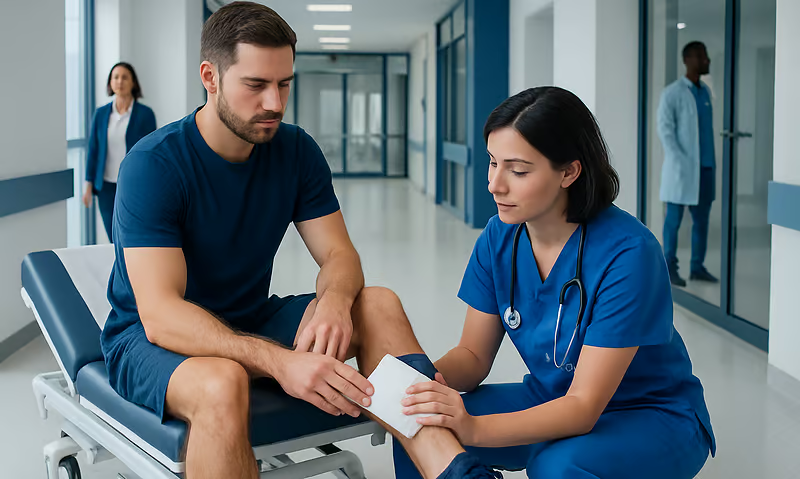
It is important not to force an injured elbow straight or attempt to put it back into position. Supporting the arm in the most comfortable position and using a wrapped cold pack for short periods may help while arranging medical assessment. A clinician may also look for ligament injury, elbow dislocation, skin wounds and injuries elsewhere in the arm.
When to seek medical care: urgent assessment is appropriate after significant trauma, visible deformity, severe swelling, inability to use the arm, or suspected fracture. Emergency care is needed if the hand is pale, blue, cold, weak, numb or increasingly painful; if there is an open wound near the injury; or if the elbow appears dislocated. These signs can indicate compromised circulation, nerve involvement or a serious injury requiring prompt treatment.
Assessment and Candidacy for Surgery
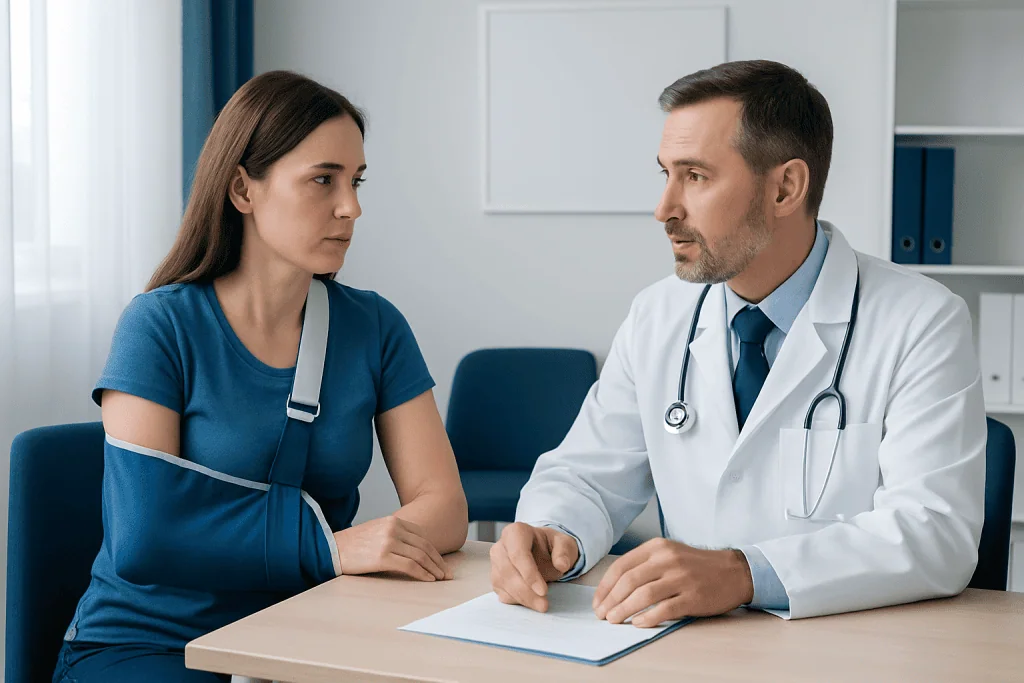
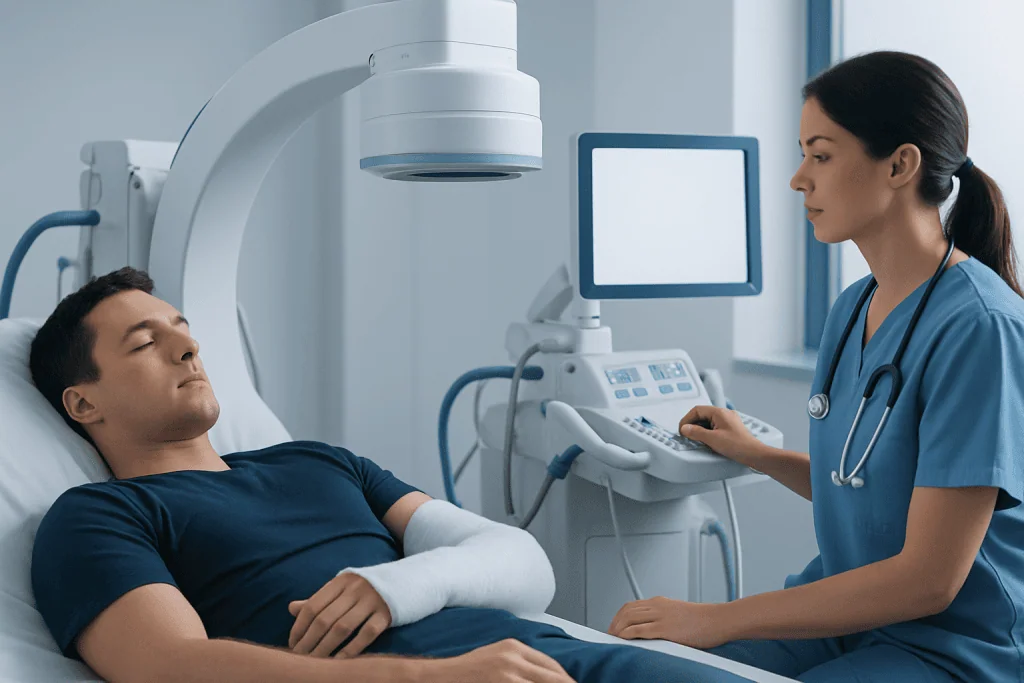
Diagnosis begins with a medical history and physical examination. The clinician checks skin condition, pulse, sensation and movement in the hand and fingers, because nerves and blood vessels pass close to the elbow. X-rays usually confirm the fracture and show whether the bone fragments are displaced. CT scanning may be used to define complex breaks or plan surgery in greater detail.
Non-surgical treatment may be suitable when the fracture is stable, the bones are well aligned, the joint surface is acceptable and the person can attend follow-up visits. The arm is generally protected in a splint or brace, with repeat imaging as advised to ensure the fracture does not move during early healing.
Surgery is more likely to be recommended for an open fracture, a fracture-dislocation, significant displacement, joint incongruity, instability, multiple fracture fragments, or loss of the elbow’s extensor mechanism. The decision also considers overall health, bone quality, hand dominance, work and daily activity requirements. Related injuries, such as elbow dislocation, may need treatment at the same time.
What Happens During Elbow Fracture Surgery?
Before surgery, the orthopedic team reviews imaging, medical conditions, medications and anesthesia options. Surgery is commonly performed under general anesthesia, sometimes with a regional nerve block to help manage pain after the procedure. The arm is positioned carefully to allow the surgeon to access the injured part of the elbow.
Through an incision over the relevant part of the joint, the surgeon realigns the broken pieces as precisely as possible. Fixation may include screws for a simple fracture, plates and screws for more complex patterns, or wires and pins in selected fractures. If the radial head is severely fragmented and cannot be reconstructed, the surgeon may consider replacing it in suitable cases. Damaged ligaments may also be repaired when needed for stability.
At the end of the procedure, the wound is closed and covered. The arm may be placed in a splint, and the team provides instructions about elevation, wound care, pain management and follow-up. Some people go home the same day, while others need observation depending on the injury, surgery and general health.
Acibadem International’s multidisciplinary specialists and JCI-accredited hospitals provide assessment and treatment for elbow fractures for international patients, including surgical care and rehabilitation planning when appropriate.
Benefits, Risks and Recovery Timeline
The main benefit of appropriate fracture treatment is improved bone alignment and joint stability, which supports healing and can reduce the likelihood of long-term loss of function. Surgical fixation may allow carefully controlled movement sooner than prolonged immobilization in unstable fractures. However, no treatment can completely eliminate the possibility of stiffness or other complications after a significant elbow injury.
Potential surgical risks include infection, bleeding, wound problems, injury to nearby nerves or blood vessels, blood clots, anesthesia-related complications, persistent pain, stiffness, delayed healing, nonunion, malunion and irritation from fixation hardware. Some people later need a procedure to remove symptomatic hardware or address stiffness. The treating team explains the risks that are most relevant to the individual fracture.
During the first days, swelling and discomfort are expected and are usually managed with prescribed or recommended pain relief, arm elevation and protection of the splint or dressing. Follow-up commonly occurs within one to two weeks to examine the wound and review early recovery. Rehabilitation may begin early or after a period of protection, depending on the fracture and repair.
Bone healing often takes around six to twelve weeks, although this varies. Regaining comfortable motion, strength and endurance can take several months, and more complex injuries may take longer. physical therapy and rehabilitation can help restore movement gradually while avoiding loads that could stress the healing bone.
Does a Broken Elbow Ever Fully Heal?
Many broken elbows heal well, especially when the fracture is diagnosed promptly, aligned appropriately and followed by a structured rehabilitation plan. “Fully healed” can mean that the bone has united on imaging and the person has returned to usual daily activities without major limitation. However, recovery differs depending on fracture complexity, joint damage, age, general health and adherence to follow-up guidance.
Some people have lasting differences in elbow extension, forearm rotation, strength or comfort, particularly after severe fractures, dislocations or injuries involving cartilage and ligaments. Mild loss of the ability to fully straighten the elbow is relatively common and may not significantly affect everyday function. Ongoing pain, catching, instability or declining movement should be reviewed by an orthopedic specialist.
Can You Still Bend Your Arm With a Fractured Elbow?
Yes, some people can still bend or partly straighten the arm with a fractured elbow, particularly when the fracture is small or not displaced. The ability to move the elbow does not rule out a fracture. Pain, swelling and muscle guarding can also limit movement even if the bone fragments have not shifted.
Trying repeatedly to test movement can worsen pain and may move an unstable fracture. After an injury, the safer approach is to support the arm, avoid lifting or pushing, and arrange an examination with appropriate imaging. A clinician can determine whether movement is safe and when exercises should begin.
What Not to Do After Broken Elbow Surgery
After broken elbow surgery, patients should not remove the splint, dressing or brace unless their surgical team has instructed them to do so. They should avoid lifting, pushing, pulling, weight-bearing through the operated arm and driving until cleared. Even everyday tasks such as opening heavy doors, carrying bags or pushing up from a chair can place substantial force on the healing elbow.
It is also important not to begin unsupervised stretching or strengthening exercises before the recommended time. The elbow needs movement to limit stiffness, but doing too much too early can compromise a repair. Smoking and nicotine products can interfere with bone and wound healing, so discussing support to stop is advisable.
Patients should follow wound-care guidance and contact the care team for drainage, increasing redness, fever, worsening pain, new numbness or changes in finger color or temperature. Keeping scheduled imaging and rehabilitation appointments helps the team identify concerns early.
How Painful Is Elbow Surgery Recovery?
Pain after elbow surgery is expected, particularly during the first several days, but it is usually managed with a personalized plan that may include prescribed medication, non-drug measures and, for some patients, a regional nerve block. Pain levels vary with the type of fracture, extent of surgery, swelling and individual pain sensitivity. The goal is usually to make pain manageable enough for rest, safe movement and participation in rehabilitation.
Discomfort often improves gradually over the first one to two weeks, although soreness during therapy and after activity can continue for longer. Elevating the arm as directed, protecting the incision, using cold therapy only if approved, and taking medication exactly as instructed can help. Pain that suddenly worsens rather than gradually improves should be assessed.
During recovery, the orthopedic team may coordinate care with rehabilitation professionals and other specialists when needed. Conditions affecting bone strength or healing, including osteoporosis, may be evaluated when relevant to the injury and the person’s health history.
Frequently asked questions
How is an elbow fracture treated without surgery?
A stable, well-aligned elbow fracture may be treated with a sling, splint, cast or brace to protect the bone while it heals. Follow-up examinations and X-rays are important because some fractures can shift after the initial injury. Guided motion exercises are introduced when the clinician considers them safe.
How long does it take for a broken elbow to heal?
Bone healing commonly takes about six to twelve weeks, but timing varies with the fracture type, treatment and the person's general health. Recovery of strength and range of motion often continues for several months. Complex fractures or those requiring surgery may take longer to recover.
Does every broken elbow need surgery?
No. Many elbow fractures do not require surgery if the bones remain in a stable, acceptable position and the joint is functioning appropriately. Surgery is more often used for displaced, unstable, open or complex fractures, or when the joint surface needs reconstruction.
When can a person start moving the elbow after surgery?
The timing depends on the fracture pattern and the repair performed. Some people begin gentle, supervised movement soon after surgery, while others need a longer protection period. The surgeon and physiotherapist provide instructions tailored to the stability of the repair.
Will metal plates or screws need to be removed after elbow surgery?
Most plates and screws can remain in place if they are not causing symptoms. Removal may be considered if hardware becomes painful, prominent, restricts movement or contributes to another problem after the fracture has healed. This decision is individualized and should be discussed with the orthopedic surgeon.
What symptoms after elbow fracture surgery need urgent attention?
Urgent medical advice is needed for a cold, pale or blue hand; increasing numbness or weakness; severe or rapidly worsening pain; heavy bleeding; or a tight splint with worsening swelling. Fever, spreading redness, pus-like drainage or a wound that opens should also be reported promptly because they may indicate infection or a wound problem.
References
- American Academy of Orthopaedic Surgeons
- OrthoInfo from the American Academy of Orthopaedic Surgeons
- National Institute of Arthritis and Musculoskeletal and Skin Diseases
- MedlinePlus
- NHS
This article is for general information only and is not a substitute for professional medical advice. Please consult a qualified doctor about your individual situation.
Joint and spine care in Turkey — expert assessment & treatment
JCI-accredited · board-certified surgeons · reply within 24h
Add us as a Preferred Source to see more of our trusted health content across Google Search, AI Overviews and Discover.

More from the Health Library

Related Specialists

Dr. Ersın Adem Hadzhıyuseın
Inpatient Clinic Physicians
Assoc. Prof. Dr. Tunay Erden
Orthopedic Surgery & Traumatology
Assoc. Prof. Dr. Fatih Büyükcam
Emergency Service
Dr. Necip Tuğrul
Pediatrics