Embolic Stroke: What Patients Need to Know

An embolic stroke occurs when a clot or debris forms elsewhere in the body and travels to the brain. Symptoms usually begin suddenly and may include facial drooping, arm weakness, speech trouble, vision changes, or imbalance.
Key Takeaways
- An embolic stroke occurs when a clot or debris forms elsewhere in the body and travels to the brain.
- Symptoms usually begin suddenly and may include facial drooping, arm weakness, speech trouble, vision changes, or imbalance.
- Rapid emergency treatment is important because some therapies work best within a limited time window.
- Doctors also look for the source of the embolus, such as atrial fibrillation or carotid artery disease, to help prevent another stroke.
- Long-term recovery may involve medicines, rehabilitation, and management of underlying heart or vascular conditions.
An embolic stroke is a type of ischemic stroke caused by a clot or other material that travels through the bloodstream and blocks an artery in the brain. It is a medical emergency, but fast diagnosis and treatment can improve outcomes and help reduce long-term complications.
Overview: what an embolic stroke means
An embolic stroke is a type of ischemic stroke. It happens when a blood clot or another piece of material forms in one part of the body, breaks loose, travels through the bloodstream, and becomes stuck in a blood vessel supplying the brain. When blood flow is blocked, brain tissue does not get enough oxygen and nutrients, and symptoms can begin suddenly.
This differs from a thrombotic stroke, in which a clot forms directly inside an artery already narrowed in or near the brain. In an embolic stroke, the blockage starts elsewhere before moving to the brain. Common sources include the heart, especially in people with atrial fibrillation, and large arteries in the neck.
An embolic stroke is always time-sensitive. Quick recognition and emergency treatment may limit brain injury and improve recovery. Just as important, doctors try to identify where the embolus came from so they can lower the risk of another event.
Symptoms and warning signs
Symptoms of embolic stroke usually start without warning. They depend on which part of the brain is affected, but the key pattern is sudden change. A person may be well one moment and then suddenly have trouble speaking, moving an arm, seeing clearly, or keeping balance.
Common signs include weakness or numbness on one side of the face or body, slurred speech, difficulty understanding language, sudden vision loss or double vision, severe dizziness, trouble walking, confusion, or a sudden severe headache. Not every person has every symptom, and some symptoms may seem mild at first.
A simple way to remember urgent stroke symptoms is FAST:
- Face drooping
- Arm weakness
- Speech difficulty
- Time to call emergency services
Even if symptoms improve quickly, urgent medical evaluation is still needed. A brief episode can be a transient ischemic attack, sometimes called a mini-stroke, which can be a warning sign of a future stroke.
How it happens: causes and risk factors
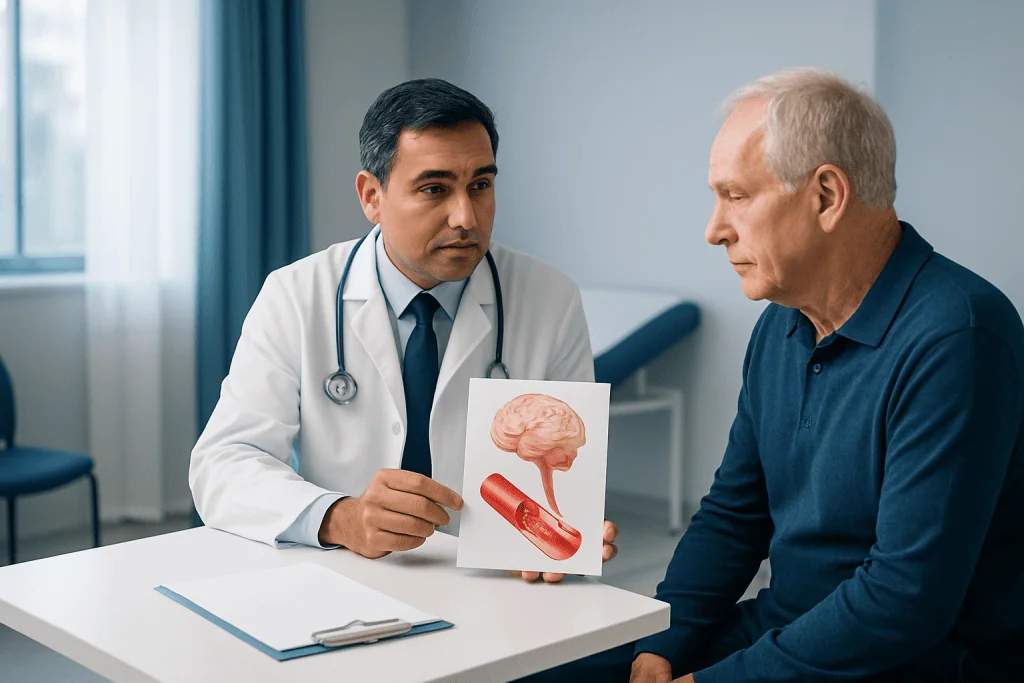
The most common cause of embolic stroke is a clot that forms in the heart and travels to the brain. This is especially associated with atrial fibrillation, an irregular heart rhythm that can allow blood to pool and clot in the upper chambers of the heart. Heart valve disease, recent heart attack, and certain heart infections or structural abnormalities can also increase risk.
Another important source is plaque in the carotid arteries, the large blood vessels in the neck that carry blood to the brain. A piece of plaque or clot can break off and move upward into smaller brain arteries. In this setting, doctors may also evaluate for carotid artery disease as part of stroke prevention planning.
Risk factors overlap with those for many cardiovascular conditions. They include high blood pressure, diabetes, high cholesterol, smoking, obesity, physical inactivity, older age, sleep apnea, and a personal history of stroke or transient ischemic attack. Some people also have clotting disorders or other less common conditions that make emboli more likely.
Although embolic stroke can affect adults of any age, risk rises as people get older and as heart and blood vessel disease becomes more common. Managing long-term health conditions and staying engaged in preventive care can significantly reduce overall stroke risk.
How doctors diagnose an embolic stroke
Diagnosis begins with an urgent medical assessment focused on timing, symptoms, and a neurological examination. Knowing when the person was last known to be well is especially important because some stroke treatments depend on a defined treatment window. Emergency teams also check blood sugar, blood pressure, oxygen levels, and other immediate factors that can affect the brain.
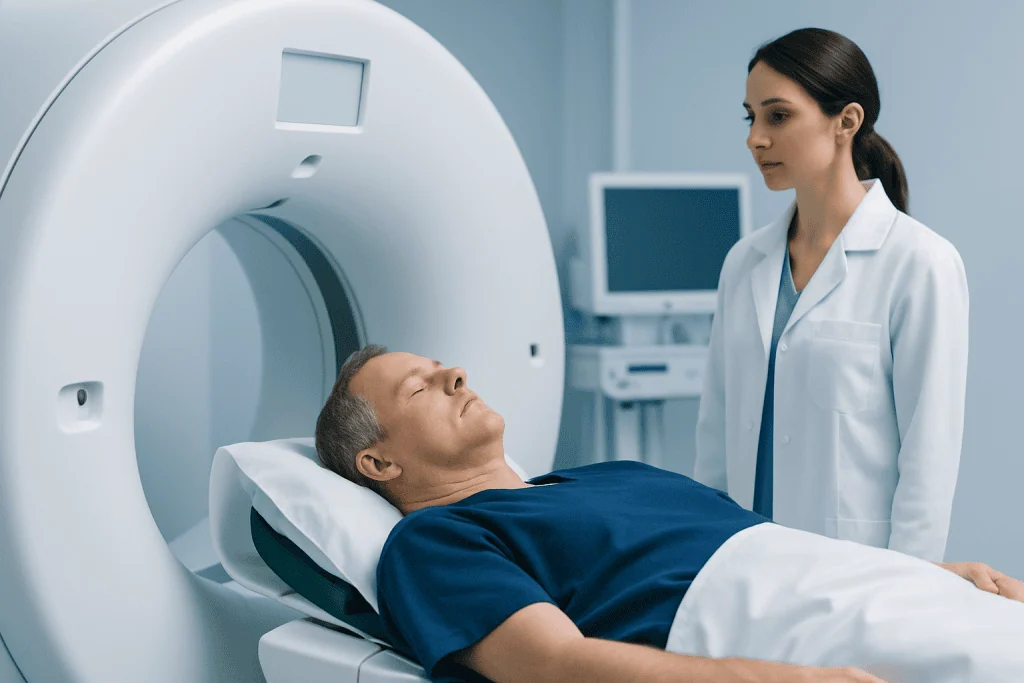
Brain imaging is essential. A CT scan is often the first test because it can quickly show whether bleeding is present. MRI may give more detail about early ischemic injury in certain cases. Vascular imaging, such as CT angiography or MR angiography, can help locate a blocked artery and guide decisions about interventional neuroradiology treatment when a large vessel is involved.
Because an embolic stroke starts elsewhere, doctors usually investigate the likely source of the clot. Tests may include an electrocardiogram, heart rhythm monitoring, echocardiography, and ultrasound of the neck arteries. Blood tests may also help identify risk factors or uncommon causes. This careful search shapes the long-term prevention plan.
In some patients, specialists may recommend additional evaluation for heart rhythm problems, structural heart disease, or disorders of coagulation. When symptoms, scans, and risk factors fit a broader cerebrovascular picture, clinicians may also discuss related conditions such as stroke and how the embolic subtype affects treatment choices.
Treatment options in the emergency and recovery phases
Treatment aims to restore blood flow to the brain as quickly and safely as possible. For eligible patients with ischemic stroke, clot-dissolving medicine may be given within a specific time window after symptom onset. This treatment is not suitable for everyone, so doctors carefully review brain imaging, medical history, and bleeding risk before proceeding.
If a major brain artery is blocked, mechanical thrombectomy may be considered. In this procedure, specialists guide small instruments through blood vessels to remove the clot directly. This is most often performed by teams trained in stroke treatment and endovascular care, and it can be highly beneficial in selected patients.
After the emergency phase, treatment focuses on preventing another stroke. Depending on the cause, this may include blood-thinning medicine such as antiplatelet or anticoagulant therapy, treatment of high blood pressure and cholesterol, blood sugar control, and support for smoking cessation. If a narrowed neck artery is the source, some patients may need a vascular procedure as part of ongoing care.
Rehabilitation is also a key part of treatment. Physical therapy, occupational therapy, speech and language therapy, and cognitive support can all help recovery. Progress is often gradual, and recovery needs vary widely from person to person depending on which brain functions were affected.
Prevention, self-care, and reducing future risk
Preventing a first or second embolic stroke usually means controlling the conditions that allow clots to form or travel. For many people, this includes careful management of blood pressure, cholesterol, diabetes, and heart rhythm problems. Taking prescribed medicines consistently is one of the most important steps.
Healthy lifestyle choices also matter. Not smoking, being physically active, maintaining a weight that supports heart health, limiting alcohol, and following a balanced eating pattern can all help reduce stroke risk. Regular follow-up with a doctor is especially important for people with atrial fibrillation or prior stroke.
People recovering from embolic stroke may benefit from home safety planning, medication review, and support with mobility, communication, or daily activities. Family members and caregivers often play an important role in helping with appointments, therapy exercises, and recognition of recurrent symptoms.
Near the end of the diagnostic or recovery journey, some patients seek coordinated care across specialties such as neurology, cardiology, vascular medicine, imaging, and rehabilitation. Acibadem International’s multidisciplinary specialists and JCI-accredited hospitals diagnose and treat stroke for international patients, including advanced evaluation when an embolic source is suspected.
When to seek medical care
Emergency medical care is needed immediately if there are sudden stroke-like symptoms, even if they last only a few minutes or improve on their own. Calling emergency services right away is safer than waiting to see if symptoms pass. Time matters because treatment decisions depend on how quickly the person reaches a stroke-capable hospital.
Urgent medical review is also important after a transient ischemic attack, new irregular heartbeat, fainting episode, or unexplained one-sided weakness or speech trouble. People who have already had an embolic stroke should contact their doctor promptly if they have medication side effects, repeated falls, swallowing problems, or signs that recovery is changing unexpectedly.
Routine follow-up matters too. Ongoing care helps monitor blood pressure, rhythm problems such as atrial fibrillation, cholesterol, rehabilitation progress, and emotional well-being after stroke. A qualified clinician can tailor prevention and recovery advice to the individual’s medical history.
Frequently asked questions
Is an embolic stroke the same as a blood clot in the brain?
An embolic stroke is caused by a clot or other material that travels to the brain and blocks an artery there. In everyday language, people may call this a blood clot in the brain, but medically the key point is that the blockage often starts elsewhere, such as the heart or neck arteries.
Can an embolic stroke happen because of atrial fibrillation?
Yes. Atrial fibrillation is one of the most common causes because the irregular rhythm can allow blood to pool and form clots in the heart. If a clot breaks free and reaches the brain, it can cause an embolic stroke.
How is an embolic stroke different from a hemorrhagic stroke?
An embolic stroke is an ischemic stroke, meaning it happens because blood flow is blocked. A hemorrhagic stroke happens when a blood vessel in or around the brain ruptures and causes bleeding. These conditions need different treatments, which is why urgent brain imaging is so important.
Can symptoms go away and still be serious?
Yes. Symptoms that improve quickly may represent a transient ischemic attack, which can be a warning sign of a future stroke. Even when symptoms disappear, medical evaluation should not be delayed.
What tests help find the source of an embolic stroke?
Doctors may use heart rhythm testing, echocardiography, ultrasound of the neck arteries, and blood vessel imaging of the brain and neck. These tests help show whether the clot likely came from the heart, carotid arteries, or another source.
What is recovery like after an embolic stroke?
Recovery varies widely depending on how much brain tissue was affected and how quickly treatment began. Some people recover well with minimal lasting symptoms, while others need rehabilitation for movement, speech, swallowing, or thinking skills. Progress often continues over time with therapy and follow-up care.
References
- World Health Organization
- American Stroke Association
- National Institute of Neurological Disorders and Stroke
- Centers for Disease Control and Prevention
- National Heart, Lung, and Blood Institute
This article is for general information only and is not a substitute for professional medical advice. Please consult a qualified doctor about your individual situation.
Explore treatments in Turkey — costs, top hospitals & a free quote
JCI-accredited · board-certified surgeons · reply within 24h
Add us as a Preferred Source to see more of our trusted health content across Google Search, AI Overviews and Discover.
Check your numbers in seconds
BMI, calories, due date, blood pressure and 30+ more clinical calculators — free, instant, doctor-reviewed ranges.

More from the Health Library

High Lft Liver — Explained by Medical Evidence, Not Myths
Lung Nodule: What Patients Need to Know

Pilon Fracture: A Complete Medical Overview

What is mi? A Doctor-Reviewed Answer

Betadine: What Patients Need to Know