Endometriosis: Pelvic Pain, Diagnosis, and Fertility Impact
Endometriosis can cause painful periods, chronic pelvic pain, pain during sex, bowel or bladder discomfort, and fertility challenges. Symptoms vary widely; some people have severe pain with mild disease, while others have few symptoms despite more extensive findings.
Key Takeaways
- Endometriosis can cause painful periods, chronic pelvic pain, pain during sex, bowel or bladder discomfort, and fertility challenges.
- Symptoms vary widely; some people have severe pain with mild disease, while others have few symptoms despite more extensive findings.
- Diagnosis often begins with a medical history, pelvic examination, and imaging, but laparoscopy may be needed to confirm and treat disease in selected cases.
- Treatment may include pain relief, hormonal therapies, surgery, fertility care, and lifestyle-based symptom support.
- People with persistent pelvic pain, worsening menstrual symptoms, or difficulty becoming pregnant should consult a qualified gynecologist.
Endometriosis is a chronic condition in which tissue similar to the lining of the uterus grows outside the uterus, often causing pelvic pain and sometimes affecting fertility. With timely diagnosis and individualized care, many people can manage symptoms and make informed reproductive health decisions.
Overview
Endometriosis is a long-term gynecological condition in which tissue similar to the endometrium, the lining inside the uterus, is found outside the uterus. These endometriosis implants most often develop on the ovaries, fallopian tubes, pelvic lining, and tissues around the uterus, although they can occasionally occur in other areas. Like the uterine lining, this tissue can respond to monthly hormonal changes, leading to inflammation, irritation, scarring, and sometimes cysts called endometriomas.
The condition is most commonly associated with pelvic pain, especially around menstruation, but it can also affect bowel, bladder, sexual, and reproductive health. Symptoms do not always match the amount of disease seen during examination or surgery. A person with small lesions may have severe pain, while another with more extensive endometriosis may have few symptoms.
Endometriosis is not cancer, and it is not caused by anything a person did wrong. It is a complex condition influenced by hormonal, immune, genetic, and inflammatory factors. Because symptoms can resemble those of other conditions, a careful medical assessment is important to guide treatment and improve quality of life.
Symptoms
The most recognized symptom of endometriosis is pelvic pain, particularly pain that begins before or during menstruation and may be stronger than typical menstrual cramps. Pain may be cramping, deep, sharp, or aching, and it can interfere with school, work, sleep, relationships, and daily activities. Some people also experience pain between periods, making the condition feel unpredictable and difficult to manage.
Endometriosis can also cause symptoms related to the bowel, bladder, and sexual function. These symptoms may worsen during menstruation, which can be an important clue for diagnosis. Common symptoms may include:
- Painful periods, also called dysmenorrhea
- Chronic pelvic or lower back pain
- Pain during or after sexual intercourse
- Painful bowel movements, constipation, diarrhea, or bloating
- Pain or discomfort with urination, especially during periods
- Heavy menstrual bleeding or spotting between periods
- Fatigue, nausea, or digestive discomfort around menstruation
- Difficulty becoming pregnant
Not everyone with endometriosis has all of these symptoms. Some people first learn they may have the condition during an evaluation for infertility or during surgery for another reason. Because pelvic pain can have many causes, including ovarian cysts, fibroids, pelvic inflammatory disease, irritable bowel syndrome, and bladder pain syndrome, professional evaluation is essential.
Causes and Risk Factors
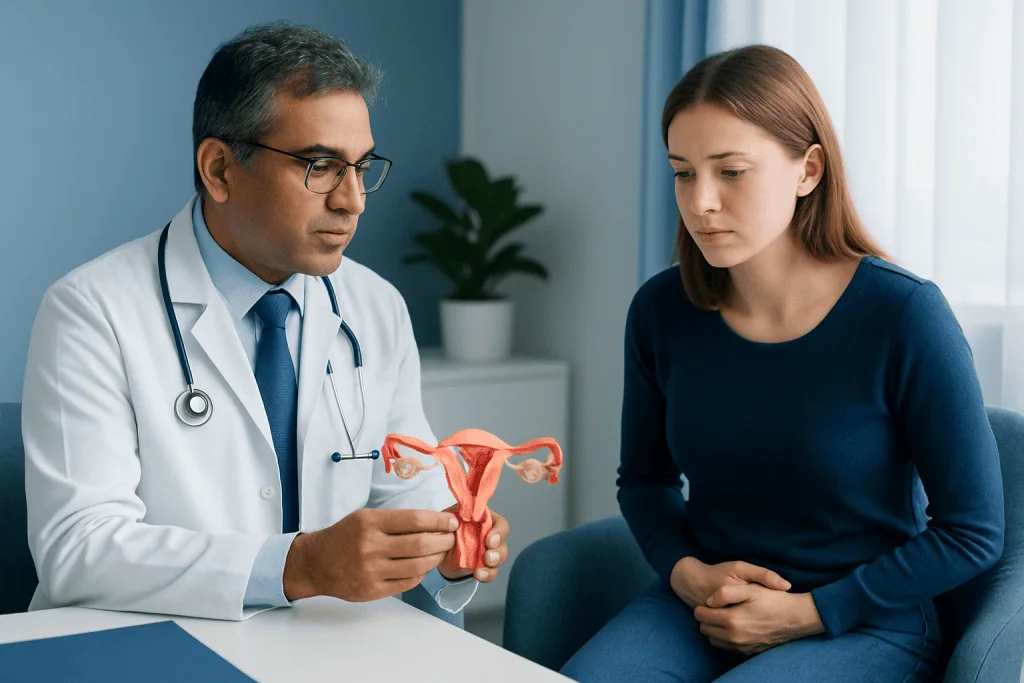
The exact cause of endometriosis is not fully understood. Several theories may help explain how endometriosis develops, and more than one mechanism may be involved. One theory is retrograde menstruation, in which menstrual blood flows backward through the fallopian tubes into the pelvis, allowing endometrial-like cells to implant. However, because retrograde menstruation can occur in many people who never develop endometriosis, other factors are also likely important.
Genetics and the immune system may play a role. Endometriosis can run in families, suggesting inherited susceptibility. Immune or inflammatory responses may allow endometrial-like cells to survive outside the uterus and contribute to pain and scarring. Hormones, particularly estrogen, also influence the growth and activity of endometriosis tissue.
Several factors may be associated with a higher likelihood of endometriosis. These include having a close family member with the condition, starting periods at an early age, having short menstrual cycles, having heavy or long menstrual bleeding, or conditions that block normal menstrual flow. Endometriosis can affect adolescents and adults, and symptoms should not be dismissed simply because a person is young.
Diagnosis
Diagnosis begins with a detailed discussion of symptoms, menstrual history, pain patterns, bowel and bladder symptoms, sexual pain, prior surgeries, and fertility goals. A gynecologist may perform a pelvic examination to check for tenderness, limited movement of pelvic organs, ovarian cysts, or nodules. A normal examination does not rule out endometriosis, especially in early or superficial disease.
Imaging can be helpful, particularly when ovarian endometriomas or deep endometriosis are suspected. Transvaginal ultrasound is often used as a first-line imaging test. In some cases, magnetic resonance imaging may be recommended to map deeper disease before surgery or to clarify findings. Imaging may not detect small superficial implants, so symptoms and clinical judgment remain important.
Laparoscopy, a minimally invasive surgical procedure, has traditionally been considered the definitive way to diagnose endometriosis because it allows the doctor to see lesions and, if appropriate, remove or biopsy them. However, not everyone needs immediate surgery. Many people may begin treatment based on symptoms and examination findings, especially if fertility is not an immediate concern and there are no signs of a mass or another urgent condition.
A thoughtful diagnosis also means considering other conditions that can occur alongside or mimic endometriosis. These may include adenomyosis, fibroids, pelvic floor muscle dysfunction, irritable bowel syndrome, interstitial cystitis or bladder pain syndrome, and chronic pain sensitization. Identifying overlapping conditions can make treatment more effective and personalized.
Treatment Options
Treatment for endometriosis is individualized. The best approach depends on symptom severity, age, reproductive plans, previous treatments, imaging findings, and personal preferences. The main goals are to reduce pain, improve function, treat associated problems such as endometriomas or scarring, and support fertility when pregnancy is desired.
Pain relief may include nonsteroidal anti-inflammatory medicines when appropriate, especially for menstrual pain. Hormonal treatments can reduce or suppress menstrual cycling and may help calm endometriosis-related inflammation. Options can include combined hormonal contraceptives, progestin-only therapies, hormonal intrauterine systems, or medications that suppress ovarian hormone production. These treatments are not suitable for everyone, and side effects, contraindications, and fertility plans should be discussed with a doctor.
Surgery may be considered when pain is severe, symptoms do not respond to medical treatment, imaging shows an endometrioma or deep disease, or fertility evaluation suggests that surgical treatment may be helpful. Laparoscopic surgery can remove or destroy endometriosis lesions, release scar tissue, and treat ovarian endometriomas when appropriate. Surgery requires careful planning because removing disease while protecting ovarian reserve, bowel, bladder, and nerves is important.
Endometriosis is a chronic condition, so long-term management may involve a combination of medical treatment, surgery when indicated, pelvic floor physiotherapy, pain management support, and follow-up care. Shared decision-making is important. A treatment plan should be reviewed over time, especially if symptoms change or pregnancy goals become a priority.
Fertility Impact
Endometriosis can affect fertility, but it does not mean pregnancy is impossible. Many people with endometriosis conceive naturally, while others may need medical or fertility support. The effect on fertility may depend on the location and extent of disease, whether the ovaries or fallopian tubes are involved, the presence of scar tissue, age, ovarian reserve, partner sperm factors, and other reproductive health conditions.
Endometriosis may reduce fertility in several ways. Inflammation in the pelvis can affect the environment around eggs, sperm, and embryos. Scar tissue can alter the relationship between the ovaries and fallopian tubes, making it harder for an egg and sperm to meet. Ovarian endometriomas may be associated with changes in ovarian reserve, and surgery on the ovary must be balanced carefully to avoid unnecessary loss of healthy ovarian tissue.
For people trying to conceive, early discussion with a gynecologist or fertility specialist can be helpful. Options may include timed intercourse, ovulation assessment, treatment of coexisting conditions, laparoscopic surgery in selected cases, intrauterine insemination, or in vitro fertilization. The choice depends on age, duration of infertility, disease severity, ovarian reserve, tubal status, and partner evaluation.
People who are not ready for pregnancy but are concerned about future fertility may ask about fertility planning. This may include monitoring ovarian reserve, discussing the timing of surgery, and considering fertility preservation in selected cases. Decisions should be individualized and made with a clinician experienced in both endometriosis and reproductive medicine.
Prevention and Self-Care
There is no proven way to completely prevent endometriosis. However, symptom management and supportive habits can improve comfort and help people recognize patterns. Keeping a symptom diary may be useful. Tracking menstrual timing, pain levels, bowel and bladder symptoms, medication use, and triggers can help clinicians understand the pattern and response to treatment.
Self-care does not replace medical treatment, but it may support overall well-being. Some people find relief from heat therapy, gentle movement, stretching, relaxation techniques, adequate sleep, and stress reduction. Pelvic floor physiotherapy may be helpful when pelvic muscles become tense or painful in response to chronic pain. Nutrition changes may help some individuals with bloating or bowel symptoms, although no single diet cures endometriosis.
It is also important to use pain medicines safely and according to medical advice, especially if symptoms are frequent. People should avoid repeatedly increasing over-the-counter medication use without speaking to a clinician. Persistent pain is a medical concern, not something that must simply be endured.
When to See a Doctor
A person should seek medical advice if menstrual pain is severe, worsening, or interfering with normal life. It is also important to consult a doctor for pelvic pain between periods, pain during sex, painful bowel movements or urination around menstruation, heavy bleeding, or ongoing fatigue associated with periods. Early evaluation can help identify endometriosis or other treatable causes of symptoms.
Medical assessment is especially important if a person has difficulty becoming pregnant after trying for an appropriate period of time based on age and health history, or sooner if there is known endometriosis, irregular cycles, prior pelvic surgery, or other fertility concerns. Prompt care is also needed for sudden, severe pelvic pain, fainting, fever, vomiting, or possible pregnancy-related pain, as these symptoms may suggest urgent conditions unrelated to endometriosis.
For international patients, Acibadem International offers access to multidisciplinary specialists and JCI-accredited hospitals that diagnose and treat endometriosis, including complex pelvic pain and fertility-related concerns. Patients should always discuss their individual situation with a qualified gynecologist to choose the safest and most appropriate care plan.
Frequently asked questions
Is endometriosis the same as painful periods?
Endometriosis can cause painful periods, but not all painful periods are due to endometriosis. Typical cramps may improve with simple measures, while endometriosis-related pain is often more severe, persistent, or associated with bowel, bladder, sexual, or fertility symptoms. A doctor can help determine the likely cause.
Can endometriosis be seen on an ultrasound?
Ultrasound can often detect ovarian endometriomas and may identify signs of deeper endometriosis when performed by an experienced clinician. However, small or superficial endometriosis lesions may not appear on ultrasound. A normal scan does not always rule out the condition.
Does endometriosis always cause infertility?
No. Many people with endometriosis are able to become pregnant naturally. Others may need treatment or fertility support, depending on age, disease severity, ovarian reserve, tubal health, and partner factors.
Is surgery always necessary for endometriosis?
Surgery is not always necessary. Some people manage symptoms with medical treatment and follow-up, while others benefit from laparoscopic surgery, especially if pain is severe, imaging shows an endometrioma, or fertility-related factors are present. The decision should be individualized.
Can endometriosis come back after treatment?
Endometriosis can recur or symptoms can return after treatment, including after surgery. Long-term management may include hormonal therapy when appropriate, monitoring, lifestyle support, and treatment of overlapping pain conditions. Follow-up care helps adjust the plan over time.
Can teenagers have endometriosis?
Yes. Endometriosis can occur in adolescents, and severe period pain that limits school, sports, sleep, or daily life should be evaluated. Early recognition can help reduce delays in care and improve symptom management.
References
- World Health Organization
- American College of Obstetricians and Gynecologists
- European Society of Human Reproduction and Embryology
- National Institute for Health and Care Excellence
- Mayo Clinic
This article is for general information only and is not a substitute for professional medical advice. Please consult a qualified doctor about your individual situation.
Endometriosis in Turkey — costs, top hospitals & a free quote
JCI-accredited · board-certified surgeons · reply within 24h
Add us as a Preferred Source to see more of our trusted health content across Google Search, AI Overviews and Discover.

Gynecology & Obstetrics
Women’s health across pregnancy, gynecologic surgery and high-risk pregnancy care.
187 specialists in this unit