Endometriosis Surgery Discovery: Procedure, Recovery and Results

Laparoscopy is the main surgical method used to diagnose and treat endometriosis. Surgery may remove endometriosis lesions, scar tissue and ovarian endometriomas while aiming to preserve healthy tissue.
Key Takeaways
- Laparoscopy is the main surgical method used to diagnose and treat endometriosis.
- Surgery may remove endometriosis lesions, scar tissue and ovarian endometriomas while aiming to preserve healthy tissue.
- Recovery is often measured in days to weeks after minimally invasive surgery, although complete healing varies.
- Surgery can improve symptoms for many people, but endometriosis may recur and some patients need ongoing medical treatment.
- A personalized plan should consider pain, fertility goals, imaging findings and possible involvement of the bowel, bladder or ovaries.
Endometriosis surgery discovery usually refers to laparoscopic surgery used to confirm endometriosis and, when appropriate, remove or treat visible disease during the same procedure. It can reduce pain and support fertility for selected patients, but the decision depends on symptoms, disease location, reproductive plans and prior treatment.
Overview: What Endometriosis Surgery Discovery Means
Endometriosis surgery discovery refers to the process of finding endometriosis during an operation, most often a minimally invasive procedure called laparoscopy. During laparoscopy, a surgeon views the pelvic organs directly and may remove, destroy or release visible endometriosis tissue and scar tissue in the same operation. This approach can provide valuable information when symptoms, examination and imaging do not fully explain a person’s pain or fertility concerns.
Endometriosis occurs when tissue similar to the lining of the uterus grows outside the uterus. It can affect the ovaries, pelvic lining, fallopian tubes, bowel, bladder and other areas. The amount of disease seen at surgery does not always match the severity of symptoms: small lesions can be painful, while more extensive disease may cause few symptoms.
Surgery is not required for everyone with suspected or confirmed endometriosis. Many people are managed with symptom-relieving medicines, hormonal treatment, fertility care or a combination of approaches. A gynecologist can help decide whether surgery is likely to add useful diagnostic information or offer meaningful symptom relief.
How Surgery Helps Diagnose and Treat Endometriosis
Ultrasound and magnetic resonance imaging can identify certain patterns of endometriosis, especially ovarian endometriomas or deeper disease in some locations. However, superficial lesions may not be visible on imaging. Laparoscopy allows direct inspection of the pelvis and enables the surgeon to take a tissue sample when confirmation is needed.
If endometriosis is found, the surgeon may use excision, which involves cutting out lesions, or ablation, which uses energy to destroy selected areas of tissue. Adhesions, or bands of scar tissue that can pull pelvic organs out of their usual position, may be carefully divided. Ovarian endometriomas may sometimes be treated surgically, with particular attention to preserving ovarian tissue where fertility is a priority.
The aim is not simply to “find” disease. The surgical plan should address the patient’s main concern, such as persistent pelvic pain, pain during sex, painful periods, an endometrioma, an unclear pelvic mass or difficulty conceiving. In complex cases affecting the bowel, bladder, ureters or diaphragm, care may involve gynecologic surgeons alongside colorectal surgeons, urologists, pain specialists and fertility experts.
For a broader explanation of the condition, patients can read endometriosis information before discussing whether a surgical assessment is appropriate.
Who May Be a Candidate for Endometriosis Surgery
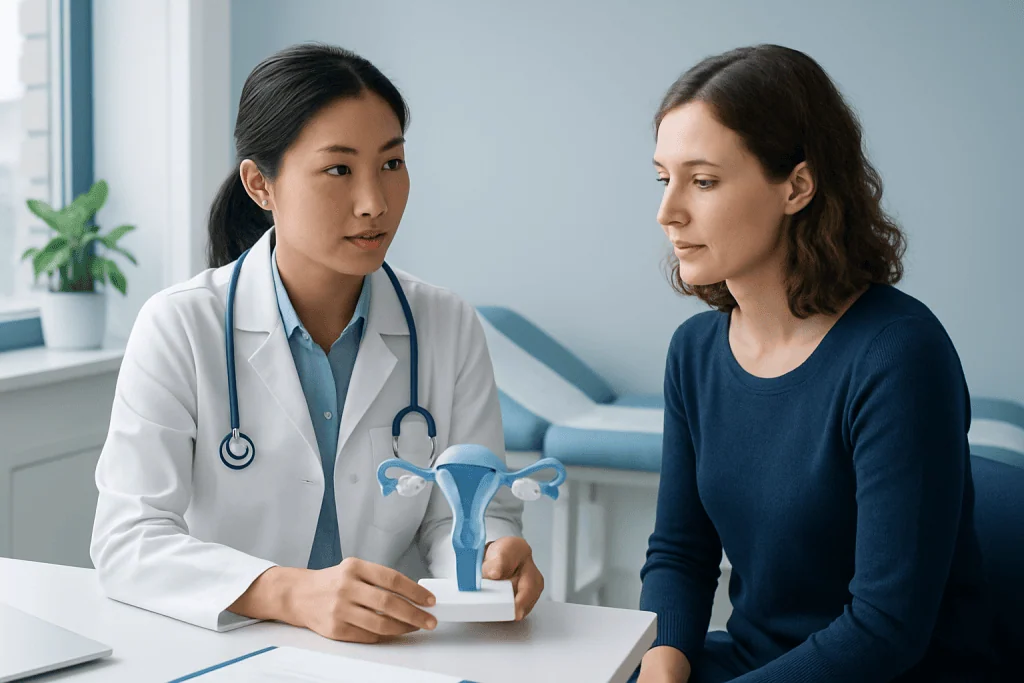
A clinician may discuss surgery when pelvic pain remains disruptive despite appropriate medical treatment, when scans suggest an endometrioma or deep endometriosis, or when a diagnosis remains uncertain. Surgery can also be considered for infertility in selected situations, particularly if endometriosis-related anatomy changes may affect fertility or if another pelvic condition needs evaluation.
Before recommending surgery, the care team considers symptoms, medical history, pelvic examination, ultrasound or MRI findings, previous operations, response to hormonal therapies and pregnancy plans. The potential benefit of surgery is balanced against its risks, including effects on ovarian reserve when operating on the ovaries.
People who are trying to conceive may need individualized advice. Surgery may be helpful in some cases, while assisted reproductive treatment may be more suitable in others. A fertility specialist can explain how age, ovarian reserve, sperm factors, tubal function, disease severity and past treatment influence this decision.
- Persistent pelvic pain that affects daily life, sleep, work or relationships
- Suspected deep endometriosis involving pelvic organs
- An ovarian endometrioma requiring assessment or treatment
- Fertility concerns where surgery may clarify or improve pelvic anatomy
- Uncertain diagnosis or concern about another pelvic condition
Step by Step: What Happens During the Procedure
Endometriosis surgery is commonly performed under general anesthesia. The surgeon usually makes a small incision near the navel, gently inflates the abdomen with carbon dioxide gas to create space, and inserts a thin camera called a laparoscope. One or more additional small incisions allow fine surgical instruments to be used.
The surgeon examines the uterus, ovaries, fallopian tubes, pelvic lining and visible nearby structures. Areas that look suspicious can be photographed, described in the operative report and sampled for laboratory analysis. If treatment has been planned and can be performed safely, visible lesions may be excised or ablated, adhesions may be released, and cysts or endometriomas may be managed.
More extensive disease can require a longer procedure and a larger multidisciplinary surgical team. If bowel, bladder or ureter involvement is suspected, preoperative planning is especially important. Occasionally, a different surgical approach, including open surgery, may be necessary, but this is less common than laparoscopic treatment.
Patients considering a planned operation can learn more about endometriosis surgery and the questions to discuss with their gynecologic team.
Recovery Timeline, Benefits and Expected Results
After uncomplicated laparoscopy, many patients go home the same day or after an overnight stay. In the first few days, it is common to have tiredness, abdominal tenderness, light vaginal bleeding or spotting, and shoulder-tip discomfort caused by the gas used during surgery. Prescribed pain relief, gentle walking and rest can support comfort during this early phase.
Many people resume light daily activities within several days, but returning to work, exercise, driving and sexual activity should follow the surgeon’s individual guidance. Recovery may take one to two weeks after a straightforward diagnostic laparoscopy and longer after extensive excision, ovarian surgery or bowel or bladder procedures. Follow-up appointments allow the team to review pathology results, healing and next steps.
Potential benefits include a clearer diagnosis, reduced pain, improved mobility of pelvic organs and, in selected patients, improved chances of conception. Results vary. Pain may improve gradually rather than immediately, especially when pelvic floor muscle tension, nerve sensitization or other pain conditions are also present.
Endometriosis is a long-term condition, and surgery does not guarantee that symptoms will not return. Hormonal treatment after surgery may help reduce recurrence for patients who are not trying to become pregnant, depending on their medical circumstances and preferences.
Risks and Limitations to Understand
Every operation has possible risks. With laparoscopic endometriosis surgery, these can include bleeding, infection, blood clots, reactions to anesthesia, injury to the bowel, bladder, ureters, blood vessels or nerves, and the need for additional surgery. Serious complications are uncommon, but their likelihood can be higher when disease is extensive or located close to important organs.
Ovarian surgery deserves careful discussion for people who may want pregnancy in the future. Removing an endometrioma can improve symptoms or reduce the chance of cyst-related complications, but it may also remove some healthy ovarian tissue. The surgical technique and the patient’s ovarian reserve are important considerations.
There are also limits to what surgery can achieve. Some lesions may be difficult to see, not all pelvic pain is caused by endometriosis, and symptoms can recur over time. A realistic plan often combines surgery, medical management, physiotherapy when indicated, fertility support and ongoing review rather than relying on one treatment alone.
Clear communication before surgery is important. Patients can ask what procedure is planned, whether removal of lesions will be performed at the same time as diagnosis, which specialists may be involved, and what alternatives exist if unexpected findings are seen.
When to Seek Medical Care
Medical assessment is appropriate for persistent or worsening pelvic pain, very painful periods, pain during sex, pain with bowel movements or urination that occurs around menstruation, or difficulty becoming pregnant. These symptoms can have several causes, and early evaluation can help identify an appropriate care plan.
Urgent medical care is needed for severe or sudden abdominal or pelvic pain, fainting, fever, heavy vaginal bleeding, persistent vomiting, chest pain, shortness of breath, or symptoms after surgery that are worsening rather than improving. After an operation, patients should contact their surgical team promptly if they notice increasing redness or discharge from wounds, inability to pass urine, leg swelling or severe pain not controlled by the prescribed plan.
Acibadem International’s multidisciplinary specialists and JCI-accredited hospitals diagnose and treat endometriosis for international patients, including those who may need coordinated gynecologic, fertility, colorectal or urologic input. A qualified clinician can help patients decide whether observation, medication, fertility treatment or surgery is the most suitable next step.
Frequently asked questions
Is surgery the only way to diagnose endometriosis?
No. Symptoms, pelvic examination and imaging can strongly suggest endometriosis, and treatment may sometimes begin without surgery. Laparoscopy may be considered when confirmation would change management, when symptoms persist, or when surgery is needed to treat suspected disease.
Can endometriosis be treated during diagnostic laparoscopy?
Often, yes. When this has been discussed and consented to in advance, a surgeon may remove or treat visible endometriosis and adhesions during the same operation. The exact treatment depends on the location and extent of disease and on patient priorities.
How long does recovery take after endometriosis surgery?
Recovery varies with the type and extent of surgery. Many people recover from a straightforward laparoscopy over days to a couple of weeks, while extensive surgery may require several weeks or longer. The operating team provides individualized activity and wound-care advice.
Will endometriosis surgery improve fertility?
Surgery may improve fertility for some people, especially if it restores pelvic anatomy or treats specific endometriosis-related problems. It does not help every person in the same way, so fertility planning should be discussed with a gynecologist or fertility specialist.
Can endometriosis come back after surgery?
Yes. Surgery can reduce or remove visible disease, but endometriosis can recur and symptoms may return over time. Ongoing follow-up and, for some patients, hormonal treatment may help manage recurrence risk.
What questions should a patient ask before endometriosis surgery?
Useful questions include the goals of surgery, the surgeon’s planned technique, whether excision is expected, possible effects on fertility, expected recovery and likely alternatives. Patients may also ask whether other specialists will be available if disease involves the bowel, bladder or urinary tract.
References
- World Health Organization
- American College of Obstetricians and Gynecologists
- European Society of Human Reproduction and Embryology
- National Institute for Health and Care Excellence
This article is for general information only and is not a substitute for professional medical advice. Please consult a qualified doctor about your individual situation.
Endometriosis in Turkey — costs, top hospitals & a free quote
JCI-accredited · board-certified surgeons · reply within 24h
Add us as a Preferred Source to see more of our trusted health content across Google Search, AI Overviews and Discover.

Gynecology & Obstetrics
Women’s health across pregnancy, gynecologic surgery and high-risk pregnancy care.
187 specialists in this unit