Endoscopy Esophagus Cancer: Preparation, Procedure and Results
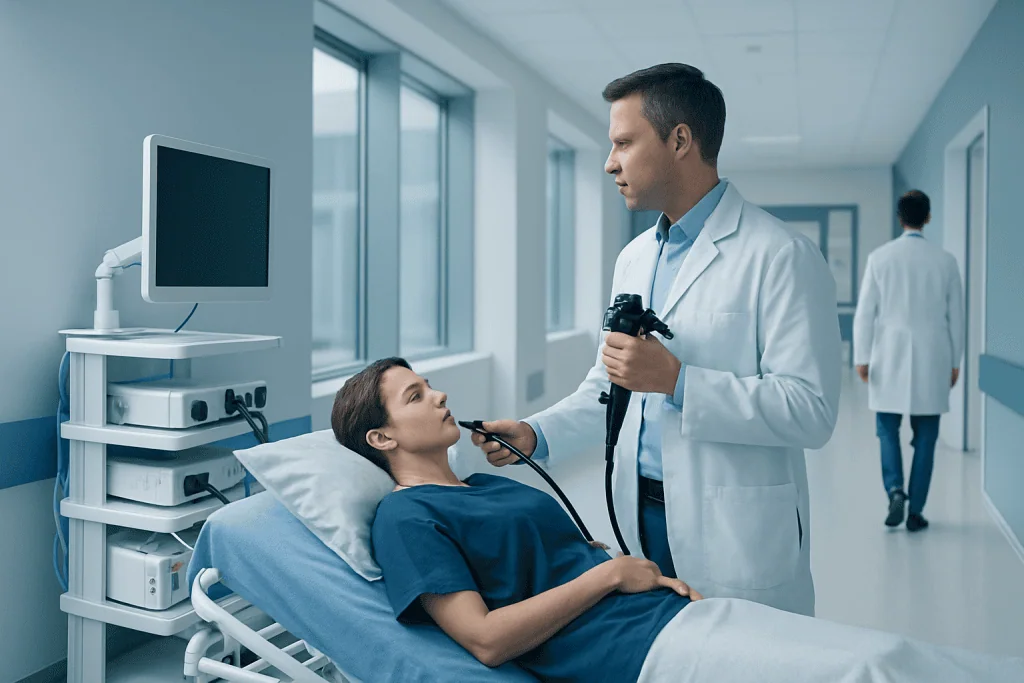
Upper endoscopy examines the esophagus with a thin, flexible camera passed through the mouth. A doctor may identify suspicious areas during endoscopy, but a biopsy is needed to diagnose cancer.
Key Takeaways
- Upper endoscopy examines the esophagus with a thin, flexible camera passed through the mouth.
- A doctor may identify suspicious areas during endoscopy, but a biopsy is needed to diagnose cancer.
- Most people go home the same day and do not need bed rest after a routine endoscopy.
- Temporary throat irritation, bloating, or drowsiness after sedation are common and usually short-lived.
- Urgent assessment is important for progressive trouble swallowing, unintentional weight loss, vomiting blood, or black stools.
Endoscopy esophagus cancer evaluation is a key test for investigating swallowing problems, persistent reflux symptoms, or other signs that may need closer assessment. It lets a specialist view the esophageal lining directly and take small tissue samples when needed, but cancer can only be confirmed through laboratory examination of a biopsy.
Overview: what endoscopy for esophagus cancer involves
Endoscopy esophagus cancer assessment usually means an upper gastrointestinal endoscopy, also called esophagogastroduodenoscopy (EGD). During this test, a gastroenterologist guides a narrow, flexible tube with a light and camera through the mouth to inspect the esophagus, stomach, and first part of the small intestine. It is one of the most direct ways to investigate symptoms or abnormal imaging findings involving the esophagus.
The procedure can show inflammation, narrowing, ulcers, Barrett’s esophagus, and areas that look unusual. If an area needs further assessment, the doctor can take tiny tissue samples, called biopsies, through the endoscope. A pathologist examines these samples under a microscope; this is the step that confirms or rules out cancer.
Endoscopy is used both to help diagnose esophageal cancer and to plan further care when cancer is found. Depending on results, the next steps may include imaging scans, endoscopic ultrasound, blood tests, nutritional support, and discussion by a team that may include gastroenterology, oncology, surgery, radiology, and pathology specialists.
Who may need an upper endoscopy?
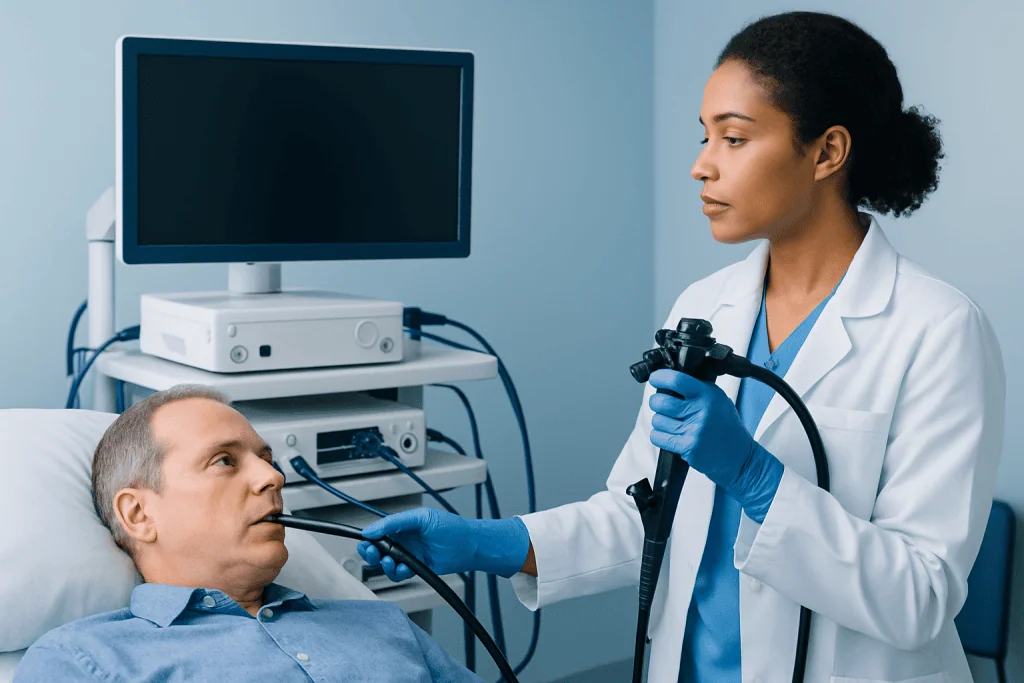
An upper endoscopy may be recommended when a person has symptoms that are persistent, worsening, or concerning for a disorder of the esophagus. Common reasons include difficulty swallowing, food seeming to stick in the chest, pain with swallowing, frequent regurgitation, ongoing heartburn despite treatment, unexplained anemia, or unexplained weight loss.
It may also be performed after a scan or barium swallow shows a possible narrowing or mass. People with Barrett’s esophagus may have planned surveillance endoscopies because this condition can increase the risk of precancerous changes in the esophageal lining. Most people with reflux do not have cancer, but an endoscopy can help clarify the cause when symptoms or risk factors warrant investigation.
Before recommending the test, the clinician considers symptoms, medical history, medicines, prior procedures, and individual risk. People should tell the endoscopy team about blood thinners, diabetes medicines, allergies, pregnancy, heart or lung conditions, and any prior problems with anesthesia or sedation.
How the procedure works: preparation and step-by-step care
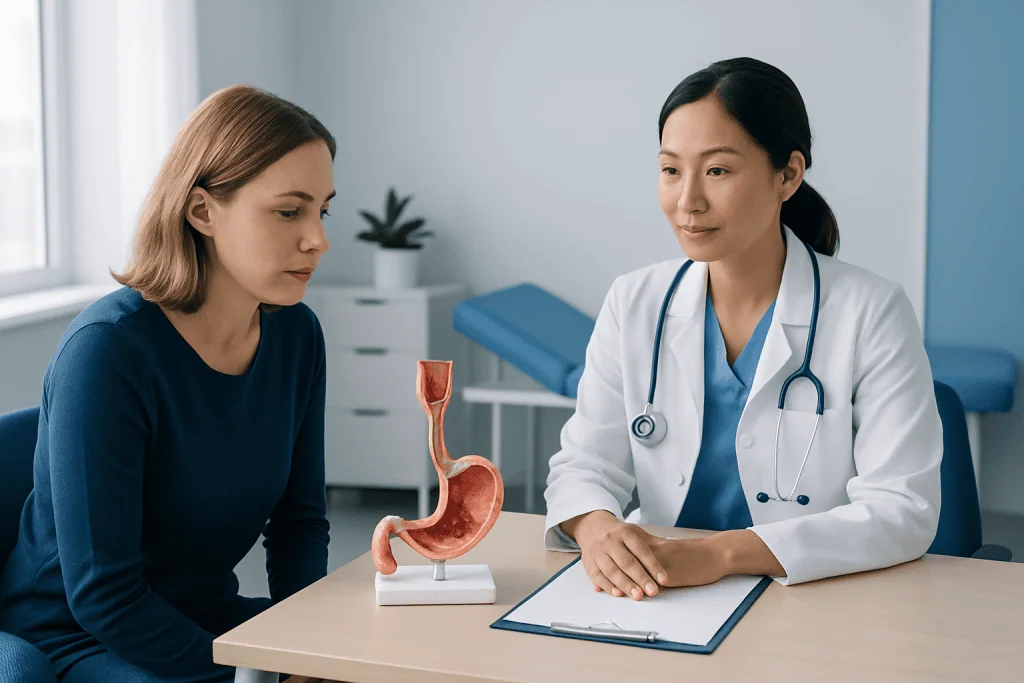
Preparation usually includes avoiding food for several hours before the appointment so the stomach is empty. Instructions vary based on the time of the procedure and a person’s medical needs. Clear liquids may be permitted until a specified time, but the endoscopy unit’s directions should be followed exactly. Some medicines may need to be adjusted in advance only under guidance from the prescribing clinician.
At the appointment, the team reviews consent, medical history, and vital signs. A numbing spray may be used in the throat, and many people receive intravenous sedation to improve comfort and relaxation. In selected circumstances, the procedure may be done without sedation or with a different form of anesthesia.
The person lies on their side while a mouth guard protects the teeth and endoscope. The scope is passed gently through the mouth and throat into the esophagus. It does not block breathing. The doctor examines the lining, may introduce air or carbon dioxide to improve visibility, and can take biopsies or perform other necessary measures. A routine diagnostic examination often takes less than 30 minutes, although the total visit is longer because of preparation and recovery.
If a narrowing is found, the doctor may sometimes perform dilation or arrange a separate therapeutic procedure, depending on the situation. When treatment of an early abnormality is appropriate, options can include endoscopic mucosal resection in carefully selected cases.
Can a doctor see esophageal cancer during an endoscopy?
Yes. A doctor can often see an area that appears suspicious for esophageal cancer during an endoscopy. Possible findings include an irregular raised area, ulcer, narrowing, fragile tissue, or a growth that changes the normal appearance of the esophageal lining. However, appearance alone cannot provide a definite diagnosis.
Biopsy samples are usually taken from suspicious tissue and sent to a pathology laboratory. The pathologist determines whether cancer cells are present and, if so, identifies the cell type and other features that help guide care. Occasionally, repeat endoscopy or additional biopsies are needed if samples are inconclusive or do not match the clinical concern.
If cancer is confirmed, staging tests help determine whether it is limited to the esophagus or has spread elsewhere. These may include CT, PET-CT, endoscopic ultrasound, and sometimes bronchoscopy for tumors near the airway. Accurate staging supports an individualized treatment plan, which may involve endoscopic therapy, surgery, chemotherapy, radiation therapy, or a combination of approaches.
At what stage is esophageal cancer usually diagnosed?
Esophageal cancer can be diagnosed at different stages. Early disease may cause no symptoms or only subtle swallowing changes, so it is not always detected at its earliest stage. Many people seek assessment after swallowing becomes increasingly difficult, which can occur when a tumor narrows the esophagus; however, symptoms alone cannot determine the stage.
Stage is determined only after specialist evaluation. It reflects the depth of tumor growth in the esophageal wall, whether nearby lymph nodes are involved, and whether cancer has spread to distant organs. Endoscopic ultrasound and imaging tests complement biopsy results to provide this information.
Earlier diagnosis can expand treatment options, which is why progressive swallowing difficulty or unexplained weight loss should not be ignored. People with Barrett’s esophagus should follow their clinician’s surveillance plan, as monitoring can detect dysplasia, or precancerous cell changes, before invasive cancer develops.
Recovery timeline, comfort and possible risks
After a routine endoscopy, a person is observed until the effects of sedation begin to wear off. A mild sore throat, temporary bloating, belching, or nausea can occur and generally improves within a day. If a throat-numbing spray was used, eating and drinking should wait until swallowing feels normal, according to the care team’s instructions.
How long does it take for the esophagus to heal after an endoscopy? A standard diagnostic endoscopy does not usually cause an injury requiring healing of the esophagus. Minor throat or esophageal irritation generally settles within 24 to 48 hours. Recovery can take longer if a dilation, tissue removal, or another therapeutic intervention was performed, and the treating team will give specific dietary and follow-up advice.
How many days bed rest after endoscopy? Bed rest is not normally needed after an uncomplicated outpatient endoscopy. People may rest at home on the day of sedation and should not drive, operate machinery, drink alcohol, make important decisions, or return to demanding work until the next day or until their team says it is safe. A responsible adult should accompany a sedated patient home.
Serious complications are uncommon but can include bleeding, a tear in the digestive tract, reaction to sedation, or infection. The chance depends partly on whether treatment is performed in addition to inspection and biopsy. Severe chest or abdominal pain, fever, persistent vomiting, vomiting blood, black stools, shortness of breath, or trouble swallowing after the procedure requires urgent medical assessment.
Benefits, results and next steps
The principal benefit of endoscopy is that it combines direct examination with the ability to collect biopsies during the same visit. It can identify noncancerous explanations for symptoms, such as reflux-related inflammation or a benign stricture, while also helping detect Barrett’s esophagus, dysplasia, or cancer. Results from the visual examination may be discussed immediately, but biopsy results commonly take several days.
A normal endoscopy can be reassuring, although it does not explain every symptom in every person. Depending on the clinical picture, the doctor may recommend reflux management, swallowing tests, monitoring, or other investigations. If biopsies show cancer or precancerous changes, additional tests and a timely specialist consultation are arranged.
Treatment decisions depend on cancer type, stage, location, general health, nutrition, and personal preferences. Some early lesions can be treated endoscopically, while more advanced disease may require coordinated esophageal cancer treatment. The care team should explain the purpose, expected benefits, alternatives, and possible side effects of each recommended option.
When to seek medical care
A medical appointment should be arranged promptly for difficulty swallowing that persists or progresses, pain when swallowing, food repeatedly sticking, unexplained weight loss, persistent vomiting, chest discomfort not clearly related to a known cause, or symptoms of reflux that do not improve with appropriate care. These symptoms are often caused by conditions other than cancer, but they deserve proper evaluation.
Urgent medical attention is needed for vomiting blood, black or tar-like stools, fainting, severe chest pain, severe breathing difficulty, or an inability to swallow liquids. Anyone who develops concerning symptoms after an endoscopy should contact the endoscopy team or seek urgent care as advised.
Acibadem International’s multidisciplinary specialists and JCI-accredited hospitals diagnose and treat esophageal conditions for international patients, coordinating endoscopy, pathology, imaging, and oncology or surgical input when needed. A qualified clinician can help determine whether endoscopy is appropriate and interpret results in the context of the individual’s health.
Frequently asked questions
Is endoscopy painful?
Most people do not describe upper endoscopy as painful. A throat spray and often sedation are used to reduce gagging and improve comfort. Some pressure, bloating, or throat discomfort can occur, but these effects are usually temporary.
Can biopsies during endoscopy spread esophageal cancer?
No. Taking a biopsy during endoscopy is a standard and necessary way to confirm or exclude cancer. There is no evidence that routine diagnostic biopsy causes esophageal cancer to spread.
What should a person eat after an endoscopy?
After throat numbness has completely worn off, many people can start with water and light foods if they feel well. The endoscopy team may give different instructions after dilation, tissue removal, or another therapeutic procedure. Alcohol should be avoided for at least the rest of the day after sedation.
How accurate is endoscopy for esophageal cancer?
Endoscopy is highly useful because it allows direct inspection of the esophagus and targeted biopsies of abnormal-looking areas. Its diagnostic value is strongest when visual findings are combined with pathology results. Additional imaging and endoscopic ultrasound are often needed to stage confirmed cancer.
Can reflux cause the same symptoms as esophageal cancer?
Yes. Reflux can cause heartburn, regurgitation, chest discomfort, and sometimes swallowing symptoms, many of which overlap with other esophageal conditions. Persistent, progressive, or unexplained symptoms should be evaluated rather than assumed to be reflux alone.
When can a person return to work after endoscopy?
After sedation, most people should take the rest of the day off and return to usual activities the following day if they feel well. The timing may differ after a therapeutic procedure or if complications occur. The endoscopy team’s discharge instructions should take priority.
References
- American Cancer Society
- National Cancer Institute
- American Society for Gastrointestinal Endoscopy
- National Health Service
- European Society of Gastrointestinal Endoscopy
This article is for general information only and is not a substitute for professional medical advice. Please consult a qualified doctor about your individual situation.
Persistent digestive symptoms? Get evaluated in Turkey
JCI-accredited · board-certified surgeons · reply within 24h
Add us as a Preferred Source to see more of our trusted health content across Google Search, AI Overviews and Discover.