Endovascular Neurosurgery vs Open Brain Surgery: When Is Each Option Used?
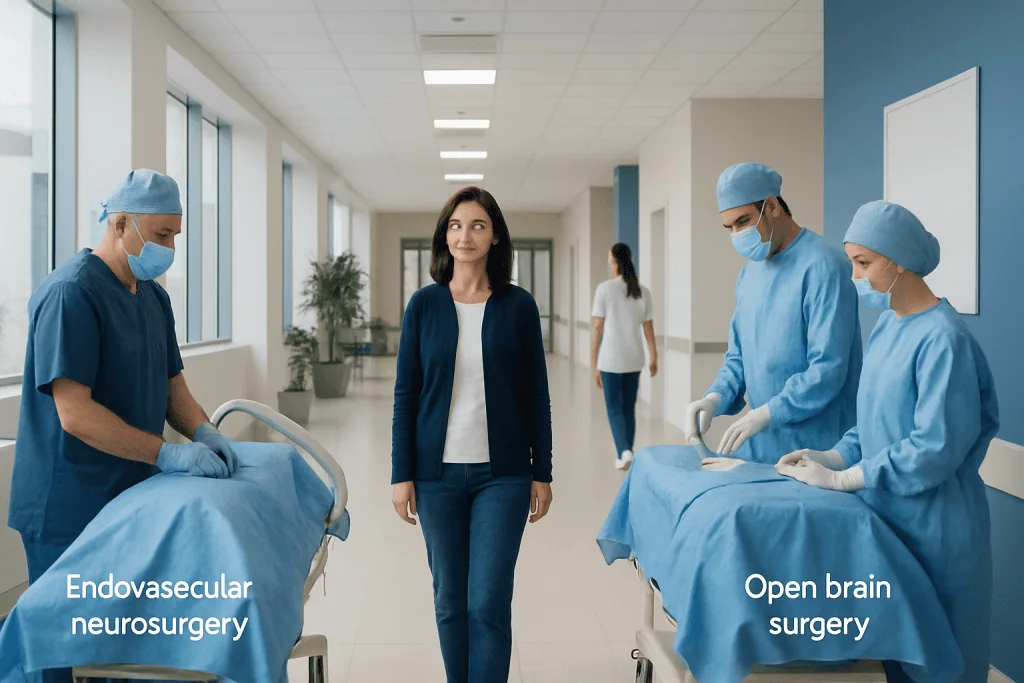
Endovascular neurosurgery uses catheters inside blood vessels, while open brain surgery involves a surgical opening to reach the brain directly. Neither approach is universally better; each has advantages for specific conditions and anatomies.
Key Takeaways
- Endovascular neurosurgery uses catheters inside blood vessels, while open brain surgery involves a surgical opening to reach the brain directly.
- Neither approach is universally better; each has advantages for specific conditions and anatomies.
- Common conditions treated include brain aneurysms, arteriovenous malformations, stroke, tumors, and blocked blood vessels.
- Treatment planning is often done by a multidisciplinary team that may include interventional neuroradiologists, neurologists, and neurosurgeons.
- Recovery time, risks, and long-term follow-up can differ significantly between the two approaches.
Endovascular neurosurgery and open brain surgery are two important ways to treat disorders of the brain and blood vessels. The best option depends on the diagnosis, the location and shape of the problem, the patient’s overall health, and how quickly treatment is needed.
Overview: How the Two Approaches Differ
When comparing endovascular neurosurgery vs open brain surgery, the main difference is how doctors reach the problem. Endovascular neurosurgery is a minimally invasive technique. A specialist guides thin tubes called catheters through blood vessels, usually starting from the wrist or groin, and navigates them to the brain or neck under imaging guidance. Through these catheters, the doctor can deliver tiny devices, remove clots, or block abnormal blood vessels.
Open brain surgery, often called craniotomy-based surgery, involves making an opening in the skull so the surgeon can directly see and treat the affected area. This direct access can be especially useful when a lesion must be removed, repaired, or decompressed with precision. It may also be necessary when the problem cannot be reached safely through blood vessels alone.
Both methods are well-established and can be life-saving. In some cases, they are not alternatives but complementary tools. A patient may first have an endovascular procedure to stabilize bleeding or reduce blood flow to a lesion, followed by open surgery. In other situations, a minimally invasive approach may avoid the need for a craniotomy entirely.
The decision is usually individualized. Doctors consider the type of disease, its size and location, the person’s age and general health, whether the problem is urgent, and which option offers the best chance of treatment with the lowest risk of harm.
When Endovascular Neurosurgery Is Commonly Used

Endovascular neurosurgery is most often used for conditions involving blood vessels in the brain, neck, or spinal cord. A common example is treatment of a brain aneurysm, where a weakened area of a blood vessel wall can bulge and possibly rupture. Depending on the aneurysm’s shape and location, the specialist may use coils, stents, flow-diverting devices, or other techniques to seal it from inside the artery. This approach is closely related to brain aneurysm care.
It is also a key treatment for some types of stroke. In an ischemic stroke caused by a large blood clot blocking blood flow to the brain, doctors may perform a catheter-based clot removal procedure. This is often referred to as mechanical thrombectomy, and it can help restore circulation quickly in selected patients. Endovascular treatment is also used in some cases of narrowed carotid or intracranial arteries.
Other conditions treated this way include arteriovenous malformations, dural arteriovenous fistulas, and certain vascular tumors. In these situations, the specialist may intentionally block abnormal vessels, reduce the blood supply before surgery, or treat the lesion completely through the blood vessels. This may lower bleeding risk and support safer overall care.
The main advantages of endovascular care are that it avoids a large surgical opening, often causes less disruption to surrounding tissue, and may allow a shorter hospital stay in selected cases. However, it is not suitable for every patient or every anatomy, and some problems still require direct open surgery for the best result.
When Open Brain Surgery Is Commonly Used
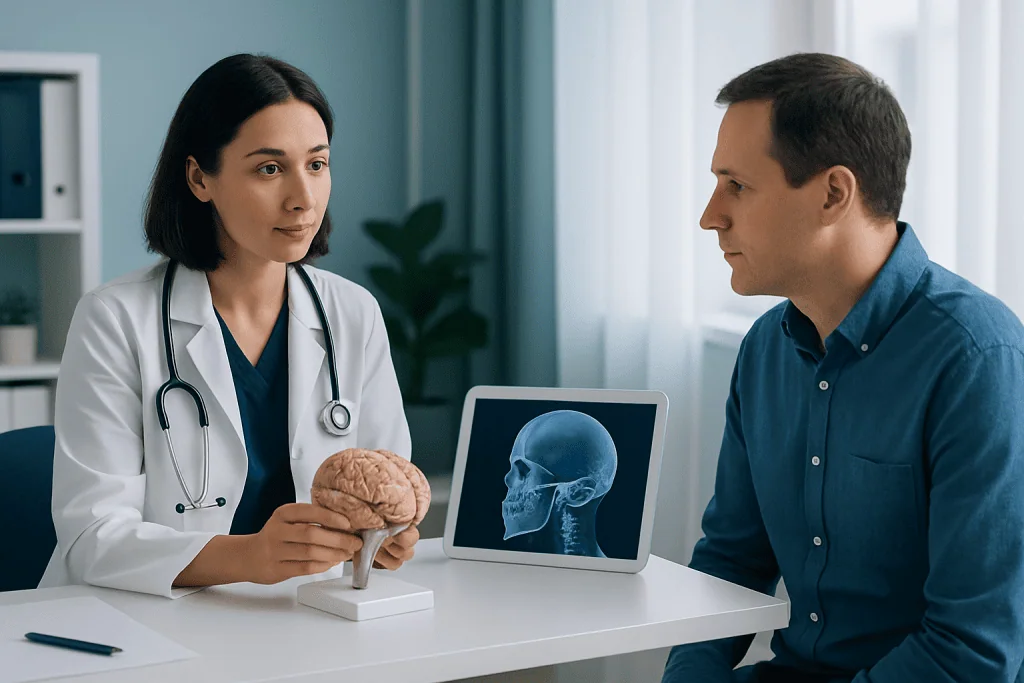
Open brain surgery is often chosen when direct access to the brain is necessary. This may include removing a brain tumor, draining a large blood collection, relieving pressure on the brain, repairing certain vascular abnormalities, or reaching a lesion that cannot be treated safely from inside a blood vessel. For many nonvascular conditions, open surgery remains the standard approach.
Some aneurysms are also better treated with open surgery, especially if they have a complex shape, a broad neck, branch vessels arising from the aneurysm, or features that make catheter-based repair less durable or more risky. In such cases, a neurosurgeon may place a clip across the aneurysm through a craniotomy. This is known as aneurysm clipping.
Open surgery may also be preferred for some arteriovenous malformations, particularly when complete removal is realistic and offers a clear long-term benefit. Likewise, if there is severe bleeding, swelling, or mass effect that needs immediate decompression, direct surgery can sometimes address the problem more effectively than an endovascular procedure alone.
Although open surgery is more invasive, it offers important strengths. The surgeon can directly visualize the anatomy, control bleeding, obtain tissue for diagnosis when needed, and perform repairs that may not be possible by catheter. The trade-off is that recovery may be longer, and the procedure may involve more postoperative monitoring and rehabilitation.
How Doctors Decide Which Option Is Best
The choice between endovascular neurosurgery and open brain surgery is based on careful imaging and clinical assessment. Doctors review brain scans such as CT, MRI, CT angiography, MR angiography, and catheter angiography to understand the exact anatomy. They look at the size, location, and shape of the lesion, whether there is bleeding, and how nearby structures may be affected.
Patient factors also matter. Age, medical conditions, medications, previous surgeries, kidney function, bleeding risk, and ability to tolerate anesthesia can all influence the plan. For example, a minimally invasive procedure may be attractive in someone who is medically fragile, but only if it can treat the problem effectively and safely.
Urgency is another major factor. In emergencies such as acute stroke due to a large-vessel blockage, speed is critical, and interventional neuroradiology techniques may be the first choice if the patient qualifies. In contrast, a slowly growing tumor may call for open surgery, observation, radiation, or a combination depending on symptoms and imaging findings.
Many hospitals use a multidisciplinary team approach. Neurologists, interventional specialists, neurosurgeons, anesthesiologists, and intensive care teams work together to compare options. This helps patients and families understand expected benefits, possible risks, and whether one strategy or a staged combination is the most appropriate path.
Benefits, Risks, and Recovery
Endovascular procedures generally involve smaller access points, less visible scarring, and often faster early recovery than open surgery. Some patients can sit up and begin moving sooner, and hospital stays may be shorter depending on the condition treated. This can be particularly valuable when the goal is to reopen a blocked artery or exclude an aneurysm without manipulating brain tissue directly.
However, minimally invasive does not mean risk-free. Endovascular procedures can still cause bleeding, stroke, vessel injury, reactions to contrast material, infection, or device-related complications. Some patients may need follow-up imaging over time, and in certain cases the treated lesion can recur or require an additional procedure.
Open brain surgery has its own set of benefits and risks. Its advantages include direct access, the ability to remove tissue or repair anatomy under direct vision, and in some situations a more definitive one-time treatment. Risks can include infection, bleeding, seizures, swelling, neurologic deficits, and a longer recovery period. The exact risk depends greatly on the part of the brain involved and the underlying condition.
Recovery after either approach varies widely. Some people return to normal routines quickly, while others need rehabilitation for speech, movement, balance, or cognitive changes. Follow-up appointments and imaging are important after both types of treatment to monitor healing and long-term success.
Conditions That May Involve Both Approaches
In real-world practice, the comparison of endovascular neurosurgery vs open brain surgery is not always a simple either-or choice. Some conditions benefit from a combined strategy. For example, a vascular malformation may first be embolized through a catheter to reduce blood flow and then removed surgically with less bleeding risk. This stepwise plan can improve safety in selected patients.
Similarly, a ruptured aneurysm may be managed by the approach that best secures it quickly, but the broader care plan may still involve intensive monitoring for vasospasm, hydrocephalus, or other complications. A patient with a complex lesion may also need several specialists to decide whether surgery, endovascular therapy, radiosurgery, or observation is most suitable.
Brain tumors can sometimes involve both open and minimally invasive techniques as well. While most tumors are not treated through the blood vessels alone, preoperative embolization may reduce blood flow to highly vascular tumors before surgery. In other cases, endovascular procedures help manage related vessel problems rather than the tumor itself. Patients exploring brain tumor treatment may hear about this coordinated approach.
This is one reason expert evaluation matters. The best treatment is not simply the newest or least invasive one, but the one that fits the anatomy, the diagnosis, and the patient’s goals. In experienced centers, treatment planning is designed around what offers the safest and most effective overall result.
Questions Patients May Want to Ask Their Specialist
Patients and families often feel more confident when they understand why one option is recommended over another. Useful questions include whether the condition can be treated endovascularly, whether open surgery would offer a better long-term result, and what the main risks are with each approach. Asking about the doctor’s experience with the specific procedure can also be helpful.
It is also reasonable to ask about recovery expectations. Patients may want to know how long they might stay in the hospital, whether time in intensive care is expected, when normal activities can resume, and whether rehabilitation could be needed. Understanding follow-up imaging and the chance of needing future treatment is important as well.
Another key topic is whether there are non-surgical options, such as monitoring or medication, depending on the diagnosis. For some lesions, especially those found incidentally, immediate intervention may not always be necessary. A second opinion can be valuable when treatment decisions are complex or when more than one reasonable option exists.
For international patients seeking coordinated specialist care, Acibadem International’s multidisciplinary teams and JCI-accredited hospitals diagnose and treat complex neurovascular and neurosurgical conditions using both advanced endovascular techniques and open surgery when appropriate.
Frequently asked questions
Is endovascular neurosurgery safer than open brain surgery?
Not always. Endovascular procedures are less invasive, but the safest option depends on the exact condition, the anatomy, and the patient’s overall health. In some situations, open surgery provides better control or a more durable repair.
Which conditions are most often treated with endovascular neurosurgery?
Endovascular techniques are commonly used for brain aneurysms, some strokes caused by blood clots, narrowed arteries, and certain vascular malformations. They are especially useful when the problem can be reached effectively through the blood vessels. A specialist uses imaging to decide whether this route is appropriate.
Does open brain surgery always mean a longer recovery?
Recovery is often longer after open surgery, but this is not true in every case. The underlying disease, the area of the brain involved, and whether there were complications all affect healing time. Some patients recover steadily with only short-term restrictions, while others may need rehabilitation.
Can a patient need both endovascular treatment and open surgery?
Yes. Some conditions are best managed with a combined approach, such as embolization before surgery for a vascular malformation or tumor. Using both methods can sometimes improve safety and treatment effectiveness.
How do doctors choose between coiling and clipping for a brain aneurysm?
Doctors consider the aneurysm’s size, shape, neck width, location, whether it has ruptured, and the patient’s age and health. Coiling is an endovascular method, while clipping is an open surgical method. The decision is individualized and often discussed by a neurovascular team.
Should patients get a second opinion before brain or neurovascular surgery?
A second opinion can be very helpful, especially when the diagnosis is complex or more than one treatment approach is possible. It may clarify the benefits and limitations of each option. Many patients find this reassuring before making a major treatment decision.
References
- World Stroke Organization
- American Heart Association
- National Institute of Neurological Disorders and Stroke
- European Stroke Organisation
- American Association of Neurological Surgeons
This article is for general information only and is not a substitute for professional medical advice. Please consult a qualified doctor about your individual situation.
Neurosurgery in Turkey — costs, top hospitals & a free quote
JCI-accredited · board-certified surgeons · reply within 24h
Add us as a Preferred Source to see more of our trusted health content across Google Search, AI Overviews and Discover.

More from the Health Library



Related Specialists

Asst. Prof. Dr. Özlem Apti Şengkioun
Dermatology
Prof. Dr. Fikret Aksoy
General Surgery
Assoc. Prof. Dr. Burcu Bulum Akbulut
Pediatric Nephrology
Assoc. Prof. Dr. Ufuk Gürkan
Cardiology