Endovascular Treatment for Brain Aneurysm: Who May Be a Candidate?

Endovascular treatment reaches the aneurysm from inside the blood vessel, usually through a catheter inserted in the wrist or groin. Not every brain aneurysm needs immediate treatment; some are monitored carefully over time.
Key Takeaways
- Endovascular treatment reaches the aneurysm from inside the blood vessel, usually through a catheter inserted in the wrist or groin.
- Not every brain aneurysm needs immediate treatment; some are monitored carefully over time.
- Treatment choice depends on whether the aneurysm has ruptured, where it is located, and how its neck and shape look on imaging.
- Common endovascular options include coiling, stent-assisted coiling, and flow diversion.
- A multidisciplinary team helps decide whether endovascular treatment, surgery, or observation is the safest option.
Endovascular treatment for brain aneurysm is a minimally invasive approach used to reduce the risk of aneurysm rupture or rebleeding. Candidacy depends on factors such as the aneurysm’s size, shape, location, symptoms, and a person’s overall health.
Overview
A brain aneurysm is a weakened area in the wall of a brain artery that bulges outward. Some aneurysms remain small and never cause problems, while others can grow, press on nearby structures, or rupture and cause bleeding around the brain. Because the risks are different from person to person, treatment decisions are individualized.
Endovascular treatment for brain aneurysm is a minimally invasive method that treats the aneurysm from inside the blood vessel. Instead of opening the skull, a specialist guides a thin catheter through an artery, often from the wrist or groin, to the blood vessels in the brain. Devices such as coils, stents, or flow diverters are then placed to reduce blood flow into the aneurysm and lower the chance of rupture or repeat bleeding.
This approach is commonly used in modern aneurysm care and may be considered for both ruptured and unruptured aneurysms. In many cases, it offers shorter recovery time than open surgery, but it is not automatically the best choice for everyone. The decision depends on careful imaging, medical history, and expert review by specialists familiar with brain aneurysm care.
Who May Be a Candidate
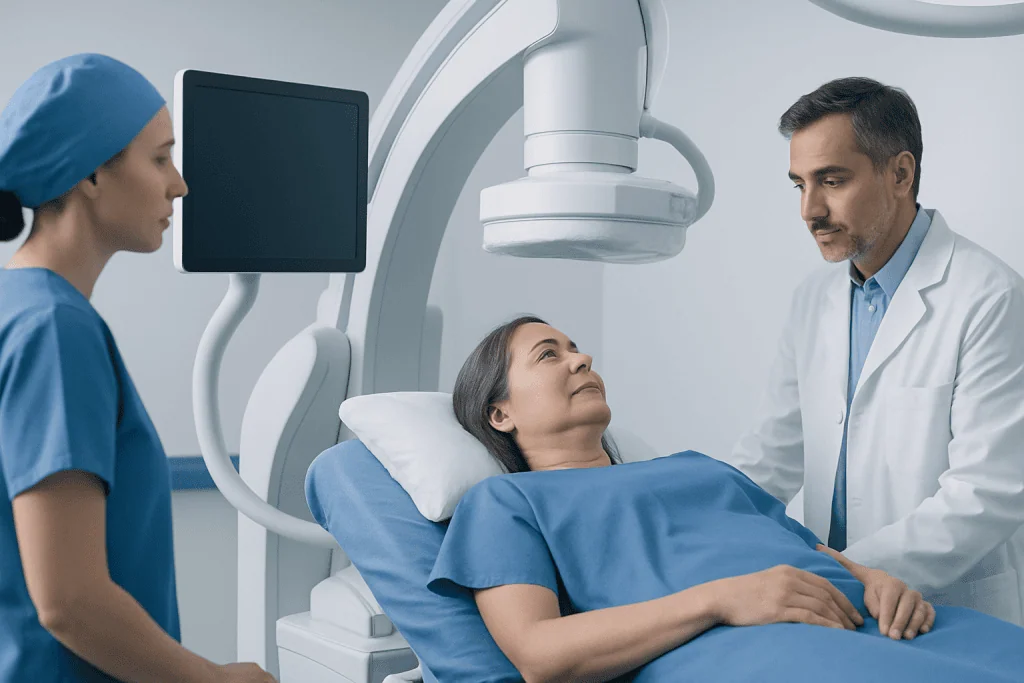
A person may be a candidate for endovascular treatment if the aneurysm’s anatomy is suitable and the expected benefits outweigh the risks. Doctors look closely at whether the aneurysm has ruptured, how large it is, where it sits in the brain circulation, how wide its neck is, and whether it has features that suggest a higher risk of bleeding. Symptoms such as headache, double vision, or nerve compression may also influence the decision.
People with ruptured aneurysms are often evaluated urgently because treatment may help prevent another bleed. In unruptured aneurysms, the decision is often more balanced. Some aneurysms are small and low risk, so watchful monitoring may be safer than immediate treatment. Others are more concerning because of their size, shape, growth over time, family history, smoking, high blood pressure, or location in higher-risk arteries.
Endovascular therapy is often considered when a minimally invasive route is technically feasible or when open surgery may carry greater risk. Older adults, people with other health conditions, and those with aneurysms in deeper or harder-to-reach areas may sometimes benefit from an endovascular approach. However, certain aneurysms still may be better treated with surgical clipping or observation, depending on the full clinical picture.
- Ruptured aneurysms that need urgent treatment
- Unruptured aneurysms judged to have meaningful rupture risk
- Aneurysms with anatomy suitable for coiling or flow diversion
- Patients for whom open surgery may be less favorable
- Cases reviewed by a multidisciplinary neurovascular team
How Doctors Assess an Aneurysm

Choosing the right treatment begins with detailed imaging. Doctors may use CT angiography, MR angiography, or catheter angiography to study the aneurysm’s exact shape and its relationship to nearby blood vessels. These tests help determine whether the aneurysm has a narrow or wide neck, whether branches arise from it, and whether a device can be placed safely.
Size matters, but it is only one part of the decision. A small aneurysm is not always harmless, and a larger aneurysm is not always treated in the same way. Doctors also look for irregular contours, daughter sacs, evidence of growth on repeat scans, and signs that the aneurysm is affecting nearby nerves or brain tissue. These details can change the estimated risk.
The patient’s overall health is equally important. A care team considers age, blood pressure control, smoking status, prior bleeding, medication use, kidney function, and whether the person can safely take antiplatelet medicines if a stent or flow diverter may be needed. This careful review helps tailor the treatment plan rather than relying on a one-size-fits-all approach.
Types of Endovascular Treatment
Several endovascular techniques are available. In simple coiling, tiny platinum coils are placed inside the aneurysm to promote clotting and reduce blood flow into the bulge. This is often used for selected aneurysms, especially when the shape allows the coils to stay securely inside. A related option, coil embolization, is one of the most established minimally invasive aneurysm treatments.
For wide-necked aneurysms, coiling may need extra support. In stent-assisted coiling, a small mesh tube is placed in the parent artery to help hold coils in place and preserve normal blood flow. Balloon-assisted coiling may also be used during the procedure to improve safety and control while the coils are inserted.
Another option is flow diverter treatment, which places a special stent-like device across the aneurysm opening. This redirects blood along the normal artery and encourages the aneurysm to seal off over time. Flow diversion can be especially helpful for selected large, wide-necked, or complex aneurysms, though it is not suitable for all cases and often requires blood-thinning medication for a period after treatment.
Some patients may also be evaluated for cerebral angiography as part of diagnosis and procedural planning. The treating team explains which technique is most appropriate, what it is designed to achieve, and whether more than one stage of treatment could be needed.
Benefits, Risks, and Recovery
The main benefit of endovascular treatment is that it can often treat a brain aneurysm without open brain surgery. Because the procedure is performed through blood vessels, recovery may be quicker for many patients, with less surgical trauma and a shorter hospital stay in selected cases. This can be particularly valuable in emergencies such as a ruptured aneurysm or in patients who may not tolerate major surgery as well.
Still, endovascular treatment has risks and should be considered carefully. Possible complications include bleeding, stroke, blood vessel injury, device-related problems, recurrence of the aneurysm, or the need for future retreatment. If a stent or flow diverter is used, antiplatelet medications are often required, and those medicines bring their own considerations.
Recovery depends on whether the aneurysm was ruptured or unruptured and on the type of device used. People treated for an unruptured aneurysm may recover relatively quickly, though they still need rest, follow-up appointments, and repeat imaging. Recovery after a ruptured aneurysm is often longer and may involve rehabilitation, close neurological monitoring, and management of complications from the bleed itself rather than from the procedure alone.
When Monitoring May Be Better Than Treatment
Not all aneurysms need to be treated immediately. For some small, stable, unruptured aneurysms, careful observation may be the safest option. This usually means regular imaging over time and attention to risk factors such as high blood pressure and smoking. The goal is to watch for growth or shape changes that might alter the balance between treatment risk and rupture risk.
Monitoring may be recommended when the aneurysm appears low risk, when treatment would be technically difficult, or when a person’s other medical conditions make intervention less suitable. This decision does not mean the aneurysm is being ignored. Rather, it reflects a thoughtful plan based on current evidence and the individual’s health profile.
Patients often feel anxious about living with an untreated aneurysm, which is understandable. Clear communication with the care team can help. Knowing the reason for surveillance, the schedule for follow-up scans, and the symptoms that should prompt urgent medical attention can make the process more manageable and reassuring.
Prevention, Self-care, and Follow-up
Although a person cannot directly strengthen an aneurysm wall through lifestyle changes, overall vascular health matters. Good blood pressure control, smoking cessation, regular medical care, and management of conditions such as high cholesterol can support healthier blood vessels. Avoiding recreational drugs such as cocaine is also important because they can sharply raise the risk of bleeding and stroke.
After endovascular treatment, follow-up imaging is an important part of care. Some aneurysms remain sealed off permanently, while others may show small areas of reopening over time. Repeat scans allow doctors to confirm that the treatment is working as planned and to decide whether any additional therapy is needed.
People should take prescribed medicines exactly as directed, especially if a stent or flow diverter has been used. They should also ask before stopping any blood-thinning medicine. Near the end of the treatment journey, some international patients choose evaluation at centers such as Acibadem International, where multidisciplinary specialists in JCI-accredited hospitals diagnose and treat complex neurovascular conditions.
When to See a Doctor
Anyone who has been told they have a brain aneurysm should discuss the finding with a neurologist, neurosurgeon, or interventional neuroradiology team experienced in aneurysm care. Even when an aneurysm is found incidentally, specialist review helps clarify whether observation or treatment is more appropriate and what kind of follow-up is needed.
Urgent medical attention is needed for symptoms that could suggest rupture, such as a sudden severe headache unlike usual headaches, fainting, seizures, sudden confusion, weakness, trouble speaking, or sudden vision changes. These symptoms do not always mean an aneurysm has ruptured, but they need emergency evaluation right away.
People should also seek medical advice if they have a known aneurysm and notice new neurological symptoms, worsening headaches, or problems tolerating medications after treatment. Early review can help identify whether symptoms are related to the aneurysm, the recovery period, or another condition that needs attention.
Frequently asked questions
Is endovascular treatment the same as brain surgery?
No. Endovascular treatment is minimally invasive and is performed from inside the blood vessels using catheters, usually inserted through the wrist or groin. Open brain surgery, such as clipping, involves an operation through the skull.
Can every brain aneurysm be treated with coils or a flow diverter?
No. The best method depends on the aneurysm’s size, neck, shape, location, and whether nearby branches are involved. Some aneurysms are better suited to surgery, while others may be monitored rather than treated immediately.
Does an unruptured aneurysm always need treatment?
Not always. Many unruptured aneurysms are monitored with regular imaging if their estimated rupture risk is low. Treatment is usually considered when the aneurysm has higher-risk features or causes symptoms.
How long does recovery take after endovascular aneurysm treatment?
Recovery varies. After treatment of an unruptured aneurysm, some people recover relatively quickly, while recovery after a ruptured aneurysm is often longer because the brain bleed itself can cause serious effects. The care team gives guidance based on the procedure performed and the person’s overall condition.
Will follow-up scans still be needed after treatment?
Yes, in most cases. Follow-up imaging helps confirm that the aneurysm remains closed and checks for recurrence or reopening over time. The timing of scans depends on the treatment type and the aneurysm’s features.
What symptoms suggest an aneurysm rupture emergency?
A sudden, very severe headache, fainting, seizure, sudden weakness, confusion, trouble speaking, or sudden vision changes require emergency care. These symptoms need prompt evaluation because bleeding around the brain is a medical emergency.
References
- American Heart Association
- National Institute of Neurological Disorders and Stroke
- Brain Aneurysm Foundation
- Society of NeuroInterventional Surgery
- European Stroke Organisation
This article is for general information only and is not a substitute for professional medical advice. Please consult a qualified doctor about your individual situation.
Explore treatments in Turkey — costs, top hospitals & a free quote
JCI-accredited · board-certified surgeons · reply within 24h
Add us as a Preferred Source to see more of our trusted health content across Google Search, AI Overviews and Discover.
Check your numbers in seconds
BMI, calories, due date, blood pressure and 30+ more clinical calculators — free, instant, doctor-reviewed ranges.