Enema Catheter: An Evidence-Based Patient Guide
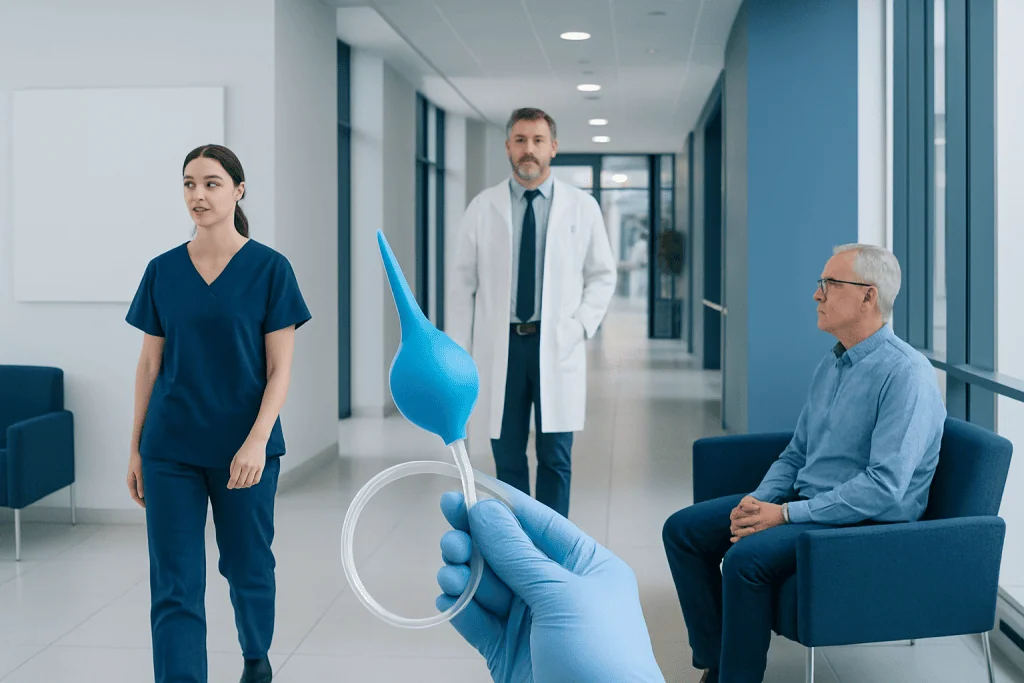
An enema catheter can be used when a clinician recommends it, particularly when standard enema tips are unsuitable or fluid needs to be delivered more slowly. Most enemas are intended for short-term use and do not treat the cause of repeated constipation.
Key Takeaways
- An enema catheter can be used when a clinician recommends it, particularly when standard enema tips are unsuitable or fluid needs to be delivered more slowly.
- Most enemas are intended for short-term use and do not treat the cause of repeated constipation.
- Only the prescribed or commercially prepared solution should be used; plain tap water can disrupt body salts when used in excessive amounts or repeatedly.
- Resistance, severe pain, rectal bleeding, dizziness, or worsening abdominal symptoms are reasons to stop and seek medical advice.
- A Foley catheter should not be used for an enema unless a qualified clinician has specifically instructed and supervised its use.
An enema catheter is a soft tube used to introduce prescribed fluid into the rectum and lower bowel, usually for short-term constipation relief, bowel preparation, or selected hospital procedures. It should be used carefully because the wrong solution, excessive force, or use during certain symptoms can cause injury or make an underlying condition worse.
Overview: What Is an Enema Catheter?
An enema catheter is a flexible tube placed a short distance into the rectum to deliver fluid to the lower part of the large intestine. The fluid can soften and lubricate stool, stimulate a bowel movement, or help clear the bowel before certain tests or treatments. In many home products, the tube is a short, smooth enema catheter tip attached to a squeeze bottle or bag.
Different enema catheters are designed for different settings. A standard rectal tip is usually used for a simple, short-term enema. In hospitals, a longer rectal catheter or an enema catheter colon tube may be selected for people who need carefully controlled administration, have limited mobility, or require bowel management under professional supervision.
An enema is not a routine solution for ongoing constipation. Persistent bowel changes may be related to diet, medicines, pelvic floor problems, hormonal conditions, or disorders affecting the digestive tract. Recurrent constipation deserves assessment so that treatment can address the cause rather than repeatedly relying on rectal interventions.
How an Enema Catheter Works and Who May Need One
Once fluid enters the rectum, it can soften stool and gently stretch the bowel wall. This may trigger the natural urge to pass stool. The effect depends on the type and amount of solution, the person’s bowel function, and whether stool is located low in the rectum or farther into the colon.
A clinician may recommend an enema for short-term constipation, fecal impaction, preparation before selected examinations, or bowel management in some neurological or mobility-related conditions. In clinical settings, the type of solution and device are chosen according to the person’s age, medical history, kidney and heart function, and reason for treatment.
People should seek medical advice before using an enema if they have kidney disease, heart failure, inflammatory bowel disease, recent colorectal surgery, rectal bleeding, severe hemorrhoids, or a known bowel narrowing. Enemas may also be inappropriate when there is concern for bowel obstruction, appendicitis, or an acute abdominal condition. Ongoing constipation and bowel-emptying difficulties can be assessed through constipation evaluation and treatment.
Can You Do an Enema With a Catheter?

Yes, an enema may be administered through a purpose-designed rectal catheter when this is clinically appropriate. The catheter should be smooth, flexible, adequately lubricated, and selected for rectal use. It should never be forced, because the rectal lining is delicate and can be injured.
For most uncomplicated home enemas, the manufacturer-provided tip is intended to be used with that product. A longer catheter is not necessarily more effective and may increase the risk of discomfort or trauma if used incorrectly. A healthcare professional may use a rectal catheter in hospital when a particular delivery method is needed.
Not every tube is safe for rectal administration. Urinary catheters, feeding tubes, and other medical tubing have different purposes and should not be substituted for a rectal enema device without explicit clinical direction. Anyone who is uncertain about the correct equipment should ask a nurse, pharmacist, or doctor before proceeding.
How to Administer Enema Through Foley Catheter?
A Foley catheter is designed to drain urine from the bladder, not to deliver an enema. It should not be used for rectal enemas at home. Its retention balloon can cause serious injury if inflated in the rectum, and using an unsuitable catheter may lead to pain, bleeding, perforation, infection, or delayed diagnosis of a bowel problem.
In limited specialist circumstances, trained clinicians may use specific rectal catheter techniques for bowel irrigation or management of severe stool retention. This is different from a person attempting to administer an enema through a Foley catheter. The choice of catheter, solution, volume, insertion depth, and monitoring must be made by the treating team.
If a person has been given individual instructions involving a catheter, they should follow the written care plan exactly and contact the clinical team if anything is unclear. They should stop the procedure if there is pain, resistance, bleeding, faintness, or leakage that is unexpected. For complex bowel symptoms, a gastroenterology assessment may help identify safe, longer-term options.
How Far Do You Push an Enema In?
The enema catheter tip only needs to pass gently into the rectum, not deeply into the colon. The correct insertion depth varies with the device, a person’s anatomy, and whether the procedure is being performed in a supervised clinical setting. Product instructions should be followed exactly for home products.
Lubrication and a relaxed position can reduce discomfort. The person should stop immediately if there is resistance, sharp pain, or bleeding. Pushing farther is not a way to improve the result and can damage rectal tissue. A clinician should assess people who cannot insert a prescribed device comfortably or who have repeated difficulty completing an enema.
When a healthcare professional performs the procedure, they may use a rectal examination first to check for stool in the rectum and to identify factors that could make catheter placement unsafe. This is especially important for older adults, people with neurological conditions, and those with a history of rectal or bowel surgery.
Why Can't You Use Tap Water for an Enema?
Tap water is not always appropriate for an enema because the bowel can absorb water and electrolytes. Using large amounts, repeated water enemas, or water at an unsuitable temperature may disturb the body’s salt balance, particularly in children, older adults, and people with kidney, heart, or liver disease.
Water quality also varies by location, and tap water is not a sterile medical solution. Commercially prepared enemas and clinician-prescribed solutions are formulated for their intended purpose and should be used according to their instructions. A person should not make homemade mixtures or add soap, alcohol, hydrogen peroxide, coffee, or other substances unless specifically directed by a qualified clinician.
Some ready-to-use enemas contain phosphate or other active ingredients. These can also cause electrolyte problems or kidney complications in susceptible people, especially when used more than directed. It is important to tell a doctor or pharmacist about kidney disease, heart disease, dehydration, medicines such as diuretics, and any previous reaction to a bowel preparation product.
Procedure, Benefits, Recovery and Possible Risks
When an enema is clinically advised, the usual process involves reviewing symptoms and medical history, choosing an appropriate solution, positioning the person comfortably, lubricating the tip, and inserting it gently. The fluid is introduced slowly. The person is usually asked to retain it briefly if comfortable, then use the toilet when the urge occurs. The exact process differs for hospital bowel preparation and for treatment of fecal impaction.
The potential benefit is relatively quick relief when stool is retained in the lower bowel. It may also help prepare the bowel for a planned procedure. After a simple enema, mild cramping, fullness, or urgency may occur briefly. Most people can resume normal activity once they feel well, maintain hydration, and follow any dietary or medication advice from their clinician.
Possible risks include rectal irritation, cramping, diarrhea, dehydration, electrolyte imbalance, and injury from forceful insertion. Rare but serious complications include rectal bleeding, perforation, or complications from an unsuitable solution. Repeated enemas can make it harder to manage constipation without them and may delay care for an underlying problem. Medical teams can provide gastroenterology care when bowel symptoms require investigation or individualized treatment.
Acibadem International’s multidisciplinary specialists and JCI-accredited hospitals support international patients who need assessment and treatment for digestive and bowel-health concerns.
When to Seek Medical Care
A person should seek urgent medical attention for severe or increasing abdominal pain, a swollen abdomen, vomiting, fever, inability to pass stool or gas, fainting, significant rectal bleeding, or black stools. These symptoms can indicate a problem that should not be managed with an enema at home.
Medical advice is also appropriate when constipation lasts longer than expected, occurs repeatedly, begins suddenly without a clear reason, or is accompanied by unexplained weight loss, fatigue, or a persistent change in bowel habits. Children, pregnant people, frail older adults, and individuals with chronic illness should use enemas only with professional guidance.
If an enema does not produce a bowel movement as expected, the person should not keep repeating doses without advice. A doctor can determine whether stool retention, medication side effects, dehydration, pelvic floor dysfunction, or another condition is contributing to the symptoms and recommend safer next steps.
Frequently asked questions
What is an enema catheter used for?
An enema catheter is used to place an enema solution into the rectum and lower bowel. It may be used for short-term constipation relief, stool impaction management, or preparation for certain medical procedures. The appropriate device and solution depend on the person’s health needs.
Can an enema catheter cause bowel damage?
Injury is uncommon when a suitable device is used gently and according to medical or product instructions. However, forceful insertion, inserting too far, using an inappropriate tube, or continuing despite pain can injure the rectum. Pain, resistance, or bleeding are reasons to stop and seek advice.
How quickly does an enema usually work?
The timing depends on the type of enema solution and the reason it is being used. Some commercially prepared products work within minutes, while other approaches may take longer. A person should follow the specific instructions provided with the product or by their clinician.
Is it safe to use an enema every day?
Daily or frequent enemas are generally not recommended unless a specialist has created an individual bowel-management plan. Repeated use can cause irritation, dehydration, and electrolyte disturbances, and may mask an underlying cause of constipation. Persistent symptoms should be discussed with a doctor.
What should someone do if an enema does not work?
They should not repeatedly use enemas or exceed the product directions without medical advice. It may mean that stool is not in the lower rectum, that there is significant impaction, or that another problem is present. Contact a healthcare professional, especially if there is pain, vomiting, swelling, or inability to pass gas.
Can people with kidney or heart disease use enemas?
They should consult a doctor before using an enema. Certain solutions, including phosphate-containing products, can affect fluid balance and electrolytes and may be unsafe for some people with kidney disease, heart disease, or dehydration. A clinician can recommend an appropriate alternative when needed.
References
- National Institute of Diabetes and Digestive and Kidney Diseases
- American Gastroenterological Association
- Mayo Clinic
- MedlinePlus
- National Health Service
This article is for general information only and is not a substitute for professional medical advice. Please consult a qualified doctor about your individual situation.
Persistent digestive symptoms? Get evaluated in Turkey
JCI-accredited · board-certified surgeons · reply within 24h
Add us as a Preferred Source to see more of our trusted health content across Google Search, AI Overviews and Discover.