

Enema — Explained by Medical Evidence, Not Myths

An enema is used to empty the lower bowel, prepare for procedures, or deliver certain medicines. It may help some people with constipation, but it is not the first or best option for everyone.
Key Takeaways
- An enema is used to empty the lower bowel, prepare for procedures, or deliver certain medicines.
- It may help some people with constipation, but it is not the first or best option for everyone.
- Overuse of enemas can irritate the rectum, disturb body salts and fluids, and worsen bowel dependence.
- People with severe pain, rectal bleeding, fever, or ongoing constipation should seek medical advice before using one.
- Safer long-term constipation care usually focuses on hydration, fiber, activity, and medical evaluation when needed.
An enema is a medical method that places liquid into the rectum and lower bowel to help empty stool, prepare for a test or procedure, or deliver medication. When used correctly and for the right reason, it can be helpful, but repeated or unnecessary use may cause problems and should be discussed with a doctor.
Overview: What an Enema Is and Why It Is Used
An enema is a procedure in which liquid is gently placed into the rectum through the anus. The liquid helps soften stool, stimulate the bowel, cleanse the lower intestine before a test or procedure, or deliver medication directly to the lower digestive tract. In everyday use, the word often refers to a constipation remedy, but medically it has several different purposes.
Most people do not need enemas regularly. For occasional constipation, healthcare professionals often recommend simpler measures first, such as fluids, fiber, physical activity, and in some cases oral laxatives. An enema may be considered when these options are not enough, when rapid emptying of the lower bowel is needed, or when a doctor specifically advises it.
Enemas are not all the same. Different solutions work in different ways. Some draw water into the bowel, some lubricate and soften stool, and others are used as part of bowel preparation before procedures such as colonoscopy. Because the right product depends on the reason for use and the person’s overall health, it is important not to assume that all enemas are equally safe.
How Enemas Work
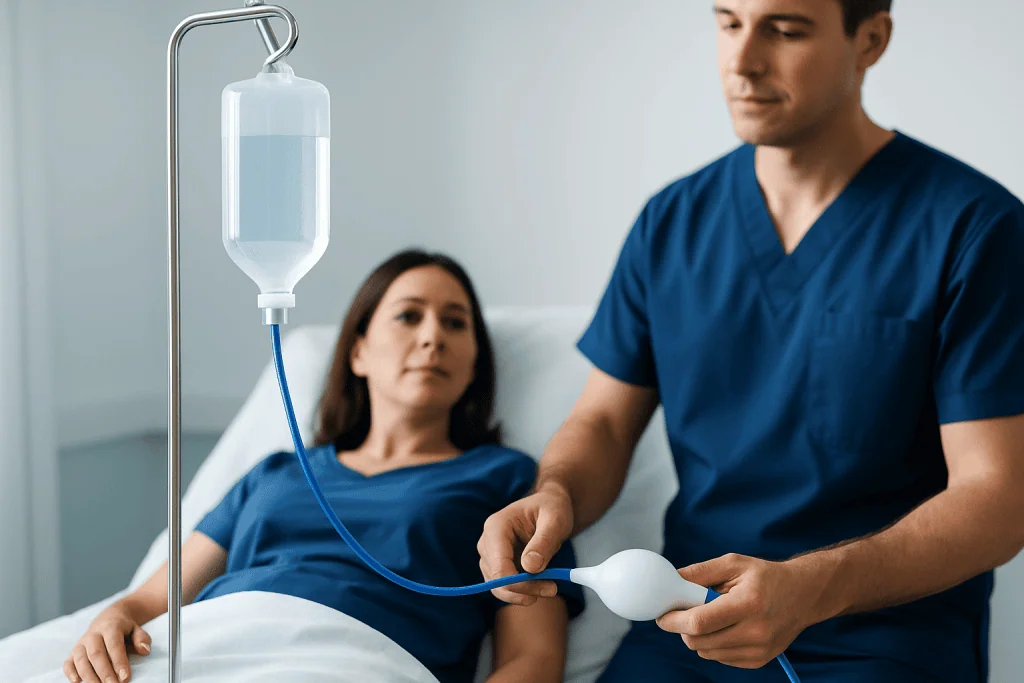
The rectum is the last part of the large intestine before stool leaves the body. When liquid is introduced into this area, it can trigger the urge to have a bowel movement. Depending on the type of solution, the liquid may soften stool, increase water in the bowel, or stimulate the rectum so the muscles contract and move stool outward.
Some enemas are small-volume products used at home, while others use a larger amount of liquid and are given in healthcare settings. A person is usually asked to lie on their side, and the fluid is introduced gently. The liquid is often held for a short time if possible, then passed with stool. Mild cramping or a sense of fullness can occur during this process.
Medication enemas are different from cleansing enemas. In certain bowel conditions, medicines may be delivered directly into the rectum and lower colon to act where inflammation is present. This approach may be useful in selected cases of ulcerative colitis or other lower bowel conditions, under medical supervision.
Common Medical Uses of an Enema

One common reason for an enema is short-term relief of constipation, especially when stool is hard or sitting low in the rectum. Even then, it is not always the first choice. A doctor may suggest an enema when constipation is causing significant discomfort, when oral treatments have not worked, or when stool needs to be removed more quickly.
Enemas are also used before certain tests or procedures. Cleaning the lower bowel can improve visibility and help a doctor examine the intestine more accurately. They may be part of preparation for imaging, lower bowel examinations, or a planned procedure involving the rectum or colon.
Another important use is delivering medication directly to the bowel lining. This may be done in inflammatory bowel diseases or other conditions affecting the lower colon and rectum. In some cases, evaluation by specialists in gastroenterology care is helpful when constipation, bowel inflammation, or ongoing rectal symptoms are persistent or unclear.
- Relief of selected cases of constipation
- Bowel preparation before procedures or tests
- Delivery of certain rectal medications
- Supportive care in specific hospital settings
Risks, Side Effects, and Common Myths
A careful, occasional enema can be appropriate for some people, but it is not risk-free. Common short-term side effects include cramping, bloating, irritation around the anus, and temporary discomfort. If the nozzle is inserted forcefully or the rectal lining is already inflamed, there is also a small risk of injury.
Repeated or frequent use can cause more significant problems. Some enema solutions may alter fluid and mineral balance in the body, especially in older adults, children, and people with kidney or heart disease. Overuse may also make the bowel less responsive over time, so a person may start relying on enemas instead of addressing the cause of constipation.
Several myths are worth correcting. An enema is not a general “detox” treatment, and there is no evidence that routine colon cleansing improves health in otherwise healthy people. It is also not a safe way to manage chronic constipation without medical guidance. If constipation keeps returning, the priority should be finding out why it is happening rather than repeatedly emptying the bowel.
People should be especially cautious if they have severe hemorrhoids, recent bowel surgery, inflammatory bowel disease flare symptoms, unexplained abdominal pain, dehydration, kidney disease, or possible bowel blockage. In these situations, self-treatment may be unsafe and medical advice is important.
Who Should Avoid or Use an Enema Only With Medical Advice
Not everyone should use an enema at home. Infants, frail older adults, pregnant people, and anyone with significant heart, kidney, or bowel disease should usually speak with a healthcare professional first. The same is true for people taking medicines that affect body fluid balance or those who have had repeated constipation with no clear cause.
Enemas may be risky if there are warning signs of a more serious problem. These include sudden severe abdominal pain, vomiting, a swollen abdomen, inability to pass gas, fever, rectal bleeding, black stool, unexplained weight loss, or a major change in bowel habits. These symptoms can point to obstruction, infection, inflammatory disease, or another condition that needs medical evaluation rather than home treatment.
People with ongoing constipation may benefit from assessment for common causes such as low fiber intake, dehydration, medication side effects, pelvic floor problems, thyroid disease, or structural bowel issues. A specialist may also evaluate for conditions such as Crohn's disease when symptoms suggest intestinal inflammation rather than simple constipation.
What to Expect During Use and Afterward
When a doctor or product instructions recommend an enema, the process is usually straightforward. The person often lies on the left side with knees bent, and the nozzle is inserted gently into the rectum with lubrication. The fluid is introduced slowly. A feeling of pressure, fullness, or the urge to pass stool is common and usually short-lived.
After the fluid is given, the person may be asked to hold it briefly if comfortable. The bowel movement often happens soon afterward, though the exact timing depends on the type of enema used. Some cramping can occur, but strong pain is not expected. If severe pain, dizziness, bleeding, or no result occurs, medical advice should be sought.
Good technique matters. Force should never be used, and the instructions on the product or from the care team should be followed closely. Using more than recommended, mixing homemade solutions, or repeating enemas frequently can increase the chance of harm. If bowel emptying is needed as part of a broader diagnostic plan, a doctor may also recommend other tests or treatments, including endoscopic evaluation when appropriate.
Safer Self-Care and Long-Term Prevention of Constipation
For many people, constipation improves more safely with daily habit changes than with repeated enemas. Drinking enough fluids, eating fiber-rich foods, staying physically active, and allowing time for unhurried bathroom visits can support regular bowel function. It can also help to respond to the natural urge to pass stool rather than delaying it repeatedly.
If constipation is frequent, the person should review medicines and supplements with a healthcare professional, because some can slow the bowel. Oral treatments may be more appropriate than enemas in many situations, depending on the person’s age, health conditions, and symptoms. A doctor can help choose the safest option rather than relying on trial and error.
Chronic constipation deserves medical attention, especially if it is new, worsening, or associated with pain or bleeding. At the end of the evaluation process, some people may need specialist care to identify structural, functional, or inflammatory causes. Acibadem International’s multidisciplinary specialists and JCI-accredited hospitals diagnose and treat digestive conditions for international patients when further assessment is needed.
When to Seek Medical Care
Medical care is important if an enema causes severe abdominal pain, persistent cramping, rectal bleeding, faintness, or vomiting. A person should also seek help if the enema does not produce a bowel movement and symptoms of constipation are worsening. These situations can suggest blockage, dehydration, or another problem that should not be managed at home.
A doctor should be consulted sooner rather than later if constipation lasts more than a short period, keeps returning, or comes with fever, weight loss, anemia, or a major change in normal bowel habits. People with known bowel disease, kidney disease, or heart disease should ask for guidance before using an enema. Prompt evaluation helps identify the cause and supports safer, more effective treatment.
Frequently asked questions
What is an enema used for?
An enema is used to place liquid into the rectum to help empty stool, prepare the bowel for a test or procedure, or deliver medication to the lower intestine. It can be useful in selected situations, but it is not the best solution for every case of constipation.
Is an enema safe for constipation?
An enema can be safe when used correctly and for the right reason, but it is not risk-free. Overuse or use in someone with certain medical conditions can lead to irritation, dehydration, or changes in body salts, so medical advice is wise if constipation is frequent or severe.
How quickly does an enema work?
Many enemas work fairly quickly, often within minutes to a short period after use, though timing varies by product type. If there is no result and symptoms continue, the person should not keep repeating enemas without guidance.
Can enemas be used regularly?
Regular use is generally not recommended unless a doctor specifically advises it. Frequent enemas can irritate the rectum and may contribute to dependence on bowel stimulation instead of addressing the underlying cause of constipation.
Who should not use an enema without asking a doctor first?
People with severe abdominal pain, rectal bleeding, inflammatory bowel disease symptoms, kidney disease, heart disease, recent bowel surgery, pregnancy, or advanced age should speak with a doctor first. Children, especially infants, also need medical guidance before any enema use.
Are enemas a good way to detox the body?
No. There is no good medical evidence that routine enemas or colon cleansing detox the body in healthy people. The body already removes waste through the intestines, liver, and kidneys, and unnecessary cleansing can cause harm.
References
- National Institute of Diabetes and Digestive and Kidney Diseases
- American Gastroenterological Association
- Mayo Clinic
- Cleveland Clinic
- National Health Service
This article is for general information only and is not a substitute for professional medical advice. Please consult a qualified doctor about your individual situation.
Persistent digestive symptoms? Get evaluated in Turkey
JCI-accredited · board-certified surgeons · reply within 24h
Add us as a Preferred Source to see more of our trusted health content across Google Search, AI Overviews and Discover.

More from the Health Library



Related Specialists

Dr. Nurgül Bozoğlu
Radiology
Dr. Mahir Kenduşim
Ophthalmology
Assoc. Prof. Dr. Şafak Yılmaz Baran
Gynecology & Obstetrics
Prof. Dr. Burak Akan
Orthopedic Surgery & Traumatology