Enlarged prostate bph Treatment Options: From Medication to Surgery

Benign prostatic hyperplasia (BPH) is a non-cancerous enlargement of the prostate that can affect urine flow. Mild symptoms may be managed with monitoring and practical lifestyle changes.
Key Takeaways
- Benign prostatic hyperplasia (BPH) is a non-cancerous enlargement of the prostate that can affect urine flow.
- Mild symptoms may be managed with monitoring and practical lifestyle changes.
- Medicines can relax prostate-related muscles, shrink the prostate over time, or address bladder symptoms in selected people.
- Minimally invasive procedures and surgery can provide stronger or more durable relief when medication is not suitable or effective.
- Sudden inability to urinate, fever with urinary symptoms, or visible blood in urine needs prompt medical assessment.
Enlarged prostate BPH treatment is tailored to urinary symptoms, prostate size, overall health and personal preferences. Options range from watchful waiting and medication to minimally invasive procedures and surgery when symptoms are persistent, severe or causing complications.
Overview: Choosing Enlarged Prostate BPH Treatment
Enlarged prostate BPH treatment aims to improve urinary comfort, protect bladder and kidney function when needed, and support daily quality of life. Benign prostatic hyperplasia, usually called BPH, is a non-cancerous growth of the prostate gland. As the prostate surrounds part of the urethra, enlargement may narrow this channel and make it harder for urine to pass.
Treatment is not based on prostate size alone. A urologist considers symptoms, how much they affect sleep and everyday activities, urine flow, remaining urine in the bladder after voiding, test results, medical history and the person’s preferences. Some people need only regular review, while others benefit from medicine, a procedure or surgery.
BPH is not the same as prostate cancer, although both conditions can occur in the same person and may cause overlapping concerns. A careful assessment helps identify the cause of urinary symptoms and determines whether treatment is needed. For broader information about the condition, see enlarged prostate (BPH).
Symptoms and Reasons Treatment May Be Needed
Common lower urinary tract symptoms include a weak or interrupted urine stream, waiting to start urinating, straining, dribbling after urination, a feeling that the bladder has not emptied fully, frequent urination and waking at night to urinate. Urgency, meaning a sudden difficult-to-control need to urinate, may also occur.
Symptoms do not always match the degree of enlargement. A relatively small prostate can cause troublesome obstruction in some people, while a larger prostate may produce few symptoms. Urinary symptoms can also result from infection, bladder problems, stones, certain medicines, neurological conditions or prostate cancer, so self-diagnosis is not reliable.
Active treatment may be recommended if symptoms substantially disrupt life or if BPH leads to repeated urinary retention, recurrent urinary tract infections, bladder stones, ongoing blood in the urine believed to be prostate-related, bladder damage, or kidney effects related to obstruction. These complications are not inevitable, but they require timely urological evaluation.
Assessment Before Selecting a Treatment

A clinician usually begins by discussing symptoms, fluid intake, medical conditions and medicines. Some cold and allergy products, decongestants, antihistamines and other medicines can worsen difficulty urinating in certain people. A symptom questionnaire may help measure severity and track response to treatment over time.
Assessment commonly includes a physical examination, which may include a digital rectal examination, and a urine test to look for infection or blood. Blood tests may be used to assess kidney function and, when appropriate, prostate-specific antigen (PSA). PSA is not a test for BPH alone; it is interpreted in the context of age, prostate findings, medicines and individual cancer risk.
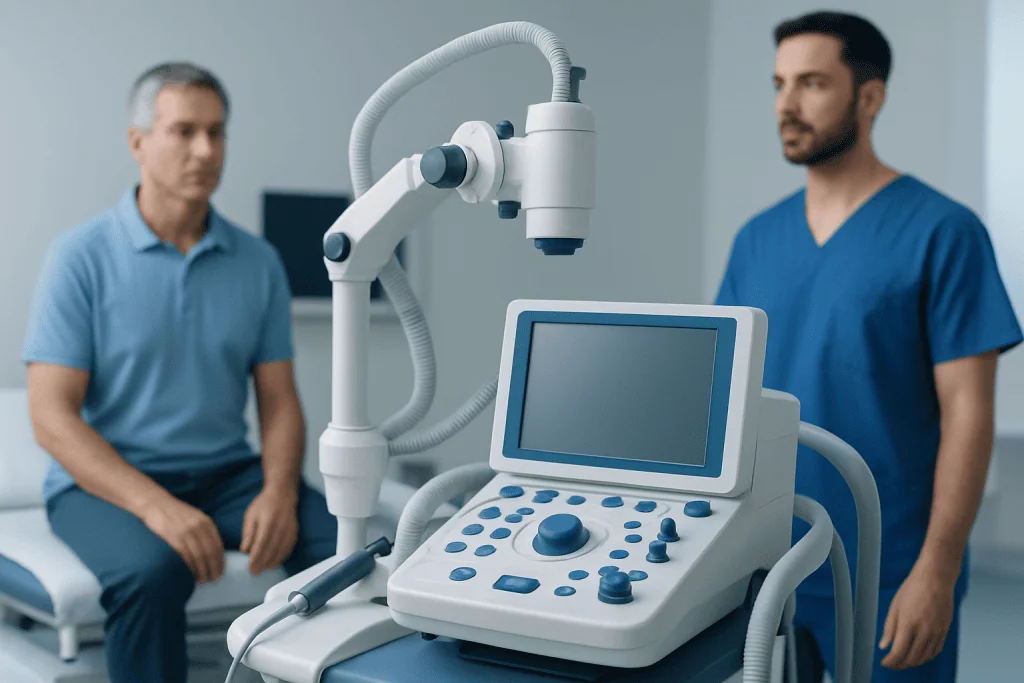
Further testing may include ultrasound to measure prostate size and post-void residual urine, a urine-flow test, bladder assessment or cystoscopy in selected cases. These tests help distinguish obstruction from bladder weakness and guide whether medication, a minimally invasive option or surgery is most likely to help.
Conservative Care and Medication Options
For mild symptoms that are not bothersome and are not causing complications, watchful waiting can be an appropriate choice. This involves periodic review rather than ignoring symptoms. Helpful measures may include reducing evening fluids, limiting alcohol and caffeine if they worsen urgency or frequency, avoiding delayed urination, reviewing medicines with a clinician and managing constipation.
Alpha-blockers relax smooth muscle in the prostate and bladder neck, often improving urine flow and symptoms relatively quickly. Possible side effects include dizziness, tiredness, nasal congestion and changes in ejaculation. Because some can lower blood pressure, medication choice should take account of heart health and other prescribed treatments.
5-alpha-reductase inhibitors gradually reduce the size of the prostate in suitable people, particularly when the prostate is enlarged. Benefits may take several months to become clear. They can affect sexual function and PSA interpretation, so follow-up is important. Combination treatment with an alpha-blocker may be considered for selected patients with more significant enlargement and symptoms.
When urgency and frequency are prominent, medicines that target bladder overactivity may sometimes be added after checking that bladder emptying is adequate. Medication decisions should be individualized, especially for people with glaucoma, low blood pressure, liver or kidney disease, or multiple medicines.
Minimally Invasive Procedures and Surgery
Procedural treatment may be considered when symptoms remain bothersome despite medication, medication causes unacceptable side effects, an individual prefers a longer-lasting intervention, or BPH has caused complications. The best procedure depends on prostate size and shape, presence of a prominent middle lobe, bleeding risk, need to preserve ejaculation, anesthesia suitability and local clinical expertise.
Some minimally invasive approaches use heat, steam, implants or other methods to widen the urinary channel by reducing or repositioning prostate tissue. They may be performed with local anesthesia, sedation or general anesthesia, depending on the technique. These options can offer shorter recovery for appropriate candidates, although symptom improvement, durability and likelihood of later retreatment differ between methods.
Transurethral resection of the prostate (TURP) is an established operation in which a surgeon passes a thin instrument through the urethra and removes obstructing prostate tissue. Laser procedures can vaporize or remove tissue and may be especially useful in some people with a larger prostate or those taking certain blood-thinning medicines. For very large prostates, an enucleation procedure or, less commonly, simple prostatectomy may be advised.
For a more detailed discussion of available techniques and individualized planning, explore enlarged prostate BPH treatment options. A urologist can explain which procedures are available and appropriate for the individual situation.
What a BPH Procedure Involves: Candidacy, Recovery and Risks
Before a procedure, the care team reviews urinary tests, prostate anatomy, current medicines and anesthesia considerations. Blood-thinning medicines may need a carefully supervised plan; they should never be stopped independently. A urine infection is usually treated before intervention. The clinician also discusses goals, including the importance of preserving ejaculation or avoiding repeat treatment.
Although the exact steps vary, many procedures follow a similar pathway: pre-procedure assessment, anesthesia or sedation, treatment through the urethra or a small access route, observation in recovery and, for some techniques, temporary placement of a urinary catheter. Tissue removed during some operations may be examined in a laboratory. Hospital stay may range from same-day discharge to a short admission, depending on the procedure and recovery.
Temporary burning during urination, urinary frequency, urgency, mild bleeding and fatigue can occur during healing. Recovery can take days to several weeks, while complete improvement may continue over a longer period. People are usually advised to drink fluids as directed, avoid strenuous activity and heavy lifting for a clinician-recommended period, and attend follow-up appointments.
Potential benefits include stronger urine flow, less straining, fewer nighttime trips to the bathroom and reduced risk of obstruction-related complications. Risks vary by procedure but can include bleeding, infection, temporary urinary retention, urethral narrowing, urinary leakage, erectile difficulties, retrograde ejaculation and the possible need for further treatment. A balanced conversation about expected benefits and risks supports informed consent.
When to Seek Medical Care
Any new or worsening urinary symptoms should be discussed with a qualified clinician, particularly when they affect sleep, work, travel or emotional wellbeing. Medical review is also important for recurrent urinary infections, visible blood in urine, unexplained pelvic pain, unintentional weight loss, or symptoms that begin suddenly.
Urgent medical care is needed for complete inability to pass urine, especially if there is lower abdominal pain or swelling. Prompt assessment is also appropriate for fever, chills or feeling unwell alongside burning urination, pelvic pain or difficulty passing urine, as these symptoms may indicate infection requiring treatment.
A person should not assume urinary symptoms are simply part of aging. Early evaluation can identify treatable causes and help prevent complications. At Acibadem International, multidisciplinary urology specialists in JCI-accredited hospitals assess and treat BPH for international patients, with care plans based on individual clinical needs.
Frequently asked questions
Can an enlarged prostate be treated without surgery?
Yes. Many people with BPH do not need surgery. Depending on symptom severity and test results, options may include monitoring, lifestyle adjustments and medication. A procedure may be considered if symptoms remain troublesome or complications develop.
Which medication is best for enlarged prostate BPH treatment?
The most suitable medicine depends on prostate size, symptoms, blood pressure, other health conditions and personal priorities. Alpha-blockers may work relatively quickly, while 5-alpha-reductase inhibitors can reduce prostate size over time in appropriate patients. Some people benefit from combination treatment.
Does BPH treatment affect sexual function?
Some BPH medicines and procedures can affect ejaculation, erections or sexual desire, while others have a lower likelihood of these effects. Retrograde ejaculation, in which semen enters the bladder rather than leaving through the penis, can occur after certain procedures. These issues should be discussed before choosing treatment.
How long does recovery take after enlarged prostate surgery?
Recovery depends on the type of treatment, prostate size, general health and whether a catheter is required. Some minimally invasive procedures allow a return to light activities within days, while recovery after TURP, laser surgery or larger operations may take several weeks. The treating team provides personalized activity and follow-up guidance.
Can BPH become prostate cancer?
BPH itself is not cancer and does not turn into prostate cancer. However, BPH and prostate cancer can occur at the same time, and some symptoms can overlap. Appropriate assessment, including PSA testing when clinically indicated, helps a clinician evaluate prostate health.
When is surgery recommended for BPH?
Surgery or another procedure may be recommended when medications do not provide adequate relief, cannot be used, or cause unwanted side effects. It may also be advised for repeated urinary retention, bladder stones, recurrent infections, ongoing bleeding or kidney problems related to obstruction. The decision is individualized after a urological assessment.
References
- American Urological Association
- European Association of Urology
- National Institute of Diabetes and Digestive and Kidney Diseases
- National Health Service
- Mayo Clinic
This article is for general information only and is not a substitute for professional medical advice. Please consult a qualified doctor about your individual situation.
Explore treatments in Turkey — costs, top hospitals & a free quote
JCI-accredited · board-certified surgeons · reply within 24h
Add us as a Preferred Source to see more of our trusted health content across Google Search, AI Overviews and Discover.
Check your numbers in seconds
BMI, calories, due date, blood pressure and 30+ more clinical calculators — free, instant, doctor-reviewed ranges.