Epilepsy After a First Seizure: What Tests Are Done and What Comes Next

One seizure does not always mean epilepsy. Evaluation often includes a medical history, physical and neurological exam, blood tests, EEG, and brain imaging.
Key Takeaways
- One seizure does not always mean epilepsy.
- Evaluation often includes a medical history, physical and neurological exam, blood tests, EEG, and brain imaging.
- Treatment decisions depend on the likely cause and the risk of future seizures.
- Safety advice, follow-up, and lifestyle guidance are important after a first seizure.
- Urgent medical care is needed if seizures are prolonged, repeated, or linked to injury, pregnancy, or serious illness.
A first seizure can be frightening, but it does not automatically mean a person has epilepsy. Doctors usually confirm what happened, look for possible causes, estimate the risk of another seizure, and then decide whether treatment or monitoring is the best next step.
Overview: What a First Seizure May Mean
A seizure happens when there is a sudden burst of abnormal electrical activity in the brain. This can affect movement, awareness, sensation, behavior, or consciousness. Some seizures are obvious, with shaking and loss of awareness, while others may be brief staring spells, confusion, unusual sensations, or involuntary movements.
After a first seizure, one of the most important questions is whether the event was truly an epileptic seizure or something that looked similar. Fainting, severe migraine, low blood sugar, sleep disorders, panic attacks, and certain heart rhythm problems can sometimes be mistaken for seizures. A careful evaluation helps doctors understand what happened and what should be done next.
A diagnosis of epilepsy is not made automatically after one seizure. In many cases, epilepsy is diagnosed when a person has had more than one unprovoked seizure, or when tests show that the risk of another seizure is high enough to make recurrence likely. This is why the first assessment focuses not only on the event itself, but also on possible triggers, brain findings, and overall risk.
Symptoms and What Doctors Ask About
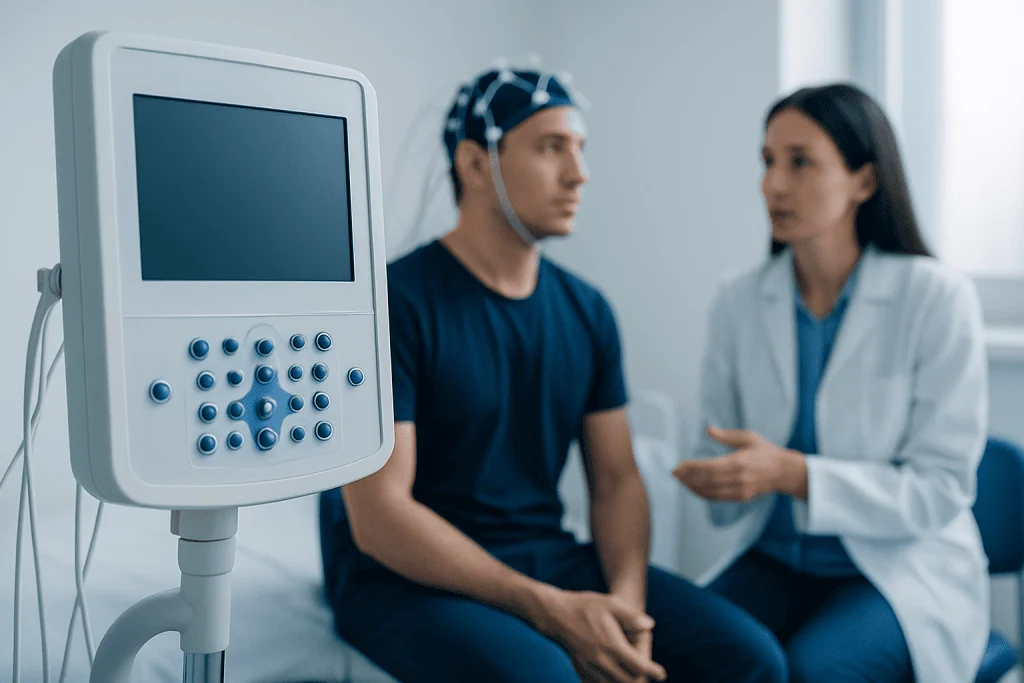
Doctors begin by gathering a clear description of the episode. Details from a witness can be especially helpful because many people do not remember the event fully. The team may ask whether there was a warning feeling beforehand, such as a strange smell, a sense of fear, dizziness, visual changes, or tingling. They also ask whether the person stared, became stiff, had jerking movements, bit the tongue, lost bladder control, or felt very sleepy afterward.
Symptoms before and after the event can help distinguish seizure from other conditions. A short period of confusion, fatigue, headache, muscle soreness, or deep sleep afterward may suggest a post-seizure recovery period. On the other hand, chest pain, palpitations, prolonged lightheadedness, or a clear trigger such as standing up quickly may point toward another cause.
The medical history usually includes questions about recent illness, fever, head injury, alcohol or drug use, sleep deprivation, pregnancy, family history of seizures, and any previous episodes that may have gone unnoticed. Doctors also review medications because some prescription and nonprescription drugs can lower the seizure threshold or interact with future treatment.
- What happened just before, during, and after the event
- How long the episode lasted
- Whether there was loss of awareness or consciousness
- Any recent infection, injury, or metabolic problem
- Past neurological symptoms, such as headaches or weakness
Causes and Risk Factors Doctors Look For

A first seizure may be provoked or unprovoked. A provoked seizure is linked to a temporary factor such as very low blood sugar, a major electrolyte imbalance, alcohol withdrawal, certain drugs, high fever in children, or an acute brain problem. In these cases, treatment focuses on the underlying cause as well as the seizure itself.
An unprovoked seizure happens without a clear immediate trigger. Doctors then consider whether there may be an underlying tendency in the brain to have repeated seizures. This can be related to prior stroke, head trauma, brain infection, a structural brain abnormality, scar tissue, or, less commonly, a brain tumor. Some people have no clear cause identified even after a full workup.
Certain findings increase the chance of another seizure. These include an abnormal neurological exam, a known brain injury, specific changes on EEG, or abnormalities seen on MRI. Understanding these risk factors helps doctors decide whether the event is more likely to be a single isolated seizure or part of a longer-term condition such as epilepsy.
What Tests Are Done After a First Seizure?
The testing plan depends on the person’s age, symptoms, medical history, and how the event occurred. Most people have a physical exam and a neurological exam first. These help identify any weakness, memory problem, language issue, or sign of infection that might suggest a cause.
Blood tests are commonly used to look for reversible problems. Doctors may check blood sugar, electrolytes, kidney and liver function, signs of infection, and sometimes a toxicology screen if substance exposure is possible. In selected situations, further testing may be needed for pregnancy, autoimmune disease, or other medical conditions.
An electroencephalogram, often called an EEG, records the brain’s electrical activity. It does not hurt and can sometimes show patterns that support a seizure diagnosis or suggest a specific seizure type. A normal EEG does not rule out epilepsy, but an abnormal EEG can be very helpful in estimating the risk of future seizures and planning treatment.
Brain imaging is also common after a first unprovoked seizure. A head CT scan may be used urgently in the emergency setting if there has been trauma, severe headache, fever, immune suppression, or a concern for bleeding. For a more detailed look at the brain structure, doctors often prefer MRI because it can show subtle abnormalities such as scar tissue, small lesions, or developmental changes that may not be visible on CT.
How Diagnosis Is Made and What Happens Next
After the first evaluation, the doctor combines information from the event, examination, and tests to decide what the episode most likely was. Sometimes the conclusion is clear, but in other cases the answer remains uncertain and follow-up is needed. If the event may not have been a seizure, the doctor may recommend assessment for other causes, including fainting or sleep-related conditions.
If the evidence supports a seizure, the next step is to estimate the chance of recurrence. This is important because treatment is not the same for everyone after a first event. Some people have a low risk of another seizure and may be observed without daily medication. Others have findings that strongly suggest a higher risk and may benefit from earlier treatment.
Follow-up with a neurologist is often recommended, especially when the diagnosis is uncertain, imaging or EEG is abnormal, or the person has ongoing symptoms. In some cases, additional testing such as a repeat EEG, longer-term video EEG monitoring, or more specialized imaging may be considered. This broader evaluation helps classify the seizure type and determine whether there is an identifiable syndrome or another neurological condition such as a brain tumor.
Treatment Options After a First Seizure
Treatment depends on the cause. If the seizure was provoked by a medical problem, the priority is correcting that problem, such as treating an infection or restoring a metabolic imbalance. When the event is unprovoked, doctors weigh the benefits and drawbacks of starting antiseizure medication right away versus monitoring and waiting to see whether another seizure occurs.
Antiseizure medicines can reduce the chance of recurrence, but they are not necessary for every person after a first seizure. The decision usually depends on factors such as EEG findings, MRI results, prior brain injury, and the person’s daily life, including work, sports, and driving. The doctor also considers possible side effects and whether medication is likely to improve safety and quality of life.
If tests show a structural cause, treatment may include more than medication. For example, some people may need evaluation by specialists in neurosurgery if there is a lesion that requires further management. Others may benefit from coordinated care in neurology for seizure classification, medication planning, and long-term follow-up.
Near the end of the evaluation, practical guidance becomes very important. The person may be advised about driving restrictions, water safety, heights, sleep, alcohol, and medication adherence. Acibadem International’s multidisciplinary specialists in JCI-accredited hospitals also evaluate and treat seizure disorders for international patients when more detailed assessment or ongoing care is needed.
Prevention, Self-care, and Daily Safety
Not all seizures can be prevented, but some steps may lower the chance of another event or help avoid complications. Good sleep is especially important because sleep deprivation can make seizures more likely in some people. Limiting alcohol, avoiding recreational drugs, and taking all prescribed medicines as directed can also reduce risk.
Safety planning after a first seizure is a practical part of care. Until a doctor says it is safe, a person may need to avoid driving, swimming alone, climbing ladders, or operating heavy machinery. Showers are often safer than baths, and family members may be taught basic seizure first aid so they know how to respond calmly if another event happens.
Keeping a seizure diary can help. It may include the date and time of the event, possible triggers, sleep pattern, medications, alcohol intake, and recovery symptoms. This information can help the doctor identify patterns and decide whether more testing or treatment is needed.
- Prioritize regular sleep and hydration
- Avoid missing prescribed medication doses
- Limit alcohol and avoid illicit substances
- Use safety precautions around water, heights, and machinery
- Arrange follow-up care even if the person feels well afterward
When to Seek Urgent Medical Care
A first seizure should always be medically assessed, even if the person seems to recover quickly. Urgent care is especially important when the seizure lasts longer than a few minutes, happens more than once without full recovery in between, or causes serious injury. Trouble breathing, persistent confusion, or severe headache after the event are also reasons for prompt evaluation.
Emergency assessment is also needed if the seizure occurs during pregnancy, in someone with diabetes, after a head injury, or in a person with fever, immune suppression, or a known cancer history. In these settings, doctors look carefully for complications and for underlying causes that may require immediate treatment.
Family members and caregivers can help by noting what they saw and sharing it with the medical team. During a seizure, the safest response is usually to protect the person from injury, turn them onto one side if possible, avoid placing anything in the mouth, and call emergency services when warning signs are present. Clear medical follow-up after the event helps ensure that test results are reviewed and the next steps are understood.
Frequently asked questions
Does one seizure mean a person has epilepsy?
No. A single seizure does not automatically mean epilepsy. Doctors make that diagnosis based on the number of seizures, whether there was a clear trigger, and whether tests show a high likelihood of future seizures.
Why is an EEG done after a first seizure?
An EEG records the brain's electrical activity and may show patterns that support a seizure diagnosis. It can also help estimate the risk of another seizure and guide decisions about treatment and follow-up.
Is MRI always needed after a first seizure?
MRI is often recommended after a first unprovoked seizure because it gives detailed images of the brain. It can help identify structural causes such as scar tissue, developmental abnormalities, or other lesions, although the exact imaging plan depends on the clinical situation.
Will medication be started right away?
Not always. Some people are monitored after a first seizure, while others are advised to start antiseizure medicine if their recurrence risk appears higher. The decision is individualized and should be made with a neurologist or another qualified doctor.
Can a person drive after a first seizure?
Driving rules vary by country and region, and temporary driving restrictions are common after a seizure. The doctor will usually advise the person on when it may be safe and legally allowed to drive again.
What should family members do if another seizure happens?
They should stay calm, protect the person from injury, and place them on their side if possible. They should not put anything in the mouth, and they should seek emergency help if the seizure is prolonged, repeated, or followed by breathing problems or delayed recovery.
This article is for general information only and is not a substitute for professional medical advice. Please consult a qualified doctor about your individual situation.
Epilepsy in Turkey — costs, top hospitals & a free quote
JCI-accredited · board-certified surgeons · reply within 24h
Add us as a Preferred Source to see more of our trusted health content across Google Search, AI Overviews and Discover.

Neurology
Diagnosis and treatment of disorders of the brain, spinal cord, nerves and muscles.
51 specialists in this unitNeurology Specialists at Acibadem





More from the Health Library

Celiac Disease in Adults: When Digestive Symptoms Are Not the Only Clue

Sarcoidosis: Lung, Skin, and Eye Symptoms Explained

Kidney Stones: Warning Signs, Causes, and Treatment

Asthma: Wheezing, Inhaler Use, and Preventing Attacks

Condition Synonym: Other Words Doctors May Use Instead