Esotropia — Explained by Medical Evidence, Not Myths

Esotropia means one or both eyes turn inward and may be constant or intermittent. It can appear in infancy, childhood, or adulthood and has several possible causes.
Key Takeaways
- Esotropia means one or both eyes turn inward and may be constant or intermittent.
- It can appear in infancy, childhood, or adulthood and has several possible causes.
- Early assessment is important because untreated eye misalignment can affect vision development and depth perception.
- Diagnosis relies on a full eye examination, including alignment testing and refraction.
- Treatment may include glasses, patching, prism lenses, vision support, or eye muscle surgery depending on the case.
Esotropia is a form of strabismus in which one or both eyes turn inward. It is a medical eye alignment problem rather than a myth or habit, and treatment depends on the type, cause, age, and effect on vision.
Overview: what esotropia really is
Esotropia is an inward turning of one eye or both eyes. It is one type of strabismus, which is the medical term for eyes that are not aligned in the same direction. In some people the eye turn is always present, while in others it appears only at certain times, such as when tired, focusing on near objects, or feeling unwell.
Medical evidence shows that esotropia is not caused by reading too much, poor discipline, or a child trying to cross the eyes on purpose. It usually reflects how the eye muscles, focusing system, and brain’s control of eye alignment work together. Because these systems are closely linked, the condition can affect both appearance and vision.
Esotropia can occur in babies, children, and adults. Some children are born with it or develop it in the first months of life, while others develop it later because of significant farsightedness or other visual factors. In adults, esotropia may appear gradually or suddenly and sometimes points to an underlying neurological or eye problem that needs attention.
Accurate diagnosis matters because esotropia is not a single disease with one standard treatment. It includes different subtypes, such as infantile esotropia, accommodative esotropia, partially accommodative esotropia, and acquired forms. An eye specialist identifies the pattern and then recommends the most appropriate management plan.
Symptoms and how esotropia may affect vision
The most noticeable sign of esotropia is that one eye appears to turn inward toward the nose. This may be obvious all the time or may happen only occasionally. Parents often first notice it in photographs, when the child is focusing on a toy, or when the child is tired. Adults may notice the same visible misalignment in a mirror or from comments by others.
Symptoms vary by age and by whether the brain can still combine the images from both eyes. Young children may not complain at all, even when alignment is poor, because the brain can suppress the image from one eye. Over time, however, this may lead to reduced visual development in that eye, commonly called amblyopia or lazy eye.
Older children and adults are more likely to report visual symptoms. These can include double vision, eye strain, headaches, trouble with reading, poor depth perception, and difficulty judging distance. Some people turn or tilt the head to reduce symptoms or to use the eyes in a more comfortable position.
- Inward turning of one or both eyes
- Intermittent crossing, especially when tired or focusing
- Double vision in some older children and adults
- Closing one eye in bright light or while reading
- Reduced depth perception
- Eye fatigue, headaches, or visual discomfort
Causes, types, and risk factors

Esotropia develops when the normal balance that keeps the eyes aligned is disrupted. In children, one common mechanism involves focusing effort. Children who are significantly farsighted may need to focus intensely to see clearly, and that focusing can trigger an inward turn of the eyes. This is called accommodative esotropia and often improves with the right glasses prescription.
Infantile esotropia typically appears within the first six months of life. The exact cause is not always clear, but it is thought to relate to early development of the visual and eye movement systems. Some children with developmental or neurological conditions are more likely to have strabismus, though many infants with esotropia are otherwise healthy.
Adults can develop esotropia for different reasons. These include decompensation of a long-standing childhood alignment problem, eye muscle or nerve dysfunction, thyroid eye disease, previous trauma, or neurological conditions. A sudden new eye turn with double vision should be assessed promptly because it may reflect a problem affecting the nerves or brain pathways that control eye movements.
Risk factors include family history of strabismus, significant farsightedness, premature birth, developmental conditions, and certain neurological or systemic illnesses. Esotropia may also be discussed within the broader group of strabismus disorders, because alignment problems can take several forms and may change over time.
How doctors diagnose esotropia
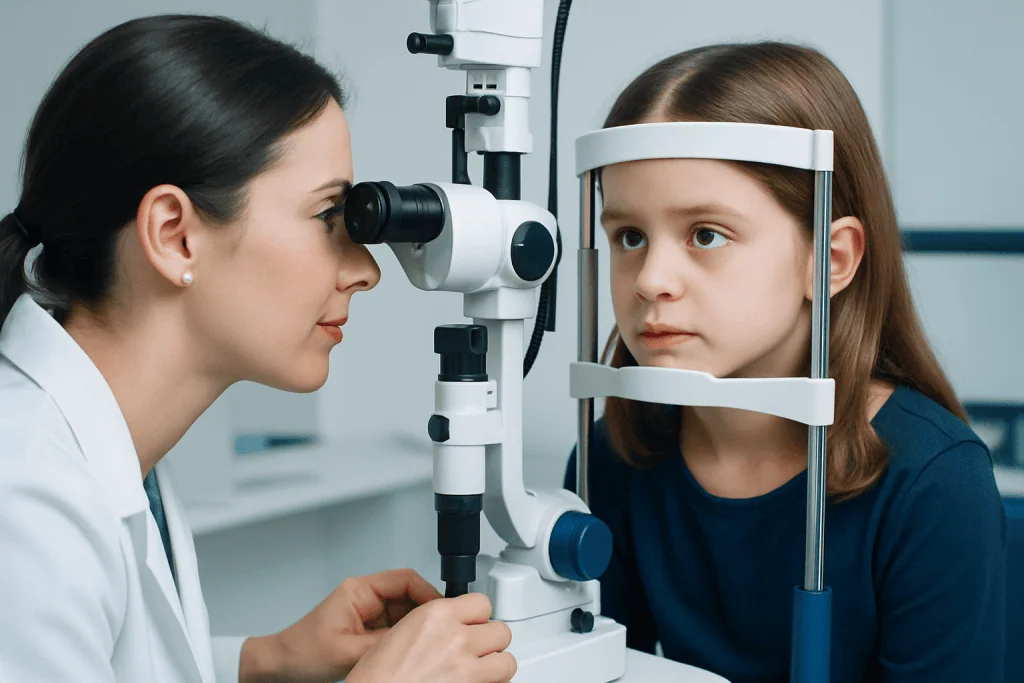
Diagnosis starts with a detailed history and a comprehensive eye examination. The doctor asks when the eye turn began, whether it is constant or intermittent, whether double vision is present, and whether there is any family history of eye misalignment or need for strong glasses. In children, the exam also looks at visual development and whether one eye is being favored.
A key part of the exam is measuring eye alignment at distance and near. Eye specialists use cover tests and other methods to determine the direction and size of the deviation. They also assess eye movements to see whether all muscles and nerves appear to function normally. This helps distinguish among different types of esotropia and identify signs that further evaluation may be needed.
Refraction is also essential, especially in children. Often this is done after eye drops temporarily relax focusing so the doctor can measure farsightedness accurately. If accommodative esotropia is suspected, the response to glasses is an important clue. The doctor also checks the health of the front and back of the eye and evaluates binocular vision and depth perception when possible.
Additional tests are not needed in every case. However, if esotropia appears suddenly, is associated with neurological symptoms, or the pattern is unusual, imaging or referral for broader evaluation may be appropriate. In some patients, careful assessment may also guide planning for eye muscle surgery if non-surgical measures do not fully correct alignment.
Treatment options based on the cause
Treatment for esotropia depends on its type, the patient’s age, the amount of eye turn, and whether vision in one eye has become weaker. The goal is not only to improve appearance but also to support normal visual development, reduce double vision, improve depth perception when possible, and help the eyes work together more comfortably.
Glasses are often the first treatment when farsightedness contributes to the eye turn. In accommodative esotropia, wearing the correct prescription may significantly reduce or even fully control the misalignment. Some patients may also benefit from prism lenses to help manage double vision, especially in selected adult cases.
If amblyopia is present, treatment must also address that problem. This may involve patching the stronger eye or using other approaches to encourage the weaker eye to develop better vision. Management of amblyopia is especially important in childhood, when the visual system is still developing and treatment is more effective.
When glasses alone do not fully align the eyes, surgery may be recommended to adjust the eye muscles. The aim is to improve alignment so the eyes are better positioned for single vision and binocular function. Depending on the situation, clinicians may also discuss a broader strabismus surgery plan, particularly for persistent or large-angle deviations. In adults with complex causes, treatment may also include addressing the underlying condition, sometimes with input from specialists in neurology or related fields.
Prevention, self-care, and practical support
Esotropia itself cannot always be prevented, because some forms relate to early visual development, inherited tendencies, or medical conditions that are not under personal control. Even so, timely eye checks can make a meaningful difference. Early detection allows treatment to begin before vision development is affected more seriously.
For children, routine vision screening and prompt assessment of any suspected eye turn are important. Parents should know that infants can seem to have crossed eyes because of a broad nasal bridge or skin folds near the eyelids, a look sometimes called pseudostrabismus. Since the distinction is not always obvious, a professional eye exam is the safest way to confirm whether alignment is normal.
For patients already diagnosed with esotropia, following the treatment plan consistently matters. That may include wearing glasses as prescribed, attending follow-up visits, using patching therapy as instructed, and reporting any change in symptoms. Adults who have double vision should avoid driving or other visually demanding activities until a doctor advises that it is safe.
General eye health habits also support care, although they do not replace treatment. These include managing chronic health conditions, protecting the eyes from injury, and seeking care for any sudden change in vision. Near the end of the treatment journey, some patients may be cared for by multidisciplinary teams; Acibadem International’s specialists in JCI-accredited hospitals diagnose and treat eye alignment problems for international patients when coordinated care is needed.
When to seek medical care
A child or adult should be evaluated if one eye consistently turns inward, if the crossing becomes more frequent, or if there are concerns about vision or eye comfort. In children, early assessment is especially important because untreated misalignment can interfere with visual development during key years.
Prompt medical care is recommended if esotropia begins suddenly, particularly in an older child or adult, or if it is accompanied by double vision, headache, drooping eyelid, weakness, imbalance, or other neurological symptoms. These features do not always mean a serious condition is present, but they do need timely professional assessment.
Parents should also seek care if a baby older than a few months appears to have a persistent eye turn, or if one eye seems to wander or fixate less well than the other. Adults should not assume that new-onset eye crossing is simply fatigue or age. A qualified eye doctor can determine whether it reflects a treatable focusing problem, a long-standing alignment issue, or another underlying cause.
Regular follow-up is part of good care even after treatment starts. Eye alignment can change as a child grows or as visual demands and general health change over time. Ongoing review helps make sure treatment still matches the patient’s needs.
Frequently asked questions
Is esotropia the same as lazy eye?
No. Esotropia refers to an inward turning of the eye, while lazy eye usually means amblyopia, a reduction in vision development in one eye. The two can happen together, but they are not the same condition.
Can esotropia go away on its own?
Some intermittent eye crossing in very young infants may be temporary, but persistent or repeated inward turning should be assessed by an eye specialist. True esotropia often needs treatment or monitoring, especially in children. It is best not to wait for it to resolve without professional guidance.
Do glasses fix esotropia?
In some cases, yes. Glasses can be very effective when farsightedness and focusing effort are driving the inward turn, as in accommodative esotropia. Other patients may still need additional treatment such as patching, prisms, or surgery.
Is esotropia serious?
Esotropia is treatable, but it should be taken seriously because it can affect vision development, depth perception, and comfort. In adults, sudden onset can sometimes signal an underlying medical issue. That is why proper diagnosis is important.
At what age should a child be checked for esotropia?
Any persistent inward turning beyond the early infant months should be evaluated. A child should also be checked sooner if the eye turn is obvious, happens often, or there are concerns about visual behavior. Early care gives the best chance to protect visual development.
Does esotropia always require surgery?
No. Many patients are treated first with glasses, observation, patching, or prisms depending on the cause and age. Surgery is considered when non-surgical treatment does not fully correct alignment or when the eye turn is large or persistent.
This article is for general information only and is not a substitute for professional medical advice. Please consult a qualified doctor about your individual situation.
Explore treatments in Turkey — costs, top hospitals & a free quote
JCI-accredited · board-certified surgeons · reply within 24h
Add us as a Preferred Source to see more of our trusted health content across Google Search, AI Overviews and Discover.

More from the Health Library
Quillivant: An Evidence-Based Guide for Patients

Kcal Brown Rice: A Complete Medical Overview
Spinal Muscular Atrophy — Explained by Medical Evidence, Not Myths
Stains on Lips: What Patients Need to Know
Decaf Coffee: What Patients Need to Know