

Ethmoid sinus: Symptoms, Causes, and Treatment — Complete Patient Guide

The ethmoid sinus sits between the eyes and is part of the paranasal sinus system. Ethmoid sinus inflammation can cause pressure near the nose and eyes, congestion, headache, and thick nasal discharge.
Key Takeaways
- The ethmoid sinus sits between the eyes and is part of the paranasal sinus system.
- Ethmoid sinus inflammation can cause pressure near the nose and eyes, congestion, headache, and thick nasal discharge.
- Most cases are linked to viral upper respiratory infections, allergies, or blockage of normal sinus drainage.
- Diagnosis is usually based on symptoms and examination; imaging is reserved for selected cases.
- Treatment may include saline rinses, nasal steroid sprays, pain relief, and sometimes antibiotics or surgery when appropriate.
- Urgent medical evaluation is important for severe eye swelling, vision changes, high fever, or symptoms that rapidly worsen.
The ethmoid sinus is a group of small air cells located between the eyes, and problems in this area most often involve inflammation or infection called ethmoid sinusitis. Typical symptoms include nasal congestion, facial pressure around the bridge of the nose or inner eyes, headache, and reduced sense of smell, with treatment guided by the cause and severity.
What the ethmoid sinus is and why it matters
The ethmoid sinus refers to a collection of small, honeycomb-like air cells within the ethmoid bone, located between the eyes and behind the bridge of the nose. These air cells are part of the paranasal sinuses, along with the frontal, maxillary, and sphenoid sinuses. Their lining makes mucus, helps warm and humidify inhaled air, and supports normal drainage through narrow passages into the nasal cavity.
When people search for the “ethmoid sinus,” they are usually asking about symptoms caused by inflammation or infection in this area. This is commonly called ethmoid sinusitis, a form of sinusitis that can occur on its own or together with inflammation in other sinuses. Because the ethmoid sinuses lie close to the eyes, symptoms often feel centered around the inner eye area or the bridge of the nose.
Many ethmoid sinus problems improve with conservative treatment, especially when they are linked to a cold or allergies. However, persistent blockage, bacterial infection, nasal polyps, or structural issues can interfere with normal drainage and make symptoms last longer. Understanding the location and function of the ethmoid sinus helps explain why symptoms can include both nasal complaints and pressure around the eyes.
Common symptoms of ethmoid sinus problems
Ethmoid sinus inflammation often causes discomfort between the eyes or around the bridge of the nose. Some people describe this as pressure, fullness, or a deep ache that may worsen when bending forward. Nasal congestion is also common, and breathing through the nose may feel difficult on one or both sides.
Other symptoms can include thick nasal mucus, postnasal drip, headache, reduced sense of smell, bad breath, and fatigue. The discharge may be clear, yellow, or green, although mucus color alone does not always show whether the cause is viral or bacterial. Some people also notice tenderness around the inner corners of the eyes or mild swelling of nearby tissues.
Symptoms may vary depending on whether the problem is acute or chronic. Acute symptoms usually develop during or after a cold and improve within days to weeks. Chronic sinus inflammation tends to last 12 weeks or longer and may include ongoing congestion, facial pressure, cough, sleep disruption, and a reduced ability to smell.
- Pressure between the eyes or at the bridge of the nose
- Nasal blockage or stuffiness
- Headache or facial pain
- Postnasal drip and throat irritation
- Reduced or altered sense of smell
- Thick nasal discharge
Causes and risk factors

The most common trigger for ethmoid sinus symptoms is a viral upper respiratory infection, such as the common cold. Viral swelling can narrow the small drainage pathways of the ethmoid air cells, causing mucus to build up. If drainage remains blocked, bacteria may sometimes grow in trapped secretions and lead to a secondary bacterial infection.
Allergies are another frequent contributor. Ongoing nasal inflammation from allergic rhinitis can keep the sinus lining swollen and make recurrent symptoms more likely. In some people, anatomical factors such as a deviated nasal septum or enlarged turbinates reduce airflow and drainage. Nasal polyps can also block sinus openings and are a recognized cause of chronic or repeated sinus disease, including nasal polyps.
Additional risk factors include smoking exposure, air pollution, asthma, immune system problems, and dental or facial conditions that affect neighboring structures. People with repeated sinus infections may need assessment for chronic inflammation, allergy, or structural blockage rather than repeated short-term symptom treatment alone.
How doctors diagnose ethmoid sinusitis
Diagnosis starts with a careful review of symptoms, how long they have lasted, and whether they began after a cold, allergy flare, or another illness. A doctor will usually ask about facial pressure, congestion, nasal discharge, fever, smell changes, and any symptoms around the eyes. The pattern and duration of symptoms often help distinguish a short-term viral illness from a bacterial infection or chronic sinus problem.
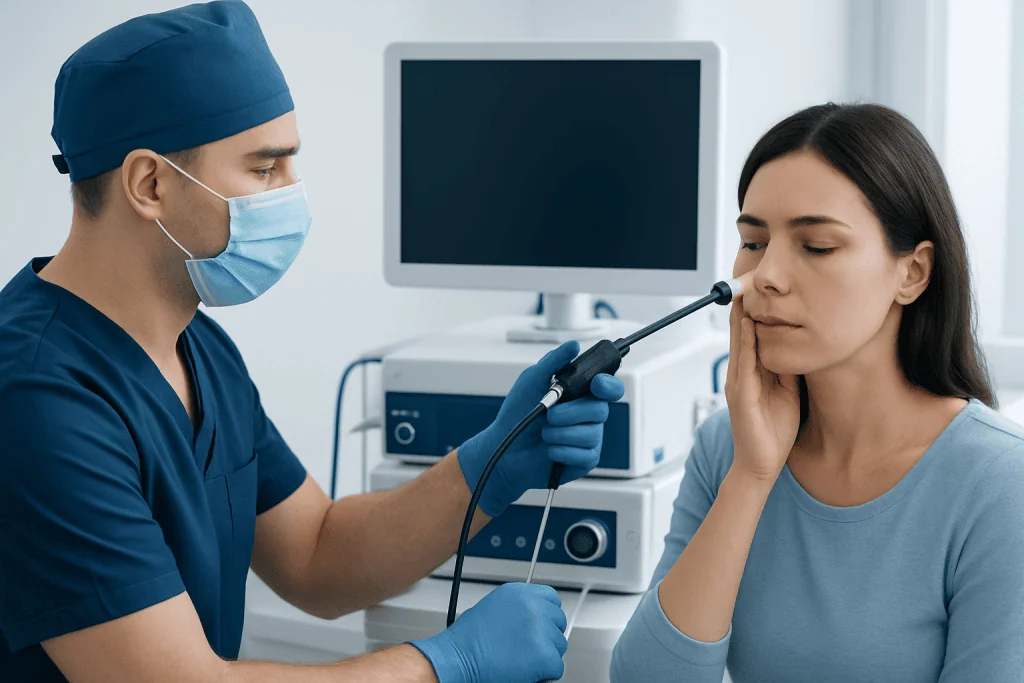
A physical examination may include inspection of the nose and throat and evaluation for facial tenderness or swelling. In ENT practice, a nasal endoscopy may be used to look more closely inside the nasal passages and sinus drainage areas. This can help identify pus, polyps, swelling, or structural narrowing.
Imaging is not needed for every case. A CT scan of the sinuses may be considered when symptoms are severe, recurrent, long-lasting, or not responding to standard treatment, or when surgery is being planned. Imaging can show blockage, mucosal thickening, complications, or conditions affecting nearby structures. Blood tests are not usually required unless there is concern about an underlying immune issue or another cause.
Treatment options for ethmoid sinus conditions
Treatment depends on the cause, severity, and duration of symptoms. For many patients, supportive care is enough while the lining of the nose and sinuses recovers. Saline nasal irrigation can help thin mucus and improve drainage, while nasal corticosteroid sprays may reduce inflammation, especially when allergies or chronic swelling are involved. Rest, hydration, and simple pain relief can also make recovery more comfortable.
If a doctor suspects a bacterial sinus infection based on symptom pattern, severity, or prolonged illness, antibiotics may be considered. They are not useful for every sinus infection, because many cases are viral and improve without them. When allergies are a major factor, treatment may include antihistamines or other allergy-focused measures to reduce ongoing irritation and swelling.
People with persistent or repeated symptoms may benefit from specialist evaluation. Structural blockage, chronic inflammation, or polyps may need targeted care, and some patients are candidates for endoscopic sinus surgery to restore drainage. If a deviated septum contributes to poor airflow or obstruction, septoplasty may sometimes be discussed. In selected cases, ENT specialists may also recommend evaluation of the nasal cavity with nasal endoscopy as part of diagnosis and follow-up.
When treatment is individualized, the goal is not only to relieve symptoms but also to improve ventilation and reduce the chance of repeated flare-ups. This is especially important when ethmoid sinus problems affect sleep, concentration, or daily comfort over time.
Self-care and prevention
Simple self-care steps can support healing and may lower the risk of future episodes. Gentle saline rinses or sprays can keep the nasal passages moist and help clear secretions. Using medicines exactly as prescribed, especially nasal steroid sprays, is important because they often work best when used consistently rather than only during severe symptoms.
Managing allergies can make a meaningful difference for people with recurrent ethmoid sinus inflammation. Reducing exposure to triggers such as dust, pollen, or smoke may help limit swelling in the nose. Humidified air can be soothing in dry environments, but humidifiers should be cleaned regularly to avoid mold or bacterial buildup.
General health measures also matter. Good hand hygiene may reduce viral infections, and avoiding tobacco smoke supports the normal function of the sinus lining. People who notice repeated “sinus infections” should not rely only on short-term remedies; a proper assessment can identify whether the underlying issue is allergy, chronic inflammation, polyps, or structural narrowing.
When to seek medical care
Most short-lived sinus symptoms improve with time and supportive care, but medical review is sensible when symptoms last more than about 10 days without improvement, become worse after seeming to get better, or keep returning. A doctor should also assess significant facial pain, persistent fever, severe headache, or symptoms that interfere with sleep and daily activities.
Prompt medical attention is especially important because the ethmoid sinus lies close to the eyes. Urgent evaluation is recommended if there is swelling around the eye, redness of the eyelids, pain with eye movement, double vision, reduced vision, confusion, marked drowsiness, or a very severe headache. These features can suggest a complication and should not be ignored.
For international patients who need specialist assessment, Acibadem International’s multidisciplinary ENT teams in JCI-accredited hospitals diagnose and treat sinus conditions using individualized medical and surgical approaches. Seeking timely care can help relieve symptoms, confirm the cause, and prevent unnecessary delays in treatment.
Frequently asked questions
Where is the ethmoid sinus located?
The ethmoid sinus is located between the eyes, behind the bridge of the nose. It is made up of multiple small air cells rather than one large hollow space.
What does ethmoid sinus pain feel like?
Many people feel pressure or aching between the eyes or around the bridge of the nose. The discomfort may come with congestion, headache, and a sense of facial fullness, especially when bending forward.
Can an ethmoid sinus infection affect the eyes?
Yes, because the ethmoid sinuses are close to the eye sockets, inflammation or infection can sometimes irritate nearby tissues. Eye swelling, redness, pain with eye movement, or vision changes need prompt medical evaluation.
How is ethmoid sinusitis different from other sinus infections?
The main difference is location. Ethmoid sinusitis often causes symptoms centered between the eyes and near the inner corners of the eyes, while other sinus infections may cause more forehead, cheek, or deep head pressure depending on which sinus is involved.
Do all ethmoid sinus infections need antibiotics?
No. Many sinus infections are caused by viruses and improve with supportive care such as saline rinses, rest, and symptom control. Antibiotics are considered when the pattern suggests a bacterial infection or symptoms are more severe or prolonged.
Can allergies cause ethmoid sinus problems?
Yes, allergies can swell the nasal lining and block normal sinus drainage. This can lead to repeated pressure, congestion, and a greater chance of ongoing or recurrent sinus inflammation.
When is surgery considered for ethmoid sinus disease?
Surgery may be considered when symptoms keep returning, last for a long time, or do not improve with appropriate medical treatment. It may also help if polyps or structural blockage prevent normal drainage.
References
- American Academy of Otolaryngology–Head and Neck Surgery
- National Institute of Allergy and Infectious Diseases
- Centers for Disease Control and Prevention
- Mayo Clinic
- Merck Manual
This article is for general information only and is not a substitute for professional medical advice. Please consult a qualified doctor about your individual situation.
Explore treatments in Turkey — costs, top hospitals & a free quote
JCI-accredited · board-certified surgeons · reply within 24h
Add us as a Preferred Source to see more of our trusted health content across Google Search, AI Overviews and Discover.

More from the Health Library



Related Specialists

Dyt. Renan Güneş
Nutrition & Diet
Fzt. Necla Aleyna Yiğit
Physical Medicine & Rehabilitation
Prof. Dr. Nigar Baykan
Anesthesiology
Prof. Dr. Hayati Özkan
Cardiovascular Surgery