Exotropia: An Evidence-Based Guide for Patients

Exotropia means one eye drifts outward and may be constant or intermittent. It can affect children and adults, with causes ranging from childhood visual development to nerve or muscle problems.
Key Takeaways
- Exotropia means one eye drifts outward and may be constant or intermittent.
- It can affect children and adults, with causes ranging from childhood visual development to nerve or muscle problems.
- Diagnosis includes a full eye exam, alignment testing, and checks of vision in each eye.
- Treatment may include glasses, patching, vision therapy in selected cases, or surgery depending on severity and cause.
- A prompt eye assessment is important if exotropia is new, worsening, or linked to double vision or neurological symptoms.
Exotropia is a type of strabismus in which one eye turns outward instead of aligning with the other eye. It can happen occasionally or more often over time, and early assessment helps protect vision, eye coordination, and daily comfort.
Overview
Exotropia is a form of strabismus, or eye misalignment, in which one eye turns outward. The eye turn may appear only at certain times, such as when a person is tired, daydreaming, ill, or looking into the distance, or it may be present most or all of the time. In many patients, exotropia is treatable, and care is aimed at improving alignment, helping the eyes work together, and protecting vision.
People often notice exotropia as an outward drifting eye, squinting in bright light, closing one eye outdoors, or trouble maintaining focus. Some children are unaware of the problem, while adults may be more likely to notice eye strain or double vision. Because eye alignment and binocular vision develop early in life, children with exotropia benefit from timely evaluation.
Exotropia is not a single condition with one cause. It includes several patterns, such as intermittent exotropia, constant exotropia, sensory exotropia, and exotropia related to nerve or muscle disorders. Understanding the type helps guide treatment and helps explain why one person may need only monitoring while another may benefit from strabismus surgery.
How exotropia may appear in daily life
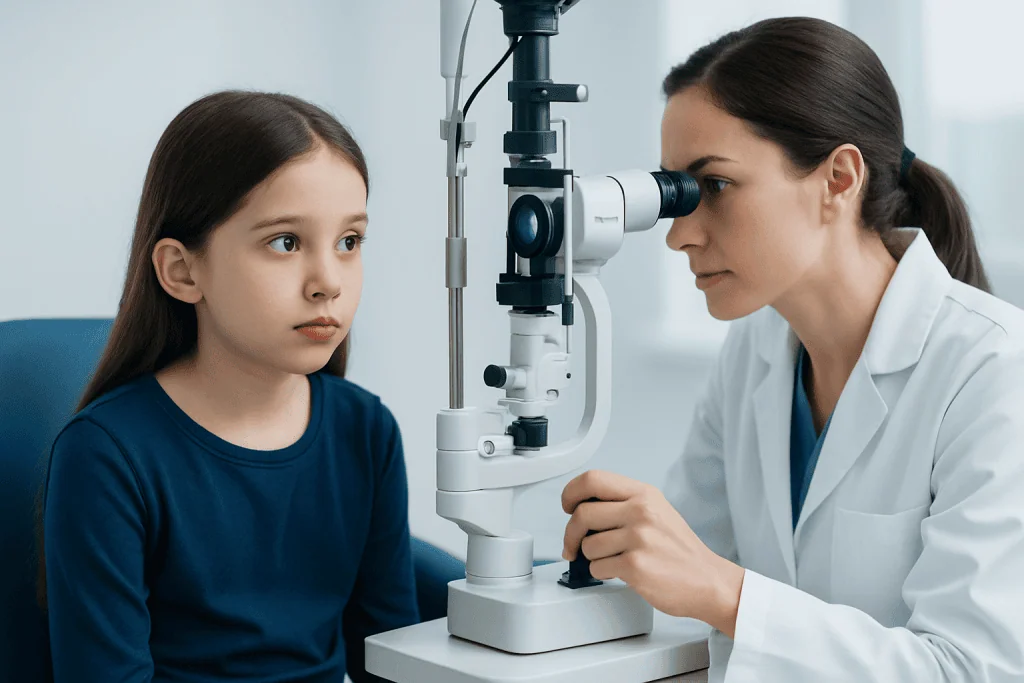
Exotropia can be subtle at first. A parent may notice that a child’s eye drifts outward in photographs or when the child is tired. Teachers may observe difficulty sustaining attention on near tasks. Adults sometimes describe a sense that the eyes are not working together, especially when reading, driving, or looking at distant objects.
Intermittent exotropia is one of the most common forms. In this pattern, the eyes are aligned some of the time, but one eye drifts outward under certain conditions. The frequency and control of the drift are important. A person who can quickly realign the eyes may need a different approach from someone whose outward drift is becoming more frequent or harder to control.
Exotropia may also affect depth perception because the brain relies on both eyes pointing at the same target to create a single three-dimensional image. Some patients compensate well, while others develop suppression, meaning the brain ignores input from one eye to avoid confusion. Related eye alignment disorders are part of the broader group of strabismus.
- Outward eye drift may be occasional or constant
- Symptoms often become more noticeable with fatigue or illness
- Bright sunlight may trigger eye closing or squinting
- Some patients have reduced depth perception or intermittent double vision
Symptoms and possible complications

The most visible symptom is one eye turning outward. In intermittent cases, this may happen only briefly. Family members may notice it before the patient does. In children, signs can include rubbing the eyes, tilting the head, closing one eye in bright light, or losing interest in close visual tasks. Adults may report blurred vision, eye fatigue, headaches, or double vision.
Not every person with exotropia has the same visual experience. Some maintain good vision in both eyes, while others may develop amblyopia, often called “lazy eye,” especially if one eye is consistently favored by the brain. Amblyopia is more likely when the visual system is still developing in childhood and should be assessed and treated when present. This is one reason doctors may evaluate exotropia alongside amblyopia.
If exotropia is left unaddressed in some patients, eye coordination can worsen over time. Constant misalignment may reduce binocular vision and depth perception. In adults, a new-onset exotropia can also point to an underlying eye, nerve, or neurological problem, so a professional evaluation is important rather than relying on self-diagnosis.
Causes and risk factors
Exotropia can develop for different reasons. In children, it often relates to how the brain and eye muscles coordinate alignment and focusing during visual development. Sometimes there is a family history of strabismus, suggesting a genetic tendency. Premature birth, developmental differences, and certain neurological or muscular conditions can also increase risk.
Another important cause is poor vision in one eye. When one eye does not see clearly because of cataract, retinal disease, severe refractive error, or other eye disease, the brain may have difficulty keeping the eyes aligned. This is called sensory exotropia. In adults, exotropia may also appear after vision loss, trauma, or disorders affecting the cranial nerves or eye muscles.
Some people have convergence weakness, making it harder for the eyes to turn inward for near work. Others develop exotropia after previous eye alignment issues or surgery. The cause shapes treatment, so doctors look not only at the eye turn itself but also at vision quality, refractive error, neurological signs, and overall eye health. Correcting focus with laser eye surgery is not a standard treatment for exotropia itself, but a refractive assessment may be part of the broader eye evaluation.
How doctors diagnose exotropia
Diagnosis begins with a detailed history and a complete eye examination. The doctor asks when the eye drift started, how often it occurs, whether it is getting worse, and whether there are symptoms such as double vision, squinting, or headaches. In children, family observations are very helpful because the eye turn may not happen constantly during the appointment.
The examination usually includes visual acuity testing in each eye, refraction to check for glasses needs, and alignment measurements at near and distance. Eye specialists use tests such as cover testing and prism measurements to assess the angle of deviation and how well the patient controls it. Depth perception and binocular vision may also be measured.
The doctor also examines eye movements and the health of the eyes to look for causes such as cataract, retinal problems, or nerve-related weakness. If exotropia appears suddenly, causes double vision, or is linked to other neurological symptoms, additional testing may be needed. In selected cases, imaging or consultation with neurology may be appropriate. Some patients also benefit from a detailed assessment in ophthalmology to plan ongoing care.
Treatment options
Treatment depends on the type of exotropia, the patient’s age, the frequency of the eye drift, and whether binocular vision is affected. In mild intermittent cases with good control, doctors may recommend monitoring over time. Regular follow-up helps track whether the exotropia is stable or becoming more frequent, larger in angle, or harder to control.
Glasses may help when refractive error contributes to poor focus and alignment. If amblyopia is present, treatment may include patching or other methods to encourage use of the weaker eye. Vision therapy or orthoptic exercises may help selected patients, especially when there is a specific convergence issue, but suitability depends on the individual pattern of exotropia and the specialist’s assessment.
Surgery may be considered when the eye turn is frequent, constant, cosmetically significant, or causing loss of binocular function. The goal of surgery is to adjust the eye muscles so the eyes align more effectively. Surgery is planned carefully based on measurement of the deviation and may improve appearance, eye teaming, and comfort, though follow-up remains important because alignment can change over time.
Adults with new exotropia may need treatment of an underlying cause in addition to alignment management. Prism glasses may sometimes help with double vision in selected cases. The best plan is individualized, balancing visual function, symptoms, age, cause, and how much the condition affects daily life.
Self-care, monitoring, and long-term outlook
There is no single home remedy that corrects exotropia, but families and patients can play an important role in monitoring it. Keeping notes on when the eye drifts, what seems to trigger it, and whether it is becoming more frequent can help the doctor judge control and progression. Photographs or short videos taken at home may also be useful, especially for intermittent exotropia.
Following the prescribed treatment plan matters. If glasses are recommended, they should be worn as directed. If patching or exercises are advised, consistency is important because irregular treatment may limit benefit. Children should attend follow-up visits even if the eye turn seems mild, since visual development changes over time.
The outlook varies. Many patients do well with appropriate treatment and monitoring. Some need only observation, while others benefit from surgery or additional therapies. The aim is not only a straighter eye appearance but also the best possible visual function and comfort. Near the end of care planning, some international patients may choose centers such as Acibadem International, where multidisciplinary specialists in JCI-accredited hospitals evaluate and treat exotropia.
When to seek medical care
A routine eye appointment is appropriate whenever an outward eye drift is noticed in a child or adult, even if it happens only sometimes. Early assessment can help identify whether the problem is benign and intermittent or whether it is affecting vision, depth perception, or visual development.
Prompt medical attention is more important if exotropia appears suddenly, becomes rapidly worse, or is associated with double vision, drooping eyelid, severe headache, eye pain, weakness, imbalance, or other neurological symptoms. These features may point to a cause that needs urgent assessment.
Adults who develop a new eye turn should not assume it is due to fatigue alone. Children should also be seen sooner if the eye drift becomes more frequent, if one eye seems to be used less, or if there are concerns about learning, focusing, or visual behavior. A qualified eye specialist can decide whether monitoring, vision treatment, or surgery is the most appropriate next step.
Frequently asked questions
What is exotropia?
Exotropia is a type of eye misalignment in which one eye turns outward. It may happen only occasionally or be present more consistently, depending on the person and the underlying cause.
Is exotropia the same as strabismus?
Exotropia is one form of strabismus. Strabismus is the general term for eyes that do not align properly, while exotropia specifically means an outward deviation.
Can exotropia go away on its own?
Some intermittent cases remain stable for long periods, but exotropia should still be assessed by an eye specialist. It is not safe to assume it will resolve without follow-up, especially in children whose visual system is still developing.
Does exotropia always need surgery?
No. Treatment depends on how often the eye drifts, whether vision is affected, and what is causing the misalignment. Some patients are monitored, while others improve with glasses, amblyopia treatment, or selected exercises; surgery is considered when alignment needs more direct correction.
Can adults develop exotropia?
Yes, adults can develop exotropia, sometimes after long-standing intermittent symptoms and sometimes as a new problem. A new onset in adulthood deserves medical evaluation because it may be linked to visual loss, nerve problems, trauma, or other underlying conditions.
Does exotropia affect vision?
It can. Some people mainly notice the appearance of the eye drift, while others develop eye strain, double vision, reduced depth perception, or amblyopia in childhood. The impact on vision varies, which is why a full eye exam is important.
References
- American Academy of Ophthalmology
- American Association for Pediatric Ophthalmology and Strabismus
- National Eye Institute
- Mayo Clinic
- Merck Manual
This article is for general information only and is not a substitute for professional medical advice. Please consult a qualified doctor about your individual situation.
Explore treatments in Turkey — costs, top hospitals & a free quote
JCI-accredited · board-certified surgeons · reply within 24h
Add us as a Preferred Source to see more of our trusted health content across Google Search, AI Overviews and Discover.

More from the Health Library

Neovascularization: What Patients Need to Know

Sonography: An Evidence-Based Guide for Patients

Women’s Feminine Pads: A Complete Medical Overview

Remedies for Sleep Deprivation: What Patients Need to Know

Oral Gonorrhea: What Patients Need to Know