Eye Cancer: Diagnosis, Outlook, and Modern Treatment Approaches

Eye cancer can affect different parts of the eye, and treatment depends on the tumor type, size, and location. Symptoms may include blurred vision, flashes, floaters, a visible spot in the eye, or sometimes no symptoms at all.
Key Takeaways
- Eye cancer can affect different parts of the eye, and treatment depends on the tumor type, size, and location.
- Symptoms may include blurred vision, flashes, floaters, a visible spot in the eye, or sometimes no symptoms at all.
- Diagnosis often combines a dilated eye exam with imaging tests and, in selected cases, biopsy or genetic testing.
- Modern treatment may include laser therapy, radiation, surgery, or systemic cancer care, with follow-up tailored to the risk of recurrence or spread.
- Prompt assessment by an eye specialist is important for any new visual change, eye mass, or unexplained eye discomfort.
Eye cancer is a rare group of cancers that can start inside the eye or in nearby tissues. Diagnosis usually involves a detailed eye exam and imaging, and modern treatment aims to control the tumor, protect vision when possible, and reduce the risk of spread.
Overview: what eye cancer means
Eye cancer refers to malignant tumors that develop in the eye itself or in tissues closely connected to it, such as the eyelid, orbit, or conjunctiva. The most common primary eye cancer in adults is uveal melanoma, while retinoblastoma is the best-known eye cancer in children. Some cancers found in the eye are secondary, meaning they have spread there from another part of the body.
Because the eye has several different structures, eye cancer is not one single disease. A tumor may arise in the iris, choroid, retina, conjunctiva, or surrounding tissues, and each type behaves differently. This is why diagnosis and treatment planning usually involve both ophthalmology and oncology specialists.
Modern care focuses on three goals at the same time: controlling the cancer, preserving vision whenever possible, and supporting long-term quality of life. Many patients benefit from highly targeted options such as radiation plaques, focused laser techniques, or carefully planned surgery, while others may need broader cancer treatment if the disease has spread.
Types of eye cancer and how they differ
The term eye cancer includes several distinct conditions. In adults, uveal melanoma is the most common primary intraocular cancer. It begins in the pigment-containing cells of the uvea, which includes the iris, ciliary body, and choroid. Conjunctival melanoma and squamous neoplasia can affect the surface of the eye, while orbital tumors develop in the tissues around the eye rather than within the eyeball itself.
In children, retinoblastoma starts in the retina and often appears very early in life. It may affect one eye or both. Early recognition is especially important because treatment can be highly effective when the disease is found promptly.
Not every eye tumor is cancerous. Some eye lesions are benign, and some pigmented spots inside the eye are closely monitored over time because they can look similar to melanoma in their early stages. Specialists may also consider related diagnoses such as retinoblastoma when assessing eye tumors in children or families with inherited risk.
- Primary eye cancer: starts in the eye or nearby tissues
- Secondary eye cancer: spreads to the eye from another organ
- Benign eye tumors: noncancerous growths that may still need monitoring or treatment
Eye cancer symptoms and possible warning signs

Eye cancer does not always cause symptoms early on. Some tumors are found during a routine dilated eye examination before they affect sight. When symptoms do occur, they often depend on where the tumor is located and how large it has become.
Possible symptoms include blurred vision, partial loss of vision, flashes of light, new floaters, or a shadow in part of the visual field. Some people notice a dark spot on the iris, a change in the shape or position of the pupil, or a visible mass on the surface of the eye. Tumors involving the orbit may lead to bulging of the eye, double vision, or swelling around the eye.
Eye pain is less common in many intraocular tumors, but discomfort can occur if the tumor raises pressure inside the eye or affects surrounding tissues. These symptoms are not specific to cancer and can happen with several other eye conditions, which is why an eye examination is needed to find the cause.
- Blurred or reduced vision
- Flashes, floaters, or visual field changes
- A dark spot in the eye or on the iris
- Eye bulging, swelling, or double vision
- A white pupil reflex in a child, especially in photographs
Causes and risk factors
In many cases, the exact cause of eye cancer is not known. Cancer begins when cells grow in an uncontrolled way, often due to acquired genetic changes. Researchers continue to study why these changes happen in eye tissues and why some lesions remain harmless while others become malignant.
Risk factors vary by tumor type. For uveal melanoma, risk may be higher in people with lighter eye color, fair skin, certain inherited syndromes, or specific preexisting pigmented lesions. For conjunctival tumors, chronic ultraviolet light exposure may play a role. In retinoblastoma, an inherited RB1 gene mutation is an important cause in some children.
Having a risk factor does not mean a person will develop eye cancer, and some patients have no known risk factors at all. A family history of eye tumors, unusual pigmented eye lesions, or childhood eye findings may justify earlier specialist assessment and, in selected families, genetic counseling.
How eye cancer is diagnosed
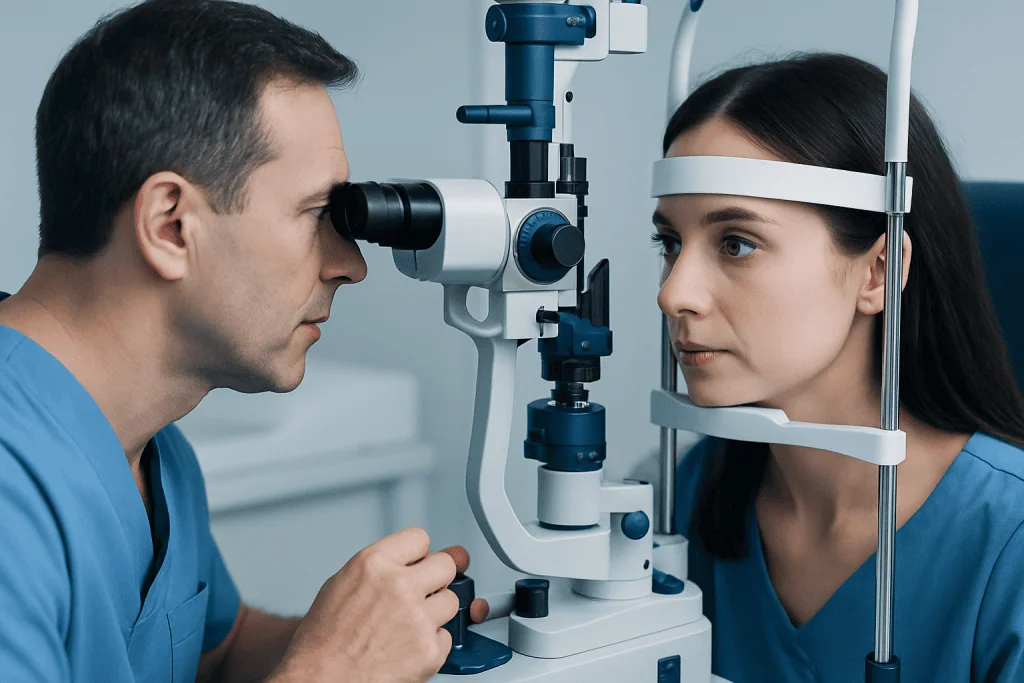
Diagnosis usually starts with a detailed review of symptoms and a comprehensive eye examination. A specialist may examine the front and back of the eye after dilating the pupils, looking carefully at the size, shape, and location of any lesion. The pattern of blood vessels, pigmentation, and associated retinal changes can help distinguish a suspicious tumor from a benign lesion.
Imaging plays a central role. Depending on the suspected tumor, tests may include ocular ultrasound, optical coherence tomography, fluorescein angiography, fundus photography, CT, or MRI. These tests help define the tumor and assess nearby structures. If spread is a concern, doctors may order body imaging and blood tests as part of staging.
Biopsy is not required for every eye tumor, especially when clinical findings are highly characteristic. In selected cases, however, a tissue sample or fine-needle biopsy may help confirm the diagnosis or provide molecular information that guides prognosis. Broader cancer workup may be coordinated through services such as cancer screening and oncology care when systemic evaluation is needed.
Modern treatment approaches and outlook
Eye cancer treatment is individualized. Doctors consider the tumor type, size, exact location, whether one or both eyes are involved, the person’s age and general health, and whether the cancer has spread. In some cases, careful monitoring is appropriate for a very small lesion, while in others treatment should begin promptly.
Common local treatments include laser-based methods, cryotherapy for selected surface lesions, and several forms of radiation therapy. Plaque brachytherapy places a small radioactive device near the tumor for a defined period and is widely used for some intraocular melanomas. External beam techniques may be used in specific situations, including some pediatric tumors and orbital disease. Patients may also be evaluated for radiation oncology as part of coordinated care.
Surgery ranges from removal of a small surface lesion to more extensive procedures when the tumor is large, causes pain, or cannot be controlled in another way. Some patients also need systemic treatment, especially if the disease has spread beyond the eye. This may involve medical cancer therapies, including medical oncology, depending on pathology and staging.
Outlook varies widely. Many localized eye cancers can be controlled successfully, especially when found early. However, preserving vision is not always possible, and some tumor types carry a higher risk of recurrence or distant spread. Regular follow-up is essential because surveillance helps detect treatment effects, recurrence, or metastasis at an earlier stage.
Follow-up, self-care, and living with eye cancer
Follow-up is a major part of eye cancer care. After treatment, patients often need repeated eye examinations and imaging to confirm that the tumor remains stable or has regressed. Some will also need blood tests or body scans over time, especially if their tumor type has a known risk of spreading.
Vision changes after treatment can affect driving, reading, work, and emotional well-being. Supportive care may include low-vision rehabilitation, protective eyewear, symptom management, and counseling. Practical adjustments at home and work can help patients stay independent while adapting to any changes in sight.
General health measures also matter. Patients should keep all follow-up appointments, report any new visual symptoms promptly, and discuss family history if inherited disease is a possibility. For surface eye cancers and other sun-sensitive conditions, sunglasses with UV protection and sensible sun safety are helpful as part of long-term eye care.
In complex cases, a multidisciplinary team can help coordinate ophthalmology, pathology, imaging, oncology, genetics, and rehabilitation. Near the end of the treatment journey or during second-opinion planning, some international patients choose centers such as Acibadem International, where multidisciplinary specialists in JCI-accredited hospitals diagnose and treat eye-related cancers.
When to seek medical care
Medical assessment is important if a person develops new blurred vision, flashes, floaters, a dark spot in the eye, persistent redness with a visible growth, eye bulging, or unexplained double vision. While these symptoms are often caused by noncancerous conditions, they should not be ignored, especially if they are new or progressive.
Urgent evaluation is particularly important for children with a white reflex in the pupil, a wandering eye, or any unusual eye appearance in photographs. Adults with a known eye lesion who notice change in vision or growth of the lesion should also arrange prompt review.
A person who has already been treated for eye cancer should contact their doctor if they notice new eye symptoms, worsening pain, or changes elsewhere in the body that concern them. Early review helps doctors determine whether the cause is treatment-related, due to recurrence, or unrelated but still important to address.
Frequently asked questions
Is eye cancer curable?
Some eye cancers can be treated very successfully, especially when they are found early and remain localized. The outcome depends on the tumor type, size, location, and whether it has spread beyond the eye. A specialist can explain the likely outlook based on the exact diagnosis.
What is the first sign of eye cancer?
There is no single first sign. Some people notice blurred vision, flashes, floaters, or a visible dark spot, while others have no symptoms and are diagnosed during an eye exam. In children, a white pupil reflex in photographs can be an important warning sign.
Can eye cancer spread to other parts of the body?
Yes, some types of eye cancer can spread, though the risk varies widely by tumor type and stage. For example, some intraocular melanomas carry a risk of metastasis even after local treatment. This is one reason regular follow-up is so important.
How do doctors tell eye cancer apart from a benign eye tumor?
Doctors use a detailed eye examination together with imaging such as ultrasound or retinal scans to study the lesion’s size, shape, and behavior. In selected cases, biopsy or genetic testing may be used. Sometimes the safest approach is careful monitoring over time to see whether a lesion changes.
Will treatment always remove the eye?
No. Many patients can be treated with eye-preserving approaches such as localized radiation, laser therapy, or limited surgery. Removal of the eye is usually considered only in specific situations, such as very large tumors, severe pain, or disease that cannot be safely controlled otherwise.
Is eye cancer hereditary?
Most eye cancers are not strongly inherited, but some forms are linked to genetic changes. Retinoblastoma is a key example in children, and some families may benefit from genetic counseling. A doctor may recommend testing when there is a relevant personal or family history.
References
- National Cancer Institute
- American Cancer Society
- American Academy of Ophthalmology
- National Eye Institute
- World Health Organization
This article is for general information only and is not a substitute for professional medical advice. Please consult a qualified doctor about your individual situation.
Oncology care in Turkey — second opinion and treatment plan
JCI-accredited · board-certified surgeons · reply within 24h
Add us as a Preferred Source to see more of our trusted health content across Google Search, AI Overviews and Discover.