Eye Movement Problems After Stroke: Neuro-Ophthalmology Assessment and Recovery

Stroke can affect the brain pathways that control eye alignment and tracking, leading to double vision, blurred vision, or difficulty focusing. Neuro-ophthalmology assessment looks at eye movements, visual function, alignment, and related neurological signs.
Key Takeaways
- Stroke can affect the brain pathways that control eye alignment and tracking, leading to double vision, blurred vision, or difficulty focusing.
- Neuro-ophthalmology assessment looks at eye movements, visual function, alignment, and related neurological signs.
- Treatment depends on the cause and may include prisms, patching, rehabilitation exercises, medication review, and stroke rehabilitation.
- Recovery varies from person to person and often continues over weeks to months.
- Sudden new vision changes, worsening double vision, or symptoms of another stroke need urgent medical attention.
Eye movement problems after stroke are common and may affect vision, balance, reading, and daily activities. A neuro-ophthalmology assessment helps identify the cause and supports a treatment plan that may improve comfort, function, and recovery.
Overview
Eye movement problems after stroke happen when a stroke affects the parts of the brain that control how the eyes move together, stay aligned, and focus on a target. Even when the eyes themselves are healthy, damage to these brain pathways can change visual function. This may lead to double vision, blurred vision, trouble reading, poor depth perception, or a sense that the visual world is unstable.
These changes can have a major effect on daily life. People may find it harder to walk safely, judge steps, pour liquids, use a phone, or follow lines of text on a page. Some also feel dizziness, nausea, headaches, or fatigue because the brain is working harder to process mismatched visual information.
A neuro-ophthalmology assessment is often helpful because it brings together eye care and neurology. The goal is to understand whether the visual symptoms come from eye misalignment, weakness of the muscles that move the eyes, problems with visual attention, or other stroke-related changes. A clear diagnosis helps guide treatment and rehabilitation.
Symptoms and how they may feel
Symptoms vary depending on which area of the brain was affected and how severe the stroke was. One of the most common complaints is double vision, also called diplopia. This may be constant or may happen only when looking in certain directions. Some people notice that one image appears higher, tilted, or slightly off to one side.
Other symptoms can include difficulty moving the eyes smoothly, trouble tracking moving objects, reduced ability to shift gaze from one target to another, or a sense that the eyes are not working together. Reading may become slow because the eyes lose their place or skip words. Watching television, using a computer, or moving through crowded spaces may also become more difficult.
Some people describe nonvisual sensations such as dizziness, motion sensitivity, poor balance, or eye strain. In certain cases, the eyelid may droop, the pupil may look different, or there may be a head turn or head tilt used unconsciously to reduce symptoms. These clues can help the specialist identify the specific eye movement problem.
- Double vision or blurred vision
- Difficulty reading or focusing
- Dizziness, nausea, or unsteadiness
- Trouble judging distance or steps
- Head turn, head tilt, or closing one eye to cope
Why stroke can affect eye movements
Eye movements depend on a complex network involving the brainstem, cerebellum, cranial nerves, and the parts of the brain that control attention and coordination. A stroke can interrupt these pathways. Depending on the location, it may weaken one or more eye muscles, disturb signals that keep the eyes aligned, or affect the brain’s ability to coordinate rapid and accurate movements.
Common stroke-related eye movement disorders include cranial nerve palsies, gaze palsies, skew deviation, internuclear ophthalmoplegia, and nystagmus. Some people also have visual field loss or problems with visual attention after stroke, which can occur alongside eye movement issues and add to the difficulty. In practice, symptoms may overlap rather than fitting into only one category.
Risk is linked to the same factors that contribute to stroke overall, such as high blood pressure, diabetes, smoking, high cholesterol, irregular heart rhythm, and vascular disease. However, once a stroke has occurred, the key question is not simply why it happened, but which visual pathways were affected and how those changes can be managed during recovery.
How neuro-ophthalmology assessment works
A neuro-ophthalmology assessment begins with a detailed history. The specialist asks when symptoms started, whether they are improving or changing, and whether they occur all the time or only in certain gaze positions. Information about the stroke type, imaging results, other neurological symptoms, and current medications is also important.
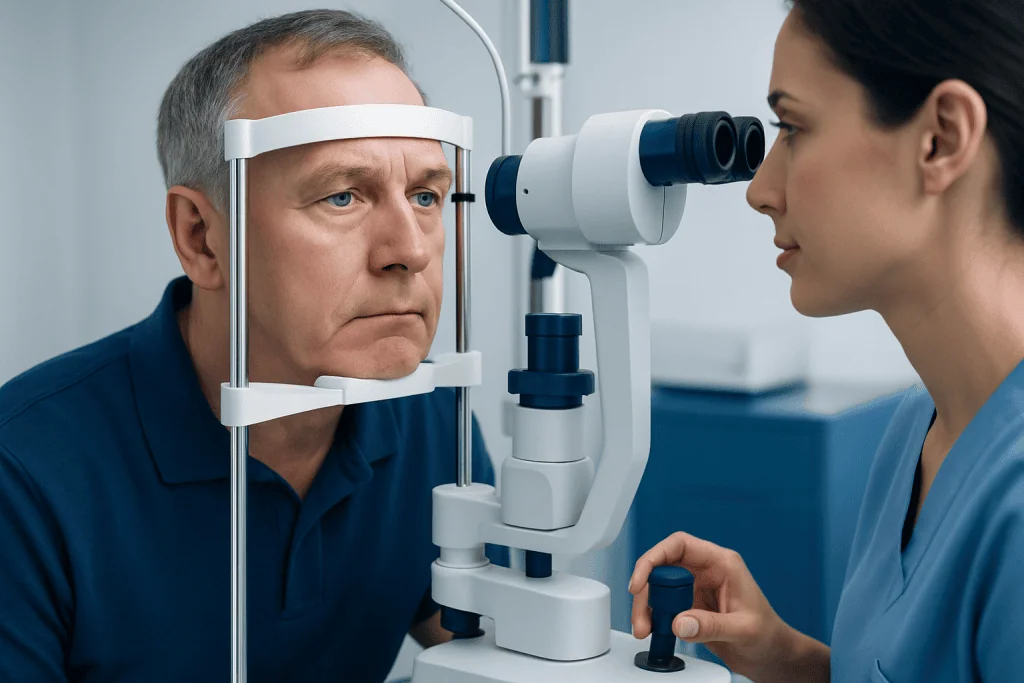
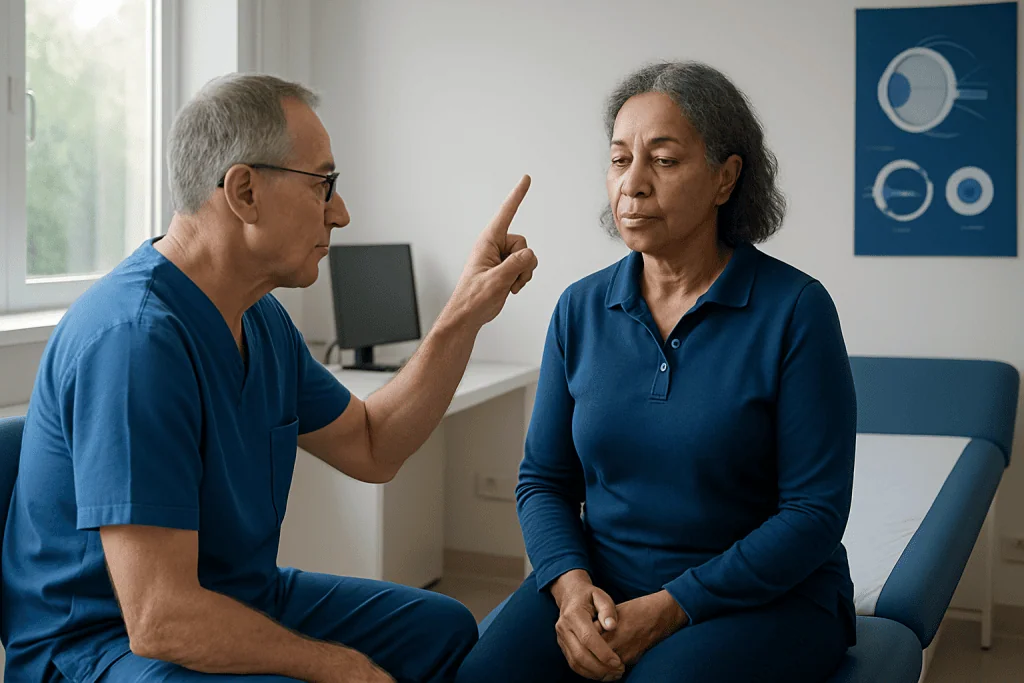
The examination usually checks visual acuity, pupils, eyelids, eye alignment, and the full range of eye movements. The doctor may test how the eyes move when following a target, how quickly they shift from one point to another, and whether images separate in particular directions of gaze. Balance between the eyes at near and distance can also be measured. These steps help show whether the problem comes from weakness, misalignment, poor coordination, or central visual processing.
Additional tests may be used when needed. These can include formal visual field testing, optical coherence tomography, orthoptic measurements, or brain imaging review. If symptoms are complex, the team may coordinate with neurology, rehabilitation, or stroke specialists. In some settings, broader evaluation may also include neurological rehabilitation needs such as mobility, reading, and occupational function.
The purpose of assessment is not only diagnosis. It also establishes a baseline, helps monitor recovery over time, and identifies practical measures that can make daily life safer and more comfortable.
Treatment options and rehabilitation
Treatment depends on the exact problem and how much it interferes with daily life. In the early phase after stroke, some eye movement problems improve as the brain heals. During this period, temporary measures may be used to reduce symptoms. These can include patching one eye for bothersome double vision, using special lenses such as prisms, adjusting reading strategies, or changing lighting and screen use.
Rehabilitation is often an important part of care. A neuro-ophthalmologist, orthoptist, neurologist, and rehabilitation team may work together to improve function. Vision-related therapy can focus on scanning, tracking, reading support, and adaptation strategies. Some patients benefit from a broader stroke recovery plan that addresses strength, balance, and coordination through stroke rehabilitation.
If the problem remains stable but persistent, more tailored solutions may be considered. Prism glasses can sometimes help align images. In selected cases, botulinum toxin or eye muscle surgery may be discussed, especially when misalignment does not improve and symptoms remain disabling. Management may also include treatment of related stroke complications, such as visual field loss, fatigue, or imbalance.
Because many people have more than one visual issue after stroke, treatment works best when it is individualized. The aim is not only to improve eye movements, but also to support reading, mobility, confidence, and independence.
Recovery, self-care, and daily adaptations
Recovery from eye movement problems after stroke is variable. Some people improve within days or weeks, while others continue to recover over several months. The pattern depends on the stroke location, severity, age, overall health, and whether other neurological problems are present. Even when symptoms do not fully disappear, practical adaptations can greatly improve comfort and function.
Simple self-care steps may help. Taking regular breaks from reading or screens can reduce strain. Large-print materials, good lighting, and uncluttered visual environments can make tasks easier. For reading, using a ruler or line guide may help the eyes stay on track. If dizziness or imbalance is present, home safety measures such as removing trip hazards and using handrails are important.
People should follow the stroke care plan closely, including risk factor control, medication adherence, and rehabilitation appointments. Managing blood pressure, blood sugar, cholesterol, sleep, and physical activity supports overall brain health. If symptoms such as new headaches, worsening vision, or confusion appear, they should not be assumed to be part of normal recovery.
Near the later stages of recovery, a center with multidisciplinary specialists may be helpful for persistent symptoms. Acibadem International’s JCI-accredited hospitals care for international patients with stroke-related visual and neurological problems through coordinated neuro-ophthalmology and rehabilitation services.
When to see a doctor urgently
Any sudden vision change after a known stroke deserves medical attention, especially if the symptoms are new, severe, or getting worse. Urgent review is important if double vision appears suddenly, one eyelid droops, a pupil changes size, the eyes cannot move normally, or vision becomes significantly blurred. These signs can indicate a new neurological event or another serious problem.
Emergency care is especially important if visual symptoms occur together with face drooping, arm weakness, numbness, trouble speaking, severe headache, confusion, or sudden loss of balance. These may be warning signs of another stroke and should be treated as a medical emergency.
Even when symptoms are not urgent, it is sensible to seek assessment if vision problems interfere with reading, driving, work, walking, or daily tasks. Early evaluation can reduce discomfort, improve safety, and connect the person with the right rehabilitation support. Ongoing follow-up is often needed because treatment may change as recovery progresses.
Frequently asked questions
Can a stroke cause eye movement problems even if the eyes are healthy?
Yes. A stroke can damage the brain pathways that control alignment, tracking, and coordination of the eyes even when the eyes themselves are structurally normal. This is why a person may have double vision or difficulty reading after stroke without having a primary eye disease.
Will eye movement problems after stroke go away on their own?
Some do improve over time, especially in the first weeks to months after stroke. However, recovery is different for each person, and some symptoms may persist without targeted treatment or rehabilitation. Follow-up helps track improvement and decide whether supportive measures are needed.
What does a neuro-ophthalmologist check during the assessment?
The specialist evaluates vision, pupils, eyelids, eye alignment, and how the eyes move in different directions. They also review stroke history, imaging, and related symptoms such as dizziness or reading difficulty. The goal is to identify the exact cause of the visual problem and plan treatment.
Are prism glasses helpful for double vision after stroke?
They can be helpful for some people, especially when the eyes are misaligned in a stable and measurable way. Prism lenses work by shifting the image so the brain can use the eyes together more comfortably. They are not suitable for every type of eye movement disorder, so an assessment is important first.
Is it safe to drive with eye movement problems after stroke?
Driving may not be safe if there is double vision, reduced visual attention, or poor depth judgment. Safety depends on the specific visual problem, local driving regulations, and medical advice. A person should avoid driving until they have been assessed and clearly told it is safe to resume.
What can help at home while waiting for treatment?
Simple measures such as using good lighting, taking visual breaks, reducing clutter, and avoiding tasks that trigger severe dizziness can help. Some people use temporary patching only if advised by a clinician. Home safety is important, especially if balance or depth perception is affected.
References
- American Stroke Association
- National Eye Institute
- National Institute of Neurological Disorders and Stroke
- American Academy of Ophthalmology
- Royal College of Ophthalmologists
This article is for general information only and is not a substitute for professional medical advice. Please consult a qualified doctor about your individual situation.
Explore treatments in Turkey — costs, top hospitals & a free quote
JCI-accredited · board-certified surgeons · reply within 24h
Add us as a Preferred Source to see more of our trusted health content across Google Search, AI Overviews and Discover.
Check your numbers in seconds
BMI, calories, due date, blood pressure and 30+ more clinical calculators — free, instant, doctor-reviewed ranges.