Eye Strain Relief: What Works, What Does Not, and Safety Notes

Eye strain is common and often linked to prolonged screen use, dry eyes, glare, poor lighting, or uncorrected vision problems. The most supported self-care measures are scheduled visual breaks, blinking more often, adjusting screen setup, and treating dryness when present.
Key Takeaways
- Eye strain is common and often linked to prolonged screen use, dry eyes, glare, poor lighting, or uncorrected vision problems.
- The most supported self-care measures are scheduled visual breaks, blinking more often, adjusting screen setup, and treating dryness when present.
- Some popular remedies, such as blue-light glasses for everyone, have mixed evidence and may not help all people.
- Eye strain should not cause sudden vision loss, severe eye pain, or one-sided headache with nausea; these symptoms need prompt medical care.
- Persistent symptoms may point to dry eye, refractive error, migraine, or another eye condition that needs professional evaluation.
Eye strain relief is usually possible with simple, evidence-based steps such as regular screen breaks, better lighting, conscious blinking, and correcting vision problems. Most cases improve with self-care, but severe pain, sudden vision changes, or a red eye need medical assessment.
Overview: what eye strain relief usually involves
Eye strain relief usually comes from reducing the demands placed on the eyes rather than from a single product or quick fix. For many people, symptoms improve with regular breaks from close work, better screen positioning, comfortable lighting, more frequent blinking, and up-to-date glasses or contact lens correction. If the eyes are dry, lubricating eye drops may also help.
Eye strain, often called digital eye strain or computer vision syndrome, is a group of symptoms rather than a disease itself. It commonly happens after long periods of reading, driving, detailed work, or using phones, tablets, and computers. The eyes and surrounding muscles can become tired when they focus for long periods without enough rest.
Not every popular remedy has equally strong evidence. Some measures are well supported by clinical experience and basic eye physiology, while others are more anecdotal or helpful only in selected cases. A practical approach is to start with low-risk, evidence-backed changes and seek assessment if symptoms are frequent, worsening, or unusual.
Symptoms and what eye strain feels like
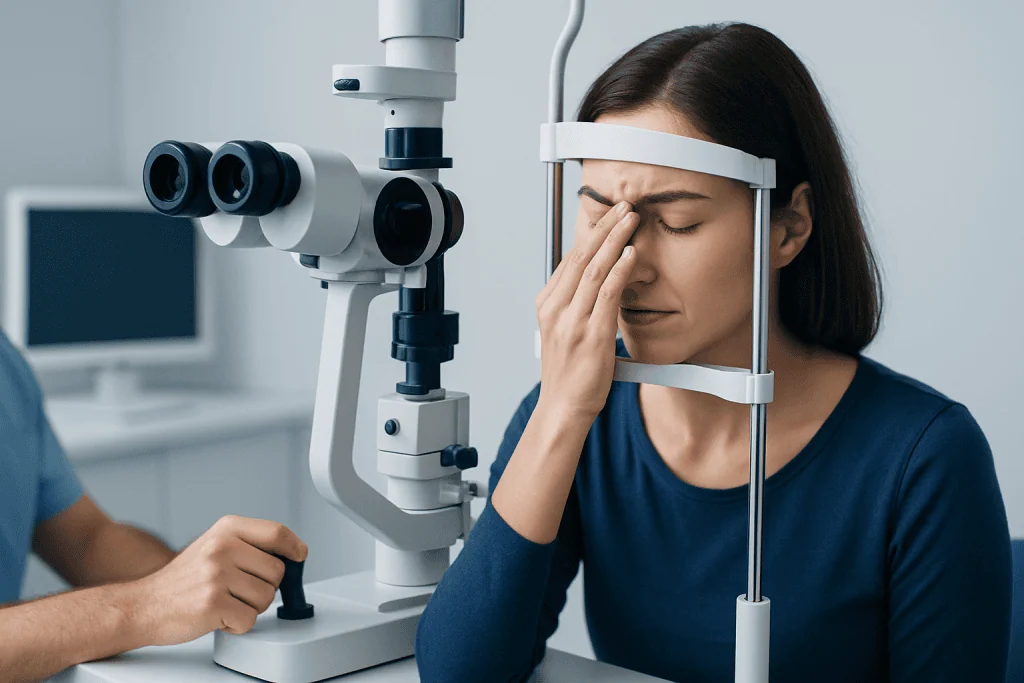
Eye strain can cause tired, sore, burning, or irritated eyes. Some people notice dryness, watering, blurry vision that comes and goes, difficulty refocusing from near to far, or a feeling of heaviness around the eyes. Headache, forehead tension, and discomfort in the neck or shoulders may also occur, especially during screen work.
Symptoms often begin during or after visually demanding tasks and improve with rest. This pattern helps distinguish eye strain from some eye diseases, which may produce more constant symptoms or noticeable redness, sensitivity to light, or vision loss. Eye strain can affect both adults and children, especially when daily screen time is high.
It is also important to remember that “eye strain” is sometimes used as a general term when the real problem is different. For example, persistent burning and fluctuating vision may be related to dry eye, while frequent headaches with visual symptoms can overlap with migraine or uncorrected refractive error. If symptoms keep returning, an eye examination can help clarify the cause.
Common causes and risk factors

The most common trigger is prolonged near work, especially screen use without enough breaks. When looking at screens, people tend to blink less often, which allows the tear film to evaporate more quickly. This can make the eyes feel dry, gritty, or tired. Small font sizes, poor contrast, prolonged concentration, and switching between multiple screens can add to the problem.
Environmental factors also matter. Glare from windows or overhead lights, air conditioning, fan airflow, smoke, and very dry indoor air can worsen discomfort. A screen that sits too high, too close, or too far away may make the eye muscles work harder. Poor posture can add neck and shoulder tension, which many people notice alongside eye discomfort.
Vision issues are another common reason symptoms continue despite rest. Nearsightedness, farsightedness, astigmatism, age-related focusing changes, or outdated glasses can all contribute. Contact lenses may worsen dryness in some people. Underlying conditions such as glaucoma or other eye disorders do not typically present as simple eye strain, but they can coexist, which is why persistent or atypical symptoms should not be ignored.
- Extended computer, tablet, or smartphone use
- Reduced blinking and dry indoor environments
- Glare, poor lighting, or improper screen distance
- Uncorrected or outdated vision prescriptions
- Contact lens wear, especially with dryness
- Long periods of reading, driving, or close-detail work
What works for eye strain relief
The most reliable eye strain relief strategies are simple and low risk. One of the best known is taking regular visual breaks. A practical method is the 20-20-20 rule: about every 20 minutes, look at something roughly 20 feet away for 20 seconds. This gives the focusing system a brief rest and can reduce the feeling of visual fatigue during screen tasks. It is also helpful to blink intentionally several times during these pauses.
Screen and workspace adjustments can make a meaningful difference. Many people are more comfortable when the screen is about an arm’s length away and slightly below eye level. Room lighting should be bright enough for comfort but not so harsh that it creates glare. Increasing text size, improving contrast, and reducing reflections from windows or glossy screens may help more than changing color settings alone.
If dryness is part of the problem, preservative-free artificial tears may provide symptom relief for some people. Warm compresses and eyelid hygiene can also help when eyelid oil glands are not working well, a common contributor to evaporative dry eye. For people whose symptoms are linked to an outdated prescription or a specific visual demand, an eye specialist may recommend glasses, contact lens changes, or laser eye surgery in selected cases after proper assessment.
General body habits matter too. Good posture, adjusting chair height, and keeping shoulders relaxed can reduce the musculoskeletal tension that often accompanies visual strain. Adequate sleep and hydration support overall comfort, although they are not stand-alone treatments for every case.
What does not always work, or has limited evidence
Not all eye strain remedies work equally well for everyone. Blue-light filtering glasses are widely marketed, but current evidence is mixed. Some people feel more comfortable using them, especially in very bright environments or late in the day, but research has not consistently shown that they reliably reduce digital eye strain for all users. They are generally low risk, but they should not replace more established measures such as breaks, blinking, and correcting glare.
Eye exercises are another area where expectations should be realistic. Simple focusing breaks can help because they reduce sustained near effort, but complex exercise routines do not have strong evidence for typical screen-related eye strain in otherwise healthy eyes. They may be recommended in specific diagnosed problems, such as convergence insufficiency, but that is different from routine digital fatigue.
Vitamins, herbal products, and “detox” eye drops should be approached cautiously. Unless a doctor has diagnosed a nutritional deficiency or another specific condition, supplements are not a proven treatment for ordinary eye strain. Redness-relieving drops that constrict blood vessels can sometimes worsen irritation with repeated use. If symptoms are significant or persistent, a proper eye exam is more useful than trying multiple over-the-counter products without guidance.
Diagnosis and when an eye exam is helpful
Most eye strain is recognized from the pattern of symptoms and the activities that trigger them. A clinician will usually ask when symptoms occur, how long screens are used, whether contact lenses are worn, and whether dryness, headache, or blurred vision are present. They may also ask about medicines, allergies, sleep, and work environment, since these can affect the eyes.
An eye examination can check visual acuity, focusing, eye alignment, tear film quality, eyelids, and the health of the front and back of the eye. This helps identify common contributors such as uncorrected refractive error, dry eye, or eyelid gland dysfunction. If symptoms include headache, nausea, halos, or marked light sensitivity, the exam helps rule out more serious causes that should not be mistaken for simple strain.
Persistent symptoms may lead to treatment tailored to the underlying issue. Depending on findings, a doctor may suggest updated glasses, dry-eye care, contact lens adjustments, or a more detailed eye examination. If blurred vision reflects a refractive problem, options such as LASIK may be discussed for appropriate candidates, although many people do well with non-surgical correction alone.
Prevention and self-care for daily screen use
Prevention works best when small habits are built into the day. Short, regular pauses are usually more effective than waiting until the eyes already feel exhausted. Many people benefit from setting a timer or using app reminders to take visual breaks. During these pauses, looking into the distance and blinking fully a few times can restore comfort.
Workstation setup is equally important. The screen should be easy to read without leaning forward or squinting. Keeping the top of the monitor at or slightly below eye level often reduces both eye and neck strain. Dry environments can be improved with humidification, and direct air from fans or vents should be redirected away from the face when possible.
People who wear contact lenses may notice more discomfort during long screen sessions. Taking periodic breaks from lens wear, using clinician-recommended lubricating drops, or discussing alternative lenses with an eye specialist may help. Children and teenagers may also need limits on uninterrupted screen time, since they may not notice symptoms until discomfort becomes significant.
Near the end of the care pathway, some patients seek specialist support if symptoms persist or if an underlying eye condition is suspected. Acibadem International’s multidisciplinary specialists and JCI-accredited hospitals evaluate eye complaints and related visual problems for international patients when further assessment is needed.
When to seek medical care
Red-flag symptoms need prompt medical care rather than home treatment. These include sudden vision loss, severe eye pain, a painful red eye, new double vision, sudden flashes or many new floaters, a curtain-like shadow in vision, eye injury, or symptoms with nausea and vomiting. These are not typical features of ordinary eye strain and may signal an urgent eye problem.
Medical advice is also important if symptoms keep returning despite rest and workspace changes, or if blurred vision lasts after the screen task is over. Recurrent headaches, frequent dryness, light sensitivity, or worsening symptoms with contact lenses deserve assessment. In children, reduced school performance, squinting, eye rubbing, or sitting very close to screens may suggest a need for vision evaluation.
In general, self-care is reasonable for mild, short-lived symptoms tied clearly to overuse. But if the diagnosis is uncertain, or if symptoms are affecting work, driving, reading, or daily comfort, an eye doctor can look for the actual cause and recommend the most appropriate treatment.
Frequently asked questions
What is the fastest way to get eye strain relief?
For many people, the quickest relief comes from stopping the visual task for a few minutes, looking into the distance, and blinking fully several times. Adjusting glare, increasing text size, and using lubricating drops if the eyes are dry can also help.
Do blue-light glasses help with eye strain?
They may help some people feel more comfortable, but the evidence is mixed and they do not work for everyone. More established strategies are regular breaks, better lighting, reduced glare, and making sure vision correction is accurate.
Can eye strain cause permanent damage?
Ordinary eye strain is uncomfortable but does not usually cause permanent eye damage. However, ongoing symptoms should not be assumed to be harmless, because dryness, refractive error, or another eye condition may be the real cause.
How long does digital eye strain last?
Mild digital eye strain often improves within minutes to hours after resting the eyes and reducing screen exposure. If symptoms continue day after day or remain even when not using screens, a professional eye assessment is a good idea.
Are artificial tears safe for eye strain relief?
Artificial tears are commonly used and may be helpful when dryness is part of the problem. Preservative-free products are often preferred for frequent use, but persistent symptoms still warrant medical advice to confirm the underlying cause.
When should someone worry that it is not just eye strain?
Sudden vision changes, severe pain, significant redness, double vision, flashes, many new floaters, or symptoms after an injury need prompt medical care. These are not typical of routine eye strain and should be assessed quickly.
References
- American Academy of Ophthalmology
- National Eye Institute
- American Optometric Association
- Mayo Clinic
- World Health Organization
This article is for general information only and is not a substitute for professional medical advice. Please consult a qualified doctor about your individual situation.
Explore treatments in Turkey — costs, top hospitals & a free quote
JCI-accredited · board-certified surgeons · reply within 24h
Add us as a Preferred Source to see more of our trusted health content across Google Search, AI Overviews and Discover.