Eyelid Surgery Springfield: Procedure, Recovery and Results

Blepharoplasty can address drooping upper-lid skin, under-eye bags, and selected functional vision concerns. Most people have temporary swelling, bruising, tightness, and dry or watery eyes during early recovery.
Key Takeaways
- Blepharoplasty can address drooping upper-lid skin, under-eye bags, and selected functional vision concerns.
- Most people have temporary swelling, bruising, tightness, and dry or watery eyes during early recovery.
- Incisions are usually placed in natural eyelid folds or inside the lower eyelid, helping scars become less noticeable over time.
- Final healing is gradual; many people look socially presentable within a few weeks, while subtle swelling can continue to settle for several months.
- A preoperative eye examination and review of medical history help reduce risk and set realistic expectations.
Eyelid surgery, also called blepharoplasty, removes or repositions excess skin and sometimes fat from the upper or lower eyelids. People searching for eyelid surgery Springfield services should seek assessment by a qualified oculoplastic, ophthalmic, or plastic surgeon to determine whether surgery is appropriate for cosmetic concerns, vision obstruction, or both.
Overview: what eyelid surgery can address
Eyelid surgery, medically called blepharoplasty, reshapes the upper eyelids, lower eyelids, or both. It may remove excess skin, adjust or redistribute fatty tissue, and tighten selected supporting tissues. The aim may be cosmetic, such as reducing a heavy upper eyelid appearance or under-eye bags, or functional, such as improving the upper visual field when overhanging skin blocks vision.
People using terms such as eyelid surgery Springfield, eyelid surgery Springfield MA, eyelid surgery Springfield MO, or eyelid surgery Springfield IL may be looking for local consultation options. The important consideration is not the city name but the clinician’s relevant training, careful eye assessment, and ability to explain whether symptoms are caused by eyelid skin, eyebrow position, ptosis, dry eye, or another eye condition.
Blepharoplasty is different from surgery for ptosis, in which the eyelid margin itself sits abnormally low because of a problem with the eyelid-lifting muscle. It is also different from a brow lift, which treats a low eyebrow that contributes to upper-lid heaviness. A specialist may recommend one procedure, a combination, or non-surgical management depending on the underlying anatomy.
Who may be a candidate for blepharoplasty
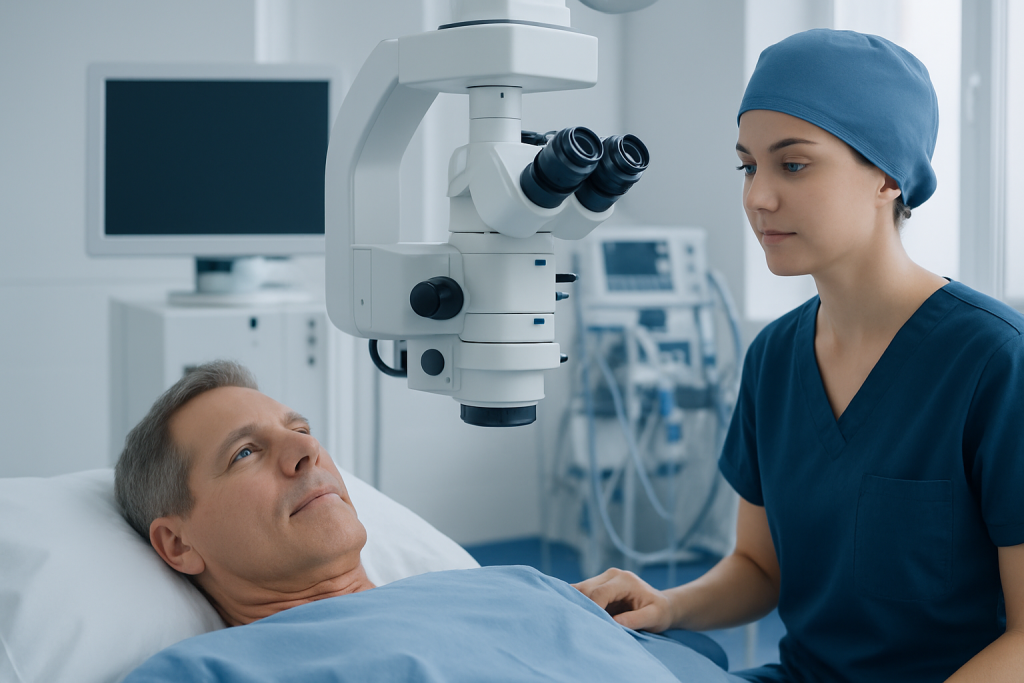
Suitable candidates generally have concerns that can be addressed by eyelid anatomy: loose upper-eyelid skin, fatty fullness below the eyes, lower-eyelid laxity, or a functional reduction in vision caused by excess upper-lid tissue. Good overall health, realistic expectations, and the ability to follow recovery instructions are important. The procedure is individualized rather than based on age alone.
During consultation, the clinician asks about eye symptoms, prior eye surgery, contact lens use, medications, allergies, smoking or nicotine use, and conditions that affect healing or bleeding. A history of dry eye, glaucoma, thyroid eye disease, facial nerve weakness, diabetes, bleeding disorders, or autoimmune disease may require additional planning or specialist input.
Some people who describe “eyelid spring surgery” may be referring to treatment planned during spring rather than a distinct operation. The season does not change the surgical method, although people should plan around sun protection, outdoor activity, allergy symptoms, travel, and adequate time for early recovery.
Before proceeding, the surgeon may assess vision, tear production, eyelid closure, eyebrow position, skin quality, and lower-lid support. Photographs and, when vision is affected, visual-field testing can help document the concern and guide treatment planning.
How eyelid surgery works: step by step

Eyelid surgery is commonly performed as an outpatient procedure using local anesthesia with sedation or general anesthesia, depending on the extent of surgery, patient health, and surgical plan. The care team confirms the planned treatment area, reviews safety instructions, and marks natural eyelid contours before the procedure begins.
For upper eyelid surgery, an incision is usually made in the natural crease. Through this opening, the surgeon removes or reshapes a conservative amount of skin and, when appropriate, fat or muscle. The incision is then closed with fine sutures. If a low eyelid margin or low brow is the main cause of heaviness, a different or additional procedure may be more suitable.
For lower eyelid surgery, the incision may be hidden just beneath the lash line or placed inside the eyelid. Fat may be removed or repositioned to improve contour, and the surgeon may tighten the lower lid when laxity is present. Preserving natural eyelid support and avoiding excessive skin removal are central parts of safe planning.
Patients considering a broader facial assessment can discuss blepharoplasty treatment options with a specialist. The appropriate approach depends on examination findings, not on a standard template or a photograph alone.
Benefits, limitations and possible risks
Potential benefits include a less heavy upper-lid appearance, smoother eyelid contours, reduced lower-lid puffiness, and, for selected patients, improved peripheral vision. Results should look proportionate to the individual face. Surgery cannot stop natural aging, eliminate all fine lines, or reliably change eyebrow position unless a brow procedure is also planned.
Temporary effects are common and include bruising, swelling, tightness, numbness, irritation, tearing, light sensitivity, and mild blurred vision from ointment or swelling. These usually improve as healing progresses. The surgeon provides instructions about cold compresses, prescribed drops or ointment, wound care, sleeping position, and activity limits.
Less common but important risks include infection, bleeding, delayed wound healing, visible scarring, asymmetry, persistent dry eye, difficulty fully closing the eyes, lower-lid malposition, or a need for revision surgery. Rarely, a serious complication can threaten vision. Choosing an appropriately trained surgeon and attending follow-up appointments support early identification of concerns.
People should avoid smoking and nicotine products as advised, disclose all medicines and supplements, and ask whether any blood-thinning medication requires coordinated adjustment with the prescribing clinician. They should never stop prescribed medication without medical guidance.
Recovery timeline and everyday activities
Recovery varies with the procedure performed, individual healing, and whether upper and lower eyelids are treated together. In the first few days, swelling and bruising may be most noticeable. Cool compresses, head elevation, rest, and gentle wound care can help. Pain is usually mild to moderate and is commonly managed with the medicines recommended by the surgical team.
During the first week, patients are usually asked to avoid strenuous exercise, bending, heavy lifting, swimming, eye makeup, and contact lenses until cleared. Sutures, when used, are often removed at an early follow-up visit. Bruising commonly starts to fade over 1 to 2 weeks, although some discoloration or swelling can last longer.
Many people feel comfortable returning to desk work and social activities after roughly 1 to 2 weeks, depending on their comfort level and whether bruising can be covered. More refined results emerge over several weeks. Incision lines continue to mature and subtle swelling may settle over months, particularly after lower eyelid surgery.
Sun protection is important during healing. Patients should use sunglasses and follow their clinician’s advice on sunscreen near healed incisions, because sun exposure can make scars appear darker for longer.
How painful is eyelid surgery recovery?
Eyelid surgery recovery is usually described as uncomfortable rather than severely painful. Many patients notice tightness, tenderness, itching, a gritty sensation, or watery eyes in the first several days. The surgical team may recommend cold compresses and appropriate pain relief, tailored to the person’s medical history.
Severe or worsening pain is not expected and should be reported promptly, especially if it occurs with sudden vision changes, marked swelling on one side, nausea, or increasing redness. Following postoperative instructions, including avoiding rubbing the eyes and using prescribed lubricating products, can make recovery more comfortable.
Dryness can be more noticeable after surgery because swelling may temporarily affect blinking and complete eyelid closure. Patients with pre-existing dry eye should discuss this before surgery, as they may need additional preventive measures or a modified treatment plan.
Why can't you watch TV after eyelid surgery?
Patients are often advised to limit television, phones, computers, and reading during the earliest recovery period because focused screen use reduces blinking. Reduced blinking can worsen dryness, irritation, and eye fatigue when the eyelids are swollen or healing. Bright screens may also feel uncomfortable if the eyes are sensitive to light.
This restriction is generally temporary rather than an absolute prohibition. A surgeon may allow short periods of screen time when the patient is comfortable, with regular breaks and use of prescribed lubricating drops or ointment. The exact advice depends on the operation and the person’s eye health.
Resting the eyes, avoiding rubbing, and using sunglasses outdoors are often more helpful in the first days than trying to resume normal visual tasks quickly. Patients should follow the specific schedule provided by their own surgeon, particularly if they have dry eye, glaucoma, or another eye condition.
How long does it take to look normal after upper eyelid surgery?
After upper eyelid surgery, many people look presentable to others in about 1 to 2 weeks, when much of the bruising and swelling has improved. However, “normal” is personal: some swelling, redness along incision lines, or slight unevenness can remain for several additional weeks while tissues settle.
More complete healing commonly takes several months. Incisions usually become less noticeable with time, especially when they are placed in the natural upper-lid crease. Healing may be slower for people who smoke, have medical conditions that affect healing, or undergo combined procedures.
Makeup may help camouflage residual bruising only after the incision is sufficiently healed and the surgeon has approved its use. A follow-up visit is the best opportunity to ask whether healing is on track and when returning to exercise, contact lenses, or cosmetic products is appropriate.
What does eyelid surgery look like after 2 weeks?
At 2 weeks, many patients have substantially less bruising and swelling than during the first few days. Upper eyelid incisions may still look pink or mildly raised, and the eyelids can appear somewhat puffy, especially in the morning. Lower eyelid swelling can take longer to resolve because fluid naturally settles in this area.
It is also common for the two sides to heal at slightly different rates. This does not necessarily mean there is a problem. The appearance should gradually improve rather than become more painful, red, or swollen.
Patients should contact their surgical team if they develop increasing pain, worsening redness, pus-like drainage, fever, new inability to close the eyes, sudden vision changes, or rapidly increasing swelling. These symptoms need timely clinical assessment rather than home treatment.
When to seek medical care
Before surgery, medical review is important for persistent eyelid drooping, changes in vision, eye pain, double vision, bulging eyes, recurrent eyelid infections, or new facial weakness. These symptoms may have causes other than excess skin and should be assessed by an eye-care professional.
After surgery, urgent medical care is needed for sudden loss or major change in vision, severe eye pain, rapidly expanding swelling or bleeding, significant shortness of breath, or symptoms of a serious allergic reaction. Patients should also contact their surgeon promptly for worsening redness, fever, discharge, or pain that is not controlled by the recommended plan.
For international patients, Acibadem International’s multidisciplinary specialists and JCI-accredited hospitals can assess and treat eyelid concerns, including cosmetic and functional indications. A consultation helps clarify whether blepharoplasty or another eye or facial procedure is the most appropriate option.
Frequently asked questions
Is eyelid surgery the same as a facelift?
No. Eyelid surgery focuses on the upper eyelids, lower eyelids, or both, while a facelift addresses sagging and contour changes in the cheeks, jawline, and neck. Some people choose combined procedures, but each should be planned according to individual anatomy and goals.
Can upper eyelid surgery improve vision?
It can improve the upper field of vision when excess upper-eyelid skin physically obstructs it. A clinician may perform examination and visual-field testing to determine whether the eyelids are contributing to functional limitation. Not all vision complaints are caused by eyelid skin.
How long do eyelid surgery results last?
The structural changes from blepharoplasty are long-lasting, but the face and eyelids continue to age naturally. Skin laxity, eyebrow position, and under-eye contour may change over time. Sun protection, not smoking, and general health support skin quality but cannot stop aging.
Will eyelid surgery leave visible scars?
All incisions create scars, but blepharoplasty incisions are typically placed in natural upper-lid creases, close to the lower lashes, or inside the lower eyelid. They are often difficult to notice once healed, although scar maturation takes time. Individual healing and skin characteristics affect scar appearance.
When can a person exercise after eyelid surgery?
Light walking is often encouraged early, but strenuous exercise, heavy lifting, and activities that raise blood pressure are usually restricted for a period set by the surgeon. Resuming activity too soon can increase swelling or bleeding risk. The safest timeline depends on the procedure and recovery progress.
Can eyelid surgery treat dark circles?
Eyelid surgery may improve shadows caused by under-eye fat bulges or hollows in selected people. However, dark circles can also result from pigmentation, thin skin, blood vessels, allergies, or facial structure, which surgery may not correct. A consultation can identify the likely causes and realistic treatment options.
References
- American Academy of Ophthalmology
- American Society of Plastic Surgeons
- Mayo Clinic
- National Eye Institute
This article is for general information only and is not a substitute for professional medical advice. Please consult a qualified doctor about your individual situation.
Explore treatments in Turkey — costs, top hospitals & a free quote
JCI-accredited · board-certified surgeons · reply within 24h
Add us as a Preferred Source to see more of our trusted health content across Google Search, AI Overviews and Discover.