Face Muscles: A Complete Medical Overview
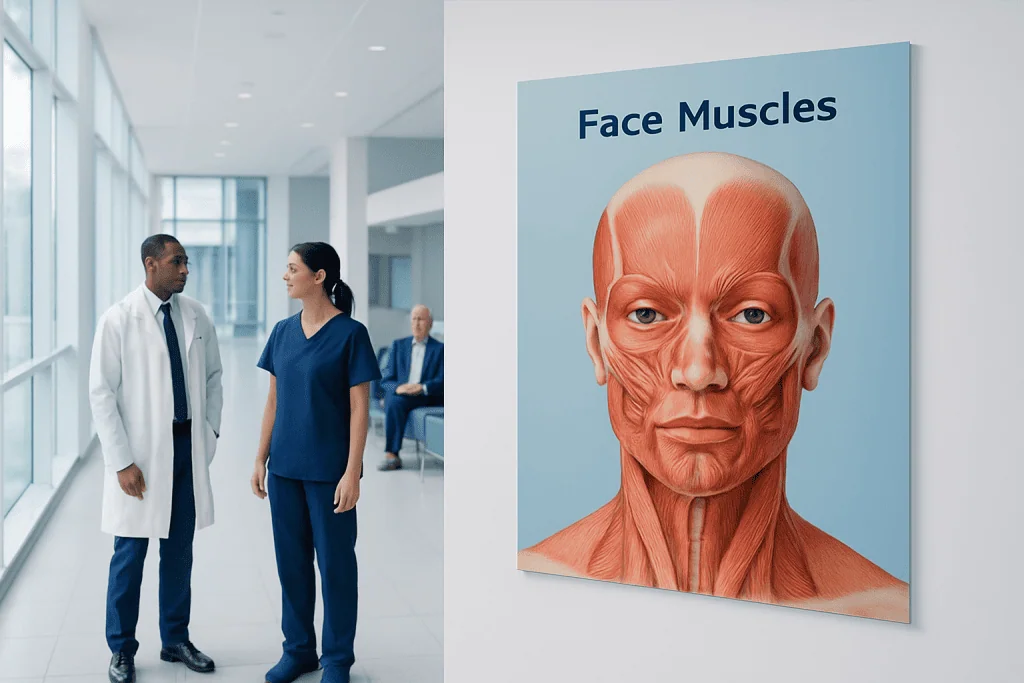
Face muscles control expression and support important daily functions such as eye protection, speech, and eating. Most facial movement depends on healthy communication between the brain, facial nerve, and muscles.
Key Takeaways
- Face muscles control expression and support important daily functions such as eye protection, speech, and eating.
- Most facial movement depends on healthy communication between the brain, facial nerve, and muscles.
- Facial weakness, drooping, pain, twitching, or asymmetry can have many causes, from temporary irritation to neurological conditions.
- A medical evaluation is important if symptoms begin suddenly, affect one side of the face, or occur with trouble speaking, severe headache, or limb weakness.
- Treatment depends on the cause and may include medicines, rehabilitation, eye protection, or specialized neurological care.
Face muscles are a specialized group of muscles that create facial expression and also help with blinking, speaking, chewing, and swallowing. Understanding how they work can help people recognize normal function, common symptoms, and when facial weakness or pain needs medical evaluation.
Overview of Face Muscles
Face muscles are the small, coordinated muscles under the skin of the face that make expressions possible. They allow a person to smile, frown, blink, raise the eyebrows, purse the lips, and show emotion. Unlike many muscles in the body that mainly move bones at joints, many face muscles attach to the skin, which is why even subtle contractions can change appearance.
These muscles do more than create expression. They help protect the eyes by closing the eyelids, support clear speech by shaping the lips and cheeks, and assist with eating by keeping food between the teeth. Some muscles in and around the jaw also contribute to chewing, although the main chewing muscles are usually considered a related but somewhat separate group.
Healthy facial movement depends on a system working together: the brain sends signals through nerves, especially the facial nerve, and the muscles respond. If any part of this pathway is affected by inflammation, injury, infection, or a neurological disorder, facial movement can change. This may appear as weakness, drooping, twitching, stiffness, or loss of symmetry.
Main Face Muscles and What They Do
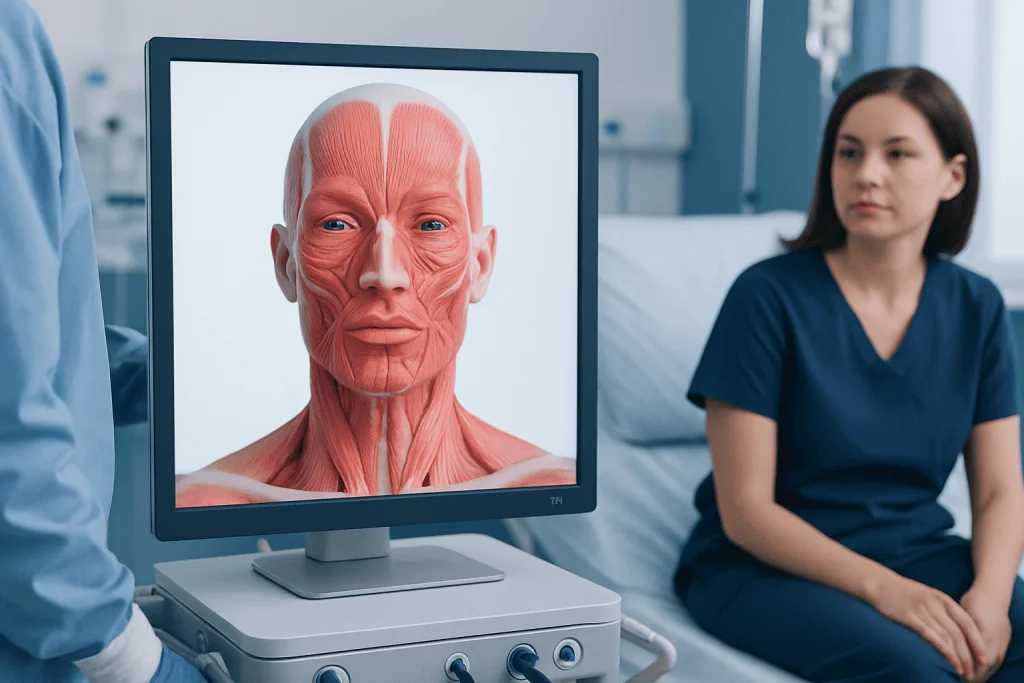
The muscles of the forehead, eyes, nose, cheeks, and mouth each have specific roles. The frontalis lifts the eyebrows and creates forehead lines. Around the eyes, the orbicularis oculi closes the eyelids and helps with blinking, which is essential for keeping the eye surface moist and protected. Around the mouth, the orbicularis oris helps close and shape the lips during speech, drinking, and kissing.
Other important face muscles include the zygomaticus muscles, which help lift the corners of the mouth during smiling, and the buccinator, which keeps the cheeks firm during chewing and speaking. Muscles around the nose and upper lip contribute to expressions such as flaring the nostrils or lifting the upper lip. Small muscles around the chin also help form expressions of tension, doubt, or concentration.
Jaw movement mainly involves the masseter, temporalis, and pterygoid muscles. These are not expression muscles in the strictest sense, but they are closely related because they work in the same region and affect facial comfort and function. Problems with the jaw muscles may lead to clenching, pain, or difficulty chewing, while disorders of the expression muscles more often cause asymmetry or weakness.
- Expression: smiling, frowning, surprise, blinking
- Protection: closing the eyelids and helping tears spread across the eyes
- Communication: shaping words, nonverbal expression, emotional signaling
- Eating: lip seal, cheek support, and assistance with swallowing
How Face Muscles Work With the Nerves
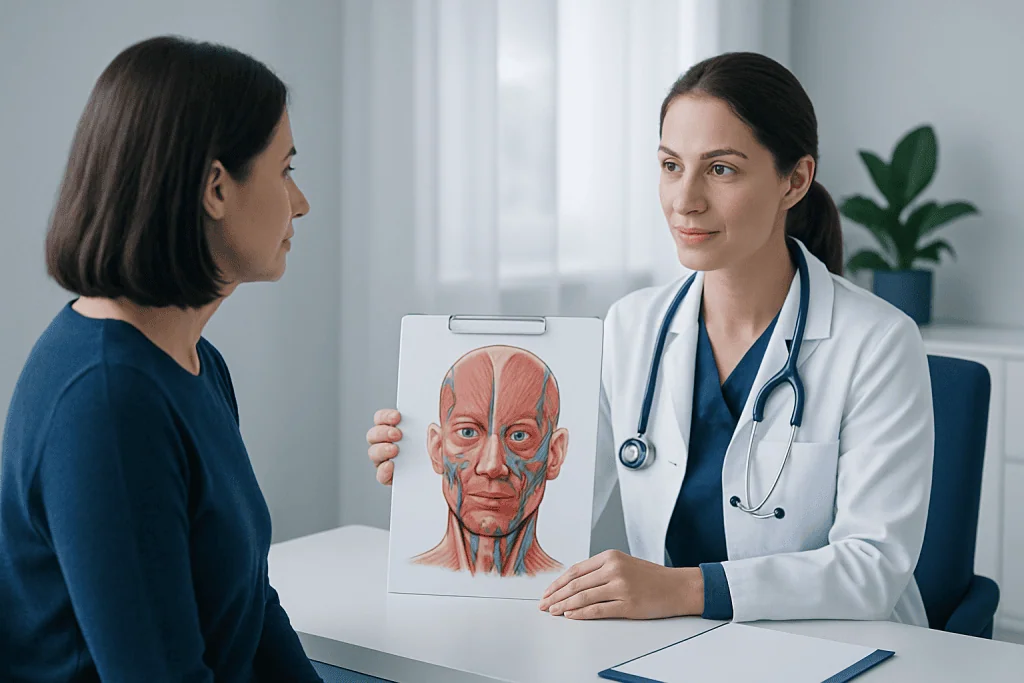
The function of face muscles depends heavily on the facial nerve, also called the seventh cranial nerve. This nerve carries signals from the brain to most of the muscles responsible for facial expression. It also has roles in taste from part of the tongue and in tear and saliva production, which is why facial nerve problems can involve more than movement alone.
The brain coordinates facial movement in a highly organized way. Some expressions are voluntary, such as smiling for a photograph, while others are automatic or emotional, such as reacting to surprise or pain. Because facial movement involves both central brain pathways and the peripheral facial nerve, doctors often look closely at the pattern of weakness to understand where the problem may be.
When the facial nerve is inflamed or compressed, one side of the face may become weak. In other cases, overactivity of nerve signals can cause twitching or spasms. Conditions involving the brain, nerves, or muscles themselves may also affect the face. For example, facial weakness can sometimes be related to Bell's palsy or, more urgently, to stroke. Understanding this nerve-muscle connection helps explain why a new facial symptom should not be ignored.
Common Symptoms and Possible Causes
Symptoms involving face muscles vary widely. Some people notice mild fatigue or uneven expressions, while others develop clear drooping, inability to close one eye, twitching, or facial tightness. Symptoms may affect one side or both sides of the face, and they may come on suddenly or gradually. Pain is not always present, but facial discomfort can occur with nerve irritation, jaw muscle tension, or inflammation.
Common causes include temporary nerve inflammation, viral infections, facial trauma, dental or jaw problems, and overuse from clenching or grinding the teeth. Neurological conditions can also be responsible, including stroke, nerve disorders, or conditions that affect communication between nerves and muscles. In some people, facial symptoms are related to stress or fatigue, which can worsen twitching or jaw tension, but these possibilities should not replace a proper medical assessment when symptoms are new or persistent.
Eye symptoms are especially important. If the eyelid does not close fully, the eye can become dry, irritated, or vulnerable to injury. Changes in speech, drooling, trouble keeping food in the mouth, or difficulty swallowing may also reflect impaired facial muscle control and deserve attention.
- Facial drooping or asymmetry
- Weakness when smiling, puffing the cheeks, or closing the eyes
- Twitching, spasms, or involuntary movements
- Jaw tightness, clenching, or pain
- Difficulty speaking clearly or eating comfortably
- Dry eye or excessive tearing
How Doctors Diagnose Face Muscle Problems
Diagnosis begins with a careful history and physical examination. A doctor will ask when symptoms began, whether they came on suddenly or gradually, and whether there are related problems such as ear pain, rash, recent infection, headache, trauma, or weakness elsewhere in the body. The pattern matters: sudden one-sided facial drooping is evaluated differently from long-standing jaw tension or occasional eyelid twitching.
During the examination, facial movements are assessed in detail. The doctor may ask the patient to raise the eyebrows, close the eyes tightly, smile, show the teeth, puff out the cheeks, and move the lips in different ways. Eye closure, speech, swallowing, and sensation may also be checked. If a jaw muscle problem is suspected, the doctor may evaluate bite function, tenderness, and range of motion.
Further testing depends on the suspected cause. Imaging may be used when doctors need to evaluate the brain, nerves, or nearby structures; in some cases, this includes MRI scan assessment. Nerve and muscle testing may help clarify whether the issue lies in the nerve, the muscle, or the communication between them. If a structural or movement-related neurological cause is suspected, referral to specialists in neurology care can guide diagnosis and treatment.
Treatment Options for Face Muscle Disorders
Treatment for face muscles depends entirely on the cause. Temporary nerve inflammation may improve with medical treatment and time, while other conditions may need rehabilitation, eye care, or targeted procedures. When facial weakness affects blinking, protecting the eye becomes a top priority. Lubricating drops, nighttime eye protection, or taping guidance from a clinician may be recommended to reduce dryness and injury risk.
For muscle overactivity, such as spasms or persistent tightness, treatment may focus on reducing triggering factors and improving muscle control. Jaw-related muscle pain may improve with soft diet adjustments, stress reduction, dental guidance, or physical therapy. Facial rehabilitation exercises can help some patients recover coordination after nerve injury, but these should ideally be guided by a clinician or therapist so that exercises are appropriate and do not reinforce abnormal movement patterns.
In selected cases, treatment may involve medicines, rehabilitation, injections, or surgery. People with significant weakness, spasm, or complex neurological symptoms may benefit from a structured evaluation that includes physical therapy and rehabilitation. When symptoms are caused by a specific disease, the focus is on treating that underlying condition rather than the face muscles alone.
Self-care, Prevention, and Daily Support
Not all face muscle problems can be prevented, but healthy habits may reduce strain and support recovery. Managing stress, improving sleep, and addressing jaw clenching can help people who experience facial tension or twitching. Good eye care is important if blinking is incomplete. People should avoid rubbing a dry or irritated eye and should seek guidance if the eye cannot close well.
General neurological and vascular health also matters. Controlling blood pressure, diabetes, and cholesterol, avoiding smoking, and staying physically active can lower the risk of some conditions that affect facial movement. Prompt treatment of ear, dental, or sinus infections may also reduce the chance of complications spreading to nearby nerves or tissues.
Simple home measures can be supportive, but they are not a substitute for diagnosis when symptoms are new, one-sided, or progressive. Warm compresses may ease muscle tension, and gentle relaxation practices may help with clenching, but forceful massage or unproven devices should be approached cautiously. If symptoms persist, it is safer to seek professional advice than to assume the problem is minor.
When to Seek Medical Care
Medical care is important if facial weakness starts suddenly, especially if it affects one side of the face. Sudden drooping combined with arm weakness, leg weakness, trouble speaking, confusion, severe headache, or vision changes needs urgent evaluation because it can be a sign of stroke. A new inability to close the eye, marked facial pain, or a rash around the ear also deserves prompt attention.
People should also seek assessment for symptoms that do not improve, keep returning, or gradually worsen. Ongoing twitching, repeated spasms, chewing difficulty, drooling, or swallowing problems should be discussed with a doctor. Persistent jaw muscle pain, clicking, or limitation in opening the mouth may need dental, ENT, or neurological evaluation depending on the pattern.
For international patients who need multidisciplinary assessment, Acibadem International offers diagnosis and treatment through JCI-accredited hospitals with relevant specialists in neurology, rehabilitation, imaging, and related fields. A coordinated review can be especially helpful when facial symptoms involve both function and appearance or when the cause is not immediately clear.
Frequently asked questions
What are face muscles?
Face muscles are the muscles under the skin that create facial expression and help with blinking, speaking, and eating. Many of them attach to the skin rather than only to bone, which allows subtle visible movement.
How many face muscles are there?
There is no single count used in every source because different texts group some muscles differently. In general, the face contains many small paired muscles working together in the forehead, eyelids, cheeks, lips, chin, and around the nose.
Why would one side of the face feel weak?
One-sided facial weakness can happen when the facial nerve or the brain pathways controlling facial movement are affected. Causes range from Bell's palsy to stroke, so sudden weakness should always be assessed urgently.
Can stress affect face muscles?
Yes, stress can contribute to jaw clenching, muscle tension, and sometimes eyelid twitching or facial tightness. However, new or persistent symptoms should not be assumed to be stress-related without medical evaluation.
Do face muscle exercises help?
Facial exercises may help some people, especially during recovery from certain nerve-related conditions, but they are not suitable for every cause. It is best to use exercises recommended by a qualified clinician or therapist after diagnosis.
Are face muscle spasms serious?
They are often not dangerous, but they can be bothersome and may sometimes reflect irritation of the facial nerve or another neurological issue. If spasms are persistent, spreading, painful, or associated with weakness, a doctor should evaluate them.
This article is for general information only and is not a substitute for professional medical advice. Please consult a qualified doctor about your individual situation.
Explore treatments in Turkey — costs, top hospitals & a free quote
JCI-accredited · board-certified surgeons · reply within 24h
Add us as a Preferred Source to see more of our trusted health content across Google Search, AI Overviews and Discover.

More from the Health Library

Essence Vanilla Essence: An Evidence-Based Guide for Patients

Liver Inflammation: What Patients Need to Know

Pertussis Injection: What Patients Need to Know

Tea to Drink to Sleep — Explained by Medical Evidence, Not Myths

Dandelion: An Evidence-Based Guide for Patients
Flat Warts Virus: What Patients Need to Know
Physical Medicine & Rehabilitation Specialists at Acibadem

Fzt. Busenur Sezer
Physical Medicine & Rehabilitation
Büşra Zeybek
Physical Medicine & Rehabilitation
Fzt. Çağlar Dal
Physical Medicine & Rehabilitation
Assoc. Prof. Dr. Çağrı Örs
Orthopedic Surgery & Traumatology