Facial Pain and Eye Strain: Could It Be a Headache Disorder?

Migraine and tension-type headache can cause facial pressure, pain around the eyes, and sensitivity to visual tasks. Not all facial pain is a sinus problem; many people with "sinus headaches" actually have migraine.
Key Takeaways
- Migraine and tension-type headache can cause facial pressure, pain around the eyes, and sensitivity to visual tasks.
- Not all facial pain is a sinus problem; many people with "sinus headaches" actually have migraine.
- Eye strain may trigger or worsen headaches, but persistent pain can also signal an underlying headache or eye condition.
- Warning signs such as sudden severe headache, vision loss, weakness, fever, or confusion need urgent medical care.
- Treatment depends on the cause and may include lifestyle steps, eye care, pain-relieving medicines, and specialist evaluation.
Facial pain and eye strain are common symptoms that may happen with a headache disorder, especially migraine or tension-type headache. Because similar symptoms can also come from the eyes, sinuses, jaw, or facial nerves, a proper medical evaluation helps identify the true cause and guide treatment.
Overview
Facial pain and eye strain are symptoms rather than diagnoses. They may feel like pressure behind the eyes, aching in the forehead or cheeks, soreness around the temples, or discomfort that worsens during reading, screen use, or bright light exposure. In many cases, these symptoms are related to a headache disorder, but they can also come from the eyes, sinuses, jaw joints, neck muscles, or facial nerves.
Migraine is one of the most common reasons for pain around the eyes and face. It can cause throbbing or steady pain, light sensitivity, nausea, visual symptoms, and tenderness in the forehead, temples, or cheeks. Tension-type headache can also create a band-like pressure across the forehead and around the eyes, especially during stress, fatigue, or long periods of concentration.
At the same time, not every person with facial pressure has a primary headache disorder. Dry eyes, uncorrected vision problems, sinus inflammation, teeth grinding, temporomandibular joint dysfunction, and nerve-related facial pain can all produce similar discomfort. This overlap is why self-diagnosis is often difficult.
A careful evaluation usually looks at the pattern of pain, associated symptoms, triggers, and eye or neurological findings. Once the cause is identified, treatment can often reduce symptoms and improve daily comfort.
Symptoms and How They May Feel
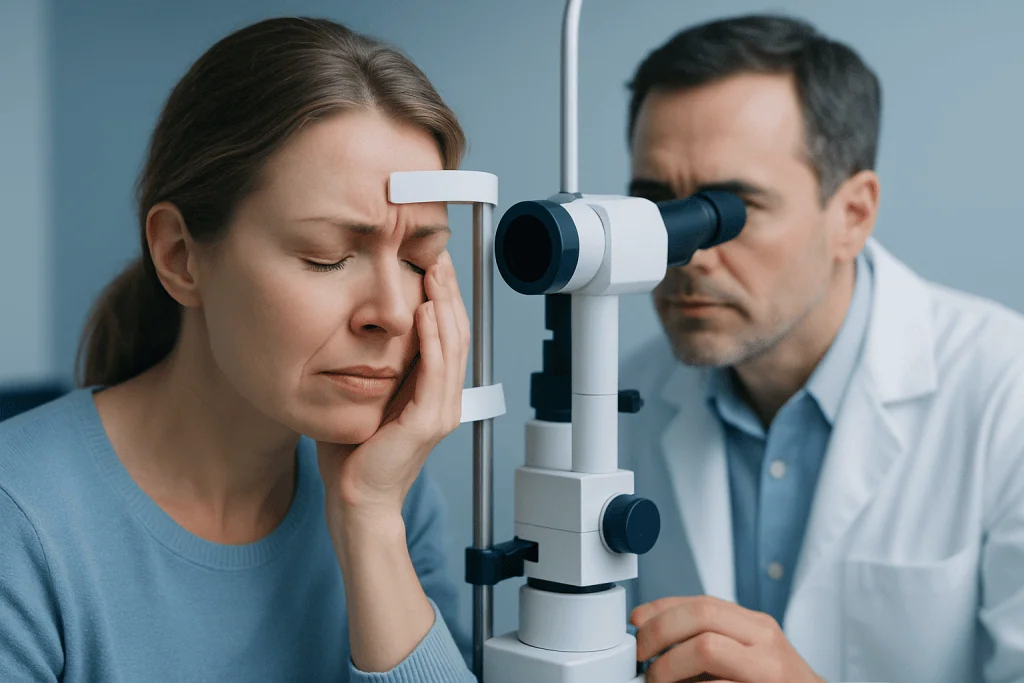
The symptoms of facial pain and eye strain can vary from person to person. Some people describe pressure behind one eye, while others notice aching across the brow, temples, nose, or cheeks. The discomfort may be dull and persistent or come in repeated episodes. It may also be linked with headache, neck tension, or a feeling of heaviness in the face.
Eye strain often appears during or after visual tasks. A person may notice sore eyes, blurred vision after reading, trouble focusing, watering, dryness, or increased discomfort with screen time. When this happens together with headache, it can be hard to tell whether the eyes are the main cause or whether the headache disorder is making the eyes feel more sensitive.
Symptoms that can suggest a headache disorder include:
- Pain on one or both sides of the head or face
- Pressure around the forehead, eyes, or temples
- Sensitivity to light, sound, or visual stimulation
- Nausea or reduced appetite
- Worsening with physical activity or lack of sleep
- Episodes triggered by stress, dehydration, missed meals, or hormonal changes
Other symptoms may point toward a different cause. True eye disease may bring persistent redness, marked vision changes, halos around lights, or pain with eye movement. Sinus-related symptoms often include congestion, thick nasal discharge, reduced sense of smell, or facial pain that clearly worsens with an upper respiratory infection. Jaw-related pain may increase with chewing or clenching.
Could It Be a Headache Disorder?

Yes, facial pain and eye strain can be signs of a headache disorder. Migraine is especially important because it often causes pain around the eye, forehead, cheek, or temple. Some people with migraine feel pressure rather than throbbing, which can make it seem like a sinus or eye problem. Visual sensitivity, bright light discomfort, nausea, and recurring attacks support migraine as a possible cause.
Tension-type headache is another common explanation. It may cause a steady, tight, pressing sensation around the head and eyes. Many people notice it during long workdays, emotional stress, poor posture, or extended screen use. Neck and scalp muscle tenderness are also common.
Cluster headache is less common but can cause severe pain around one eye with tearing, nasal congestion, eyelid drooping, or restlessness. Although it is uncommon, it is a distinct headache disorder that deserves prompt specialist attention because the pain can be intense and attacks often recur in patterns. People with symptoms suggestive of migraine or another primary headache disorder may benefit from a neurological assessment.
It is also worth knowing that many so-called sinus headaches are later found to be migraine. When facial pressure keeps returning without clear signs of infection, a headache specialist may consider a primary headache diagnosis rather than a sinus condition alone.
Other Possible Causes
Several non-headache conditions can lead to facial pain or eye strain. Eye-related causes include dry eye, uncorrected refractive error, eye muscle imbalance, prolonged near work, and some inflammatory or pressure-related eye conditions. A routine eye examination can help identify whether the eyes themselves are contributing to symptoms.
Sinus problems may also cause facial discomfort, usually with congestion, discharge, reduced smell, and tenderness during an upper respiratory illness or allergy flare. Dental issues, teeth grinding, and temporomandibular joint disorders can create pain that spreads into the temples, cheeks, and around the eyes. Neck strain can refer pain forward into the forehead or facial area as well.
Less commonly, facial pain can arise from irritation of the facial nerves. One example is trigeminal neuralgia, which often causes brief, shock-like, one-sided facial pain. Unlike typical eye strain, nerve pain tends to be sharp and may be triggered by touch, chewing, speaking, or cold air.
Because facial pain can overlap across several body systems, some people need evaluation by more than one specialist, such as neurology, ophthalmology, ENT, or dentistry. This approach helps ensure that important conditions are not missed and that treatment matches the true cause.
Diagnosis
Diagnosis begins with a detailed medical history. The clinician will ask where the pain is felt, how long it lasts, how often it occurs, what it feels like, and what triggers or relieves it. Associated symptoms matter greatly, including light sensitivity, nausea, blurred vision, nasal congestion, tearing, jaw pain, or neurological symptoms such as numbness or weakness.
A physical examination often includes a neurological assessment, facial and scalp examination, and review of the eyes, nose, jaw, and neck. If symptoms suggest eye involvement, an eye specialist may check visual acuity, refraction, eye surface health, eye movements, and eye pressure. If the history points toward sinus disease or dental causes, those areas may need targeted assessment as well.
Tests are not needed for every headache. However, imaging or other investigations may be recommended when symptoms are unusual, new, rapidly changing, or associated with warning signs. Depending on the situation, a doctor may request brain imaging, sinus evaluation, or specialist eye testing. People with recurrent or complicated headaches may be assessed in a dedicated headache treatment setting to clarify the diagnosis and plan care.
Keeping a symptom diary can be very helpful before and after diagnosis. Recording the timing of pain, screen use, meals, sleep, stress, menstrual cycles, and response to medicines often reveals patterns that support a more accurate diagnosis.
Treatment Options
Treatment depends on the cause. If a headache disorder is responsible, management may include medicines to relieve attacks, medicines to reduce frequency, and lifestyle strategies to avoid triggers. For many people, the best plan combines both medical treatment and daily habits that support sleep, hydration, regular meals, and stress management.
When eye strain contributes, treatment may involve correcting vision problems, improving screen ergonomics, treating dry eye, adjusting lighting, and taking regular visual breaks. If facial pain is linked to jaw clenching or temporomandibular dysfunction, a dentist or jaw specialist may recommend bite protection, muscle relaxation strategies, or physical therapy.
For some neurological causes of facial pain, more specialized care is needed. Patients with persistent nerve-related symptoms may be referred for neurology treatment or, in selected cases, pain management treatment. If visual symptoms are prominent, an ophthalmology evaluation can be an important part of the treatment plan.
Near the end of the care pathway, some patients benefit from multidisciplinary review, especially when symptoms overlap between neurology, eye health, and ENT care. Acibadem International’s multidisciplinary specialists and JCI-accredited hospitals diagnose and treat headache-related facial pain and associated visual complaints for international patients.
Prevention and Self-care
Simple preventive steps can make a meaningful difference, especially when symptoms are linked to migraine, tension headache, or visual fatigue. Regular sleep, hydration, and meals help stabilize the body’s routine. Limiting prolonged screen exposure without breaks can reduce eye strain and muscle tension around the forehead and temples.
Helpful self-care measures may include:
- Using the 20-20-20 rule during screen work: every 20 minutes, look 20 feet away for 20 seconds
- Adjusting screen brightness and room lighting
- Blinking often and using eye lubrication if advised by a doctor
- Maintaining good posture and reducing neck strain
- Managing stress with relaxation, stretching, or regular physical activity
- Keeping a diary to identify headache or facial pain triggers
People who know they have migraine may benefit from avoiding personal triggers such as dehydration, missed meals, alcohol, strong odors, or disrupted sleep. It is also wise to use pain-relieving medicines carefully and according to medical advice, since frequent use can sometimes lead to medication-overuse headache.
Self-care is useful, but it should not replace medical review when symptoms are persistent, severe, or changing. A doctor can help decide whether the problem is mainly a headache disorder, an eye issue, or another condition that needs focused treatment.
When to See a Doctor
A person should arrange a medical evaluation if facial pain or eye strain keeps returning, interferes with work or daily life, or is accompanied by frequent headaches. It is also sensible to seek care when over-the-counter measures are no longer helping, when screen-related discomfort is worsening, or when there are repeated episodes of one-sided pain around the eye or face.
Urgent medical attention is needed for warning signs such as sudden severe headache, new weakness, confusion, fainting, seizures, fever with severe headache, double vision, sudden vision loss, a painful red eye, or head pain after injury. These symptoms do not always mean a dangerous problem, but they do need prompt assessment.
New headaches in older adults, headaches during pregnancy, or headaches in someone with cancer, immune system disease, or significant neurological symptoms also deserve timely evaluation. In these situations, clinicians may look more closely for causes beyond common primary headache disorders.
Early diagnosis can reduce uncertainty and help the person receive the right care sooner. Whether the source is migraine, eye strain, sinus disease, or another condition, a structured assessment offers the best path toward relief and safe treatment.
Frequently asked questions
Can eye strain cause facial pain?
Yes. Eye strain can contribute to aching around the eyes, forehead, and temples, especially after long periods of reading or screen use. However, ongoing or severe facial pain may also be related to migraine, tension headache, sinus problems, or another condition, so persistent symptoms should be checked by a doctor.
How can someone tell the difference between a sinus problem and a headache disorder?
A sinus problem is more likely when facial pain comes with nasal congestion, thick discharge, reduced smell, or a recent infection. A headache disorder such as migraine is more likely when attacks recur and include light sensitivity, nausea, visual sensitivity, or triggers like stress, missed meals, or lack of sleep.
Is pain behind one eye always a migraine?
No. Pain behind one eye can happen with migraine, cluster headache, eye strain, sinus disease, or certain eye conditions. Because some eye disorders need prompt treatment, new or intense one-sided eye pain should be evaluated, especially if vision changes or eye redness are present.
When should facial pain and eye strain be treated as urgent?
Urgent care is important for sudden severe headache, vision loss, double vision, a painful red eye, weakness, confusion, fever, or symptoms after head injury. These features can point to conditions that need immediate assessment rather than routine follow-up.
Can screen time make a headache disorder worse?
Yes. Long periods of screen use can trigger eye strain, reduce blinking, worsen dry eye, and increase sensitivity to light or visual motion. In people with migraine or tension-type headache, this can make symptoms more frequent or more noticeable.
What kind of doctor evaluates facial pain with headaches?
The first evaluation often starts with a primary care doctor, neurologist, or headache specialist. Depending on the symptoms, an ophthalmologist, ENT specialist, dentist, or pain specialist may also be involved to rule out eye, sinus, jaw, or nerve-related causes.
References
- World Health Organization
- International Headache Society
- American Migraine Foundation
- National Eye Institute
- American Academy of Ophthalmology
This article is for general information only and is not a substitute for professional medical advice. Please consult a qualified doctor about your individual situation.
Joint and spine care in Turkey — expert assessment & treatment
JCI-accredited · board-certified surgeons · reply within 24h
Add us as a Preferred Source to see more of our trusted health content across Google Search, AI Overviews and Discover.

More from the Health Library



Related Specialists

Dt. Müge Tiralı Türkkan
Oral & Dental Health
Prof. Dr. Leyla Ağaoğlu
Pediatrics
Dr. Okan Acıcbe
Aesthetic Plastic & Reconstructive Surgery
Dr. Mehmet Gürcan
Orthopedic Surgery & Traumatology