Fahr Disease: Diagnosis, Outlook, and Modern Treatment Approaches

Fahr disease usually refers to primary familial brain calcification, an inherited disorder causing bilateral brain calcifications. A CT scan is the most sensitive routine imaging test for detecting brain calcifications.
Key Takeaways
- Fahr disease usually refers to primary familial brain calcification, an inherited disorder causing bilateral brain calcifications.
- A CT scan is the most sensitive routine imaging test for detecting brain calcifications.
- Doctors must rule out treatable metabolic causes of calcification, especially parathyroid and calcium-phosphate disorders.
- There is currently no treatment that removes established brain calcifications, but many symptoms can be managed.
- Outlook varies widely: some people remain symptom-free, while others need ongoing neurological and supportive care.
Fahr disease is a rare neurological condition in which calcium deposits develop in specific areas of the brain, sometimes causing movement, mood, thinking, or seizure-related symptoms. Diagnosis combines brain imaging with blood tests and, when appropriate, genetic assessment; care focuses on treating reversible causes, relieving symptoms, and supporting quality of life.
Overview: what is Fahr disease?
Fahr disease is a rare neurological disorder characterized by abnormal calcium deposits in areas of the brain that help regulate movement, coordination, mood, and thinking. These deposits are most often seen in the basal ganglia, but may also involve the thalamus, dentate nuclei of the cerebellum, and parts of the cerebral cortex. The condition is commonly identified on a brain CT scan, sometimes after symptoms develop and sometimes incidentally during imaging for another reason.
In current medical terminology, inherited Fahr disease is more often called primary familial brain calcification (PFBC). It is distinct from brain calcification caused by another medical problem. The term Fahr syndrome may be used when calcifications are secondary to an identifiable cause, such as a disorder of the parathyroid glands or calcium and phosphate balance. Making this distinction matters because some secondary causes can be treated.
Brain calcifications can be present without causing noticeable symptoms. When symptoms occur, their type and severity do not always closely match the amount of calcium visible on a scan. A neurologist can help interpret imaging findings in the context of the person’s symptoms, medical history, family history, and laboratory results.
Symptoms and how the condition may affect daily life
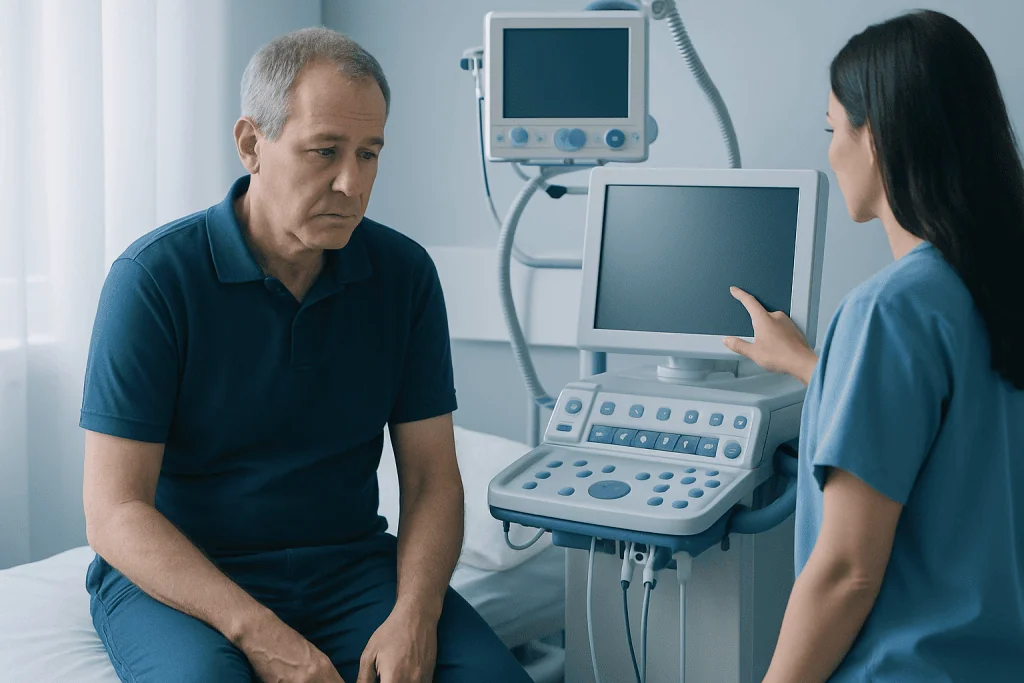
Fahr disease can affect people differently. Some individuals have no symptoms throughout life, while others develop symptoms gradually in adulthood. Movement-related symptoms may include tremor, stiffness, slowed movements, unsteady walking, poor coordination, involuntary movements, or muscle spasms. These features can resemble other movement disorders, so careful clinical assessment is important.
Some people experience neurological symptoms such as seizures, headaches, changes in speech, swallowing difficulty, or episodes of fainting. Cognitive and emotional symptoms can also occur. These may include reduced attention, slower thinking, memory difficulties, depression, anxiety, irritability, personality change, or, less commonly, psychotic symptoms. Such symptoms have many possible causes and should not be assumed to result from brain calcification alone.
The practical effects may range from none to difficulties with work, driving, walking safely, medication management, or independent daily activities. Regular review helps clinicians identify changing needs and arrange support early, including physiotherapy, occupational therapy, speech and language therapy, or mental health care when appropriate.
Causes, genetics, and risk factors

Primary familial brain calcification is most often linked to genetic changes that affect how cells in the brain regulate phosphate and maintain the blood-brain barrier. Several genes have been associated with the condition. In many families, it follows an autosomal dominant inheritance pattern, meaning a person with a disease-causing genetic variant may have a 50% chance of passing it to each child. However, symptoms and age of onset can vary substantially, even among relatives with the same variant.
Not every person with a family history will know of affected relatives. A parent may have had mild symptoms, no symptoms, or no brain imaging. In some cases, no currently recognized genetic cause is identified despite clinical and imaging findings that suggest PFBC. A genetics specialist or genetic counselor can explain what testing may and may not show, and discuss the possible implications for relatives.
Secondary bilateral brain calcification has different causes. Important examples include low parathyroid hormone activity, abnormal calcium or phosphate levels, vitamin D-related metabolic disturbances, kidney disease, certain infections, autoimmune conditions, toxic exposures, and rare mitochondrial or developmental disorders. These causes are not interchangeable with inherited PFBC, and the evaluation is designed to look for reversible or treatable contributors.
How Fahr disease is diagnosed
Diagnosis begins with a detailed history and neurological examination. The clinician will ask about movement changes, seizures, headaches, mood or memory concerns, medications, past illnesses, and family history. They will also consider whether the imaging pattern and symptoms could be explained by another neurological condition. Because small calcifications can occasionally occur with aging, the location, extent, age of the person, and clinical context all matter.
A non-contrast CT scan of the head is generally the preferred test for detecting and mapping brain calcifications. MRI can provide useful information about other brain changes, but it is usually less sensitive than CT for calcium deposits. Imaging alone does not establish whether the finding is primary or secondary, and it cannot reliably predict how symptoms will progress.
Blood testing commonly includes calcium, phosphate, magnesium, kidney function, vitamin D, and parathyroid hormone measurements. Additional testing is chosen according to the person’s history and examination. Genetic testing may be offered when PFBC is suspected, particularly when there is a family history or no metabolic cause is found. Genetic counseling before and after testing can help people understand uncertain results and decisions about family testing.
Modern treatment approaches and ongoing care
There is no proven treatment that dissolves established brain calcifications or reliably stops progression in primary familial brain calcification. Treatment is individualized and focuses on the symptoms that are affecting the person’s health, independence, and well-being. A neurologist may coordinate care with primary care clinicians, psychiatrists, endocrinologists, rehabilitation professionals, and other specialists depending on the symptoms present.
When testing identifies a secondary metabolic cause, treating that cause is a central priority. For example, correcting an underlying parathyroid or calcium-phosphate disorder may improve symptoms and may help prevent further complications, although existing calcifications may remain visible on imaging. Management should be supervised by qualified clinicians because calcium, vitamin D, and related therapies require careful monitoring.
Symptom-directed treatment may include antiseizure medicines for seizures, carefully selected medicines for movement symptoms, and evidence-based treatment for depression, anxiety, or psychosis when needed. Physiotherapy can support mobility, strength, balance, and fall prevention. Occupational therapy can help adapt daily tasks, while speech and language therapy may help with communication or swallowing concerns. Medication choices are individualized because some medicines can worsen movement, sedation, or cognitive symptoms in certain people.
Acibadem International’s multidisciplinary specialists and JCI-accredited hospitals can assess suspected Fahr disease and coordinate neurological, endocrine, genetic, and rehabilitation care for international patients.
Outlook, monitoring, and self-care
The outlook for Fahr disease is highly variable. Some people remain well or have only mild symptoms, while others develop more significant movement, cognitive, psychiatric, or seizure-related difficulties over time. Symptoms may appear in adulthood, but the timing is unpredictable. A CT scan showing extensive calcification does not necessarily mean that a person will have severe symptoms, and relatively modest calcification can still be clinically relevant in some individuals.
Follow-up is usually guided by symptoms rather than by a fixed imaging schedule. A clinician may recommend periodic neurological review, monitoring of cognitive or mood changes, and repeat laboratory testing when there is a known metabolic disorder. Repeat imaging may be useful in selected circumstances, but it is not always needed simply because calcifications have already been identified.
Helpful self-care measures include taking prescribed medicines as directed, attending follow-up appointments, maintaining regular sleep, staying physically active within safe limits, and avoiding alcohol or recreational drugs if they trigger seizures, worsen balance, or interact with medicines. People with falls, seizures, or slowed reaction times should discuss driving, workplace safety, and home fall-prevention measures with their healthcare team. Family members may also benefit from education and support, particularly when symptoms affect thinking or mood.
When to seek medical care
A person should arrange a medical assessment if they develop a new tremor, stiffness, changes in walking or coordination, unexplained seizures, persistent cognitive changes, or significant changes in mood or behavior. Assessment is also appropriate when a CT scan has shown basal ganglia or other brain calcifications, especially if there is a personal or family history of neurological symptoms. Early evaluation helps identify potentially treatable metabolic causes.
Urgent medical attention is needed for a first seizure, a prolonged seizure, repeated seizures without full recovery, sudden severe headache, new weakness on one side of the body, trouble speaking, sudden confusion, loss of consciousness, or a serious fall or injury. These symptoms can have causes other than Fahr disease and should be assessed promptly.
People with a known diagnosis should contact their healthcare professional if seizures change, walking becomes less safe, swallowing problems emerge, medicines cause troubling side effects, or depression, anxiety, hallucinations, or thoughts of self-harm occur. Prompt support can improve safety and help ensure that treatment remains appropriate as needs change.
Frequently asked questions
Is Fahr disease the same as Fahr syndrome?
The terms are sometimes used inconsistently, but they are not exactly the same. Fahr disease usually refers to primary familial brain calcification, which is often inherited. Fahr syndrome generally refers to similar brain calcifications caused by an underlying condition, such as a parathyroid or mineral-balance disorder.
Can Fahr disease be cured?
There is currently no treatment proven to remove established brain calcifications in primary familial brain calcification. Care focuses on managing seizures, movement symptoms, mood or cognitive concerns, and everyday functioning. If a secondary cause is found, treating that condition is especially important.
Does everyone with Fahr disease develop symptoms?
No. Some people with characteristic calcifications, including people with genetic variants linked to PFBC, may have few or no symptoms. Others develop symptoms that vary in type and severity. Regular clinical review is more useful than trying to predict symptoms from scan findings alone.
How is Fahr disease inherited?
Many genetic forms are inherited in an autosomal dominant pattern. This means an affected parent may pass the relevant genetic variant to each child, but symptoms can differ greatly among family members. Genetic counseling can help families understand inheritance, testing options, and the limits of prediction.
What test confirms Fahr disease?
A head CT scan is the most sensitive routine test for showing the typical pattern of brain calcification. Diagnosis also requires blood tests to exclude treatable metabolic causes and may include genetic testing. A neurologist interprets these results together rather than relying on one test alone.
Can calcium supplements cause Fahr disease?
Ordinary calcium intake or a prescribed calcium supplement does not by itself cause primary familial brain calcification. However, abnormal calcium and phosphate regulation can contribute to secondary brain calcification in some medical conditions. People with brain calcifications should not start or stop supplements without advice from their clinician.
References
- National Institute of Neurological Disorders and Stroke
- National Organization for Rare Disorders
- Orphanet
- GeneReviews
- Merck Manual Professional Edition
This article is for general information only and is not a substitute for professional medical advice. Please consult a qualified doctor about your individual situation.
Explore treatments in Turkey — costs, top hospitals & a free quote
JCI-accredited · board-certified surgeons · reply within 24h
Add us as a Preferred Source to see more of our trusted health content across Google Search, AI Overviews and Discover.