Farmers Walk: What Patients Need to Know
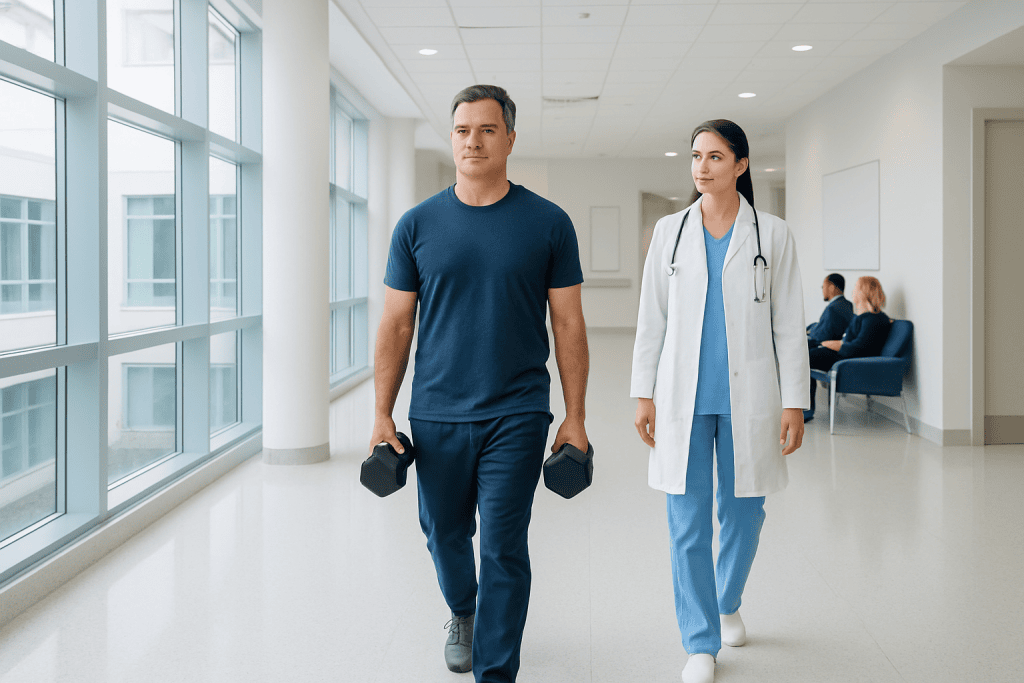
Farmers walk is a loaded-carry exercise that trains grip, core stability, posture, and walking mechanics. Proper form matters more than heavy weight, especially for beginners or people returning to exercise after injury.
Key Takeaways
- Farmers walk is a loaded-carry exercise that trains grip, core stability, posture, and walking mechanics.
- Proper form matters more than heavy weight, especially for beginners or people returning to exercise after injury.
- Common problem areas include the lower back, shoulders, hands, and knees if technique or load selection is poor.
- People with joint pain, recent surgery, hernia, uncontrolled blood pressure, or balance problems should seek medical advice before starting.
- Progressing slowly and stopping if pain develops helps reduce the risk of strain and overuse injuries.
Farmers walk is a simple strength and conditioning exercise that involves carrying weights while walking. For most people, it can support grip strength, balance, posture, and overall fitness when performed with good technique, appropriate loads, and attention to pain or injury risk.
What is the farmers walk?
Farmers walk is a strength and conditioning exercise in which a person holds a weight in each hand and walks for a set distance or time. The movement is named after the practical task of carrying heavy items by hand, and in exercise settings it may be done with dumbbells, kettlebells, trap bars, or specially designed handles.
Although it looks straightforward, farmers walk challenges several body systems at once. It asks the hands to grip firmly, the shoulders to stay stable, the trunk muscles to resist leaning or twisting, and the legs to maintain a steady walking pattern under load. Because of this combination, many clinicians and trainers view it as a functional exercise rather than an isolated strength movement.
For patients and the general public, the main question is usually whether farmers walk is safe and useful. In many healthy adults, it can be a practical exercise for building strength and everyday carrying capacity. However, technique, starting weight, and underlying health conditions make an important difference, so it is not suitable for everyone in the same way.
Potential benefits and muscles worked
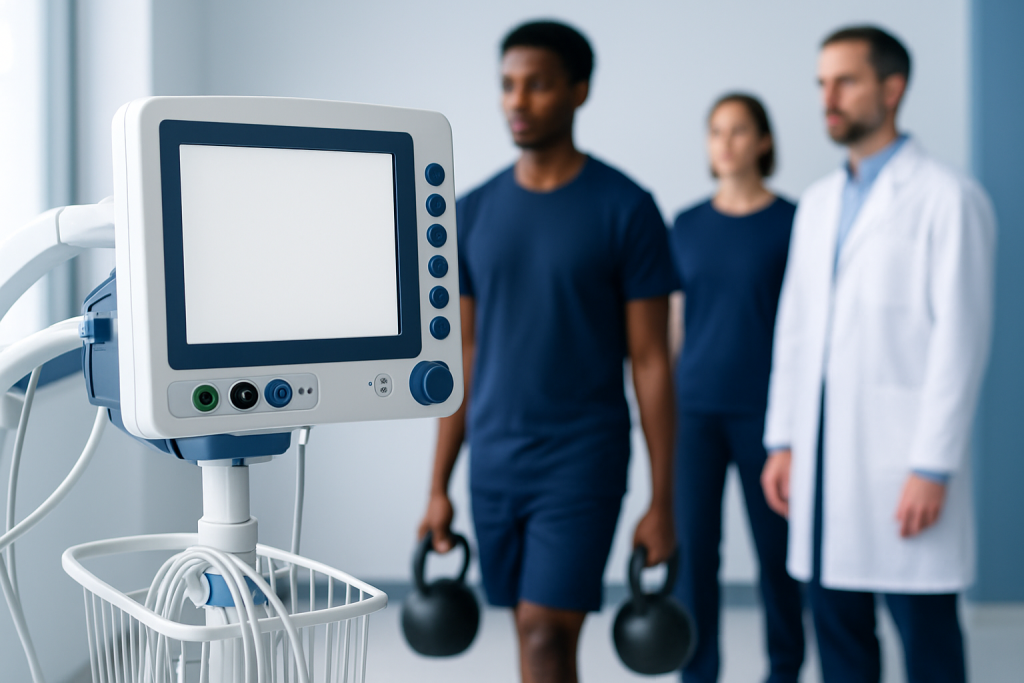
Farmers walk mainly works the grip, forearms, shoulders, upper back, abdominal wall, lower back stabilizers, hips, and legs. Instead of moving one joint through a large range, it teaches the body to maintain alignment while carrying a load. That makes it especially relevant for tasks such as carrying shopping bags, luggage, or household items.
Some people use farmers walk to support posture and trunk stability. When performed correctly, the exercise encourages a tall stance, level shoulders, and controlled steps. It may also improve body awareness, which can help a person notice when they are leaning, shrugging, or overstriding during daily activities.
Farmers walk can also contribute to general conditioning. Depending on the weight and distance, it may challenge the heart and lungs as well as the muscles. Still, it should not be viewed as a cure-all. Benefits depend on consistent training, proper recovery, and fitting the exercise into a broader routine that includes mobility, aerobic activity, and other forms of strength work.
- Grip and forearm endurance
- Core bracing and trunk control
- Shoulder stability
- Hip and leg strength during walking
- Balance and coordination under load
Who may benefit most, and who should be cautious

Healthy adults who want to improve general strength, posture, and functional fitness may benefit from farmers walk. It can be useful for people who sit for long periods and need more whole-body loading, as well as for recreational exercisers looking for a low-complexity movement. Because walking is a familiar pattern, many people find it easier to learn than more technical lifts.
Even so, some people should be cautious. Those with recent injuries, severe deconditioning, significant balance problems, uncontrolled high blood pressure, chest pain with exertion, hernia, or recent surgery may need medical clearance first. People with back pain, shoulder pain, hand or wrist problems, or lower-limb joint issues may need a modified plan or a different exercise altogether.
Extra care is also reasonable in older adults who are at risk of falls and in anyone with neurologic conditions that affect gait or coordination. In these cases, a clinician may suggest supervised strengthening or rehabilitation first. If pain or weakness is linked to a known musculoskeletal condition such as spinal stenosis or scoliosis, individualized assessment is especially important.
Proper form: how to do farmers walk safely
Safe farmers walk starts before the first step. The weights should be manageable enough to lift with control and carry without swaying, holding the breath excessively, or losing posture. A person should stand tall, keep the head in a neutral position, let the shoulders sit down and back rather than shrugging, and brace the abdominal muscles gently as if preparing for a cough.
After lifting the weights, the person should walk with short, steady steps and keep the torso upright. The goal is not to rush. It helps to look ahead, keep the rib cage stacked over the pelvis, and avoid leaning side to side. At the end of the distance, the weights should be set down carefully rather than dropped suddenly, unless using equipment designed for that purpose in a controlled gym environment.
Beginners usually do best with a light-to-moderate load and a short distance. If grip fails quickly, posture collapses, or the lower back aches, the weight may be too heavy. One-sided carries, uneven carries, or longer intervals can be useful progressions later, but they place greater demands on balance and trunk control and are usually not the first step for patients restarting exercise.
- Choose a weight that allows upright posture
- Keep shoulders level and avoid shrugging
- Take controlled steps rather than rushing
- Breathe steadily instead of straining
- Stop if sharp pain, dizziness, or numbness occurs
Common risks, mistakes, and possible injuries
The most common problems with farmers walk come from using too much weight too soon or losing body position during the carry. When the load is excessive, a person may lean forward, arch the lower back, shrug the shoulders, or take unstable steps. Over time, this can increase strain on the back, neck, shoulders, knees, or feet.
Grip fatigue is expected, but pain is not. Blisters, hand irritation, and forearm overuse can occur, particularly when volume rises quickly. People with existing wrist, elbow, or shoulder issues may notice symptom flare-ups if they grip too hard or try to carry weights that exceed their current capacity. In others, the exercise may aggravate mechanical back pain if the trunk muscles cannot control the load well.
Farmers walk should be avoided if it causes shooting pain, numbness, faintness, chest discomfort, or a sense that balance may be lost. Anyone recovering from an operation or undergoing rehabilitation may need structured guidance. In some situations, supervised exercise therapy or physical therapy and rehabilitation can help a person rebuild carrying tolerance more safely.
How to fit farmers walk into a balanced exercise plan
Farmers walk usually works best as part of a broader plan rather than as a stand-alone exercise. It can be placed near the end of a strength session, used as a short conditioning interval, or included in functional training circuits. The exact role depends on a person’s goals, age, fitness level, and medical history.
For many beginners, one or two short sets with light or moderate weight are enough at first. Progress can come from slightly longer distances, more sets, or small increases in weight. Rapid progression is less helpful than consistent, symptom-free practice. Rest days and variation in training are important, especially if a person also performs gripping, rowing, deadlifting, or manual work.
People with persistent pain or poor movement quality may benefit from assessment before increasing load. Depending on the problem, clinicians may recommend strengthening, mobility work, gait training, or evaluation by specialists in orthopedics or sports injury care. The aim is not only to carry more, but to move well while doing it.
When to seek medical care
Medical advice is appropriate if farmers walk causes ongoing pain, worsening stiffness, swelling, weakness, numbness, or repeated loss of balance. Care should also be sought if symptoms continue beyond a few days, interrupt sleep, or limit everyday activities such as walking, lifting, or climbing stairs. These features can suggest more than routine post-exercise soreness.
Urgent assessment is needed for chest pain, severe shortness of breath, fainting, sudden severe back pain, loss of bladder or bowel control, or new weakness in an arm or leg. These are not typical exercise effects and should not be ignored. Patients with osteoporosis, recent trauma, known heart disease, or recent surgery should be especially careful about self-directed heavy loading.
If symptoms point to a musculoskeletal problem, imaging or specialist review may sometimes be recommended, though many exercise-related pains are diagnosed clinically. Near the end of a care pathway, some patients choose centers that offer coordinated assessment across rehabilitation, orthopedics, and imaging. Acibadem International’s multidisciplinary specialists and JCI-accredited hospitals diagnose and treat exercise-related musculoskeletal conditions for international patients when more detailed evaluation is needed.
Frequently asked questions
Is farmers walk a good exercise for beginners?
It can be, because the movement pattern is simple and familiar. The key is to start with light weights, short distances, and careful attention to posture. People with medical conditions, balance concerns, or recent injuries should ask a clinician before beginning.
What muscles does farmers walk work most?
Farmers walk strongly challenges the grip, forearms, shoulders, upper back, abdominal muscles, hips, and legs. It is also a trunk stability exercise because the body must resist leaning and twisting while walking. That combination makes it different from many machine-based exercises.
Can farmers walk help with posture?
It may support better postural control when done with correct alignment and an appropriate load. The exercise encourages a tall stance, steady shoulder position, and trunk bracing. However, if the weight is too heavy, posture often worsens rather than improves.
Is lower back soreness normal after farmers walk?
Mild muscular fatigue can happen, especially in beginners. Sharp pain, pain that radiates down the leg, numbness, or pain that persists should not be considered normal and deserves medical advice. Reviewing technique and reducing load are often the first steps.
How heavy should the weights be for farmers walk?
There is no single correct weight for everyone. A safe starting point is a load that allows upright posture, steady breathing, and controlled steps for a short distance without pain. If the person sways, strains, or cannot set the weights down with control, the load is probably too heavy.
Who should avoid farmers walk?
People with uncontrolled high blood pressure, recent surgery, active hernia symptoms, severe balance problems, chest pain with exertion, or significant musculoskeletal pain should avoid it until they have medical guidance. Some may return later with modifications or supervised rehabilitation. Individual assessment is important.
References
- American College of Sports Medicine
- National Institute of Arthritis and Musculoskeletal and Skin Diseases
- Centers for Disease Control and Prevention
- National Health Service
- MedlinePlus
This article is for general information only and is not a substitute for professional medical advice. Please consult a qualified doctor about your individual situation.
Joint and spine care in Turkey — expert assessment & treatment
JCI-accredited · board-certified surgeons · reply within 24h
Add us as a Preferred Source to see more of our trusted health content across Google Search, AI Overviews and Discover.
Check your numbers in seconds
BMI, calories, due date, blood pressure and 30+ more clinical calculators — free, instant, doctor-reviewed ranges.