Febrile Seizures in Children: What Parents Should Do

Febrile seizures are usually triggered by fever and are most common in children aged 6 months to 5 years. Most febrile seizures are brief and harmless, though they should be medically evaluated.
Key Takeaways
- Febrile seizures are usually triggered by fever and are most common in children aged 6 months to 5 years.
- Most febrile seizures are brief and harmless, though they should be medically evaluated.
- During a seizure, the child should be placed on their side and kept safe; nothing should be put in the mouth.
- Emergency help is needed if the seizure lasts more than 5 minutes, breathing seems difficult, or the child does not recover normally.
- Some children may have another febrile seizure with future fevers, but most outgrow them by age 5.
Febrile seizures are seizures linked to fever in young children, most often between 6 months and 5 years of age. They can be frightening to witness, but most are short, do not cause long-term harm, and children usually recover fully.
Overview
Febrile seizures in children are convulsions that happen in association with a fever. They are most often seen in infants and young children, especially between 6 months and 5 years of age. For many families, the event is sudden and alarming, particularly if it is the first seizure a child has ever had.
A febrile seizure usually occurs when a child has a fever from a common illness such as a viral infection, ear infection, or another short-term infection. In many cases, the seizure happens early in the illness, sometimes before parents even realize the child is developing a fever. Although the seizure itself can look dramatic, most febrile seizures are brief and do not lead to brain damage, learning problems, or epilepsy.
Doctors generally divide febrile seizures into two main types. Simple febrile seizures are the most common; they affect the whole body, last less than 15 minutes, and do not recur within 24 hours. Complex febrile seizures may last longer, happen more than once in a day, or involve one part of the body more than the other. This distinction helps guide medical evaluation and follow-up.
Symptoms and What a Febrile Seizure May Look Like
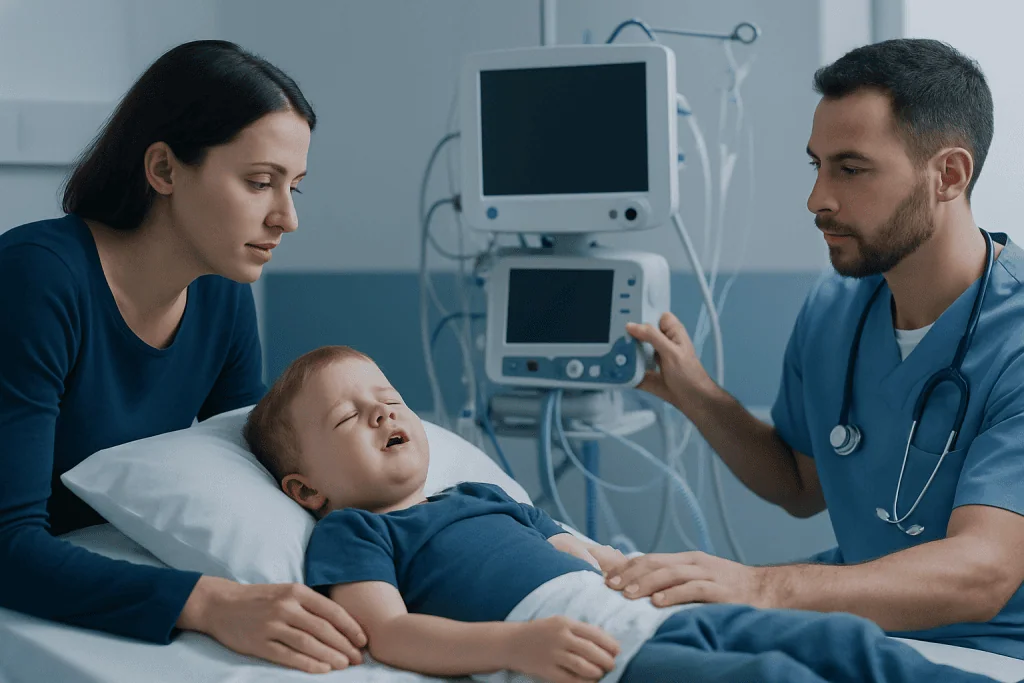
During a febrile seizure, a child may lose consciousness, become stiff, and have rhythmic jerking movements of the arms and legs. Some children may roll their eyes upward, drool, or appear briefly unresponsive. The episode often lasts only a few seconds to a few minutes, though even a short seizure can feel much longer to a parent watching it happen.
After the seizure stops, the child may seem sleepy, confused, irritable, or less active for a short period. This recovery period is common. Once the child becomes more alert, they may still have signs of the illness causing the fever, such as a runny nose, cough, ear pain, or tiredness.
Symptoms that suggest urgent medical attention is needed include:
- A seizure lasting more than 5 minutes
- Trouble breathing or blue lips
- Persistent confusion or difficulty waking up afterward
- Stiff neck, severe lethargy, or signs of serious infection
- Seizure activity affecting only one side of the body
- A first seizure in a child younger than 6 months or older than 5 years
Because other conditions can also cause seizures with fever, such as meningitis or certain neurological disorders, any child with a first febrile seizure should be assessed by a healthcare professional.
Causes and Risk Factors
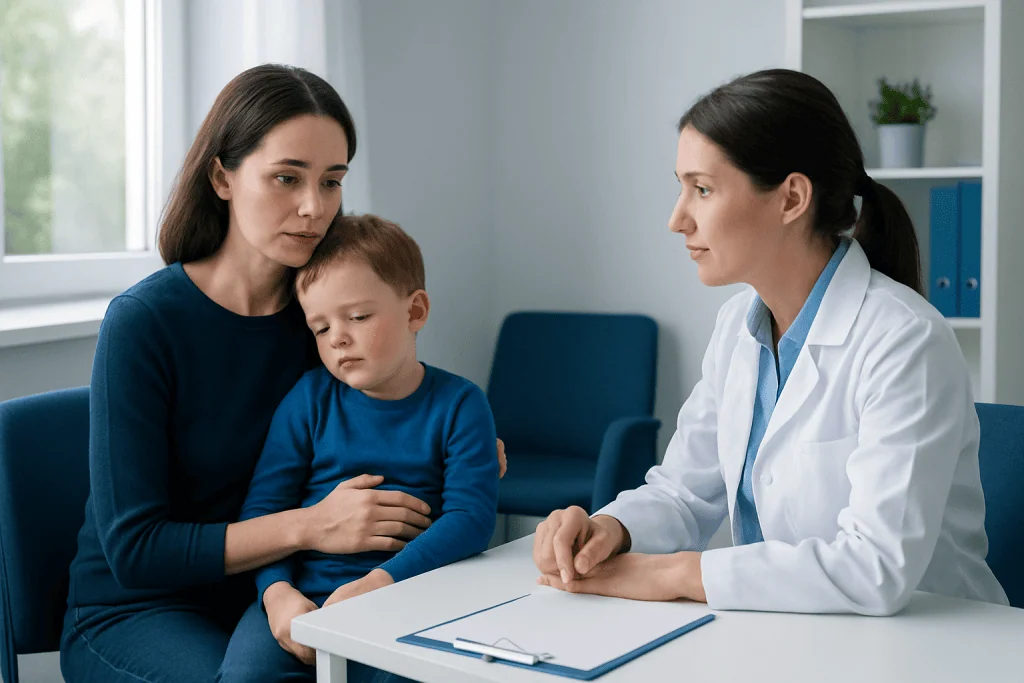
Febrile seizures happen when a young child’s developing brain reacts to fever. The seizure is linked to the rise in body temperature rather than to one specific illness. Viral infections are a common trigger, but bacterial infections can also cause fever-related seizures. In some children, a fever after routine immunization may be associated with a febrile seizure, though the underlying reason is still the fever itself and such events remain uncommon.
Some children are more likely than others to experience febrile seizures. A family history is one of the strongest risk factors, suggesting a genetic tendency. Age also matters: the peak risk is in toddlers, because the immature brain is more sensitive to fever at this stage of development.
Other factors that may increase risk include:
- Previous febrile seizure
- Frequent fevers in early childhood
- Relatives who had febrile seizures as children
- Rapid temperature rise during an illness
It is important to know that febrile seizures are different from seizures caused by epilepsy. They are also different from seizures related to low blood sugar, head injury, poisoning, or problems affecting the brain itself. A doctor may sometimes consider other causes if the child has unusual features, repeated episodes, or developmental concerns. When needed, a specialist may assess for other seizure disorders such as epilepsy.
What Parents Should Do During a Febrile Seizure
The most important step is to keep the child safe. Lay the child on the floor or a bed away from hard or sharp objects, and gently turn them onto their side if possible. Loosen tight clothing around the neck and watch the child closely. Timing the seizure can be very helpful for doctors later.
Parents should not hold the child down, try to stop the movements, or put anything in the child’s mouth. A child cannot swallow their tongue during a seizure, and placing objects or fingers in the mouth can cause injury. It is also best not to give food, drink, or medicine until the child is fully awake and able to swallow normally.
Emergency services should be called right away if the seizure lasts more than 5 minutes, if the child has trouble breathing, if another seizure follows quickly, or if the child does not return toward their usual level of responsiveness. Even when the seizure is brief and the child seems to recover, contacting a doctor promptly is recommended, especially after a first episode.
Once the seizure ends, focus on the underlying fever and illness. The child should be examined to identify the cause of the fever, such as an ear infection, viral illness, or another infection. This may involve a pediatric assessment and, if needed, tests to rule out a more serious problem.
How Doctors Diagnose Febrile Seizures
Diagnosis begins with a careful description of what happened. Doctors usually ask about the child’s age, how high the fever was, how long the seizure lasted, whether the whole body was involved, and how the child behaved afterward. They also ask about recent illness, vaccinations, previous febrile seizures, medications, and family history.
A physical examination helps identify the source of the fever and look for warning signs of more serious conditions. The doctor checks the child’s temperature, hydration, breathing, ears, throat, skin, and neurological status. In many children with a simple febrile seizure who recover well, extensive testing is not necessary.
Additional tests may be considered if the child is very young, looks seriously unwell, has an unusual or prolonged seizure, or has signs that suggest an infection affecting the brain or spinal cord. Depending on the situation, doctors may order blood tests, urine tests, or imaging. In selected cases, a child may need neurological evaluation or an EEG study to help clarify whether the event fits a febrile seizure pattern or another type of seizure.
If there are concerns about the brain or a structural cause, the team may also consider advanced imaging such as brain MRI. The goal is not to overtest, but to make sure the child receives the right evaluation based on age, symptoms, and the features of the seizure.
Treatment Options and Recovery
Most simple febrile seizures stop on their own and do not need seizure-specific treatment once they have ended. Immediate care focuses on the child’s safety during the event and on evaluating the cause of the fever afterward. If the child has a common viral illness, treatment may simply involve rest, fluids, and monitoring at home after medical assessment.
When a seizure lasts longer or does not stop quickly, emergency doctors may give medication to end it. Treatment decisions depend on the child’s age, seizure length, recovery, and the suspected illness behind the fever. If an infection such as an ear infection or another bacterial illness is found, that condition is treated appropriately.
Fever-reducing medicines may help the child feel more comfortable, but they do not reliably prevent future febrile seizures. Because of that, routine daily anti-seizure medication is usually not recommended for most children with simple febrile seizures. The risks of long-term medication often outweigh the benefits in a condition that children typically outgrow.
Children with complex febrile seizures, repeated episodes, or unusual examination findings may be referred to a pediatric neurologist. In some situations, hospital observation is needed. In specialized centers, children can be assessed by pediatric and neurology teams, and Acibadem International’s multidisciplinary specialists in JCI-accredited hospitals also diagnose and treat febrile seizures for international patients when further evaluation is required.
Prevention, Self-care, and Future Outlook
There is no guaranteed way to prevent febrile seizures, because they are linked to the body’s response to fever rather than to anything a parent did or did not do. Treating fever for comfort, keeping the child hydrated, and watching for signs of infection are sensible steps, but they cannot completely eliminate the risk of another seizure.
Many parents worry that a febrile seizure means their child will develop epilepsy or have long-term developmental problems. In most children, this does not happen. The overall outlook is very good, especially after a simple febrile seizure. Some children may have another episode with future fevers, but most outgrow febrile seizures by around age 5.
Parents may find it helpful to make a simple action plan with their child’s doctor. This can include how to monitor fever, what to do if another seizure occurs, when to call emergency services, and whether specialist follow-up is needed. If seizures are prolonged, recurrent, or difficult to classify, a doctor may discuss further neurological care, sometimes including neurology evaluation.
If there are repeated fever-related events or uncertainty about the diagnosis, doctors may also consider whether another febrile illness or inflammatory condition is involved. In rare cases, evaluation may overlap with other childhood conditions such as meningitis when warning signs are present.
When to See a Doctor
Any child with a first febrile seizure should be seen by a doctor promptly, even if the child seems back to normal afterward. Medical evaluation helps confirm that the seizure was fever-related and not caused by another problem. It also helps identify the source of the fever and decide whether any further tests are needed.
Parents should seek urgent or emergency care if the seizure lasts more than 5 minutes, if the child has trouble breathing, if the child looks very ill, if there is neck stiffness, repeated vomiting, a severe headache, poor responsiveness, or signs of dehydration. A child should also be assessed urgently if the seizure happens without a clear fever, involves only one side of the body, or happens repeatedly within a day.
Follow-up with a pediatrician is important after the event, particularly if there is a family history of seizures, developmental concerns, or repeated febrile seizures. Families who understand what febrile seizures are and how to respond often feel more prepared and less frightened if another episode occurs.
Frequently asked questions
Are febrile seizures dangerous?
Most febrile seizures are not dangerous and do not cause long-term brain damage. They are frightening to see, but the majority are brief and children recover fully. A doctor should still evaluate the child, especially after the first episode.
What should parents do first during a febrile seizure?
Parents should place the child on their side on a safe surface and move nearby objects away. They should not put anything in the child's mouth or try to hold the child down. If possible, they should time the seizure and seek emergency help if it lasts more than 5 minutes.
Can fever medicine prevent febrile seizures?
Fever medicine can help a child feel more comfortable, but it does not reliably prevent febrile seizures. A seizure may still happen as the temperature rises during an illness. Parents should use fever treatment as advised by a doctor for comfort rather than as a guaranteed prevention method.
Will a child have epilepsy after a febrile seizure?
Most children with simple febrile seizures do not go on to develop epilepsy. The risk may be somewhat higher in children with complex febrile seizures, developmental issues, or a strong family history of epilepsy. A doctor can explain the child's individual risk based on the details of the episode.
Can febrile seizures happen more than once?
Yes, some children have another febrile seizure during a later illness with fever. Recurrence is more likely in younger children and in those with a family history of febrile seizures. Even so, most children outgrow the tendency by about 5 years of age.
When should parents call an ambulance for a febrile seizure?
Emergency help is needed if the seizure lasts more than 5 minutes, if the child has breathing problems, turns blue, or does not wake up and recover normally afterward. Parents should also seek urgent care if the child looks seriously ill or has warning signs such as neck stiffness or repeated seizures.
References
- American Academy of Pediatrics
- National Institute of Neurological Disorders and Stroke
- National Health Service
- Centers for Disease Control and Prevention
- International League Against Epilepsy
This article is for general information only and is not a substitute for professional medical advice. Please consult a qualified doctor about your individual situation.
Febrile Seizures in Turkey — costs, top hospitals & a free quote
JCI-accredited · board-certified surgeons · reply within 24h
Add us as a Preferred Source to see more of our trusted health content across Google Search, AI Overviews and Discover.

Neurology
Diagnosis and treatment of disorders of the brain, spinal cord, nerves and muscles.
51 specialists in this unit