Finasteride for Hair Loss: How It Works, Results Timeline, and Side Effects

Finasteride mainly treats male pattern hair loss by reducing DHT levels in the scalp. It usually works gradually, with visible changes often taking 3 to 6 months and fuller assessment taking up to 12 months.
Key Takeaways
- Finasteride mainly treats male pattern hair loss by reducing DHT levels in the scalp.
- It usually works gradually, with visible changes often taking 3 to 6 months and fuller assessment taking up to 12 months.
- The medicine is generally used long term; stopping it often allows hair loss to resume.
- Possible side effects can include sexual side effects, mood changes, and breast tenderness, so medical follow-up is important.
- Finasteride is often combined with other hair-loss strategies such as topical treatment or procedural options.
Finasteride for hair loss is an oral prescription medicine that helps slow male pattern hair loss by lowering dihydrotestosterone (DHT), a hormone involved in follicle miniaturization. It does not work overnight, but many people notice reduced shedding first, followed by stabilization and possible regrowth over several months.
Overview: What Finasteride Does for Hair Loss
Finasteride hair loss treatment is used mainly for androgenetic alopecia, also called male pattern hair loss. It works by blocking the conversion of testosterone into dihydrotestosterone, or DHT. In people who are genetically prone to pattern hair loss, DHT gradually shrinks susceptible hair follicles, making hairs finer, shorter, and less visible over time.
The main goal of finasteride is usually to slow or stop ongoing thinning rather than create dramatic regrowth in every person. Many patients first notice that shedding becomes less active. Over time, some also see thicker-looking hair or improved density, especially at the crown and mid-scalp. Results can vary depending on age, duration of hair loss, family history, and how much miniaturization has already occurred.
Because hair growth happens in cycles, finasteride needs time to show benefit. It is not a quick fix, and it works best when started before follicles have been inactive for too long. For people exploring the full range of options, doctors may also discuss medical treatment alongside procedural care such as hair transplant treatment for more advanced thinning.
Who May Benefit Most
Finasteride is most commonly prescribed for adult men with androgenetic alopecia. It is generally most helpful in the earlier and moderate stages of thinning, when follicles are still active but becoming smaller. People with recent progression, widening at the crown, or visible thinning along the top of the scalp often respond better than those with long-standing areas of complete baldness.
It is important to understand that not all hair loss has the same cause. Patchy hair loss, sudden shedding after illness or stress, scalp inflammation, and hair breakage may point to other conditions. If the diagnosis is uncertain, a dermatologist or hair specialist may evaluate whether the problem is more consistent with hair loss in general, male pattern baldness, or another scalp disorder.
Finasteride is not usually the first approach for every patient. A clinician may consider age, medical history, fertility plans, current medications, and personal preferences before recommending treatment. This individualized assessment helps set realistic expectations and avoid using the wrong treatment for the wrong type of thinning.
Results Timeline: When Improvements Usually Appear

One of the most common questions is how long finasteride takes to work. In the first few months, the most noticeable change may be less shedding rather than visible regrowth. Some people become discouraged early because the mirror does not show much difference yet, but this is common. Hair follicles need time to complete growth cycles before thicker hairs emerge.
Many patients look for early signs between 3 and 6 months, but a fair assessment usually takes about 6 to 12 months of consistent use. Stabilization is often the first success. In practical terms, that may mean fewer hairs in the shower, less progression at the crown, or improved photographs compared with earlier months.
Doctors often suggest taking standardized photographs before starting treatment and comparing them under similar lighting over time. This can be more reliable than day-to-day visual judgment. Patients who are also considering future procedural planning sometimes review pattern progression resources such as the Norwood scale, how many grafts may be needed for a hair transplant, or the expected hair transplant recovery timeline to better understand where medication fits into their long-term care plan.
If treatment is effective, ongoing use is usually needed to maintain benefit. When finasteride is stopped, DHT levels rise again, and the protective effect on follicles usually fades. Hair loss may then gradually resume over the following months.
Side Effects and Safety Considerations
Like any prescription medicine, finasteride can cause side effects. The most discussed are sexual side effects, such as lower libido, erectile difficulty, or changes in ejaculation. These effects do not happen in everyone, and when they do occur, their severity and duration can vary. Some patients have no noticeable problems, while others may decide the medicine is not the right fit for them.
Other reported concerns can include breast tenderness or enlargement, testicular discomfort, skin rash, or mood changes such as low mood. Because these symptoms can have different causes, it is important not to self-diagnose. A doctor can help determine whether the medicine, another health issue, or a combination of factors may be responsible.
Finasteride is not appropriate for everyone. A clinician may review liver health, other medications, reproductive concerns, and whether blood testing such as prostate-specific antigen screening is relevant, because finasteride can affect PSA interpretation. People should never change or stop a prescribed medicine without medical advice, especially if they are taking it under ongoing supervision.
Women who are pregnant or may become pregnant are generally advised to avoid handling crushed or broken finasteride tablets because of potential risk to a male fetus. This is a safety point often discussed during prescribing so that patients understand proper handling and storage at home.
How Doctors Diagnose Hair Loss Before Prescribing Finasteride
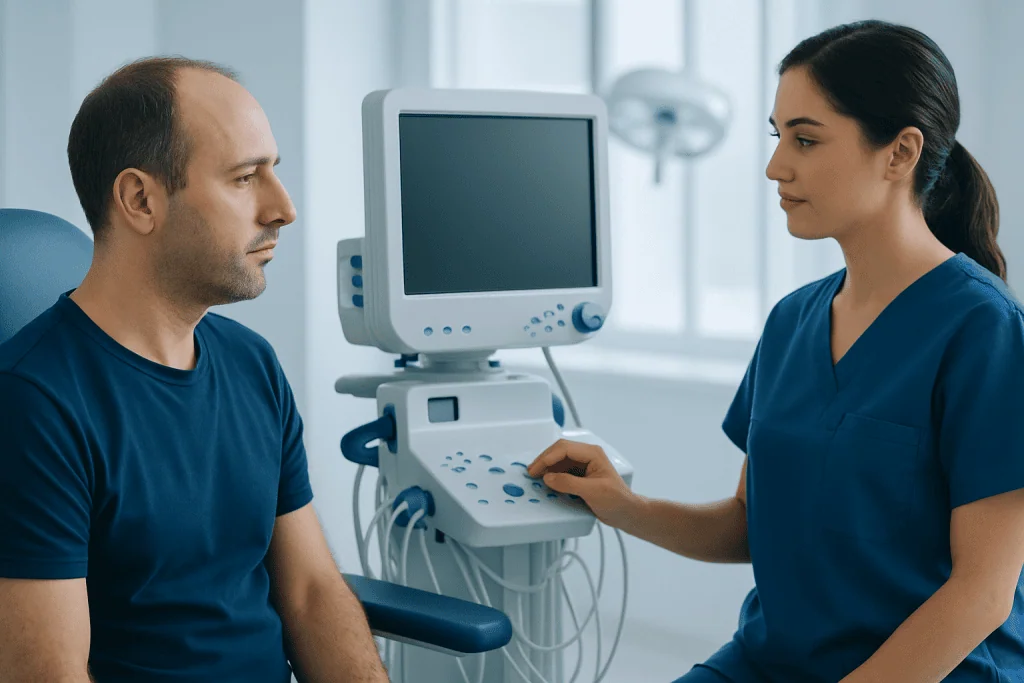
Before starting finasteride, a doctor will usually confirm that the hair loss pattern matches androgenetic alopecia. Diagnosis often begins with a medical history and scalp examination. The clinician may ask when thinning began, whether shedding is diffuse or patterned, whether there is itching or scalp scaling, and whether family members have similar hair loss.
The scalp exam helps distinguish pattern hair loss from other causes such as scarring alopecia, fungal infection, inflammatory scalp disease, or telogen effluvium after stress, illness, or weight change. In some cases, dermoscopy can help assess miniaturized hairs and scalp features more closely. Blood tests may be considered if there are signs of iron deficiency, thyroid disease, nutritional deficiency, or hormonal imbalance.
This step matters because finasteride is targeted therapy, not a universal hair-loss solution. If the wrong diagnosis is made, treatment may disappoint or delay more appropriate care. A careful diagnosis also helps identify whether other approaches, such as PRP for hair loss or dermatology evaluation and treatment, may be useful as part of a broader plan.
Treatment Options and Combination Approaches
Finasteride is often one part of a broader strategy rather than the only treatment. Depending on the pattern and severity of hair loss, doctors may recommend combining it with topical therapies, scalp care, or procedural options. Combination treatment can make sense because hair thinning often has both hormonal and follicular components, and different methods can support different aspects of the problem.
For example, a patient with ongoing miniaturization may use finasteride to reduce DHT-related progression while also using a topical treatment to support visible density. Someone with stable but advanced loss may use medication to protect remaining native hair while planning a procedure. This can be especially relevant when discussing hair transplant treatment because preserving existing hair is an important part of long-term cosmetic planning.
Not every patient needs the same level of treatment. Some may do well with medication alone, while others may prefer watchful follow-up with photographs before making a decision. A specialist can help weigh expected benefit, potential side effects, convenience, and personal goals so that treatment remains practical and realistic.
Self-Care, Follow-Up, and When to Seek Medical Care
Self-care during finasteride treatment focuses mainly on consistency and healthy expectations. Taking the medicine as prescribed, attending follow-up visits, and tracking progress with photographs can make the experience less frustrating. General scalp care, balanced nutrition, adequate sleep, and management of stress may also support overall hair and skin health, even though they do not replace targeted treatment for androgenetic alopecia.
Patients should seek medical advice promptly if they notice troubling side effects such as persistent sexual symptoms, breast changes, rash, significant mood changes, or any symptom that feels severe or unusual. It is also sensible to return for review if hair loss is rapidly worsening, becomes patchy, or is associated with redness, pain, scaling, or scarring, since these features may suggest a different diagnosis.
If results are limited after an adequate trial, a doctor may reassess the diagnosis, discuss combination therapy, or review whether another treatment path is more suitable. Near the end of the treatment journey, some international patients choose evaluation at centers such as Acibadem International, where multidisciplinary specialists in JCI-accredited hospitals assess hair loss and treatment options in a coordinated way.
Frequently asked questions
Does finasteride regrow hair or only stop hair loss?
Finasteride mainly helps slow or stop further miniaturization of hair follicles in male pattern hair loss. Some people also see partial regrowth or thicker-looking hair, especially at the crown, but results vary from person to person.
How long does finasteride take to work for hair loss?
Many people need at least 3 to 6 months before noticing early changes such as reduced shedding. A fuller assessment usually takes 6 to 12 months because hair grows slowly and treatment works through the hair cycle.
What happens if someone stops taking finasteride?
If finasteride is stopped, its effect on DHT decreases and the underlying pattern hair loss process usually resumes. Over time, hair that was being protected may thin again, so maintenance generally requires continued treatment under medical guidance.
Are finasteride side effects permanent?
Many people do not experience side effects, and some side effects improve after stopping the medicine, but experiences can differ. Anyone who develops concerning symptoms should speak with a qualified doctor rather than trying to judge the issue alone.
Is finasteride suitable for every type of hair loss?
No. Finasteride is mainly used for androgenetic alopecia and is not the right treatment for every cause of shedding or thinning. A proper scalp and medical evaluation helps confirm whether pattern hair loss is actually the cause.
Can finasteride be used with a hair transplant?
Yes, in many cases doctors use finasteride before or after a hair transplant to help preserve existing native hair. This can support longer-term planning, but the decision should be individualized based on diagnosis, goals, and tolerance of the medicine.
References
- American Academy of Dermatology
- National Health Service
- MedlinePlus
- Mayo Clinic
- British Association of Dermatologists
This article is for general information only and is not a substitute for professional medical advice. Please consult a qualified doctor about your individual situation.
Hair transplant in Turkey — costs, graft counts & a free assessment
JCI-accredited · board-certified surgeons · reply within 24h
Add us as a Preferred Source to see more of our trusted health content across Google Search, AI Overviews and Discover.