First Line Treatment for Nsclc: How It Works, Results and What to Expect

First-line NSCLC treatment is not one single treatment; it depends on stage and tumor testing. Early-stage NSCLC is often treated with surgery, sometimes followed by chemotherapy, immunotherapy, targeted therapy or radiation.
Key Takeaways
- First-line NSCLC treatment is not one single treatment; it depends on stage and tumor testing.
- Early-stage NSCLC is often treated with surgery, sometimes followed by chemotherapy, immunotherapy, targeted therapy or radiation.
- Advanced NSCLC treatment commonly uses biomarker-guided targeted therapy, immunotherapy, chemotherapy, or a combination.
- Molecular and PD-L1 testing help clinicians select the most appropriate systemic treatment.
- Regular scans, symptom review and blood tests help the care team assess response and manage side effects.
- New or worsening breathing symptoms, chest pain, coughing blood or neurologic symptoms need prompt medical assessment.
First line treatment for NSCLC is the initial treatment plan used for non-small cell lung cancer. It is individualized according to the cancer stage, whether it can be removed with surgery, tumor biomarker results, and the person's general health and preferences.
Overview: What Is First Line Treatment for NSCLC?
First line treatment for NSCLC means the first treatment or treatment combination recommended after non-small cell lung cancer (NSCLC) has been diagnosed and staged. The goal may be to cure localized cancer, reduce the chance of recurrence after curative treatment, control cancer that has spread, relieve symptoms, or preserve quality of life. NSCLC includes several cancer types, most commonly adenocarcinoma and squamous cell carcinoma.
The treatment plan is based on more than the cancer name alone. A multidisciplinary team considers the cancer stage, tumor size and location, lymph-node involvement, whether surgery is feasible, imaging findings, lung and heart function, other health conditions, and the person’s treatment goals. For advanced disease, biomarker testing and PD-L1 testing are especially important because they can identify treatments designed for particular tumor features.
It can take time to complete staging and laboratory testing before treatment begins. This planning period is purposeful: it helps avoid choosing a treatment before the team has the information needed to personalize care. A specialist can explain which tests are pending, what each result may mean, and when treatment is expected to start.
How First-Line NSCLC Treatment Works
For stage I and some stage II NSCLC, the first treatment is commonly surgery to remove the tumor and nearby lymph nodes when a person is medically fit for an operation. Surgery may involve removing a small part of the lung, a lobe of the lung, or, less often, an entire lung. Radiation therapy may be used when surgery is not suitable or as part of treatment for selected locally advanced cancers.
Systemic treatments travel through the bloodstream to reach cancer cells throughout the body. Chemotherapy damages rapidly dividing cells and may be given before surgery, after surgery, with radiation, or for advanced cancer. Immunotherapy helps the immune system recognize and attack cancer cells; it may be used alone or with chemotherapy depending on PD-L1 expression, cancer type and clinical situation.
Targeted therapies block specific signals that help cancer cells grow. They are used when molecular testing finds an actionable change, such as an EGFR, ALK, ROS1, BRAF, MET, RET, NTRK, KRAS G12C or HER2 alteration. In many people with metastatic NSCLC and a relevant driver alteration, targeted therapy is preferred as initial systemic treatment because it directly addresses the tumor’s biology.
Some people receive more than one type of treatment in a planned sequence. For example, a person may have chemotherapy and immunotherapy before surgery, followed by additional treatment afterward. The exact approach should be reviewed with a medical oncologist, radiation oncologist, thoracic surgeon and other relevant specialists.
Candidacy and Tests Before Treatment

Before recommending first-line therapy, clinicians confirm the diagnosis with a tissue biopsy or, in some circumstances, a liquid biopsy that looks for tumor DNA in the blood. Pathology identifies the NSCLC subtype, while molecular testing searches for gene changes that may guide targeted treatment. PD-L1 testing measures a protein that can help inform whether immunotherapy is likely to be part of the initial plan.
Staging usually includes detailed chest imaging and imaging of other areas where lung cancer may spread. A PET-CT scan, brain MRI, and sampling of lymph nodes may be recommended depending on the situation. These tests help distinguish localized, locally advanced and metastatic cancer, which strongly affects the treatment goal and choices.
Fitness for treatment is assessed through medical history, physical examination and blood tests. Lung function tests may be needed before surgery or chest radiation. The care team also considers smoking status, nutrition, activity level, medications, autoimmune conditions, organ function and any history of organ transplantation, as these factors can influence the safety of particular treatments.
Patients may wish to ask whether all appropriate biomarker results are available before systemic treatment starts. In urgent situations, treatment may need to begin while some results are pending, but the team should explain why and how the plan could change once complete testing is available.
What to Expect: A Step-by-Step Treatment Journey
The process generally starts with diagnostic confirmation, staging and tumor testing. The care team then meets to develop an individualized recommendation and discusses expected benefits, possible side effects, alternatives and practical issues such as appointment schedules. A person may also be offered participation in a clinical trial when an appropriate study is available.
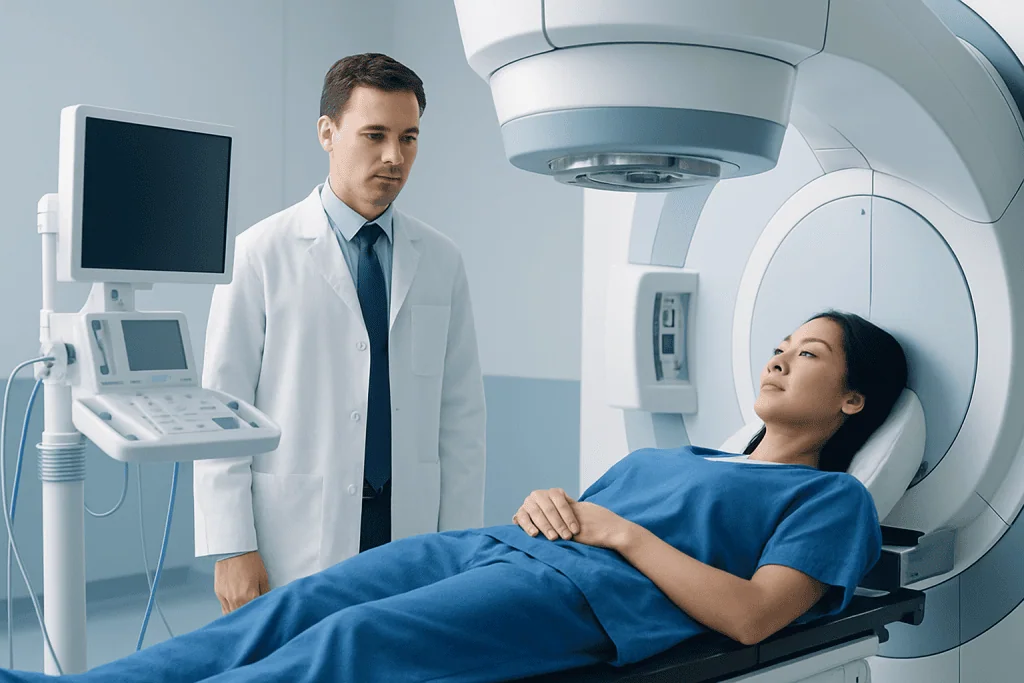
If surgery is recommended, preoperative testing is completed first. The operation is followed by a hospital stay and recovery period, with pathology results helping determine whether additional treatment is advised. If radiation is used, planning scans are performed to map the target precisely; treatment is commonly delivered in short daily sessions over a planned course.
For chemotherapy, immunotherapy or targeted therapy, treatment may be given by intravenous infusion at regular intervals or as tablets taken at home, depending on the medicine. Before each cycle or visit, clinicians usually review symptoms and may check blood counts and organ function. Scans are repeated at planned intervals to assess whether treatment is shrinking, stabilizing or no longer controlling the cancer.
Supportive care is part of first-line treatment from the beginning. It may include medicines for nausea, pain, cough or breathlessness; nutritional guidance; rehabilitation; smoking-cessation support; and emotional support. Palliative care can be provided alongside cancer-directed treatment to improve comfort and quality of life; it is not limited to end-of-life care.
Benefits, Risks and Recovery Timeline
The potential benefit of treatment depends on stage and tumor characteristics. In early-stage NSCLC, surgery and other curative-intent approaches aim to remove or eradicate the cancer. In metastatic NSCLC, systemic therapy may shrink tumors, slow progression, ease cancer-related symptoms and help people live longer with the disease, although it is not usually considered curative.
Side effects vary by treatment. Surgery may cause pain, fatigue, shortness of breath and temporary limits in activity. Radiation can cause tiredness, skin irritation, swallowing discomfort or inflammation in the lungs. Chemotherapy may cause fatigue, nausea, reduced blood counts, infection risk, nerve symptoms or other effects depending on the medicines used.
Immunotherapy can cause immune-related inflammation affecting organs such as the lungs, bowel, liver, skin, hormone glands or kidneys. Targeted therapies can also cause specific effects, including skin changes, diarrhea, fatigue, liver test abnormalities or lung inflammation. Early reporting allows the team to investigate symptoms and adjust treatment safely when needed.
Recovery is individual. After lung surgery, people often gradually increase walking and breathing exercises over several weeks, while complete recovery may take longer. During systemic treatment, energy levels can fluctuate from day to day. The care team can give realistic guidance based on the treatment type, side effects, work demands and home support.
How Long Does Lung Cancer Take From Stage 1 to 4?
There is no reliable fixed timeline for lung cancer to progress from stage 1 to stage 4. Growth and spread vary widely among tumors based on their subtype, genetic features, location, immune environment and other biological factors. Some cancers grow relatively slowly, while others can progress more quickly.
Stage is determined by the tumor’s size and local extension, lymph-node involvement, and whether it has spread to distant organs. A cancer may already be advanced when it is first found, even if symptoms have been mild or absent. This does not mean that anyone caused the progression or missed an obvious warning sign.
For this reason, clinicians use current imaging and pathology rather than estimates of how long a cancer has been present to make treatment decisions. Follow-up scans and clinical review are tailored to the individual situation. People with a new diagnosis should discuss their stage, expected next steps and the urgency of treatment with their oncology team.
What Is the Most Successful Treatment for Lung Cancer?
There is no single treatment that is most successful for every type and stage of lung cancer. For NSCLC detected at an early stage, complete surgical removal is often the main curative treatment when it can be performed safely. Depending on the pathology results and stage, chemotherapy, immunotherapy, targeted therapy and/or radiation may be added to lower the risk of recurrence.
For locally advanced or metastatic NSCLC, the most effective initial treatment is guided by the cancer’s features. Targeted therapy can be highly effective when an actionable biomarker is present. When there is no targetable alteration, immunotherapy alone or combined with chemotherapy may be appropriate for many people, selected according to PD-L1 level, cancer subtype, symptoms and overall health.
The best plan is therefore the one that matches the individual cancer and person. Seeking care at a center with thoracic surgery, medical oncology, radiation oncology, pathology, radiology and supportive-care expertise can help ensure that treatment options are reviewed together. Acibadem International’s multidisciplinary specialists and JCI-accredited hospitals diagnose and treat lung cancer for international patients.
How Many Rounds of Chemo Is Normal for Small Cell Lung Cancer?
Small cell lung cancer (SCLC) is different from NSCLC and is treated using different protocols. Chemotherapy is commonly given in cycles, meaning a treatment day or several treatment days followed by a rest period to allow the body to recover. For many people with SCLC, an initial course often consists of several cycles, frequently around four, but the exact number depends on the stage, regimen, response and tolerance.
In limited-stage SCLC, chemotherapy is often combined with chest radiation, sometimes during the same overall treatment period. In extensive-stage SCLC, chemotherapy may be combined with immunotherapy for suitable patients, followed by maintenance immunotherapy in some cases. A medical oncologist can explain the planned number of cycles and what would lead to a change in the plan.
It is important not to apply SCLC chemotherapy schedules directly to NSCLC. Although both begin in the lung, they differ in cell type, growth pattern, staging and treatment approach. Questions about a particular regimen should be discussed with the treating oncology team.
How Quickly Does Non-Small Cell Lung Cancer Spread?
NSCLC can spread at very different rates. Some tumors remain localized long enough to be detected and treated with curative intent, while others spread to lymph nodes or distant organs before diagnosis. Adenocarcinoma, squamous cell carcinoma and other NSCLC subtypes can behave differently, and the rate cannot be predicted accurately from symptoms alone.
Clinicians assess spread through staging tests rather than waiting to see how quickly the cancer changes. If the cancer is advanced, molecular and PD-L1 testing can help identify treatment options without unnecessary delay. The oncology team balances the need to start treatment promptly with the importance of having complete information to choose the right first-line therapy.
During treatment or active surveillance, new symptoms should be reported rather than waiting for the next routine appointment. Imaging intervals are individualized, and the care team will explain when follow-up scans are planned and what changes may require earlier evaluation.
When to Seek Medical Care
Anyone with a persistent or changing cough, coughing up blood, unexplained shortness of breath, chest discomfort, repeated chest infections, unexplained weight loss, lasting hoarseness or marked fatigue should arrange medical evaluation. These symptoms often have causes other than lung cancer, but they deserve assessment, especially in people with a smoking history or known exposure to substances such as radon or asbestos.
People who have been diagnosed with NSCLC should contact their treatment team promptly for fever, worsening breathlessness, chest pain, new confusion, severe headache, new weakness, uncontrolled vomiting, significant diarrhea, a widespread rash, jaundice or any sudden deterioration. These symptoms may be related to the cancer, treatment side effects, infection or another condition and should not be managed alone.
Emergency assessment is appropriate for severe difficulty breathing, coughing a large amount of blood, sudden severe chest pain, fainting, seizures or stroke-like symptoms. A qualified clinician can determine the cause and arrange urgent care where needed.
Frequently asked questions
What determines first line treatment for NSCLC?
The main factors are cancer stage, whether the tumor can be removed or treated with curative intent, tumor subtype, biomarker results, PD-L1 expression and overall health. The treatment team also considers symptoms, lung function, other medical conditions and the person's priorities. A personalized plan may include one treatment or a sequence of treatments.
Is biomarker testing necessary before treatment for NSCLC?
Biomarker testing is particularly important in advanced non-squamous NSCLC and is increasingly relevant in other settings. It can identify gene changes that may be treated with a targeted medicine. PD-L1 testing can also help determine whether immunotherapy may be suitable as part of initial treatment.
Can stage 4 NSCLC be cured?
Metastatic, or stage 4, NSCLC is generally not considered curable with current standard treatments. However, modern targeted therapies, immunotherapy, chemotherapy, radiation and supportive care can often control the cancer and symptoms for meaningful periods. Treatment goals and expected outcomes should be discussed individually with an oncology team.
How soon should treatment start after an NSCLC diagnosis?
Treatment should begin as soon as the necessary diagnostic, staging and treatment-planning information has been gathered. For many people, completing molecular and PD-L1 testing is important before choosing first-line systemic therapy. The care team will advise if symptoms or disease features require a more urgent approach.
Will first-line treatment always work?
Response differs from person to person and depends on the cancer stage, biology and treatment used. Some tumors shrink, some remain stable and some do not respond as hoped. Regular assessment helps the team decide whether to continue, modify or change treatment.
Can a person receive chemotherapy and immunotherapy together for NSCLC?
Yes, chemotherapy and immunotherapy are often used together as first-line treatment for selected people with advanced NSCLC, particularly when no actionable driver mutation is found. Whether this combination is appropriate depends on PD-L1 testing, tumor type, health status and potential risks. A medical oncologist can explain the expected benefits and side effects in the individual situation.
References
- National Cancer Institute
- American Cancer Society
- National Comprehensive Cancer Network
- American Society of Clinical Oncology
- World Health Organization
This article is for general information only and is not a substitute for professional medical advice. Please consult a qualified doctor about your individual situation.
Oncology care in Turkey — second opinion and treatment plan
JCI-accredited · board-certified surgeons · reply within 24h
Add us as a Preferred Source to see more of our trusted health content across Google Search, AI Overviews and Discover.
Check your numbers in seconds
BMI, calories, due date, blood pressure and 30+ more clinical calculators — free, instant, doctor-reviewed ranges.