Flat Feet in Children: When It Is Normal and When an Orthopedic Review Helps

Many children have flat feet as part of normal growth and do not need treatment. Flexible flat feet usually show an arch when the child stands on tiptoes or sits with the feet relaxed.
Key Takeaways
- Many children have flat feet as part of normal growth and do not need treatment.
- Flexible flat feet usually show an arch when the child stands on tiptoes or sits with the feet relaxed.
- Pain, stiffness, frequent tripping, or one foot looking different from the other should be assessed by a doctor.
- Evaluation focuses on symptoms, flexibility, walking pattern, and foot alignment rather than appearance alone.
- Supportive shoes, exercises, and orthotics may help some children, while surgery is reserved for selected cases.
Flat feet in children are common, especially in toddlers and young school-age children, and many cases improve naturally as the feet grow. An orthopedic review may help when flat feet are painful, stiff, one-sided, or affecting walking, activity, or shoe wear.
Overview: what flat feet mean in children
Flat feet in children means the arch on the inner side of the foot looks low or absent when the child is standing. In many children, this is a normal stage of development. The foot arch often becomes more visible with age as bones, muscles, ligaments, and soft tissues mature.
In early childhood, a flat appearance can also be caused by a natural pad of soft tissue under the arch area. This can make the foot look completely flat even when development is progressing normally. For this reason, the appearance of the foot alone does not always show whether there is a problem.
Doctors usually separate pediatric flat feet into two main types: flexible and rigid. Flexible flatfoot is much more common and is often harmless. In flexible flatfoot, the arch may appear when the child is sitting, standing on tiptoes, or when the foot is lifted off the ground. Rigid flatfoot is less common and may need closer assessment because the foot is stiff and the arch does not form with movement.
When flat feet are normal during growth
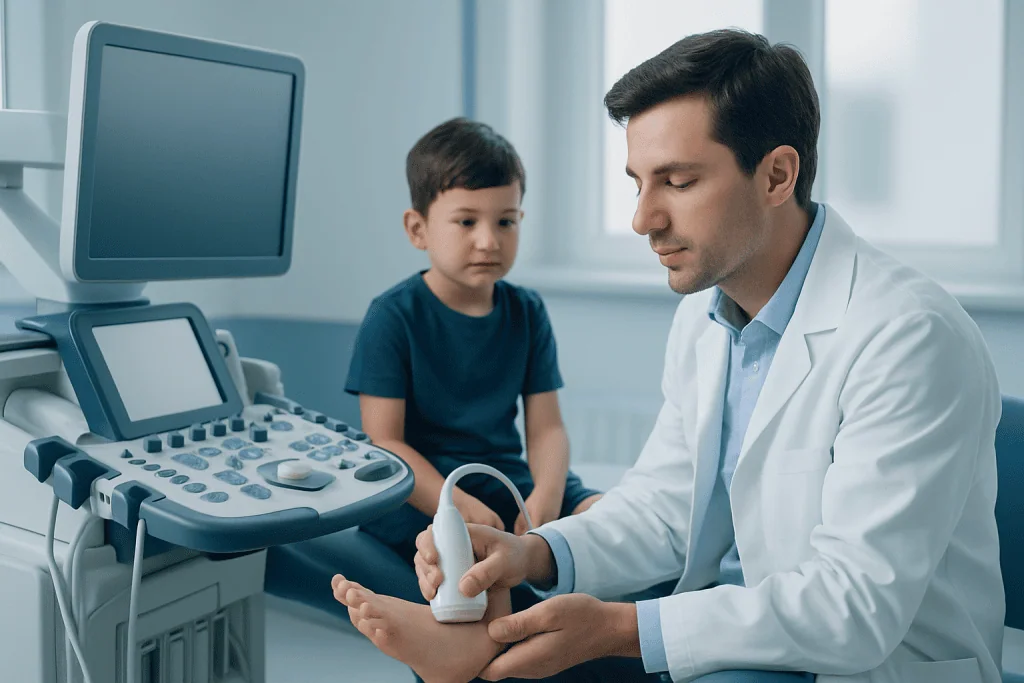
It is normal for many infants and toddlers to have flat-looking feet. At this age, the arch is still developing, and the ligaments are often naturally loose. As a child grows, the shape of the foot can change gradually over several years.
Many children with flexible flat feet have no pain, no limitation in play, and no trouble with shoes. They run, jump, and join sports without difficulty. In these cases, reassurance and simple observation are often all that is needed.
Parents sometimes notice that the inside of the shoe wears differently or that the ankles roll inward slightly. Mild inward rolling, also called overpronation, can be seen in healthy children and does not always mean disease. A doctor is more concerned when this comes with pain, fatigue, stiffness, or changes in activity.
Because children’s feet develop at different rates, there is no single age by which every child must have a visible arch. Follow-up is usually guided by symptoms and function rather than by appearance alone.
Symptoms and signs that may need an orthopedic review

Most flat feet in children do not cause problems. However, certain symptoms suggest that a medical review is helpful. Pain is one of the most important warning signs, especially pain in the arch, heel, ankle, or lower leg during walking, sports, or after activity.
Parents may also notice that the child tires quickly, avoids running, asks to be carried more than expected, or complains that shoes feel uncomfortable. Frequent tripping, changes in walking pattern, limping, or difficulty keeping up with other children can also deserve attention.
A doctor should also assess feet that are stiff rather than flexible. If the arch never appears, if the foot seems difficult to move, or if one foot looks flatter than the other, this may point to a condition that needs further evaluation. Swelling, redness, or sudden change in the foot shape should not be ignored.
- Pain during activity or after exercise
- Foot or ankle stiffness
- Frequent tripping or altered walking
- Uneven feet or one-sided flattening
- Difficulty with sports, play, or shoe fit
- Persistent concern despite growth and observation
Causes and risk factors
The most common cause of flat feet in children is normal flexible flatfoot related to growth and ligament laxity. This type often runs in families. Children with naturally looser joints elsewhere in the body may also have flatter feet without this meaning there is a serious problem.
Less commonly, flat feet can be associated with tight heel cords, also called Achilles tendon tightness. When the calf muscles and heel cord are tight, the foot may compensate by rolling inward more, which can increase strain and symptoms. In some children, this contributes to fatigue or pain.
Rigid flatfoot can be linked to structural causes. These may include abnormal connections between foot bones, certain neurologic or muscular disorders, inflammatory conditions, or previous injury. A doctor may consider these possibilities when the foot is stiff, painful, or different on one side.
Children who are overweight may place more load on the feet and may have more symptoms, although extra weight alone does not explain every case. Rarely, flat feet may appear together with other lower-limb alignment concerns such as intoeing, knock knees, or scoliosis, which may lead to a broader musculoskeletal assessment if clinically relevant.
How doctors diagnose pediatric flat feet
Diagnosis starts with a medical history and physical examination. The doctor asks when the flat feet were first noticed, whether there is pain, how the child walks, what activities are affected, and whether there is a family history. The aim is to understand both foot shape and day-to-day function.
During the examination, the doctor watches the child stand, walk, and sometimes run or rise on tiptoes. This helps show whether the flatfoot is flexible. The doctor also checks ankle movement, heel cord tightness, joint flexibility, and whether one foot differs from the other. Shoe wear patterns may provide additional clues.
Many children do not need imaging. X-rays may be considered if the foot is painful, rigid, asymmetric, or if surgery is being discussed. In selected cases, further tests may be used to look for underlying bone or soft tissue causes. If the child has broader orthopedic concerns, the care plan may involve a pediatric orthopedics and traumatology team.
The most important point is that diagnosis is based on symptoms and examination findings, not only on how flat the foot looks in a photo or footprint.
Treatment options and when treatment is needed
Treatment depends on whether the child has symptoms and on the type of flatfoot. Children with flexible, painless flat feet often do not need any treatment at all. In these cases, regular observation, supportive footwear, and reassurance are appropriate.
If symptoms are present, conservative measures are usually tried first. These may include well-fitting shoes with good support, activity modification for short periods during painful flares, stretching for a tight heel cord, and exercises to support foot and ankle strength. Some children benefit from shoe inserts or orthotics, mainly to improve comfort rather than to permanently reshape the foot.
Physical therapy can be helpful when there is pain, tightness, poor balance, or altered gait. In more complex situations, doctors may assess whether other treatments are relevant, including physical therapy and rehabilitation support. A child with persistent symptoms related to heel-cord tightness may also need assessment for associated Achilles tendon problems or similar overuse issues, depending on age and activity level.
Surgery is uncommon and is usually reserved for selected children with persistent pain, rigid deformity, or structural abnormalities that do not improve with nonsurgical care. When surgery is considered, the decision is individualized and based on function, severity, age, and the exact underlying cause. In a small number of severe cases, pediatric orthopedics evaluation may include discussion of corrective procedures.
Prevention, self-care, and daily support
Because many cases of flat feet in children are a normal variation, there is no guaranteed way to prevent them. Still, simple habits can support comfort and healthy movement. Shoes should fit properly, allow natural toe movement, and provide stable support for active play.
Parents can encourage regular physical activity, stretching when advised, and healthy weight habits. Barefoot play on safe indoor or natural surfaces may help normal foot muscle use in some children, although it does not create an arch in every case. The main goal is comfort and normal activity, not forcing a certain foot shape.
It is usually not necessary to buy special shoes for every child with flat feet. Expensive devices are not always better, and treatment should match symptoms. If inserts are recommended, they should be chosen with professional guidance so the child remains comfortable and active.
Near the end of the care journey, families who need specialist assessment may wish to know that Acibadem International’s multidisciplinary specialists in JCI-accredited hospitals diagnose and treat orthopedic conditions in children and international patients. The focus remains on careful evaluation and age-appropriate care.
When to see a doctor
Parents should consider medical review if a child with flat feet has pain, stiffness, limping, reduced endurance, or difficulty taking part in normal play and sports. A review is also sensible if shoe wear is very uneven, if the child trips often, or if there is concern about worsening alignment over time.
An appointment is especially important when the feet are rigid, when the arch never appears even off the ground or on tiptoes, or when only one foot seems affected. Swelling, redness, fever, sudden onset of symptoms, or a history of injury should be assessed promptly.
Even when the cause is likely to be harmless flexible flatfoot, a professional opinion can reassure families and help avoid unnecessary treatments. A pediatrician, family doctor, or orthopedic specialist can advise whether observation is enough or whether further tests and support are needed.
Frequently asked questions
At what age are flat feet normal in children?
Flat-looking feet are very common in infants, toddlers, and young children. The arch often becomes more visible gradually as the child grows, so a flat appearance alone is not usually a cause for concern.
How can parents tell if a child's flat feet are flexible or rigid?
In flexible flatfoot, the arch may appear when the child sits, stands on tiptoes, or when the foot is lifted. In rigid flatfoot, the foot stays flat and may seem stiff or difficult to move, which should be assessed by a doctor.
Do flat feet in children always need treatment?
No. Many children with flexible flat feet have no pain or activity limits and do not need treatment. Care is usually recommended when symptoms such as pain, fatigue, stiffness, or walking difficulty are present.
Can special shoes or orthotics cure flat feet in children?
Orthotics and supportive shoes may improve comfort and reduce strain, but they do not reliably create a permanent arch in every child. Their main role is symptom relief and support during growth.
When should a child with flat feet see an orthopedic specialist?
An orthopedic review is helpful if the child has pain, stiffness, limping, reduced participation in activities, or one foot looks different from the other. It is also important if the foot seems rigid or the shape changes suddenly.
Can flat feet affect sports and walking?
Many children with flat feet walk and play sports normally. If flat feet are causing discomfort, fatigue, poor balance, or changes in gait, assessment can help identify supportive treatments.
References
- American Academy of Orthopaedic Surgeons
- American Academy of Pediatrics
- OrthoInfo
- National Institute of Arthritis and Musculoskeletal and Skin Diseases
- NHS
This article is for general information only and is not a substitute for professional medical advice. Please consult a qualified doctor about your individual situation.
Joint and spine care in Turkey — expert assessment & treatment
JCI-accredited · board-certified surgeons · reply within 24h
Add us as a Preferred Source to see more of our trusted health content across Google Search, AI Overviews and Discover.