Foam Rollers for Fascia Release: An Evidence-Based Patient Guide

Foam rolling can provide short-term improvements in flexibility and post-exercise comfort for many people. The effects are thought to involve the nervous system, circulation, and tolerance to pressure rather than physically breaking up fascia.
Key Takeaways
- Foam rolling can provide short-term improvements in flexibility and post-exercise comfort for many people.
- The effects are thought to involve the nervous system, circulation, and tolerance to pressure rather than physically breaking up fascia.
- Gentle, controlled pressure is preferable to intense pain; bruising, numbness, or worsening symptoms are signs to stop.
- People with certain medical conditions, recent injuries, circulation concerns, or blood-thinning treatment should seek clinical advice before foam rolling.
- Persistent, severe, unexplained, or neurologic symptoms need medical assessment rather than continued self-treatment.
Foam rollers for fascia release are a form of self-myofascial release that may temporarily ease muscle tightness, improve range of motion, and reduce soreness after activity. They do not “break up” fascia or replace assessment and treatment for persistent pain, injury, or a medical condition.
Overview: What Foam Rollers for Fascia Release Can and Cannot Do
Foam rollers for fascia release can be used as a self-care technique to apply steady pressure to muscles and the connective tissue around them. Research suggests that foam rolling may produce small, short-term improvements in joint range of motion and may lessen the feeling of delayed muscle soreness after exercise. It can be a useful addition to a warm-up, cool-down, or rehabilitation plan when used appropriately.
Fascia is a continuous layer of connective tissue that surrounds and supports muscles, nerves, blood vessels, and organs. Although foam rolling is often described as “releasing” or “breaking up” fascia, this is an oversimplification. A roller is unlikely to physically reshape dense connective tissue. Its benefits are more likely related to temporary changes in nervous-system signaling, blood flow, muscle tone, and a person’s tolerance to pressure and movement.
Foam rolling is not a cure for the cause of ongoing pain. It should not be used to push through a suspected injury, joint instability, significant swelling, or unexplained symptoms. When discomfort continues despite sensible self-care, an assessment by a physiotherapist, sports medicine clinician, or orthopedic specialist can help identify the most appropriate next step.
How Foam Rolling Works and Who May Benefit
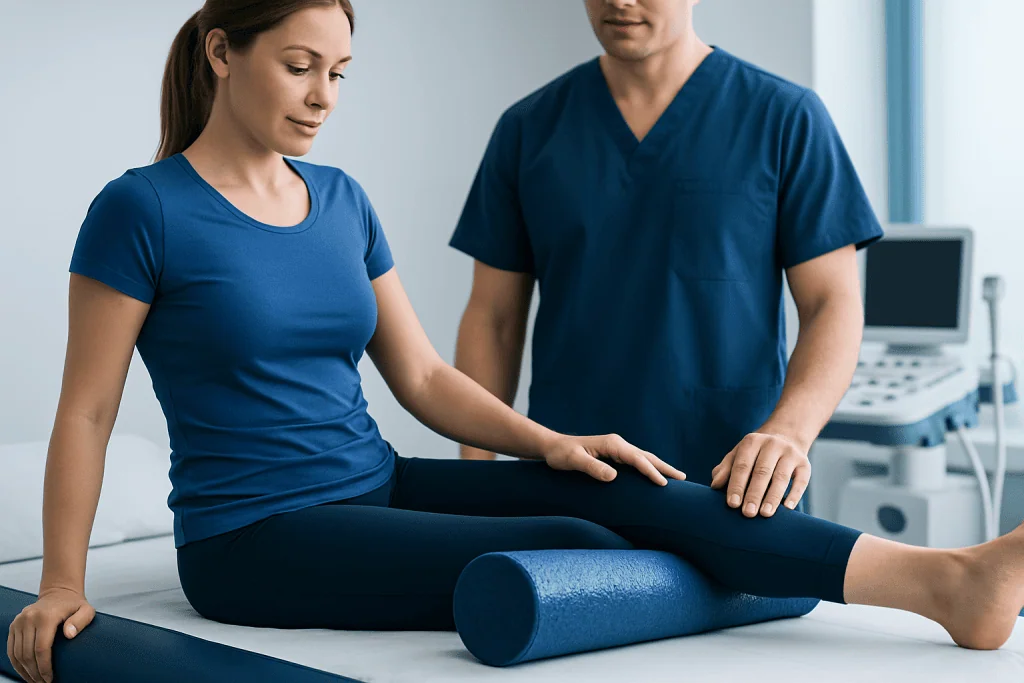
Self-myofascial release involves using body weight against a foam roller, ball, or similar tool. The pressure stimulates sensory receptors in skin, muscle, and connective tissue. This may reduce the nervous system’s protective sense of tightness for a period of time, making movement feel easier. The effect varies between individuals and is usually temporary, so it is most helpful when paired with strengthening, mobility work, gradual activity progression, and recovery habits.
Healthy adults who have mild exercise-related muscle tightness or soreness may find foam rolling helpful. It is commonly used on large muscle groups such as the calves, thighs, buttocks, upper back, and muscles around the shoulder blade. People returning to exercise, recreational athletes, and those with sedentary routines may also use it as a gentle movement-preparation tool.
Foam rolling is not necessary for everyone. A person who finds it uncomfortable, anxiety-provoking, or unhelpful does not need to continue it. Other options, including guided mobility exercises, progressive strengthening, manual therapy when indicated, and a personalized physical therapy program may be more suitable for ongoing musculoskeletal concerns.
- Choose a softer roller initially, especially for sensitive areas or beginners.
- Use body weight gradually and support part of the weight with the hands or opposite leg when needed.
- Target muscles rather than rolling directly over joints, bones, the front of the neck, or the lower back.
A Safe Step-by-Step Foam Rolling Routine

Before starting, choose a clear floor area and wear comfortable clothing. A firmer roller provides more pressure, but a softer roller is often a better starting point. Mild to moderate pressure may be useful; sharp, burning, electric, or escalating pain is not a goal and should prompt a person to stop.
Begin by placing the roller beneath a broad muscle area, such as the calf or back of the thigh. Use the arms and legs to control how much body weight rests on the roller. Move slowly over a short section of muscle, rather than rapidly rolling across a large area. If a tender spot is found, a person can pause briefly and breathe normally, then continue gently or move away if pain increases.
A practical approach is to spend approximately 30 to 60 seconds on one muscle area, then reassess comfort and movement. Areas can be repeated once or twice if they remain comfortable. Foam rolling may be used before exercise to support mobility, after activity for comfort, or on rest days as part of a brief routine. Stretching or active movement afterward can help a person use any temporary improvement in range of motion.
It is generally best to avoid direct pressure over the knee, ankle, hip, shoulder, spine, bruises, open skin, varicose veins, and bony prominences. Rolling the outer thigh may be particularly uncomfortable because the iliotibial band is a firm connective-tissue structure; focusing on nearby hip and thigh muscles is usually more tolerable than repeatedly applying intense pressure directly to it.
Can I Use a Foam Roller for Fascia Release?
Yes. Many people can use a foam roller for fascia release, more accurately called self-myofascial release, as a gentle technique for temporary muscle tightness, stiffness, or post-exercise soreness. It is most useful as one part of an overall activity or rehabilitation plan rather than as a stand-alone solution.
The aim should be comfortable pressure and improved movement, not intense pain. A person may notice that an area feels less restricted immediately afterward, but this does not necessarily mean that fascia has been physically altered. Regular exercise, adequate recovery, and targeted strengthening are more important for long-term function.
People with a recent injury, persistent pain, previous surgery, a diagnosed musculoskeletal condition, or uncertainty about the source of symptoms should ask a qualified clinician before beginning. For example, ongoing back, hip, knee, or shoulder symptoms may benefit from assessment for an underlying problem such as osteoarthritis or a soft-tissue injury rather than repeated self-treatment.
Can You Overdo Myofascial Release?
Yes. Myofascial release can be overdone when pressure is excessive, sessions are too long, or painful areas are treated repeatedly without allowing symptoms to settle. More pressure does not reliably produce better results. Aggressive rolling can cause temporary bruising, skin irritation, increased tenderness, or a flare of pain.
A useful guide is to keep discomfort manageable and short-lived. Symptoms should not become sharper during the session, cause limping or altered movement, or remain substantially worse the next day. Numbness, tingling, weakness, dizziness, marked swelling, or unusual color changes are not expected responses and require stopping the activity.
If a person feels they need to roll the same painful spot every day to function, the issue deserves assessment. Recurrent pain may reflect training load, muscle weakness, movement habits, joint disease, nerve irritation, or another condition that a clinician can evaluate. A rehabilitation professional can advise whether hands-on techniques, exercise therapy, or other care is appropriate.
How Long to Foam Roll for Fascia Release?
For most people, short sessions are sufficient. Spending about 30 to 60 seconds on a muscle group, with slow controlled passes, is a reasonable starting point. A total routine may take five to 10 minutes, depending on the number of areas being treated and a person’s comfort level.
There is no established need to roll one area for several minutes or to continue until it feels numb. If an area remains highly painful, it is safer to reduce pressure, choose a softer tool, work on surrounding muscles, or stop. Foam rolling can be performed several times a week and, for some people, daily in brief gentle sessions, provided it does not create lingering soreness or worsen symptoms.
After rolling, light walking, controlled joint movements, or prescribed exercises may help maintain comfortable mobility. For those recovering from an injury or managing a chronic musculoskeletal concern, the timing and amount of foam rolling should fit within an individualized rehabilitation plan rather than follow a fixed schedule.
Which Medical Conditions Should Foam Rolling Be Avoided?
Foam rolling should be avoided directly over an acute injury, suspected fracture, open wound, active skin infection, fresh bruise, or area of significant swelling. It should also not be used over a known or suspected blood clot, including a painful, warm, swollen leg, because pressure and exercise could be unsafe until urgent medical evaluation has taken place.
People with bleeding disorders, low platelet counts, easy bruising, or treatment with anticoagulant or antiplatelet medicines should ask their doctor before using firm pressure. Clinical advice is also important for people with severe osteoporosis, reduced sensation due to diabetes or neuropathy, peripheral artery disease, active cancer treatment, recent surgery, or a history of deep vein thrombosis.
Foam rolling near a painful spine, a joint that feels unstable, or an area with radiating pain, weakness, or numbness should be avoided until evaluated. People who have been advised to limit activity after surgery or injury should follow their care team’s recommendations. In these circumstances, guided rehabilitation is safer than trying to treat the area independently.
Benefits, Risks, Recovery and When to Seek Medical Care
Potential benefits of foam rolling include a temporary increase in flexibility, reduced perceived muscle soreness after strenuous exercise, and a sense of relaxation. Results are individual and should be judged by whether the person can move more comfortably and return to appropriate activity, not by how painful the pressure feels.
There is no formal recovery period after a gentle session. Mild local tenderness may occur, particularly when beginning or after a new activity, and should settle within a day or two. Drinking fluids, sleeping well, eating adequately, and gradually increasing exercise are sensible ways to support recovery. If soreness is persistent or increasing, taking a break and seeking advice is appropriate.
When to seek medical care: A person should arrange medical assessment for pain that is severe, follows a fall or injury, lasts more than a few weeks, repeatedly limits daily activity, or is associated with joint swelling. Urgent care is needed for a hot, red, markedly swollen limb; sudden shortness of breath or chest pain; loss of strength; new bowel or bladder changes; or numbness in the saddle area.
Acibadem International’s multidisciplinary specialists and JCI-accredited hospitals can assess persistent musculoskeletal symptoms and provide individualized rehabilitation for international patients. A clinician can help determine whether foam rolling is suitable and whether further evaluation or treatment is needed.
Frequently asked questions
Does foam rolling actually release fascia?
Foam rolling is unlikely to physically break apart or permanently release fascia. It may temporarily change how tight an area feels by influencing the nervous system, muscle tone, circulation, and tolerance to pressure. These short-term effects can support comfortable movement and exercise.
Should foam rolling hurt?
Foam rolling may feel mildly uncomfortable over a tender muscle, but it should not be sharply painful. Burning, electric pain, numbness, tingling, or pain that makes normal breathing difficult are signals to stop. Reducing body weight on the roller or using a softer tool can make the technique more comfortable.
Is foam rolling better before or after exercise?
Foam rolling before exercise may temporarily improve range of motion and can be followed by active warm-up movements. After exercise, some people use it to help manage perceived muscle soreness. The best timing is the one that feels comfortable and supports the person’s planned activity.
Can foam rolling help back pain?
Foam rolling nearby muscles, such as the buttocks, upper back, or hips, may help some people feel less stiff. However, it is usually best not to roll directly on the lower back or spine. Persistent back pain, leg symptoms, weakness, or numbness should be assessed by a healthcare professional.
Can I foam roll every day?
Brief, gentle foam rolling may be acceptable daily for many healthy people if it does not cause ongoing tenderness, bruising, or worsening symptoms. Sessions do not need to be long, and rest is appropriate when muscles are sore. People with medical conditions or a recent injury should seek individualized advice.
What type of foam roller should a beginner choose?
A smooth, softer roller is often the most comfortable choice for beginners. Firm, textured, or vibrating rollers can create more intense pressure but are not proven to be necessary for benefit. A person should choose the tool that allows controlled, tolerable pressure.
References
- American College of Sports Medicine
- National Academy of Sports Medicine
- National Institute of Arthritis and Musculoskeletal and Skin Diseases
- Cleveland Clinic
- Hospital for Special Surgery
This article is for general information only and is not a substitute for professional medical advice. Please consult a qualified doctor about your individual situation.
Joint and spine care in Turkey — expert assessment & treatment
JCI-accredited · board-certified surgeons · reply within 24h
Add us as a Preferred Source to see more of our trusted health content across Google Search, AI Overviews and Discover.