Fractured Neck Brace: An Evidence-Based Patient Guide

A suspected neck fracture is an emergency until assessed by trained clinicians and imaging confirms the injury. A cervical collar supports the neck by limiting motion; it does not repair the bone by itself.
Key Takeaways
- A suspected neck fracture is an emergency until assessed by trained clinicians and imaging confirms the injury.
- A cervical collar supports the neck by limiting motion; it does not repair the bone by itself.
- Brace type, fit, and duration depend on the fracture location, stability, alignment, age, bone health, and neurological findings.
- Skin care, correct fitting, follow-up imaging, and a gradual rehabilitation plan help reduce complications during recovery.
- New weakness, numbness, breathing or swallowing problems, increasing pain, or loss of bladder or bowel control requires urgent medical attention.
A fractured neck brace is a medical device used to limit neck movement and support healing after selected cervical spine fractures. It is only appropriate after urgent assessment and imaging, because some neck fractures require a rigid brace, surgery, closer monitoring, or different stabilization.
Overview: what is a fractured neck brace?
A fractured neck brace, also called a cervical collar or neck brace, is used to keep the cervical spine as still and well aligned as possible after certain neck fractures. It can reduce painful movement and protect healing structures while clinicians monitor the injury. However, a brace is not suitable for every fracture: unstable fractures, spinal cord compression, major displacement, or some ligament injuries may need surgery or more rigid external stabilization.
Any suspected cervical spine injury should be treated as urgent. After a fall, road traffic collision, sports injury, or other trauma, the person should avoid moving the neck and should not try to put on or remove a collar without medical guidance. Emergency teams assess airway, breathing, circulation, sensation, strength, and circulation to the limbs before arranging imaging.
The term “fractured neck” can describe injuries to any of the seven neck vertebrae. The outlook varies widely, from a small stable bone fracture to a complex injury involving ligaments, nerves, or the spinal cord. Care is therefore individualized by emergency, spine, orthopedic, and neurosurgical teams.
How a fracture neck brace works and who may need one
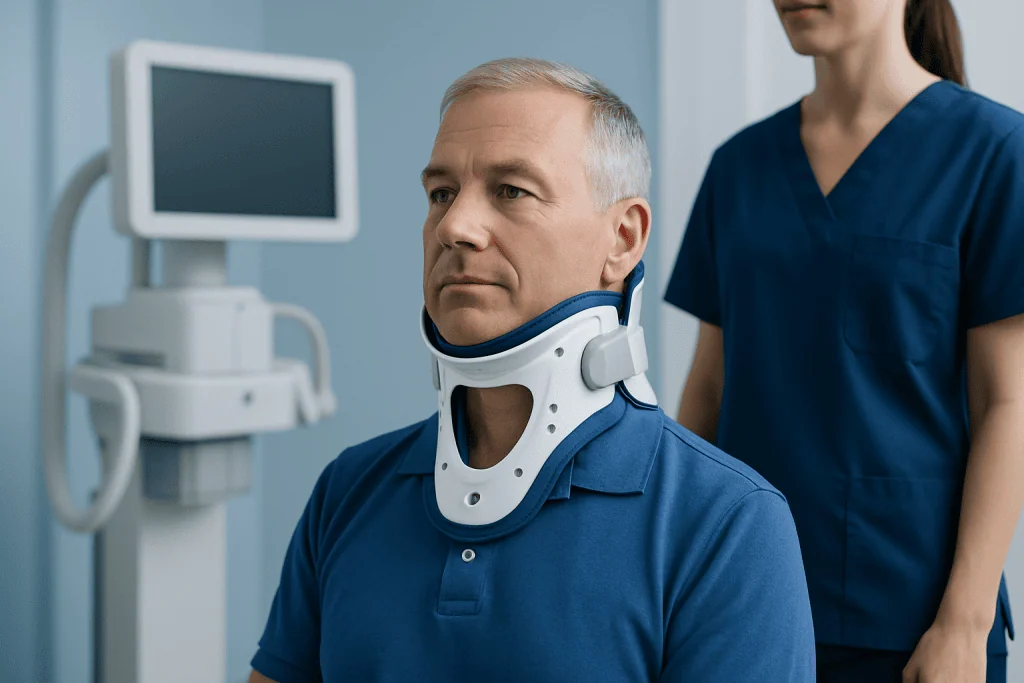
A collar works by limiting bending, turning, and extension of the neck. A soft collar provides relatively little restriction and is generally not used as definitive treatment for a confirmed fracture. A rigid collar, commonly made from molded plastic with padded supports, provides more control and may be prescribed for a stable fracture. Some complex injuries require a halo device or surgical fixation instead.
Candidacy is based on detailed review of CT scans and, when needed, MRI scans. Clinicians consider the fracture pattern, whether the bones remain aligned, ligament injury, pain level, neurological examination, ability to follow brace instructions, skin condition, and other health needs. Older adults and people with osteoporosis may require especially careful review because fractures can be unstable even after a seemingly minor fall.
A thorough fracture neurovascular assessment checks muscle strength, sensation, reflexes, pulses, skin color and temperature, as well as symptoms such as tingling or weakness. In suspected fractured neck neurotrauma, clinicians also assess alertness, breathing, swallowing, and signs of spinal cord involvement. These checks are repeated because symptoms can evolve after the initial injury.
Fitting and use: what happens during brace treatment

Once imaging confirms that brace treatment is appropriate, a trained clinician selects the correct collar design and size. The brace should support the jaw and the back of the head without forcing the neck into an uncomfortable position. It should be snug enough to limit movement but not so tight that it causes pain, breathing difficulty, pressure injury, or swallowing problems.
Patients and caregivers are shown how to put the brace on, remove it only if permitted, and clean both the skin and the removable pads. The head and neck should remain aligned during any authorized collar change. It is important not to modify the brace, add padding, loosen it for comfort, or replace it with an over-the-counter collar unless the treating team agrees.
Follow-up appointments commonly include repeat examination and imaging to check healing and alignment. If imaging shows inadequate healing or movement of the fracture, the care plan may change. Selected patients may need specialist spine procedures, including spine surgery, to stabilize the injured area.
- Wear the brace exactly as directed, including during rest if instructed.
- Keep the skin dry and inspect pressure points daily with assistance if needed.
- Use safe techniques for washing, dressing, and transfers, as demonstrated by the care team.
- Attend all scheduled imaging and clinical reviews, even if pain has improved.
How long do you have to wear a neck brace for a fractured neck?
The duration of a fractured neck brace varies because healing depends on the exact bone injured, fracture stability, alignment, bone quality, and follow-up scan findings. Many stable fractures are treated with a rigid collar for several weeks, while some need longer protection or a different form of stabilization. Only the treating spine specialist can say when it is safe to reduce or stop brace use.
Stopping early can allow painful movement or loss of alignment, while wearing a collar longer than necessary can contribute to stiffness, muscle weakness, skin problems, and reduced confidence with movement. For this reason, clinicians usually make decisions after reviewing symptoms, physical findings, and repeat X-rays or CT imaging rather than relying on a fixed calendar date.
When immobilization ends, the neck may feel stiff and weak. A carefully planned fractured neck rehab program may include gentle range-of-motion work, posture training, balance exercises, and gradual strengthening. Exercises should begin only when approved, because forceful stretching or manipulation too soon could be unsafe.
Can I sleep on my side while wearing a neck brace?
Whether a person can sleep on their side while wearing a neck brace depends on the fracture, brace design, and instructions from the treating team. In general, the aim is to keep the head and neck in a neutral, supported position without twisting. Many people find sleeping on the back easier initially, but a clinician may allow side sleeping when the collar remains correctly positioned and the neck stays aligned.
A firm, supportive mattress and carefully placed pillows can help prevent the head from tilting. Pillows should not push the chin toward the chest or allow the head to fall sideways. Some patients need assistance with turning in bed, especially early in recovery, to avoid rotating the neck.
The brace should not be removed overnight unless the medical team has clearly said it is safe. If sleeping causes increasing neck pain, pressure areas, numbness, breathing difficulty, or the collar repeatedly shifts, the patient should contact the care team for advice rather than trying to adjust the treatment plan alone.
What are the risks of using a neck brace?
The benefits of a properly prescribed fracture neck brace include reduced movement at the injured segment, improved comfort, and support while a stable fracture heals. Still, collars can cause complications, particularly when used for prolonged periods or when fitting and skin care are poor. Common concerns include pressure sores, skin irritation, sweating, stiffness, reduced neck muscle strength, and difficulty with daily activities.
Some people experience swallowing discomfort, reduced appetite, jaw discomfort, or sleep disturbance. A tight or poorly fitted collar can worsen these problems and may interfere with breathing. Older adults, people with fragile skin, reduced sensation, swallowing conditions, or cognitive impairment may need additional support and more frequent skin checks.
Risks are reduced by correct fitting, regular reassessment, cleaning of pads, prompt reporting of discomfort, and avoiding unauthorized changes. A collar should never be used to self-treat persistent neck pain after trauma. Imaging and clinical assessment are needed to rule out a fracture or other important injury.
Recovery, self-care and when to seek medical care
Recovery involves more than wearing the collar. Patients may need help with washing, dressing, driving restrictions, work adjustments, and safe mobility. Alcohol and activities that increase fall risk should be avoided during recovery. Smoking cessation, adequate protein and calcium intake, vitamin D assessment when appropriate, and management of osteoporosis can support bone health, although supplements should be individualized with a clinician.
Urgent medical care is needed after any new neck trauma or if there is worsening neck pain, new arm or leg weakness, numbness, loss of coordination, severe headache, fainting, difficulty walking, breathing or swallowing problems, fever with worsening pain, or new loss of bladder or bowel control. These symptoms may indicate a complication that needs prompt assessment.
After emergency evaluation, ongoing care may involve spine specialists, rehabilitation physicians, physiotherapists, occupational therapists, and pain clinicians. Acibadem International’s multidisciplinary specialists and JCI-accredited hospitals diagnose and treat cervical spine injuries for international patients, with follow-up plans tailored to the injury and recovery needs.
Frequently asked questions
What type of neck brace is used for a fractured neck?
A rigid cervical collar is commonly used for selected stable cervical fractures. More unstable injuries may require a halo device or surgical stabilization instead. The correct option is determined by imaging and a spine specialist’s assessment.
Can a neck fracture heal with a brace alone?
Some stable, well-aligned neck fractures can heal with a properly fitted rigid collar and close follow-up. Others are not safe to manage this way because of displacement, instability, ligament damage, or pressure on neurological structures. Repeat imaging helps confirm that healing is progressing safely.
Should a neck brace be worn all the time after a fracture?
Many patients are instructed to wear their brace continuously at first, including while sleeping, but the instructions differ by injury and device. It should only be removed for skin care, washing, or other reasons when the treating team has explained how to do this safely. Patients should not make changes based solely on comfort or improving pain.
Can I drive while wearing a fractured neck brace?
Driving is usually not safe while wearing a rigid neck brace because head turning, vision, and emergency reactions may be limited. Pain medicines can also affect alertness. A clinician should confirm when driving can safely resume.
What should I do if the collar causes a sore or rash?
Skin redness, pain, blisters, broken skin, or persistent moisture under the brace should be reported promptly to the treating team. The collar may need adjustment, padding changes, or a skin-care plan. Do not stop wearing it or alter its fit without professional advice unless there is an immediate breathing emergency.
When can rehabilitation start after a neck fracture?
Rehabilitation starts at different times depending on fracture stability and the treatment plan. Early care may focus on safe movement, walking, and protecting the neck, while neck mobility and strengthening are often delayed until healing is confirmed. A physiotherapist should guide progression to avoid stressing the fracture too soon.
References
- American Academy of Orthopaedic Surgeons
- American Association of Neurological Surgeons
- National Institute of Neurological Disorders and Stroke
- NHS
- AO Spine
This article is for general information only and is not a substitute for professional medical advice. Please consult a qualified doctor about your individual situation.
Joint and spine care in Turkey — expert assessment & treatment
JCI-accredited · board-certified surgeons · reply within 24h
Add us as a Preferred Source to see more of our trusted health content across Google Search, AI Overviews and Discover.