Functional Neurological Symptoms: When Stress Is Not the Whole Story

Functional neurological symptoms are real and involuntary, not imagined or intentionally produced. Symptoms may affect movement, sensation, speech, vision, or episodes that resemble seizures.
Key Takeaways
- Functional neurological symptoms are real and involuntary, not imagined or intentionally produced.
- Symptoms may affect movement, sensation, speech, vision, or episodes that resemble seizures.
- Stress can play a role for some people, but it is not the whole story and is not present in every case.
- Diagnosis is based on positive clinical signs and appropriate tests to rule out other conditions when needed.
- Treatment often combines education, physiotherapy, psychological support, and management of related symptoms.
- Early, supportive care can improve function and quality of life.
Functional neurological symptoms are genuine problems with movement, sensation, speech, or awareness caused by changes in how the nervous system functions rather than by visible structural injury alone. They can be distressing, but with a careful diagnosis, clear explanation, and tailored treatment, many people improve.
Overview
Functional neurological symptoms are symptoms that arise from a problem in how the brain and nervous system are working, rather than from a structural disease that fully explains them. This group of symptoms is often called functional neurological disorder, or FND. People may experience weakness, tremor, walking difficulty, numbness, speech changes, vision problems, or episodes that look similar to seizures.
These symptoms are real, common, and can be disabling. They are not “put on,” and they are not simply a sign that someone is seeking attention. A person with functional neurological symptoms may look well one moment and struggle the next, which can be confusing for families and sometimes even for healthcare professionals unfamiliar with the condition.
Modern medicine understands FND as a disorder of nervous system functioning. In simple terms, the brain has trouble sending, receiving, or controlling signals in the usual way. This can lead to symptoms even when scans or routine tests do not show the type of structural damage seen in disorders such as stroke, multiple sclerosis, or Parkinson’s disease.
Because the symptoms affect both the brain and the person’s daily life, care often involves more than one specialty. A clear explanation of the diagnosis is an important first step, because understanding that the symptoms are genuine and potentially treatable can help reduce fear and support recovery.
Symptoms
Functional neurological symptoms can vary widely from one person to another. Some people have a single symptom, while others have several symptoms at the same time. Symptoms may come on suddenly, develop gradually, or fluctuate from day to day.
Common movement-related symptoms include weakness in an arm or leg, a dragging gait, tremor, jerking movements, muscle spasms, or difficulty with balance. Some people notice that symptoms worsen when they are tired, under pressure, or focusing hard on the affected body part. Others develop speech changes such as a whispering voice, slurred speech, or trouble getting words out.
Sensory symptoms can include numbness, tingling, unusual heaviness, altered vision, hearing changes, or a feeling that part of the body does not belong to them. Some people have episodes of unresponsiveness or shaking known as functional seizures, also called dissociative seizures or nonepileptic seizures. These episodes can look alarming but are different from epileptic seizures in their cause and treatment.
- Weakness or paralysis
- Tremor, jerks, or abnormal movements
- Walking or balance problems
- Numbness or altered sensation
- Speech or swallowing difficulty
- Episodes resembling seizures or fainting
- Fatigue, pain, or “brain fog” alongside neurological symptoms
Many people with FND also live with pain, migraine, fatigue, anxiety, low mood, poor sleep, or problems with concentration. These associated symptoms do not mean the neurological symptoms are “just psychological.” Instead, they often form part of the overall picture and may need attention during treatment.
Causes and risk factors

There is rarely one single cause of functional neurological symptoms. Instead, they are usually understood as developing from a combination of biological, psychological, and social factors. This means the nervous system may become more vulnerable, then a trigger or stressor leads symptoms to appear or persist.
Stress is one possible factor, but it is not the whole story. Some people clearly notice symptoms after a period of emotional stress, trauma, conflict, burnout, or loss. Others develop symptoms after a physical event such as an injury, illness, panic attack, migraine, surgery, or a fainting episode. And some people cannot identify any obvious trigger at all.
Researchers believe that attention, expectation, the brain’s threat systems, and altered movement control may all play a part. In some people, the brain may become “stuck” in a pattern that produces symptoms automatically. This helps explain why symptoms are involuntary even though routine tests may be normal.
Risk factors can include previous neurological illness, chronic pain, fatigue syndromes, anxiety or depression, trauma history, poor sleep, and ongoing life stress. However, not everyone with these factors develops FND, and not everyone with FND has a mental health diagnosis. The condition should be approached without blame, because symptoms are not a sign of weakness or a lack of effort.
How diagnosis is made
Diagnosis begins with a detailed history and neurological examination. A clinician will ask what the symptoms feel like, when they started, whether they fluctuate, and how they affect everyday life. They will also review medical history, medicines, sleep, mood, pain, and any recent physical or emotional stresses.
Importantly, FND is not just diagnosed by saying that tests are normal. Doctors look for positive clinical signs that support the diagnosis. For example, a person may show weakness during one part of the exam but normal power during another movement, or a tremor may change when attention is diverted. These patterns can help distinguish FND from other neurological disorders.
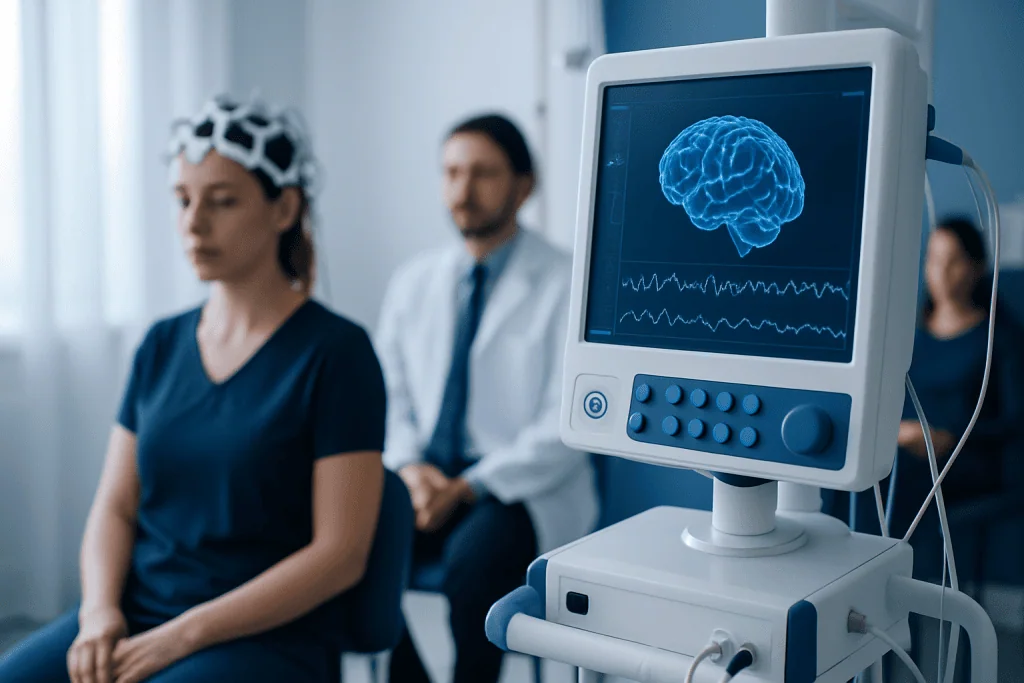
Tests such as blood work, brain imaging, EEG, or nerve studies may be used when needed to rule out other causes or when symptoms overlap with other conditions. Some people may need assessment for epilepsy, stroke, migraine, movement disorders, or multiple sclerosis if the symptoms suggest those possibilities. At the same time, a person can have FND alongside another neurological disorder, so diagnosis requires care and experience.
A clear explanation of the diagnosis matters greatly. Patients often do better when the clinician explains that the symptoms are real, shows the positive exam findings, and discusses how treatment can retrain the nervous system. In more complex cases, a coordinated evaluation may involve neurology, psychiatry, psychology, rehabilitation, and neurophysiology specialists.
Treatment options
Treatment is tailored to the person’s symptoms and needs. For many people, the first therapeutic step is understanding the diagnosis in a way that makes sense. When symptoms have been frightening or misunderstood for a long time, reassurance alone is not enough, but good education can reduce uncertainty and help patients engage with treatment.
Physical and occupational therapy are central for many movement symptoms. Unlike standard strengthening alone, therapy for FND often focuses on retraining normal movement patterns, reducing unhelpful attention to symptoms, and gradually rebuilding confidence in walking, balance, or use of the affected limb. In selected cases, a structured physical therapy and rehabilitation program can be especially helpful.
Psychological therapy may also play an important role, especially if stress, trauma, fear of symptoms, or dissociation are contributing factors. This does not mean symptoms are imagined. It means therapy can help calm the brain’s threat response, improve coping, and reduce symptom triggers. Approaches such as cognitive behavioral therapy may be considered, particularly for functional seizures or persistent symptoms. Some patients may also benefit from psychiatry support for related anxiety, depression, or trauma symptoms.
Medicines do not directly cure FND, but they may help associated problems such as pain, migraine, poor sleep, anxiety, or depression. When episodes resemble seizures, the treatment plan depends on whether the person has epilepsy, FND, or both; antiseizure medicines are not routinely useful for functional seizures unless epilepsy is also present. If diagnosis remains uncertain, evaluation with electroencephalography (EEG) or other neurological testing may be part of care.
Prevention and self-care
There is no guaranteed way to prevent functional neurological symptoms, but early recognition and supportive care may reduce their impact. The goal of self-care is not to force symptoms away, but to help the nervous system settle and function more predictably over time.
Helpful strategies often include keeping a regular sleep schedule, pacing activities, staying physically active within safe limits, and reducing long periods of symptom monitoring or bed rest where possible. People may also benefit from learning to identify triggers such as fatigue, sensory overload, panic, pain flares, or situations that increase symptom-focused fear.
Some individuals find symptom diaries useful, especially if they are brief and focused on patterns rather than constant tracking. Relaxation techniques, breathing exercises, mindfulness, and grounding strategies can support regulation of the nervous system. For those with functional seizures, creating a practical safety plan with family or colleagues may reduce injury risk and anxiety.
Recovery is often gradual rather than linear. Small gains matter, and setbacks do not mean treatment has failed. Following the care plan, attending therapy regularly, and maintaining realistic expectations can support progress. If symptoms change significantly, a doctor should review them rather than assuming every new symptom is due to FND.
When to see a doctor
Any new neurological symptom should be assessed by a healthcare professional, especially if it begins suddenly or interferes with walking, speaking, vision, or awareness. Urgent evaluation is important for symptoms that could suggest stroke, severe infection, seizure, head injury, or another acute neurological problem.
Medical review is also important if symptoms are recurring, worsening, causing falls, affecting school or work, or leading to distress at home. A person should not assume that all symptoms are due to stress, and families should avoid dismissing the problem simply because test results have been normal in the past.
If FND is diagnosed, ongoing follow-up can help refine treatment and address related symptoms such as pain, sleep disturbance, anxiety, or depression. A multidisciplinary approach often works best. Near the end of the diagnostic journey, some patients may benefit from care in specialized centers; Acibadem International’s multidisciplinary specialists in JCI-accredited hospitals diagnose and treat functional neurological symptoms for international patients.
Emergency care should be sought right away for severe headache unlike usual headache, sudden one-sided weakness, chest pain, severe breathing difficulty, loss of consciousness with injury, high fever with confusion, or any rapidly changing symptom that could signal a medical emergency.
Frequently asked questions
Are functional neurological symptoms real?
Yes. Functional neurological symptoms are real, involuntary symptoms that can affect movement, sensation, speech, or awareness. They are not imagined, exaggerated on purpose, or a sign of laziness.
Is FND the same as stress or anxiety?
Not exactly. Stress or anxiety can contribute in some people, but FND is a disorder of nervous system functioning and may occur without an obvious emotional trigger. A full assessment looks at physical, psychological, and social factors together.
Can scans and tests be normal if symptoms are severe?
Yes. Routine scans may be normal because FND reflects a problem in function rather than structural damage visible on standard imaging. Doctors make the diagnosis using positive clinical signs and tests when needed to exclude other conditions.
What is the difference between functional seizures and epilepsy?
Functional seizures can look similar to epileptic seizures, but they are caused by different brain mechanisms. Because treatment differs, careful evaluation by a neurologist is important, and some people need EEG or video-EEG testing.
Can functional neurological symptoms improve?
Many people do improve, especially when the diagnosis is explained clearly and treatment starts early. Improvement may be gradual and can involve physiotherapy, psychological therapy, treatment of related symptoms, and practical self-management strategies.
Does treatment mean the problem is psychiatric?
No. Treatment may include psychological support, but that does not mean the symptoms are “all in the mind.” FND often benefits from a neuropsychiatric and rehabilitation approach because brain function, emotions, behavior, and body symptoms all interact.
References
- National Institute of Neurological Disorders and Stroke
- National Health Service
- FND Society
- American Academy of Neurology
This article is for general information only and is not a substitute for professional medical advice. Please consult a qualified doctor about your individual situation.
Explore treatments in Turkey — costs, top hospitals & a free quote
JCI-accredited · board-certified surgeons · reply within 24h
Add us as a Preferred Source to see more of our trusted health content across Google Search, AI Overviews and Discover.