Ganglion Cyst Foot: A Complete Medical Overview

A ganglion cyst on the foot is usually benign and filled with thick joint-like fluid. Symptoms can include a visible lump, discomfort with shoes, pressure pain, or tingling if a nearby nerve is affected.
Key Takeaways
- A ganglion cyst on the foot is usually benign and filled with thick joint-like fluid.
- Symptoms can include a visible lump, discomfort with shoes, pressure pain, or tingling if a nearby nerve is affected.
- Diagnosis is often based on examination, and imaging may be used when the lump is deep, painful, or uncertain.
- Many cases improve with observation, footwear changes, and activity modification, while persistent cases may need aspiration or surgery.
- Medical review is important if the lump grows quickly, becomes very painful, changes the skin, or affects walking.
A ganglion cyst foot is a noncancerous, fluid-filled lump that usually develops near a joint or tendon on the foot or ankle. Many cysts are painless and may simply be observed, but treatment can help if the cyst causes pain, pressure, shoe irritation, or limits daily activity.
What Is a Ganglion Cyst on the Foot?
A ganglion cyst foot is a round or oval sac filled with thick, jelly-like fluid that forms near a joint capsule or tendon sheath in the foot or ankle. It is a benign growth, meaning it is not cancer. These cysts may appear on the top of the foot, around the ankle, near the toes, or less commonly on the sole.
Some ganglion cysts are easy to see as a soft or firm lump under the skin, while others are smaller or deeper and mainly cause pressure or pain. Their size may change over time, sometimes becoming more noticeable after activity and less obvious at rest. In many people, the cyst causes little trouble and can simply be monitored.
The foot has many joints and tendons that move repeatedly during walking, running, and standing. Because of this, a cyst in this area can become irritating even when it is small, especially if it rubs against shoes or presses on nearby tissue. A healthcare professional can help confirm whether a lump is a ganglion cyst or another condition that may need different care.
How a Foot Ganglion Cyst May Feel and Look
The most common sign is a localized lump near a joint or tendon. It may feel smooth, rubbery, or firm. Some cysts move slightly under the skin, while others feel more fixed in place. The overlying skin is usually normal, without redness or warmth, unless there is irritation from friction.
Symptoms vary depending on location and size. A cyst on the top of the foot may hurt when shoes press directly on it. A cyst near the ankle can cause discomfort with movement. If the cyst is close to a nerve, it may cause tingling, burning, numbness, or sharp pain. Deeper cysts may not be clearly visible but can still lead to aching or a sense of fullness.
Common features may include:
- A visible or palpable lump on the foot or ankle
- Pain with walking, running, or wearing certain shoes
- Pressure discomfort or tenderness over the cyst
- Tingling or numbness if a nearby nerve is compressed
- Changes in size over days or weeks
These symptoms can overlap with other foot problems, including bursitis, lipomas, bone-related bumps, tendon conditions, or inflammatory joint disease. For that reason, persistent or uncertain lumps should be assessed rather than self-diagnosed.
Why Ganglion Cysts Develop

The exact cause of a ganglion cyst is not always clear. In many cases, it is thought to arise when fluid leaks or is pushed out from a joint capsule or tendon lining and collects in a small sac. Repeated motion, mechanical stress, or irritation around a joint may contribute, although a clear trigger is not always identified.
A foot ganglion cyst can occur in adults of different ages and activity levels. It may be more likely in people who spend long periods on their feet, wear tight footwear, or have a history of minor injury in the area. Sometimes it develops alongside underlying joint or tendon problems, though many people have no major foot disease.
Risk factors and related issues may include:
- Repetitive stress from walking, sports, or standing work
- Local trauma or a previous ankle or foot sprain
- Irritation of a tendon sheath or small foot joint
- Footwear that creates repeated pressure over a vulnerable area
- Associated joint conditions such as arthritis in some patients
Having a ganglion cyst does not mean the foot is severely damaged. Still, if the cyst is painful or associated with another structural problem, evaluation by a clinician can help guide appropriate treatment and rule out other causes of a lump.
How Doctors Diagnose a Ganglion Cyst Foot
Diagnosis usually begins with a medical history and physical examination. A clinician will ask when the lump appeared, whether it changes size, what makes it hurt, and whether there are symptoms such as tingling or trouble wearing shoes. During the exam, the cyst’s location, size, consistency, and tenderness are assessed.
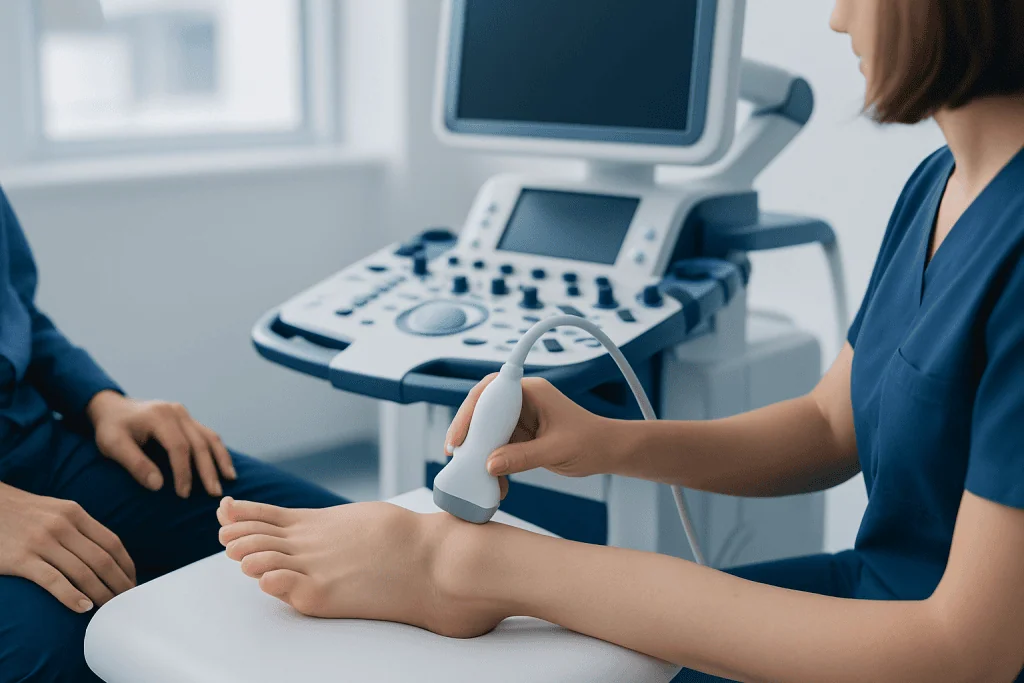
In many straightforward cases, the diagnosis is made clinically. However, imaging may be useful if the lump is deep, very painful, unusually firm, or not clearly a ganglion cyst. Ultrasound can show whether the lesion is fluid-filled and help distinguish it from a solid mass. Magnetic resonance imaging may be considered when the diagnosis remains uncertain or when planning treatment for a complex case.
Sometimes other conditions need to be considered, such as a bursa, tendon sheath swelling, lipoma, bone prominence, nerve-related lesion, or less commonly another type of soft tissue mass. If there is concern about the joint, tendon, or nearby bone, a doctor may recommend further evaluation with MRI scanning or other appropriate tests.
Treatment Options and What to Expect
Treatment depends on symptoms rather than the cyst alone. If the cyst is small, painless, and not interfering with footwear or activity, watchful waiting is often appropriate. Some ganglion cysts remain stable, and some may shrink over time. Monitoring is especially reasonable when diagnosis is clear and there are no warning signs.
When symptoms are bothersome, non-surgical care may be tried first. This may include shoe modifications to reduce pressure, cushioning pads, changes in activity, and short-term measures to calm irritation. If pain relates to a nearby tendon or joint, a doctor may also evaluate whether supportive care or physical therapy and rehabilitation could help improve mechanics and reduce stress in the area.
Aspiration, which involves drawing fluid out with a needle, may be considered in selected cases. It can reduce the lump and ease symptoms, but recurrence is fairly common because the sac or connection to the joint may remain. Aspiration may not be suitable for all foot cysts, particularly if the location is difficult or if the diagnosis is uncertain.
Surgery may be recommended for persistent pain, repeated recurrence, nerve compression, or significant difficulty with walking or footwear. The procedure typically removes the cyst and its stalk or connection to the joint or tendon sheath when possible. Recovery time varies by location and extent of surgery. For ongoing or complex cases, a specialist in orthopedics may help determine whether surgery is the best option.
Self-care, Footwear, and Preventing Irritation
Although it may not always be possible to prevent a ganglion cyst, daily habits can reduce discomfort and repeated irritation. Footwear is especially important. Shoes with a roomy toe box, soft upper material, and less direct pressure over the cyst may make walking more comfortable. Avoiding tight or rigid shoes can help reduce friction on a visible lump.
Activity modification can also be useful. If certain exercises or long periods of standing make symptoms worse, reducing intensity for a time may calm the area. Some people benefit from cushioned padding around the cyst, though it should not be so tight that it increases pressure. A clinician or podiatry professional can advise on safe padding and support.
Patients should avoid trying to burst, puncture, or strongly compress a cyst at home. This can injure surrounding tissue, increase pain, or lead to infection. Home care is best focused on comfort and observation, including noting any changes in size, color, pain level, or effect on walking.
If a person also has other foot problems such as recurrent tendon irritation, instability, or deformity, treating those issues may help reduce local stress. In some cases, assessment of gait, footwear needs, or biomechanics provides useful long-term support.
When to Seek Medical Care
Medical review is sensible whenever a new foot lump appears and does not clearly go away, especially if the diagnosis is uncertain. While ganglion cysts are usually harmless, other conditions can look similar. A doctor can help confirm the cause and explain whether observation or treatment is the safest next step.
A person should seek medical care sooner if the lump is growing quickly, becoming more painful, causing numbness, changing the skin, or making it hard to wear shoes or walk normally. Redness, warmth, drainage, or fever are not typical of a simple ganglion cyst and should also be evaluated promptly.
People with diabetes, poor circulation, reduced foot sensation, or a history of foot ulcers should not ignore a new lump or pressure point. These conditions can make even mild irritation more significant. Near the end of the care pathway, patients who need specialist assessment may be seen by multidisciplinary teams; Acibadem International’s JCI-accredited hospitals diagnose and treat foot and ankle conditions for international patients.
Frequently asked questions
Is a ganglion cyst on the foot dangerous?
A ganglion cyst on the foot is usually not dangerous. It is typically a benign, fluid-filled sac near a joint or tendon. Even so, any new or changing lump should be assessed if it is painful, enlarging, or not clearly diagnosed.
Can a foot ganglion cyst go away on its own?
Yes, some foot ganglion cysts can become smaller or settle without active treatment. Others remain the same size or come and go over time. Observation is often reasonable when the cyst is not painful and does not affect walking or footwear.
What causes pain from a ganglion cyst foot?
Pain can happen when the cyst presses on a nearby nerve, tendon, or joint, or when shoes rub directly over it. Even a small cyst may hurt if it is in a high-pressure area on the foot. Deeper cysts may cause aching without a very obvious lump.
Do ganglion cysts always need surgery?
No, surgery is not always needed. Many people are managed with monitoring, shoe changes, and symptom relief. Surgery is usually considered when the cyst causes ongoing pain, repeated recurrence, nerve symptoms, or major limitations in daily life.
Can a doctor remove fluid from a ganglion cyst?
In some cases, yes. Aspiration uses a needle to draw out fluid and may reduce the lump and improve symptoms. However, cysts can come back after aspiration because the lining or connection to the joint may remain.
Should a person try to pop a ganglion cyst at home?
No. Trying to puncture, crush, or burst a cyst at home can cause injury, pain, and infection. It is safer to have the lump evaluated by a qualified healthcare professional and follow an appropriate treatment plan.
This article is for general information only and is not a substitute for professional medical advice. Please consult a qualified doctor about your individual situation.
Joint and spine care in Turkey — expert assessment & treatment
JCI-accredited · board-certified surgeons · reply within 24h
Add us as a Preferred Source to see more of our trusted health content across Google Search, AI Overviews and Discover.

More from the Health Library

Niacin Advantages: A Complete Medical Overview

Overexertion — Explained by Medical Evidence, Not Myths

Almond Skin: A Complete Medical Overview

Newborns and Prune Juice: What Patients Need to Know

Muscle Twitching Cure: An Evidence-Based Guide for Patients