Gastrocnemius: A Complete Medical Overview
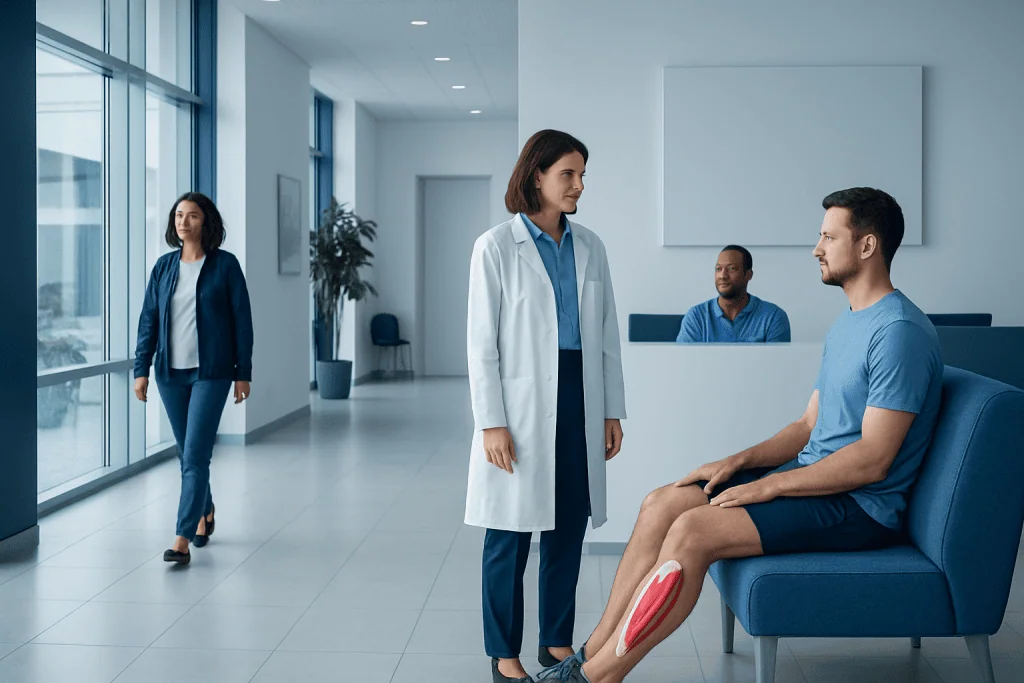
The gastrocnemius is a major calf muscle involved in knee flexion and ankle movement. A gastrocnemius strain often causes sudden pain in the upper or middle calf during sports or fast movement.
Key Takeaways
- The gastrocnemius is a major calf muscle involved in knee flexion and ankle movement.
- A gastrocnemius strain often causes sudden pain in the upper or middle calf during sports or fast movement.
- Most gastrocnemius injuries improve with conservative care, including rest and physical therapy.
- Medical evaluation is important if pain is severe, walking is difficult, or swelling raises concern for a more serious problem.
- Not all calf pain is a muscle strain; tendon injury, blood clots, and other conditions may need different treatment.
The gastrocnemius is the large, visible calf muscle that helps bend the knee and point the foot downward during walking, running, and jumping. When it is strained or injured, symptoms often include sudden calf pain, tightness, swelling, and difficulty pushing off the foot, and treatment usually focuses on rest, rehabilitation, and guided return to activity.
Overview: what the gastrocnemius is and why it matters
The gastrocnemius is the large superficial muscle at the back of the lower leg, commonly called part of the calf. It has two heads that begin above the knee joint and join lower down to form part of the Achilles tendon, which attaches to the heel. This structure allows the muscle to cross both the knee and ankle, giving it an important role in movement.
In everyday life, the gastrocnemius helps a person rise onto the toes, push off while walking, climb stairs, run, and jump. Because it works across two joints and is heavily used during sudden acceleration or changes in direction, it is also one of the calf muscles most likely to be strained. Athletes may know this problem as “tennis leg,” but it can happen to anyone, especially during an abrupt movement.
Understanding the gastrocnemius is useful because calf pain is not always simple muscle soreness. Symptoms can come from a muscle strain, the Achilles tendon, the deeper soleus muscle, or less commonly from circulation problems such as a blood clot. A careful assessment helps identify the true cause and guides the safest treatment plan.
How the gastrocnemius works in movement
The gastrocnemius works together with the soleus muscle to produce plantarflexion, the motion that points the foot downward. This action is essential for standing on tiptoe and for the final push-off phase of walking and running. Because the gastrocnemius is more active during quick, forceful movements, it is especially important in sprinting, jumping, and sudden starts.
The muscle also helps flex the knee. This dual function explains why injury often occurs when the knee is straightening while the ankle is bending upward at the same time, such as lunging for a ball or stepping suddenly off a curb. In that moment, the muscle lengthens under load, which can overstretch the fibers.
Good coordination between the gastrocnemius, soleus, Achilles tendon, hamstrings, and foot muscles supports efficient movement. Weakness, fatigue, limited ankle flexibility, and poor warm-up can all increase strain on the calf complex. In some cases, recurring calf symptoms reflect broader biomechanical issues that benefit from rehabilitation rather than rest alone.
Symptoms of gastrocnemius problems
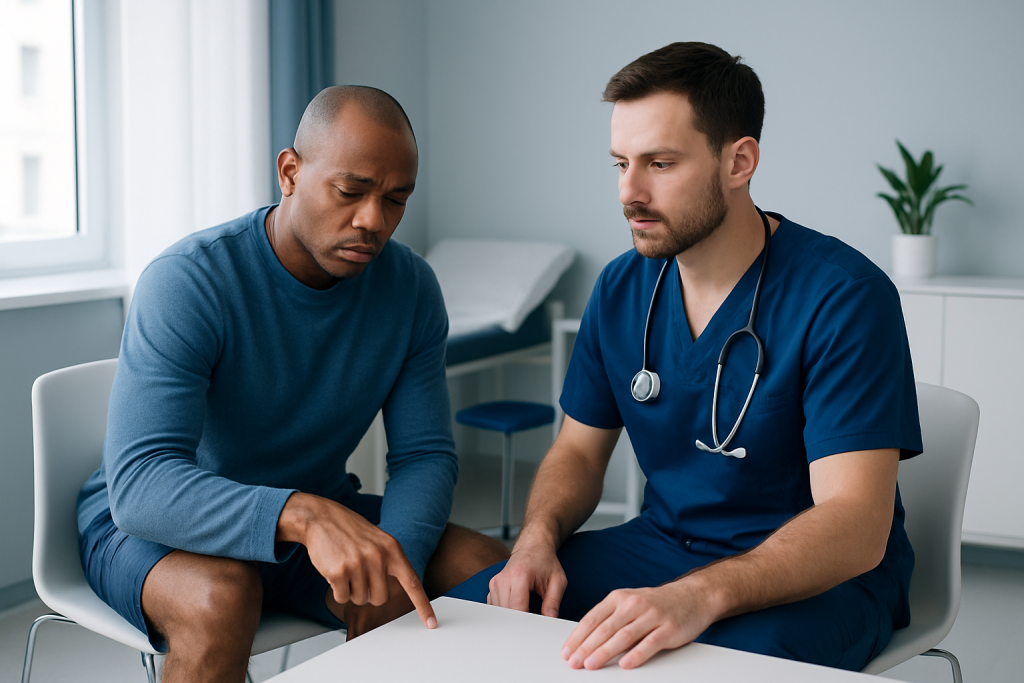
A gastrocnemius strain often causes a sudden sharp pain in the calf, sometimes described as a snap, pull, or stabbing sensation. The pain usually appears during running, jumping, rapid turning, or pushing off the foot. After the initial injury, the calf may feel tight, tender, or weak, and walking may become uncomfortable.
Other symptoms can include swelling, bruising, muscle spasm, and pain when standing on the toes or stretching the calf. Mild strains may feel like soreness and tightness with activity, while more significant tears can make it difficult to continue exercise or even walk normally. Tenderness is often greatest in the upper inner calf where injuries commonly occur.
Not every calf symptom comes from the gastrocnemius itself. Achilles tendonitis may cause pain lower down near the heel, while deeper calf discomfort can involve the soleus. If the leg is swollen, warm, red, or painful without a clear injury, a doctor may also consider circulation-related causes such as deep vein thrombosis, which needs prompt medical attention.
- Sudden calf pain during sport or fast movement
- Tightness or cramping in the back of the leg
- Swelling or bruising after injury
- Pain with pushing off, climbing stairs, or tiptoe standing
- Reduced strength or a limp
Causes and risk factors
The most common gastrocnemius problem is a strain, meaning overstretching or tearing of muscle fibers. This usually happens during an explosive movement when the knee extends and the ankle dorsiflexes at the same time. Activities such as tennis, basketball, football, running, and racquet sports are typical settings, but a sudden slip or awkward step can also trigger injury.
Several factors can raise the risk. These include inadequate warm-up, calf tightness, muscle fatigue, poor conditioning, previous calf injury, and reduced ankle mobility. Age can also play a role, as tissues may become less elastic over time. People returning to activity too quickly after time away from exercise may be more vulnerable because the muscle is asked to handle force it is not yet ready to absorb.
Other possible causes of calf pain include overuse, delayed-onset muscle soreness, Achilles tendon disorders, nerve irritation, and referred pain from the knee or lower back. In some cases, a clinician may evaluate for deep vein thrombosis if the pattern of pain and swelling suggests a vascular cause rather than a muscle injury. This distinction is important because treatment is very different.
How doctors diagnose a gastrocnemius injury
Diagnosis begins with a medical history and physical examination. A doctor will usually ask how the pain started, whether there was a sudden pop or pull, and what activities make symptoms worse. During the examination, they may check for swelling, bruising, tenderness, muscle strength, walking pattern, and pain with calf stretching or resisted movement.
Many gastrocnemius strains can be diagnosed clinically, especially when the history is typical. Doctors may also assess the Achilles tendon to make sure there is no rupture, and they may compare the injured leg with the other side. If symptoms are severe, persistent, or unclear, imaging may help confirm the diagnosis and rule out other causes.
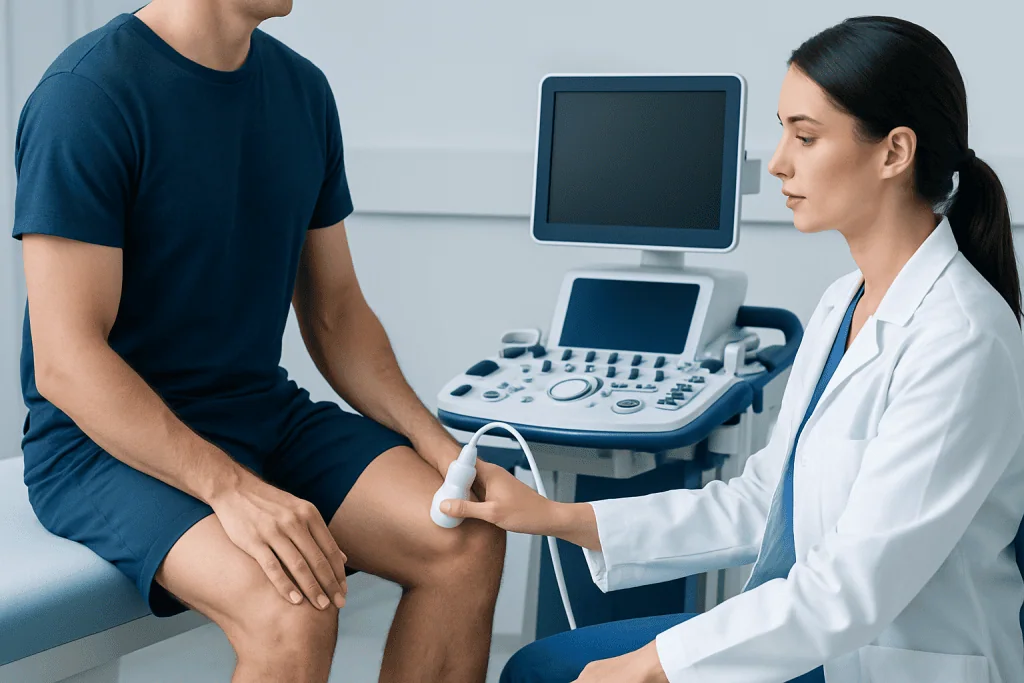
Ultrasound can show muscle tears, fluid collection, and healing progress in some cases. MRI may be used when the diagnosis remains uncertain or when a detailed picture of the muscle-tendon unit is needed. If swelling, tenderness, or risk factors raise concern for a clot, doctors may arrange urgent vascular assessment. In more complex cases, evaluation by orthopedics and traumatology specialists or physical therapy and rehabilitation teams can be helpful.
Treatment options and recovery
Most gastrocnemius strains are treated without surgery. Early care generally includes relative rest, avoiding movements that trigger sharp pain, and using ice, compression, and elevation to help control swelling and discomfort. Gentle movement is often encouraged as tolerated, because complete immobility may slow recovery and increase stiffness.
As pain settles, rehabilitation becomes the main part of treatment. A structured program may include gradual stretching, range-of-motion work, calf strengthening, balance training, and step-by-step return to walking, jogging, and sport. Recovery time varies by the severity of the injury. Mild strains may improve within a few weeks, while larger tears can take considerably longer and need closer follow-up.
Pain relief options may be discussed with a doctor, particularly if symptoms are interfering with normal movement or sleep. If a person has ongoing weakness, repeated calf injuries, or suspected tendon involvement, more specialized evaluation may be needed. Rehabilitation is often most effective when it also addresses footwear, training errors, and muscle imbalances. When symptoms involve the tendon as well as the muscle, care may overlap with approaches used in Achilles tendon treatment.
Surgery is uncommon for isolated gastrocnemius strains, but it may be considered in rare situations such as major tears with persistent functional loss. The decision depends on the injury pattern, the person’s activity level, and how they respond to conservative care. For international patients who need diagnosis or ongoing management, Acibadem International’s multidisciplinary specialists in JCI-accredited hospitals provide evaluation and treatment planning for calf and sports-related injuries.
Prevention and self-care
Prevention focuses on preparing the calf muscles for the demands placed on them. A gradual warm-up before exercise can improve tissue readiness, especially before sprinting, jumping, or quick direction changes. Flexibility work may help some people, but it is usually most useful when combined with progressive strengthening rather than used alone.
Strengthening the calf complex is important because the gastrocnemius and soleus both need to tolerate repeated loading. Exercises may include calf raises, bent-knee and straight-knee strengthening, balance drills, and later, sport-specific movements. Training load should increase gradually, particularly after an illness, break from exercise, or recent injury.
At home, people recovering from a mild strain often benefit from pacing their activity, avoiding painful stretching in the very early phase, and wearing supportive footwear. Returning to sport too soon can increase the chance of reinjury. Medical guidance is especially helpful for competitive athletes, older adults, and anyone whose pain is not steadily improving.
- Warm up before running or sports
- Increase exercise intensity gradually
- Strengthen the calves regularly
- Address ankle stiffness and poor movement patterns
- Use appropriate shoes for activity and surface
- Allow enough recovery after heavy training
When to seek medical care
Medical care is appropriate if calf pain is severe, prevents normal walking, or follows a clear snapping sensation during activity. A doctor should also assess symptoms that do not improve with several days of self-care, or repeated calf problems that keep returning during exercise. Early evaluation can help distinguish a simple strain from a tendon injury or another condition.
Urgent assessment is especially important if the calf becomes significantly swollen, warm, red, or painful without a clear sports injury. Shortness of breath, chest pain, faintness, or sudden worsening leg swelling need immediate medical attention because they may suggest a serious circulation problem. These symptoms are not typical of a routine gastrocnemius strain.
A person should also seek care if they cannot rise onto the toes, notice marked weakness, or suspect an Achilles tendon injury. In some cases, doctors may recommend imaging or referral for sports injuries care to guide recovery and safe return to activity. Timely diagnosis often shortens uncertainty and helps prevent avoidable setbacks.
Frequently asked questions
What is the gastrocnemius muscle?
The gastrocnemius is one of the main muscles of the calf and is the large muscle visible at the back of the lower leg. It helps bend the knee and point the foot downward, which is important for walking, running, climbing stairs, and jumping.
How do people know if they have a gastrocnemius strain?
A gastrocnemius strain often causes sudden sharp pain in the calf during activity, followed by tightness, tenderness, and trouble pushing off the foot. Some people also notice swelling or bruising, especially if the tear is more significant.
How long does a gastrocnemius injury take to heal?
Healing time depends on how mild or severe the injury is. Mild strains may improve within a few weeks, while moderate or more extensive tears can take several weeks to months and usually need a more structured rehabilitation plan.
Should calf pain always be treated as a muscle strain?
No. Calf pain can also come from Achilles tendon problems, deeper muscle injury, nerve irritation, or a blood clot. If the symptoms are unusual, severe, or associated with swelling, redness, or shortness of breath, medical assessment is important.
Is walking good for a gastrocnemius strain?
Gentle walking is often acceptable if it does not cause sharp pain or worsen symptoms. In the early phase, activity is usually reduced and then gradually increased as comfort, strength, and normal movement return.
Can gastrocnemius injuries be prevented?
Risk can be reduced with regular calf strengthening, a gradual warm-up, good training progression, and attention to flexibility and footwear. Prevention is especially important after a previous calf injury, because reinjury can happen if return to activity is too fast.
This article is for general information only and is not a substitute for professional medical advice. Please consult a qualified doctor about your individual situation.
Joint and spine care in Turkey — expert assessment & treatment
JCI-accredited · board-certified surgeons · reply within 24h
Add us as a Preferred Source to see more of our trusted health content across Google Search, AI Overviews and Discover.

More from the Health Library

Hld Medical Abbreviation: What Patients Need to Know

Heteropaternal Superfecundation: What Patients Need to Know
Aplastic Crisis — Explained by Medical Evidence, Not Myths
Thyroid Test: An Evidence-Based Guide for Patients
Lower Back Exercises — Explained by Medical Evidence, Not Myths