Genetic Predisposition: A Complete Medical Overview

A genetic predisposition raises risk but is not the same as a diagnosis. Family history can offer important clues about inherited health risks.
Key Takeaways
- A genetic predisposition raises risk but is not the same as a diagnosis.
- Family history can offer important clues about inherited health risks.
- Genes, lifestyle, age, and environment often work together to influence disease.
- Genetic counseling and testing may help some people clarify their risk.
- Early screening and preventive care can be useful when inherited risk is higher.
Genetic predisposition means a person has inherited gene changes that increase the chance of developing certain conditions, but it does not mean the condition will definitely occur. Understanding family history, risk factors, and when genetic testing may help can support earlier screening, prevention, and informed medical decisions.
Overview: What Genetic Predisposition Means
Genetic predisposition refers to an inherited tendency to develop a particular disease or health condition. A person with a genetic predisposition has one or more gene variants linked to increased risk, but this is not the same as having the disease itself. In many cases, these inherited factors interact with age, hormones, environmental exposures, infections, diet, exercise, smoking, and other parts of daily life.
This concept is important because it helps explain why some conditions appear more often in certain families. A predisposition may be mild or more significant, and its effect can vary from one person to another. Two relatives may share a similar genetic risk, yet only one may become ill because other influences also matter.
Genetic predisposition is commonly discussed in relation to conditions such as some cancers, heart disease, diabetes, blood clotting disorders, and certain neurological or autoimmune disorders. For example, some people may inherit a higher likelihood of breast cancer or other conditions, but regular screening and healthy habits may still play a meaningful role in reducing overall risk or supporting earlier diagnosis.
How Genes Influence Health Risk
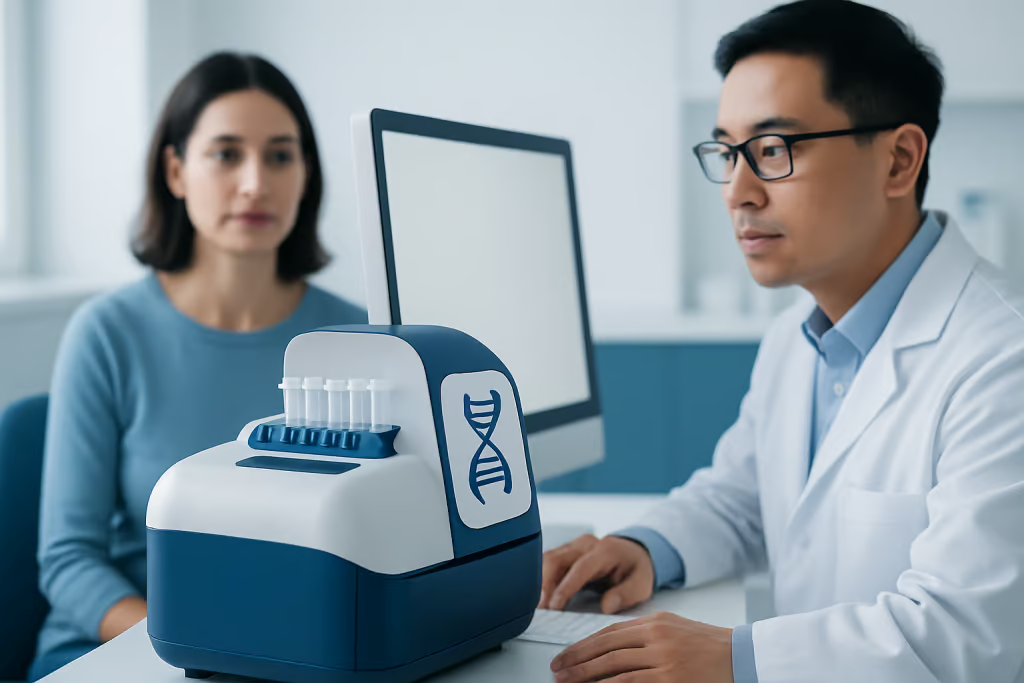
Genes carry instructions that help the body grow, function, and repair itself. Small changes in these instructions, often called variants or mutations depending on context, may affect how the body controls cell growth, processes cholesterol, responds to hormones, repairs DNA, or handles inflammation. Some variants have very little effect, while others are strongly associated with disease.
Inherited risk is not always straightforward. Some conditions are caused mainly by a single gene change, but many common diseases are influenced by multiple genes, each contributing a small amount of risk. This is why genetic predisposition often works as part of a larger picture rather than as a simple yes-or-no answer.
Penetrance and expression also matter. Penetrance describes how likely a person with a certain genetic variant is to develop the related condition. Expression refers to how the condition appears, including its severity or age of onset. These differences help explain why the same inherited variant can affect family members in different ways.
Epigenetic changes may also influence risk. These are changes in how genes are switched on or off without altering the gene sequence itself. Stress, nutrition, toxins, and other exposures may shape these patterns over time, adding another layer to inherited predisposition.
Common Conditions Linked to Genetic Predisposition

Many health conditions can involve inherited susceptibility. Some of the best-known examples include hereditary breast and ovarian cancer syndromes, inherited colon cancer syndromes, familial high cholesterol, certain heart rhythm disorders, type 2 diabetes, and some thyroid, autoimmune, and neurological disorders. A predisposition does not affect every person in the same way, but it can guide screening and preventive planning.
In cancer care, inherited variants may increase the risk of tumors developing at younger ages or in more than one organ. In cardiovascular health, genes may contribute to high cholesterol levels, high blood pressure tendencies, or structural and electrical changes in the heart. In metabolic disease, inherited traits can influence how the body uses insulin or stores fat.
Some people learn about inherited risk after a relative is diagnosed with a serious illness. Others may only discover it through genetic counseling, fertility evaluation, or screening prompted by an unusual medical history. When a family pattern is present, doctors may recommend more targeted evaluation, such as genetic testing and counseling or specialist assessment depending on the concern.
- Examples of conditions with hereditary components include certain cancers, heart disease, diabetes, and clotting disorders.
- Risk may be higher if several close relatives are affected.
- Earlier age at diagnosis in the family can be an important clue.
- Some inherited syndromes require specialized follow-up and screening.
Family History, Risk Factors, and Red Flags
Family history remains one of the most practical tools for recognizing genetic predisposition. Doctors often ask about parents, siblings, children, grandparents, aunts, uncles, and cousins. Important details include which relative was affected, the exact diagnosis if known, age at diagnosis, whether the condition occurred more than once, and whether anyone had multiple related diseases.
Certain patterns may raise suspicion for an inherited condition. These include the same disease in several close relatives, disease diagnosed at a younger-than-expected age, cancer affecting both paired organs, multiple cancers in one person, rare cancers, sudden unexplained cardiac death, repeated blood clots, or family members with developmental, neurological, or congenital disorders.
However, family history is not perfect. Small families, limited contact with relatives, adoption, incomplete records, and relatives who died young for unrelated reasons can make inherited patterns harder to see. Also, a person may carry a gene variant even without a strong family history, especially if the variant began newly in that person or was previously unrecognized in relatives.
Other risk factors continue to matter alongside genetics. Smoking, obesity, inactivity, alcohol use, chronic stress, poor sleep, pollution, and occupational exposures can all increase the likelihood that a predisposition becomes clinically important. In many situations, inherited risk and lifestyle risk should be considered together rather than separately.
How Genetic Predisposition Is Assessed
Assessment usually begins with a medical history and family history review. A doctor may ask about symptoms, past diagnoses, medications, lifestyle factors, reproductive history, and any relatives who had serious or early-onset illnesses. This conversation helps determine whether testing is likely to be informative and which specialty may be most appropriate.
If concern remains, referral to a genetics professional may be recommended. Genetic counselors and physicians with genetics expertise help explain what testing can and cannot show, what results may mean for the person and their relatives, and whether findings are likely to change screening or treatment plans. This step is often useful before and after testing.
Testing can involve blood or saliva samples. Depending on the clinical question, a doctor may order a single-gene test, a focused panel, or broader genomic testing. Results may be positive, negative, or uncertain. A variant of uncertain significance does not confirm disease and should be interpreted carefully in the context of personal and family history.
Other evaluations may also be needed. These can include imaging, blood tests, cardiac studies, or organ-specific screening to look for signs of disease or to estimate current risk. For example, a person with inherited cardiovascular risk may need closer follow-up through a cardiology evaluation, while someone with inherited cancer risk may be referred for oncology care and preventive screening discussions.
What Can Be Done If Risk Is Higher
A higher inherited risk does not mean there is nothing to do. In many cases, the main benefit of knowing about a genetic predisposition is that it allows earlier action. This may include more frequent screening, starting screening at a younger age, avoiding certain exposures, improving lifestyle habits, or considering preventive medicines or procedures when medically appropriate.
Treatment and prevention depend on the condition involved. For some risks, the focus is on cholesterol control, blood pressure management, blood sugar monitoring, or weight support. For others, the focus may be cancer surveillance, heart rhythm monitoring, reproductive planning, or testing of at-risk relatives. Decisions should be individualized and based on guidance from qualified professionals.
Emotional support can also be important. Learning about inherited risk may bring relief, uncertainty, guilt, or concern for children and siblings. Genetic counseling can help people understand the information clearly and make decisions that fit their values, age, and health priorities.
At specialized centers, care may involve multiple departments working together. Acibadem International’s multidisciplinary specialists and JCI-accredited hospitals diagnose and treat inherited-risk conditions for international patients, coordinating genetics, imaging, medical specialties, and follow-up when needed.
Prevention and Self-Care for People With a Genetic Predisposition
Self-care cannot change inherited genes, but it can still influence overall health and, in some situations, help lower disease risk. A balanced diet, regular physical activity, adequate sleep, avoiding tobacco, and limiting alcohol are broadly helpful for many conditions linked to genetic predisposition. Maintaining routine checkups also helps doctors monitor early warning signs.
People who know they have a family history of a specific disease may benefit from keeping written health records, including diagnoses and ages at diagnosis in relatives. Bringing this information to medical visits can improve risk assessment and support appropriate referrals. It may also be useful to update the record over time as family health changes.
Stress management matters too. Living with uncertainty about inherited risk can affect mood and decision-making. Practical steps such as asking questions, seeking reliable information, and using counseling or support services may help people feel more prepared and less overwhelmed.
- Keep up with routine screenings recommended for age and sex.
- Share any important family history changes with a doctor.
- Follow disease-specific advice if a healthcare team identifies higher risk.
- Ask whether relatives may also benefit from counseling or evaluation.
When to Seek Medical Care
Medical advice should be sought if there is a strong family history of serious illness, especially when conditions appear in several close relatives or at young ages. It is also important to speak with a doctor if a person develops symptoms that could be related to a known family risk, even if those symptoms seem mild at first.
Prompt evaluation is advisable after an unexpected event in the family, such as sudden cardiac death, recurrent blood clots, multiple related cancers, or a new diagnosis of a confirmed hereditary syndrome. People planning a pregnancy may also wish to ask about inherited risk if either partner has a personal or family history of genetic disease.
A doctor can help decide whether lifestyle changes, earlier screening, genetic counseling, or specialist referral would be useful. Urgent symptoms such as chest pain, severe shortness of breath, stroke-like symptoms, major bleeding, or sudden neurological changes should be treated as emergencies and evaluated immediately.
Frequently asked questions
Is genetic predisposition the same as having a disease?
No. Genetic predisposition means a person has inherited a higher chance of developing a condition, but it does not confirm that the condition is present or will definitely occur. Other factors, including environment, age, and lifestyle, often influence whether disease develops.
Can someone have a genetic predisposition without a family history?
Yes. Family history is helpful, but it is not the only way inherited risk appears. Some variants can occur for the first time in one person, and sometimes family history is incomplete or relatives were never diagnosed.
Who should consider genetic testing?
Testing may be considered for people with a strong family history, early-onset disease in relatives, unusual patterns of illness, or a personal history that suggests an inherited syndrome. A doctor or genetic counselor can help decide whether testing is likely to be useful and which type is most appropriate.
What if a genetic test result is uncertain?
An uncertain result means the variant found is not yet clearly linked to disease. It should not usually be treated the same as a confirmed harmful variant. Doctors interpret these results together with personal history, family history, and sometimes updated laboratory information over time.
Can lifestyle changes help if risk is inherited?
Often, yes. While lifestyle cannot change a person's genes, it may still reduce overall risk or delay disease in many conditions. Healthy eating, regular exercise, avoiding smoking, and attending recommended screenings are common parts of prevention.
Should family members also be evaluated?
Sometimes they should, especially if a confirmed hereditary condition or clearly harmful genetic variant is found. A healthcare professional can explain which relatives may be affected and whether counseling or testing is recommended for them.
References
- World Health Organization
- Centers for Disease Control and Prevention
- National Human Genome Research Institute
- National Cancer Institute
- American College of Medical Genetics and Genomics
This article is for general information only and is not a substitute for professional medical advice. Please consult a qualified doctor about your individual situation.
Explore treatments in Turkey — costs, top hospitals & a free quote
JCI-accredited · board-certified surgeons · reply within 24h
Add us as a Preferred Source to see more of our trusted health content across Google Search, AI Overviews and Discover.
Check your numbers in seconds
BMI, calories, due date, blood pressure and 30+ more clinical calculators — free, instant, doctor-reviewed ranges.